“Sometimes you have to give up something good to get something better.”
— Lucy's mom tells her this when Lucy is hesitant about moving and leaving her friends.

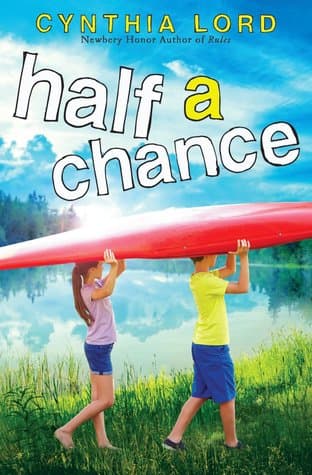
Cynthia Lord (2014)
Genre
Children's / Young Adult
Reading Time
210 min
Key Themes
See below
Sign in to track this book
Armed with her camera and a secret ambition, Lucy navigates a new lakeside home, discovering the truths of a neighbor's grandmother's fading memory and the power of art to capture both beauty and loss.
Lucy and her family move into an old house on a lake for the summer. Her father, a renowned nature photographer, is away on a long assignment. Lucy feels inspired by his talent but also overshadowed. Lucy, an aspiring photographer, carries her father's old camera everywhere, seeing the world through its lens. She soon learns that her father is judging a photography contest. Wanting to prove her own artistic merit, not just as his daughter, Lucy decides to enter the contest anonymously, hoping her work will be judged only on its quality. This decision sets the stage for her summer of exploration and self-discovery.
Soon after arriving, Lucy meets Nate, the boy who lives next door. His house has been in his family for generations. Nate is at first reserved but quickly becomes friends with Lucy, sharing his knowledge of the lake and its wildlife. Lucy is particularly drawn to the pair of loons that nest on the lake, watching them through her camera. She learns from Nate that these loons return every year, symbolizing the lasting spirit of the lake. The loons become an important subject for Lucy's photography, representing nature's beauty and the passage of time.
As Lucy spends more time with Nate, she also gets to know his grandmother, Lil. Initially, Lil seems like a charming, if eccentric, older woman who loves gardening and stories. However, Lucy's keen photographic eye, trained to notice details, starts to pick up on subtle signs that Lil's memory is failing. She observes moments of confusion, forgotten names, and repeated stories that Nate, out of love and denial, often dismisses or explains away. Lucy's camera, in its objective capture of reality, begins to document the painful truth of Lil's cognitive decline, a truth Nate is not yet ready to face.
Lucy works to capture compelling images for the photography contest. She explores various subjects around the lake, always keeping her father's high standards in mind. One important place she photographs is an old lighthouse, a local landmark that has sentimental value for Nate and his family. Lucy photographs the lighthouse in different lights and moods, trying to put emotion and story into her images. She carefully selects her best work, including several poignant shots, and submits them anonymously to the contest, feeling both hope and fear about her father's potential judgment.
Despite Lucy's growing awareness and occasional gentle suggestions, Nate resists acknowledging his grandmother's deteriorating condition. He cherishes his summer memories with Lil and fears losing the woman he knows. Lucy, however, cannot ignore what her camera and her instincts reveal. She notices Lil planting flowers in strange places, forgetting important family stories, and becoming more disoriented. Lucy's photographs, especially candid shots of Lil, become a quiet, undeniable record of the changes, forcing Lucy to consider the ethical implications of her art.
A significant event occurs when one of the loon chicks disappears from the nest. Lucy and Nate have been watching the loon family closely, and the loss of the chick deeply affects them. This event mirrors the unfolding situation with Grandma Lil, serving as a metaphor for life's fragility and the inevitability of loss. The missing chick emphasizes the harsh realities of nature and the emotional impact of absence, prompting Lucy to think about how she can capture such feelings in her photography.
The moment of truth arrives when Nate can no longer ignore the evidence. It is often through Lucy's photographs, or through a particularly stark moment of Lil's confusion, that Nate is forced to confront the reality of his grandmother's memory loss. This realization is painful and initially met with anger or sadness. Lucy, through her art and her empathetic presence, helps Nate to see what he has been avoiding. The camera, initially a tool for observation, becomes a catalyst for understanding and acceptance, bridging the gap between denial and truth.
As Nate comes to terms with Lil's condition, both he and Lucy find solace and expression in creative outlets. Lucy's photography changes from simply capturing images to telling a story, reflecting the emotional landscape of their summer. Nate, inspired by Lucy and needing a way to hold onto his grandmother, starts sketching or helping Lucy with her photography, using art to process his grief and preserve cherished memories of Lil before her memory completely fades. Their shared artistic endeavors strengthen their bond and provide a healthy way to cope.
The results of the photography contest are announced. Lucy's anonymous submission, likely a poignant image capturing the lake or a moment related to Lil, wins a significant prize. Her father, impressed by the winning photograph, expresses his admiration for the artist's eye and emotional depth. When Lucy reveals herself as the anonymous winner, her father is both surprised and proud. This moment allows for a genuine connection between them, as her father acknowledges her unique talent and artistic voice, separate from his own legacy.
By the end of the summer, Nate has accepted Grandma Lil's memory loss. While still painful, he understands that their relationship can adapt, and he finds new ways to connect with her, cherishing their moments. Lucy, having proven her talent through the contest and navigated the complexities of her friendship with Nate, gains confidence in her own artistic voice. She learns that photography is not just about capturing beauty but also about revealing truth and fostering empathy, solidifying her path as a photographer with a unique perspective.
The Protagonist
Lucy evolves from seeking external validation to trusting her own artistic voice, learning that art can illuminate truth and foster empathy.
The Supporting
Nate moves from denial and fear to acceptance and understanding of his grandmother's condition, finding solace in shared memories and new connections.
The Supporting
Lil's arc is one of decline, forcing those around her to confront the realities of aging and memory loss, ultimately inspiring acceptance and new forms of connection.
The Supporting
Initially a distant, revered figure, he becomes a proud and supportive father who genuinely recognizes his daughter's unique artistic voice.
The Supporting
Remains a steady and supportive figure throughout the story, facilitating Lucy's growth and family adjustments.
The Mentioned
Their presence and the loss of a chick parallel the human themes of life, loss, and the passage of time.
Lucy's photography is not just about capturing pretty pictures; it is a tool for seeing and understanding deeper truths. Her camera objectively records Grandma Lil's memory lapses, forcing Nate to confront what he has been denying. Through her lens, Lucy helps to make the invisible visible, showing that art can be a powerful, sometimes painful, mirror to reality. This is evident when Lucy captures Lil's confused moments, which, though difficult, ultimately help Nate accept his grandmother's condition.
“My father always said a photograph should tell a story, even if it's a story you don't want to hear.”
The novel explores various forms of loss: the gradual erosion of Grandma Lil's memory, the disappearance of the loon chick, and the loss of familiar routines as Lucy's family moves. Both Lucy and Nate must learn to navigate these changes. Nate's journey of accepting Lil's dementia is central, showing the difficulty of letting go and finding new ways to connect. Lucy's experience with the loons teaches her about nature's cycles of life and death. The characters learn that coping involves acknowledging grief and finding new forms of beauty and connection.
“Sometimes, the hardest part of losing something isn't the losing itself, but the forgetting.”
Lucy struggles with establishing her own identity as a photographer, separate from the shadow of her famous father. Entering the contest anonymously is her way of seeking validation for her unique perspective and talent, not just as 'her father's daughter.' Through her summer experiences, especially her empathetic engagement with Nate and Lil's story, Lucy develops a distinct artistic voice that values truth and emotional depth over mere technical perfection. Her winning photo signifies her success in this quest.
“I wanted to know if my eye was special, or only good enough.”
Memory is a central theme, highlighted by Grandma Lil's struggle with dementia. The novel contrasts the preciousness of shared memories, like Nate's summers with Lil, with the painful reality of memory's impermanence. Lucy's photographs become a way to preserve these fleeting moments, showing that while personal memory may fade, art can offer a lasting record. The story suggests that even as direct memories disappear, the love and connection they fostered can endure in new forms.
“Memories are like the lake, always changing, but always there, deep down.”
The lake setting plays a significant role in the emotional landscape of the story. The natural world, particularly the loons, provides beauty, wonder, and contemplation for Lucy. For Nate, the lake embodies his childhood memories and a sense of belonging. Observing the cycles of nature, such as the loons nesting and the changing seasons, offers both characters perspective and quiet solace amidst their personal challenges. Nature provides a backdrop for their growth and a metaphor for life's enduring cycles.
“The lake had a way of holding onto everything, even things you thought were gone.”
A tool for observation, truth-telling, and artistic expression.
Lucy's camera is not just a prop; it's an extension of her character and a primary plot device. It functions as a means for her to engage with the world, process her emotions, and develop her artistic eye. More profoundly, it serves as an objective witness, capturing the subtle signs of Grandma Lil's memory loss that Nate initially overlooks. The camera forces characters to confront reality and provides a tangible record of change, ultimately becoming a symbol of art's power to reveal and preserve truth.
A catalyst for Lucy's artistic journey and self-discovery.
The photography contest, judged by Lucy's father, is the central external motivator for Lucy. By entering anonymously, she creates a challenge for herself to prove her talent based purely on merit, free from the influence of her father's name. This device drives much of her action, pushing her to seek out compelling subjects and refine her skills. It builds suspense around the outcome and ultimately provides a significant moment of validation for Lucy's artistic identity.
A recurring symbol of nature's cycles, life, and loss.
The loons on the lake are more than just wildlife; they are a powerful symbol woven throughout the narrative. Their annual return represents continuity and the enduring spirit of nature. The birth of their chicks symbolizes new life and hope, while the disappearance of one chick mirrors the theme of loss and fragility in the human story. The loons provide a natural, cyclical counterpoint to the linear progression of Lil's illness and serve as a consistent subject for Lucy's artistic and emotional exploration.
A symbol of memory, care, and the subtle signs of decline.
Grandma Lil's garden, initially a place of beauty and her careful cultivation, becomes a symbolic indicator of her fading memory. As her dementia progresses, she begins to plant things in unusual places or forget where she put them. The garden, once a testament to her order and creativity, subtly reveals her confusion, serving as a visual metaphor for the disarray in her mind. It's a poignant detail that allows Lucy to observe her decline and helps Nate to eventually see the truth.
“Sometimes you have to give up something good to get something better.”
— Lucy's mom tells her this when Lucy is hesitant about moving and leaving her friends.
“Every time you pick up your camera, you're telling a story.”
— Lucy's dad, a professional photographer, often reminds her of the power of photography.
“Loon calls are like the wilderness sighing.”
— Lucy observes the natural sounds around her new home on the lake.
“It's hard to judge a photo when you don't know the story behind it.”
— Lucy learns this lesson when trying to understand her dad's competition photos.
“Being brave doesn't mean you're not scared. It means you do it anyway.”
— Lucy reflects on her own fears and the courage of others.
“Sometimes the best pictures are the ones you don't plan.”
— Lucy discovers the beauty of candid and unexpected moments through her camera.
“You can't always see what's important if you're only looking for what you expect.”
— Lucy's dad encourages her to broaden her photographic vision.
“A photograph can hold a whole summer, if you let it.”
— Lucy thinks about how her photos capture memories and feelings.
“It's funny how you can live in a place for a while and still not really see it.”
— Lucy's growing connection to her new lake home makes her notice details she missed before.
“Every person has a story, and sometimes, if you're lucky, you get to hear a little bit of it.”
— Lucy's interactions with new friends and neighbors reveal their unique lives.
“You don't have to be perfect to be good enough.”
— A subtle theme throughout the book as Lucy deals with self-doubt and competition.
“The lake had a way of showing you things, if you were patient enough to look.”
— Lucy's observations of the natural world around her new home.
“Sometimes, all it takes is half a chance.”
— The central theme of the book, referring to opportunities and new beginnings.
Ready to see how well you understood this book? Take our interactive quiz with 10 questions.

Dan Gemeinhart
4.5

Kate O'Hearn
4.4

Jeanne Birdsall
4.4

Jen Wang
4.4
Wendelin Van Draanen
4.3

John Marsden
4.3

Chris Van Allsburg
4.3
Jennifer A. Nielsen
4.2