“The thing about music is that it's all about emotion. And sometimes, the emotions are messy.”
— Main character Lyla reflecting on her songwriting.

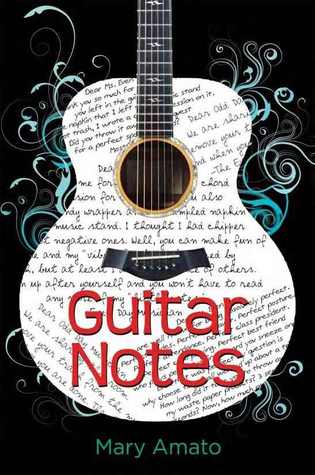
Mary Amato (2012)
Genre
Young Adult / Romance
Reading Time
270 min
Key Themes
See below
Sign in to track this book
A shy high school guitarist and a well-known but unhappy cellist find common ground and self-discovery when they have to share a practice room, changing how they see music, fame, and first love.
Tripp, a guitarist who taught himself and prefers to play alone, finds his usual practice room at school is double-booked. The new person using it is Lyla, a very talented and nationally known cellist. Their first meeting is awkward because of their different personalities and musical styles. Tripp is annoyed by Lyla and her classical music, and Lyla finds Tripp's rock music distracting. Both want to protect their practice time and space, creating tension between them. Despite their first resistance, the school's few rooms mean they have to share, setting up their unexpected interactions.
Tripp and Lyla try to manage their shared practice room, leading to several arguments. Tripp, who plays by ear, is annoyed by Lyla's careful classical practice, which involves scales and exact repetition. Lyla, in turn, is bothered by Tripp's loud electric guitar and his seemingly unplanned way of playing. They often practice at the same time, making a loud noise neither enjoys. Their talks are short and often have sarcasm or defensiveness. Tripp first sees Lyla as a snobby classical musician, while Lyla sees Tripp as messy and rough. These first interactions show their deep differences and their unwillingness to agree, making their first impressions stronger.
Annoyed by their inability to talk, Tripp starts leaving notes on the practice room wall for Lyla. At first, these notes are complaints or sarcastic remarks about their shared space and music. Lyla, after some thought, starts to reply in writing. This anonymous communication lets them express thoughts and feelings they would not say face-to-face. Tripp shares his struggles with songwriting and wanting his music to be heard. Lyla reveals her worries about her cello career and the big pressure she gets from her parents and teachers. The wall becomes a safe place for them to be open, slowly breaking down the walls between them.
As the notes continue, Tripp learns about Lyla's strict practice schedule, her many competitions, and the weight of her parents' expectations for her to go to a top music school. He starts to understand that her 'snobbiness' hides her intense pressure and unhappiness. Lyla, meanwhile, finds that Tripp is not just a loud rock player but a thoughtful songwriter who puts his heart into his original songs. She begins to like the raw emotion in his music, even if it is not her preferred style. These discoveries, though still indirect, create a growing sense of understanding and interest between them, challenging their first judgments and suggesting a deeper connection.
One day, Lyla is truly moved by a song Tripp is playing on his guitar. She does not know it is a piece he wrote about his feelings for her, inspired by their notes. Later, Tripp finds himself humming one of Lyla's classical pieces, realizing its beauty. These moments mark a change. They start to unconsciously put parts of each other's music into their own playing. Tripp might try a more melodic line, while Lyla might try a more rhythmic beat. They also start leaving encouraging notes for each other, moving past complaints to real support and shared musical ideas. This time shows a shift from just sharing space to a growing mutual respect and liking for their different talents.
The indirect communication eventually leads to a hesitant, but real, verbal conversation. Tripp and Lyla finally speak openly, talking about their dreams, fears, and how music fits into their lives. Lyla admits the huge pressure she feels and her growing doubts about a classical career that does not truly make her happy. Tripp shares his struggles with finding his voice as a songwriter and wanting to play music that truly connects with people. This conversation strengthens their bond, moving their relationship beyond the practice room wall. They realize they both love music, but in different, yet similar, ways, and that they both feel alone.
As their friendship grows, Tripp and Lyla spend more time together, both in and out of the practice room. They find shared interests beyond music and genuinely enjoy being together. Their conversations become more personal. They start talking about mixing their musical styles, with Tripp suggesting Lyla could play cello over some of his original songs. Lyla, at first unsure about trying something outside her classical comfort zone, finds herself interested. This time is marked by their mutual encouragement and the gradual breaking down of their individual musical limits, moving toward a possible creative partnership that excites them both.
Tripp, inspired by Lyla and their growing connection, writes a new song that he feels perfectly combines their musical feelings. He nervously asks Lyla to perform it with him at a school music show. Lyla, despite her worries about performing non-classical music in public and her parents' possible disapproval, agrees. This decision is a big step for Lyla, showing she is willing to take a risk and try a different path in her music. For Tripp, it is a chance to share his personal music with an audience, something he has always been hesitant to do, and to do it with someone he has come to deeply respect.
Before the performance, both Tripp and Lyla are very nervous. Lyla worries about her parents' reaction and what her classical peers will think, while Tripp is nervous about showing his personal, original music to a public audience. They support each other, strengthening their bond. They practice hard, finding a natural connection between their guitar and cello. During this time, they share more personal details about their lives and goals, making their emotional connection stronger. The shared experience of getting ready for this unique performance strengthens their friendship and suggests a deeper romantic possibility, as they realize how much they rely on each other.
Tripp and Lyla go on stage at the school show, performing Tripp's original song with Lyla's cello. The performance is a big success, met with applause from the audience, including Lyla's parents, who, to her surprise, are clearly moved. The experience frees Lyla, who realizes the joy of making music for herself, not just for outside approval. For Tripp, it is a win of self-expression and connection. The performance marks an important moment for both, showing their growth and the mixing of their musical worlds. They end the book with hope for their future, both as musicians and as friends, suggesting a possible romance and more collaborations.
The Protagonist
Tripp evolves from a solitary, self-conscious musician to a confident performer who embraces collaboration and shares his art with others.
The Protagonist
Lyla transforms from a pressured classical musician to one who finds personal joy and creative freedom by exploring new musical avenues.
The Supporting
They gradually come to understand and appreciate Lyla's desire for a different musical path, showing pride in her non-classical performance.
The Supporting
Remains a consistent figure, facilitating the initial conflict and eventual collaboration through his role in resource allocation.
The Mentioned
A static character who serves as a minor source of encouragement for Tripp.
The Supporting
Serve as a backdrop of Lyla's former world, remaining largely unchanged while Lyla evolves.
Both Tripp and Lyla deal with their identities, especially their musical paths. Lyla struggles to balance her personal desires with her parents' expectations and the classical music world, questioning if her talent truly makes her happy. Tripp, on the other hand, wants to find his unique voice as a songwriter and overcome his fear of being vulnerable. Their journey together helps them let go of outside pressures and accept who they truly are, as musicians and individuals. Lyla's decision to perform Tripp's song is a key moment in her self-discovery, showing her new independence.
“Maybe music wasn't about being perfect. Maybe it was about being real.”
The novel shows how both direct and indirect communication create connections. At first, Tripp and Lyla struggle to talk, leading to misunderstandings. Their use of notes on the practice room wall is an important part of the plot, letting them express vulnerabilities and fears they could not say face-to-face. This indirect communication slowly builds a bridge between them, eventually leading to real conversations and a deep, understanding bond. The story shows how finding the right way to communicate can help people connect deeply, overcoming initial barriers.
“The wall was a safe place for words, a place where they could be themselves without having to look each other in the eye.”
The book explores different ideas about music: Tripp's raw, unplanned, and emotional songwriting versus Lyla's technically perfect, structured, and traditional classical performance. It challenges the idea that one form is better than the other. Instead, it supports mixing styles and the importance of personal expression. Both characters learn to appreciate the beauty and value in each other's artistic ways. The eventual collaboration between the electric guitar and the cello shows the harmonious mixing of different creative worlds, highlighting that true art comes from the heart and real connection.
“He played for the feeling, not for the notes.”
A main theme is the difference between pursuing music because of outside pressure and pursuing it because of true passion. Lyla shows the former, burdened by her parents' expectations and the demands of the classical world, which has taken away her joy for the cello. Tripp, conversely, plays purely out of passion, though he lacks the confidence to share it. Their growing relationship helps Lyla find her inner love for music again and helps Tripp embrace his passion publicly. The novel suggests that true satisfaction in art comes from an inner drive rather than outside approval.
“She was supposed to love it. But lately, the cello felt more like a job than a joy.”
A confined space that forces interaction and serves as a symbolic crucible.
The shared practice room is the central setting and a key plot device. It initially acts as a source of conflict, forcing Tripp and Lyla, two very different individuals, into close proximity. Its confined nature necessitates interaction, first through music, then through notes, and finally through direct conversation. Symbolically, it represents a crucible where their individual worlds collide and eventually merge. As their relationship evolves, the room transforms from a place of tension into a safe haven for vulnerability, collaboration, and the development of their friendship and musical synergy.
An indirect communication method that fosters vulnerability and connection.
The handwritten notes Tripp and Lyla leave for each other on the practice room wall serve as a crucial plot device. Initially, they are sarcastic complaints, but they quickly evolve into a confessional space where both characters reveal their innermost thoughts, fears, and dreams that they are too shy or guarded to express verbally. This anonymity allows for a deeper level of vulnerability and understanding to develop between them, bypassing their initial judgments and defenses. The notes are instrumental in building their emotional connection and laying the groundwork for their eventual direct communication and collaboration.
The juxtaposition of classical cello and rock guitar as a metaphor for differing personalities.
The stark contrast between Lyla's highly structured, classical cello music and Tripp's improvisational, emotionally raw rock guitar music is a central plot device. It immediately establishes their differing personalities, backgrounds, and approaches to life. This musical dichotomy serves as a metaphor for their initial inability to understand or appreciate each other. As the story progresses, their gradual appreciation and eventual blending of these styles symbolize their personal growth, their overcoming of prejudice, and the harmonious integration of their individual strengths into a unified, richer whole.
A climactic event that symbolizes character growth and the merging of their worlds.
The final performance at the school showcase, where Tripp and Lyla play an original song together, is a significant plot device. It acts as the climax of their individual and shared journeys. For Tripp, it's a moment of courage and self-expression, finally sharing his personal music publicly. For Lyla, it's a declaration of independence, choosing a musical path that brings her joy over one dictated by others. The performance symbolizes the successful culmination of their collaboration, the merging of their musical worlds, and the public affirmation of their unique bond. It signifies their growth and the hopeful beginning of their future together.
“The thing about music is that it's all about emotion. And sometimes, the emotions are messy.”
— Main character Lyla reflecting on her songwriting.
“You can't just wait for inspiration. You have to go out and catch it.”
— Lyla's internal monologue about overcoming creative blocks.
“Sometimes the best songs come from the worst feelings.”
— Lyla discussing how her sadness fuels her music.
“A guitar isn't just wood and strings. It's a voice.”
— Lyla's deep connection to her instrument.
“It's hard to be brave when you're afraid of what might happen if you really try.”
— Lyla's fear of failure in her music career.
“Love isn't a song you write once. It's a melody you keep playing, changing, and improving.”
— Lyla's realization about the nature of her feelings for Brad.
“Every note you play, every word you sing, it's a piece of you out there.”
— Lyla on the personal nature of performing.
“He didn't just hear my music; he *listened* to it.”
— Lyla's appreciation for Brad's attentiveness.
“Sometimes the hardest part isn't starting, it's finishing.”
— Lyla struggling to complete a song.
“Being a musician isn't about being perfect. It's about being real.”
— Lyla's evolving understanding of artistry.
“The best kind of rhythm is when two hearts beat together.”
— Lyla's romantic thoughts about Brad.
“You can't hide behind your music forever. Eventually, you have to step out.”
— Lyla realizing she needs to confront her feelings and fears.
“A good song isn't just about the words or the chords, it's about the space in between.”
— Lyla's nuanced perspective on songwriting.
“Sometimes the quietest moments are the ones that make the loudest music in your heart.”
— Lyla reflecting on significant personal experiences.
Ready to see how well you understood this book? Take our interactive quiz with 10 questions.