“I was an animator, for Christ's sake, not a trained killer.”
— Anita Blake reflecting on her past profession vs. her current one as a vampire executioner.

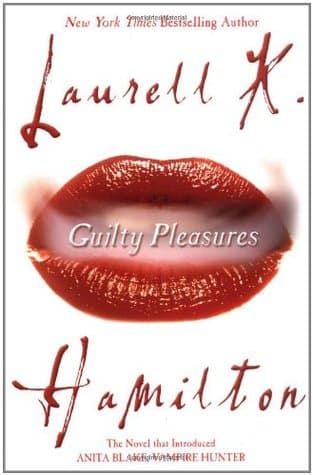
Laurell K. Hamilton (1993)
Genre
Fantasy / Mystery / Romance
Reading Time
7-8 hours
Key Themes
See below
Sign in to track this book
In a St. Louis overrun by the undead, necromancer Anita Blake hunts a serial killer for the city's most powerful vampire, battling her forbidden desire for the creatures she's sworn to destroy.
Anita Blake, an animated corpse re-animator and licensed vampire executioner for the Regional Preternatural Investigation (RPI), receives contact from a representative of Nikolaos, the Master Vampire of St. Louis. Nikolaos demands her services to investigate brutal vampire murders, a task Anita initially resists due to her deep fear and hatred of vampires. She eventually agrees, mostly to prevent a potential vampire war and to protect innocent humans. Her first stop is to view the crime scene, where she observes the unique, ritualistic nature of the killings, indicating a serial killer targeting vampires specifically and draining them completely.
Anita's investigation leads her to the first victim, a vampire named Julian, who was under the dominion of Jean-Claude, a charismatic and powerful Master Vampire who owns a strip club called 'Guilty Pleasures.' Jean-Claude immediately tries to influence Anita, a move she fiercely resists. Despite her animosity, Anita acknowledges Jean-Claude's intelligence and potential usefulness. She interviews witnesses and examines Julian's living quarters, discovering a hidden cache of human blood, which is illegal for vampires to possess, complicating the case and raising questions about Julian's true activities and allegiances within the vampire community.
A second vampire is murdered, this time a female named Cassandra, also connected to Jean-Claude. The method of killing is identical to Julian's, solidifying the pattern of a serial killer. During her investigation, Anita discovers disturbing evidence of human sacrifice associated with the vampire victims, which is strictly forbidden by the vampire council and human law. This revelation suggests a deeper, more sinister plot than simple inter-vampire feuding. The sacrifices involve draining victims of blood and life force, indicating a ritualistic element that points towards ancient, forbidden vampire magic and a possible challenge to Nikolaos's authority.
To gather more information, Anita reluctantly seeks out the local werewolf pack, led by Richard Zeeman, hoping they might have heard whispers among the preternatural community. While she gains little direct information, the encounter highlights the intricate and often tense relationships between different supernatural factions. Later, Anita is visited by Edward, a notorious human assassin known as 'Death' who specializes in killing supernatural creatures. Edward warns her that she's entering dangerous territory and that the forces she's against are far more powerful and ancient than she realizes, hinting at a larger, organized threat to the established order.
Jean-Claude continues his relentless attempts to seduce and bind Anita to him, using both his charm and subtle magical influence. Anita resists fiercely, but her attraction to him grows, creating internal conflict. A third vampire, Phillip, is brutally murdered right outside 'Guilty Pleasures,' a clear challenge to Jean-Claude and Nikolaos. This public display of violence escalates the urgency of the investigation and puts Anita in greater danger. The ritualistic elements of the murder are more pronounced, suggesting growing confidence and power from the killer.
Through diligent investigation and piecing together clues, Anita realizes the killer is not just any vampire but a Harlequin, an ancient and powerful vampire assassin, often employed by Master Vampires or the Vampire Council for specific, often bloody, tasks. She learns that the Harlequin works for someone attempting to destabilize Nikolaos's rule and seize control of St. Louis. The murders are not random acts of violence but calculated moves in a power play, designed to weaken Nikolaos's network and intimidate his allies. The Harlequin uses a specific, ritualistic dagger and ancient magic in the killings.
Anita presents her findings to Nikolaos, accusing him of either being behind the attacks or knowing more than he let on. Nikolaos, a centuries-old Master Vampire, is initially dismissive and infuriated by Anita's audacity. However, under pressure, he reveals that the Harlequin works for a rival Master Vampire named Alejandro, who attempts to usurp Nikolaos's territory and influence. Nikolaos admits that the killings are part of an ancient ritual to drain power from his bloodline and weaken his hold on the city, making him vulnerable to Alejandro's takeover. This revelation places Anita directly in the middle of a vampire war.
Anita is lured into a trap by the Harlequin, who uses a human informant as bait. Cornered and outmatched, Anita faces certain death. However, Jean-Claude, having anticipated the danger or simply keeping a close watch on her, appears and intervenes, engaging the Harlequin in a brutal fight. Jean-Claude's actions save Anita's life, but he is severely injured. This incident further complicates Anita's feelings for Jean-Claude, as she witnesses his vulnerability and his willingness to protect her, despite their adversarial relationship. It also highlights the immense power of the Harlequin.
Knowing that the Harlequin will come for Jean-Claude next, Anita and a recovering Jean-Claude prepare for a final confrontation at 'Guilty Pleasures.' They fortify the club and gather allies, including some of Jean-Claude's loyal servants. The atmosphere is tense, as they anticipate an assault. Anita understands that this isn't just about solving murders anymore; it's about preventing a full-scale vampire war and protecting her city from a brutal takeover. She arms herself with stakes, guns, and her unique magical abilities, ready to face the ancient evil.
The Harlequin, accompanied by other vampires loyal to Alejandro, attacks 'Guilty Pleasures.' A fierce battle ensues, with Anita fighting alongside Jean-Claude. Anita uses her unique skills as a vampire executioner, combining her knowledge of vampire weaknesses with her magical abilities. She manages to wound the Harlequin, eventually driving him back. With the Harlequin defeated or neutralized, Alejandro's plan to usurp Nikolaos is thwarted. The remaining vampires loyal to Alejandro retreat, and the immediate threat to Nikolaos's rule and the city is averted, though the underlying power struggles remain.
After the battle, the immediate danger passes, but the city's supernatural landscape has changed. Nikolaos, while still Master of the City, has been weakened, and power dynamics are shifting. Anita's relationship with Jean-Claude has deepened and become more complex; the undeniable attraction between them has been cemented by their shared ordeal. While she still resists his advances and her own feelings, she acknowledges a new, uneasy alliance has formed. The events have forced Anita to confront her prejudices and the blurred lines between good and evil in the preternatural world.
The Protagonist
Anita begins as a fiercely independent vampire hater but is forced to confront her prejudices and her growing, undeniable attraction to Jean-Claude, leading her to question her black-and-white view of the supernatural world.
The Supporting/Love Interest
Jean-Claude starts as a purely manipulative figure but reveals a more protective and complex side through his interactions with Anita, showing that even a Master Vampire can have nuanced motives.
The Antagonist/Supporting
Nikolaos's authority is challenged and somewhat weakened throughout the story, forcing him to rely on others, including Anita, in ways he never would have before.
The Supporting
Edward remains largely static, serving as a consistent source of pragmatic advice and a reminder of the brutal realities of Anita's world.
The Supporting
Dolores remains a steadfast and mostly static character, providing a grounding force for Anita.
The Antagonist
The Harlequin serves as the primary physical antagonist, driving much of the conflict, and is ultimately defeated, but his actions reveal the deeper political machinations of the vampire world.
The Mentioned Antagonist
Alejandro's plot is thwarted, but he remains an unseen threat, suggesting ongoing political machinations in the vampire world.
The Supporting
Ronnie remains a loyal servant to Jean-Claude, showcasing the allure and danger of being tied to a Master Vampire.
Anita Blake starts the story with a deep hatred and fear of vampires, seeing them as evil. Her job as a vampire executioner reinforces this black-and-white view. However, as she works closely with Jean-Claude and other supernatural beings, she begins to see shades of gray. She learns that not all vampires are monsters, and even the 'good' ones can be dangerous. This theme appears when she reluctantly relies on Jean-Claude for help and when she sees his protective instincts, forcing her to confront her own biases and the complexities of the preternatural world. It challenges the reader to look beyond surface appearances.
“I was the law, and I was the executioner. And I was very good at my job. But I was beginning to realize that the lines between good and evil, between human and monster, were not as clear-cut as I had always believed.”
The novel explores themes of power and control, especially within the vampire hierarchy. Nikolaos's struggle to maintain his dominion over St. Louis against Alejandro's challenge, and Jean-Claude's constant attempts to influence Anita, are central to the plot. Power is shown through physical strength, ancient magic, political maneuvering, and even seduction. Anita, despite her physical size, holds significant power through her legal authority as an executioner and her unique magical abilities, constantly resisting attempts to be controlled. The entire conflict centers on who holds power in the city's supernatural underworld.
“Master of the City. The title vibrated with power, with ancient terrors and forbidden desires. And someone was trying to take it from Nikolaos.”
A central theme is the intense, forbidden attraction that develops between Anita and Jean-Claude. Anita is sworn to kill vampires and despises them, yet she feels drawn to Jean-Claude's charisma and power. This internal conflict creates significant tension and emotional depth. The attraction is dangerous, as Jean-Claude's desire for her is predatory, but it also hints at a deeper connection. This theme explores the blurring of lines between predator and prey, and the compelling nature of dark desires that challenge one's core beliefs, ultimately forcing Anita to confront her own sexuality and vulnerability.
“He was everything I hated, everything I was sworn to destroy. And I wanted him. God help me, I wanted him.”
The book constantly asks what it means to be human and what makes a monster. Anita, a human, kills monsters, yet she often acts with violence and cold pragmatism that blurs her own humanity. Vampires like Jean-Claude, while monstrous, show moments of protective behavior and complex emotions, challenging Anita's simple categorization. The human characters who willingly serve vampires, like Ronnie, also complicate this theme, suggesting that the lines between victim and willing participant are often blurred. The novel suggests that monstrosity is not solely defined by species but by actions and intent.
“I was human, and I killed monsters. But sometimes, when I looked at my own hands, I wondered if the monster wasn't looking back at me.”
Anita's unique dual professions drive the plot and her perspective.
Anita's roles as a re-animator of the dead and a licensed vampire executioner are central to the plot. Her ability to raise the dead provides her with a unique perspective on death and the supernatural, while her executioner license gives her legal authority and a reason to interact with the vampire community. These professions not only define her character but also provide the framework for the mystery, as her skills are specifically required to investigate the vampire murders and navigate the preternatural legal system. They constantly put her in conflict with the very creatures she must work with.
The established vampire political structure dictates much of the conflict and character interactions.
The existence of a strict vampire council and a clear hierarchy (Master Vampires, their servants, etc.) serves as a crucial plot device. This structure provides the political backdrop for the murders, as they are not random acts but calculated moves within a power struggle. It explains why Nikolaos needs Anita, a human executioner, to maintain order without starting a full-blown vampire war. The rules and traditions of this hierarchy dictate character motivations, alliances, and the consequences of breaking vampire law, driving the central conflict between Nikolaos and Alejandro.
The ancient vampire assassin whose actions propel the main conflict.
The Harlequin functions as a primary catalyst for the plot. His methodical, ritualistic murders of Nikolaos's vampires directly trigger Anita's involvement and escalate the stakes of the investigation. The Harlequin is not just a killer but a symbol of the ancient, darker side of vampire politics and magic. His actions force the various factions – Nikolaos, Jean-Claude, and even Anita – to react, form uneasy alliances, and confront the underlying power struggles in St. Louis. His very existence reveals the depth of the conspiracy against Nikolaos.
The powerful, dangerous romantic tension between Anita and Jean-Claude.
The intense and forbidden attraction between Anita and Jean-Claude serves as a significant internal and external plot device. It complicates Anita's mission, challenges her prejudices, and creates a constant source of tension and vulnerability for her. Jean-Claude's attempts to seduce and claim her are integral to his character and his strategic goals. This attraction is not just romance; it's a power play, a psychological battle, and a constant threat that forces Anita to grow and question her own boundaries, making her journey more complex than a simple mystery solver.
“I was an animator, for Christ's sake, not a trained killer.”
— Anita Blake reflecting on her past profession vs. her current one as a vampire executioner.
“The problem with being a necromancer was that you were always in demand for the wrong reasons.”
— Anita musing about the constant requests for her services, usually involving raising the dead.
“Never trust a vampire who smiles too much. It means they're either very old, very powerful, or very hungry.”
— Anita's internal monologue about the deceptive nature of some vampires.
“Sometimes the monsters are the ones you least expect.”
— A general observation Anita makes about the true nature of evil, not always confined to supernatural beings.
“I didn't like being touched, not by strangers, not by anyone, unless I initiated it.”
— Anita's strong personal boundary regarding physical contact, highlighting her guarded nature.
“Guilty pleasures. We all have them. Mine just happen to involve a lot of blood and the occasional zombie.”
— Anita's sarcastic reflection on the title of the book and her unusual job.
“Being a vampire executioner wasn't glamorous. It was messy, dangerous, and usually involved a lot of paperwork.”
— Anita dispelling any romantic notions about her job.
“The dead don't lie, but they don't always tell you what you want to hear either.”
— Anita's experience with raising the dead for information, highlighting the limitations.
“Power corrupts. Absolute power corrupts absolutely. And supernatural power corrupts with a flair.”
— Anita's cynical view on the effects of power, especially on supernatural beings.
“I wasn't afraid of death. I was afraid of dying badly.”
— Anita's personal fear, focusing on the manner of death rather than death itself.
“Sometimes the best way to deal with a monster is to become a bigger one.”
— Anita's pragmatic, often brutal, approach to confronting threats.
“There's a difference between being brave and being stupid. I try to walk the line, usually with varying degrees of success.”
— Anita's self-assessment of her risk-taking tendencies.
“My life was a series of bad decisions and worse consequences, spiced with the occasional moment of pure, unadulterated terror.”
— Anita's darkly humorous summary of her existence.
“Even the most monstrous of us have a past, and sometimes that past is more tragic than evil.”
— Anita reflecting on the complex motivations behind some of the creatures she encounters.
Ready to see how well you understood this book? Take our interactive quiz with 10 questions.

Biography coming soon.







