“The wind was a constant companion, a sculptor of the land and the people.”
— Describing the ever-present elemental force in the Basque Country.

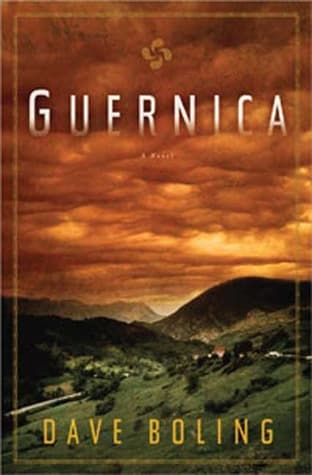
Dave Boling (2008)
Genre
Literary Fiction / Historical Fiction
Reading Time
750 min
Key Themes
See below
Sign in to track this book
In 1930s Guernica, a mysterious man and a dancer fall in love, their bond tested by the Spanish Civil War and the town's devastating bombing.
In 1935, Miguel Navarro, a young man from the Basque fishing village of Lekeitio, must leave after a clash with the Spanish Civil Guard. He arrives in Guernica, the center of Basque culture, seeking a fresh start. He finds work and begins to join the community. At a local festival, he meets Miren Ansotegui, a dancer. Despite her many admirers, Miren is drawn to Miguel's quiet strength. Their connection is immediate, starting a deep romance as the Spanish Civil War tensions rise.
Miguel and Miren's love grows as Spain becomes more politically unstable. They spend their days exploring Guernica, sharing stories, and dancing. Miren introduces Miguel to her family, including her mother, Amaia, and her younger brother, Joseba. Miguel finds a sense of belonging he never had before. However, the Spanish Civil War casts a longer shadow each day, with news of battles and political divisions reaching even the Basque Country. Their happiness is tied to growing worry about their homeland's future.
As the Spanish Civil War continues, Guernica, an open town, initially believes itself safe. The Basque people, fiercely independent, try to stay neutral, but Franco's Nationalist forces view the region with suspicion. Miguel and Miren marry and start a family. Miren becomes pregnant, bringing hope and joy amid the growing darkness. But the town becomes a refuge for those fleeing fighting, and the sounds of distant bombs and the sight of refugees begin to lessen Guernica's sense of security.
It is Monday, April 26, 1937, a market day in Guernica. The town is busy with people from nearby villages trading goods and hearing news. Miren, heavily pregnant, is home, while Miguel is out. The mood is a mix of everyday life and tension, as rumors of bombings elsewhere in Spain are common. Many people, including women and children, are outside, making the town vulnerable. This ordinary day is about to be shattered by an act of war.
In the afternoon, the quiet of Guernica breaks with the roar of German Luftwaffe planes. A systematic bombing begins. Incendiary bombs fall, setting buildings on fire and trapping civilians. Miguel, caught outside, sees the horror, trying to find shelter. The attack is prolonged, designed to cause maximum destruction and fear, turning the market town into an inferno of chaos and death.
As the bombing stops, a scene of smoke, fire, and rubble remains. Miguel, disoriented but driven, begins a frantic search for Miren and her family. He walks through burning streets, stepping over debris and bodies, calling their names. The town is unrecognizable. He meets other survivors, some hurt, some in shock, all dealing with sudden loss. His journey is a harrowing trip into the destruction, each step filled with dread and hope to find his loved ones alive.
Immediately after, the full scale of the destruction becomes clear. Guernica is almost completely destroyed, its buildings reduced to smoldering ruins. Survivors, many injured and traumatized, emerge from shelters. Miguel finds Miren, alive but severely injured and in premature labor. The Ansotegui family home is destroyed, and the fate of other family members is unknown. The priority shifts from surviving the bombing to surviving its aftermath: finding medical aid, food, and shelter amidst the desolation, and accepting the immense loss.
Amidst the chaos, Miren goes into labor. With Miguel's help, she gives birth to their child in the bombed town. However, the trauma of the bombing, Miren's injuries, and the harsh environment are too much for the newborn. Their baby, a symbol of their future, does not survive. This loss adds more grief to Miguel and Miren's suffering, making the tragedy of Guernica a part of their personal story and strengthening their will to endure.
With Guernica destroyed and Nationalist forces advancing, the surviving Basques must flee. Miguel, Miren, and the remaining Ansotegui family join the exodus, becoming refugees. They carry their few possessions and the scars of the bombing and their child's loss. Their journey is one of hardship and uncertainty, but also of strong determination to keep their Basque identity alive. They refuse to let the bombing end their spirit, holding onto hope and family strength as they seek a new beginning away from the devastation.
Years pass, and Miguel and Miren, with their surviving family, find a new home, though memories of Guernica never fade. They rebuild their lives, raise their children, and keep Basque traditions alive. The bombing of Guernica becomes a symbol of injustice and strength for them and for the entire Basque people. They commit to remembering what happened, sharing their story, and ensuring the world never forgets the atrocities. Their lasting love and community strength show the human spirit's ability to heal and last.
The Protagonist
From a solitary refugee, Miguel transforms into a steadfast husband and father, enduring immense loss yet remaining a pillar of strength for his family.
The Protagonist
Miren evolves from a spirited young woman into a symbol of resilience, carrying the trauma of loss but remaining a beacon of hope and cultural identity.
The Supporting
Amaia remains a steadfast guardian of family and tradition, her strength unwavering even after profound loss.
The Supporting
Joseba's innocence is brutally stripped away by war, forcing him to grow up quickly and carry the weight of memory.
The Supporting
Father Eusebio maintains his role as a spiritual leader, providing unwavering guidance and comfort amidst profound desolation.
The Antagonist
Serves as an ever-present symbol of external oppression that eventually leads to broader conflict.
The Antagonist
Their actions trigger the central catastrophe of the novel, forever altering the lives of the characters and the course of history.
Despite immense loss, the characters, especially Miguel and Miren, show a strong ability to endure and rebuild. The bombing aims to break the Basque spirit, but instead, it strengthens their resolve. This is seen in Miguel's search for Miren, Miren's strength during childbirth, and the family's efforts to rebuild their lives and culture. Their refusal to give up, even after losing their child and home, points to a human drive for survival and hope.
“They had tried to bomb the heart out of them, but the heart of the Basque people beat on, stronger than ever.”
At the story's heart is the deep love between Miguel and Miren, and the strong bonds of the Ansotegui family. This love provides comfort, strength, and motivation during war and personal tragedy. Miguel's move to Guernica is changed by his love for Miren, giving him purpose. During the bombing, his main goal is to find and protect her. The family's shared grief over their lost child and their commitment to each other help them through exile and rebuilding. Their relationships reflect the larger Basque community's collective strength.
“In the chaos, there was only Miren. She was his anchor, his reason, his world.”
The novel shows the Basque people's fierce pride in their language, traditions, and self-rule. Guernica, as the spiritual center of the Basque Country, represents this identity. The bombing is not just a physical attack but an assault on their soul. Characters like Amaia embody adherence to tradition. After the attack, the survivors' efforts to keep their language, customs, and the memory of Guernica alive are acts of resistance against cultural destruction. The story emphasizes that bombs cannot destroy true identity.
“They could burn the buildings, but they could not burn the language, the songs, the very soul of the Euskaldunak.”
The novel clearly shows modern warfare's impact on civilians, through its detailed depiction of the Guernica bombing. It reveals the random nature of air attacks and the psychological harm they cause. Miguel, Miren, and the town's suffering illustrates war's reality beyond the battlefield—the loss of homes, lives, and peace. The bombing is presented as a crime against humanity, a strong statement against conflict's brutality and a preview of World War II's horrors.
“The sky had opened up not with rain, but with fire and iron, turning a Monday market into an inferno.”
Hints of impending doom woven into the peaceful early narrative.
Boling subtly introduces elements that hint at the coming tragedy. The rising political tensions in Spain, the increasing number of refugees passing through Guernica, and the distant sounds of war all serve to create a growing sense of unease. These early warnings contrast sharply with the idyllic life Miguel and Miren are building, making the eventual bombing even more shocking and devastating. The peaceful market day itself, bustling with life, foreshadows the horrific irony of its destruction.
The town represents the heart of Basque culture and resilience.
Guernica itself is a powerful symbol in the novel. Before the bombing, it represents the vibrant heart of Basque culture, tradition, and democratic values – a peaceful, undefended town. Its destruction by the German Luftwaffe symbolizes the brutal assault on innocence, cultural identity, and the advent of total war. In the aftermath, the ruins and the memory of Guernica become a symbol of Basque resilience, a testament to their enduring spirit despite unimaginable loss, and a global emblem against crimes against humanity.
Contrasting scenes of peace and war to amplify emotional impact.
The novel frequently employs juxtaposition to heighten emotional intensity. The serene and picturesque descriptions of Guernica's market day, the blossoming love between Miguel and Miren, and the everyday rhythms of Basque life are starkly contrasted with the sudden, horrific violence of the bombing. This technique emphasizes the fragility of peace and the profound shock of the attack. The personal joys and hopes of the characters are set against the backdrop of an encroaching, impersonal war, making their losses all the more poignant.
Focuses on the internal experiences of Miguel and Miren.
The story is primarily told from a limited third-person perspective, largely following Miguel and Miren. This allows readers deep insight into their thoughts, fears, and emotions, fostering strong empathy. By focusing on their personal experiences, the immense historical event of the Guernica bombing becomes intimately humanized. We witness the horror and aftermath through their eyes, making the tragedy more immediate and impactful, rather than a detached historical account. This POV underscores the personal cost of war.
“The wind was a constant companion, a sculptor of the land and the people.”
— Describing the ever-present elemental force in the Basque Country.
“Memory, like the mountains, could be both a comfort and a burden.”
— Reflecting on the weight of history and personal experience.
“To be Basque was to carry a story, whispered from one generation to the next, of resilience and survival.”
— Defining the core identity and heritage of the Basque people.
“Sometimes, the only way to hold onto what you loved was to let it go.”
— A poignant realization about loss and acceptance.
“The world had a way of shrinking when you were staring at the end of it.”
— A character's perspective during a moment of extreme danger.
“Hope was a fragile thing, easily crushed, but even more easily rekindled by a shared glance, a helping hand.”
— Exploring the enduring nature of hope amidst despair.
“The language itself was a fortress, protecting their heritage, their very souls.”
— Emphasizing the importance of the Euskara language to Basque identity.
“There was a rhythm to life, even in chaos, if you listened closely enough.”
— Finding a sense of order or endurance amidst the turmoil of war.
“The bombs didn't just destroy buildings; they tore holes in the fabric of who they were.”
— Reflecting on the psychological and cultural impact of the bombing of Guernica.
“Art, like memory, could be a weapon, a testament, a scream against the silence.”
— Considering the power of artistic expression in response to atrocity.
“They were not just survivors; they were the keepers of the flame, the storytellers.”
— Highlighting the role of the remaining Basques in preserving their history.
“Grief was a shadow that lengthened with the setting sun, but even shadows eventually faded.”
— A contemplation on the process of mourning and healing.
“The world might forget, but the stones of Guernica would always remember.”
— Asserting the enduring physical and historical memory of the town.
“It was not courage born of recklessness, but of necessity, of a love for what remained.”
— Defining the type of bravery shown by the characters during wartime.
Ready to see how well you understood this book? Take our interactive quiz with 10 questions.







