“Man's life is a short, hard, and painful journey, but it is also a beautiful and wondrous one.”
— General reflection on life's duality.

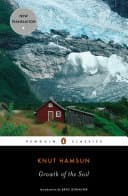
Knut Hamsun (2007)
Genre
Thriller / Mystery
Reading Time
10-15 hours (estimated for an average reader, given the novel's length and depth)
Key Themes
See below
Sign in to track this book
In the wild beauty of Norway, a lone pioneer builds a life from the soil, battling nature and his own isolation.
Isak, a strong, solitary man, goes deep into the Norwegian wilderness, looking for a place to settle and farm. He starts by clearing a small patch of forest, building a simple hut, and taming the wild soil with his hands and basic tools. His life is constant work, following nature's rhythm and the seasons. He cuts down trees, plants potatoes, and slowly turns the raw land into a productive farm. His only companions are the animals he gets and the silent landscape, as he endures harsh winters and the physical demands of pioneering, driven by a desire to create.
After some time, Inger arrives in the wilderness, drawn to Isak's isolated home. She has a harelip, which has made her an outsider. Isak accepts her, and they form a partnership based on shared work and respect. Inger is strong and capable, working with Isak to expand the farm. They have two sons, Eleseus and Sivert, and their family grows, making their presence in the wilderness stronger. Their home, now called Sellanraa, shows their perseverance and their bond with the land.
Inger gives birth to a third child, a daughter, also with a harelip. Overcome by fear, shame, and a wish to spare her child the life of an outcast, Inger makes a tragic choice. She smothers the baby, believing it is an act of mercy. The crime is found out, largely because of Oline, a gossiping wanderer who sometimes works at Sellanraa. Inger is arrested and taken away, leaving Isak to care for their young sons and manage the farm alone. This is a time of great sadness and upheaval for the family.
With Inger imprisoned, Isak faces the challenge of keeping Sellanraa going and raising Eleseus and Sivert alone. He handles the solitude with his usual quiet strength, finding comfort and purpose in his tireless work. He continues to clear land, plant crops, and care for his animals, ensuring the farm's survival. The boys grow up under his care, learning hard work and self-sufficiency from their father. This time shows Isak's strong connection to the soil and his quiet strength in hardship, proving his commitment to his home and family.
After her sentence, Inger returns to Sellanraa, changed but strong. Her harelip has been fixed during her time away. The family is reunited, and life on the farm slowly returns to normal. Inger takes up her important role in the home and on the land. With the boys older and more capable, Sellanraa enters a time of more growth. New buildings go up, more land is farmed, and the family's place in the community, though still isolated, begins to solidify, showing the power of their combined efforts.
Geissler, the shrewd bailiff, becomes a regular part of the Sellanraa family's lives. He sees Isak's hard work and his land's potential. Geissler advises Isak on legal matters, land purchases, and even helps financially. He represents the coming modern world and its systems, offering chances for expansion and joining a larger society. His influence helps Isak get more land, including the valuable 'outer fields,' and encourages the family's gradual shift from pure self-sufficiency to more organized trade and community involvement.
Eleseus, the older son, struggles with the hard, simple life at Sellanraa. He likes books, education, and the appeal of town life. He finds farm work boring and lacks his father's deep bond with the soil. Despite Isak's hopes that he would inherit the farm, Eleseus feels drawn to a different future. He leaves Sellanraa to seek his fortune in town, looking for intellectual pursuits and city opportunities. This marks the first major break from the family's self-contained world and a clash between old and new desires.
In contrast to his brother, Sivert embodies the spirit of Sellanraa. He is strong, practical, and deeply dedicated to the land and his family. He works tirelessly with Isak, learning farming and showing a natural talent for the physical demands of their life. Sivert is happy with his life and feels a deep bond with the soil, like his father. He becomes Isak's right-hand man and the clear heir to the homestead, representing the lasting legacy of their pioneering spirit and the continuation of their way of life.
A new family, the Stroms, settles near Sellanraa, starting their own farm. Axel Strom is a hardworking man, initially a welcome addition to the small community. However, his sister, Barbro, causes problems. She is beautiful, flirty, and ambitious, showing a more worldly view than the Sellanraa family. Barbro's presence brings jealousy, gossip, and moral uncertainty into the simple lives of the homesteaders, especially affecting the young men, including Sivert, and creating tension within the small, growing community.
Geissler, always looking for opportunity, finds copper on Isak's land. This leads to mining operations, bringing many new people, activity, and wealth to the remote area. Isak, despite not wanting to disturb the land at first, benefits financially, further increasing Sellanraa's prosperity. But the mining also brings noise, pollution, and a temporary population, changing the quiet, farming life Isak had built. It represents industry's full reach into their wild land, bringing both progress and a sense of loss.
Eleseus's efforts in town fail. He struggles with various jobs, lacks practical skills for city life, and gets into debt. The intellectual pursuits he once wanted do not bring him satisfaction or stability. Disappointed and defeated by the modern world, he eventually returns to Sellanraa, a shadow of his former ambitious self. His return shows the clear difference between the land's stability and the uncertainty of city life, serving as a warning about leaving one's roots and the simple, lasting values of the soil.
As Isak grows old, he continues to oversee Sellanraa, a symbol of his life's work. He sees the changes from modernization, people coming and going, and his children's changing ambitions. Despite new roads, mining, and outside influences, Isak remains firm in his connection to the land, embodying the timeless values of simplicity, hard work, and self-sufficiency. Sivert, married with his own children, takes over managing the farm, ensuring Isak's legacy continues, representing the lasting power of the soil and life's cycle.
The Protagonist
Isak begins as a solitary pioneer and evolves into the patriarch of a thriving homestead, embodying the enduring power of the land despite the encroachment of modernity.
The Supporting
Inger transforms from an outcast finding acceptance to a woman who commits a tragic act, endures punishment, and returns to her family, symbolizing resilience and the complexities of human nature.
The Supporting
Eleseus leaves the farm seeking an intellectual life, fails to find success in the modern world, and returns disillusioned, representing the clash between tradition and progress.
The Supporting
Sivert embraces the farming life from childhood, growing into a capable and loyal successor who carries on his father's legacy.
The Supporting
Geissler remains a consistent, guiding presence, facilitating Isak's prosperity and connecting Sellanraa to the wider world without undergoing significant personal change.
The Supporting
Oline remains a static character, consistently embodying gossip and disruption throughout the narrative.
The Supporting
Barbro's initial allure and ambition lead to complications, but she eventually settles into a more conventional life, though not without leaving a mark on those around her.
The Supporting
Axel attempts to establish his own homestead and, despite some setbacks, eventually finds his place in the developing community.
This theme is key to the novel, showing the deep, almost spiritual, connection between people and the land. Isak's life is defined by his struggle with nature and his eventual success, turning wild earth into a productive farm. The soil is more than a resource; it is living, a source of life, meaning, and moral purity. Scenes like Isak first clearing the land, his tireless potato planting, and his quiet joy watching crops grow show this theme. The land provides food, purpose, and belonging that no city can match, contrasting sharply with Eleseus's troubles in town.
“A tiller of the earth, a founder of a new kingdom, he was there. His kingdom was from the soil, and he was lord of it.”
The novel explores the tension between a basic, self-sufficient farm life and the coming forces of modern society. Isak and Sivert represent the values of simple living: hard work, self-reliance, and happiness with nature's gifts. In contrast, Eleseus shows the appeal and eventual failure of modern life, seeking education and city chances only to find failure and emptiness. Geissler's arrival, the start of mining, and road building all show the slow loss of wild land and traditional life, forcing characters to adapt or resist.
“He was a link in the great chain, with an eye to the future, with a root in the past.”
The strong spirit of the pioneer drives the novel. Isak, and later Inger, show this through their constant hard work, strength in harsh conditions, and firm commitment to building a life from nothing. Their ability to endure isolation, physical hardship, and personal tragedy (like Inger's imprisonment) without breaking shows their inner strength. The creation and growth of Sellanraa itself is a monument to this theme, showing how perseverance and a deep desire to create can turn barren land into a thriving community.
“And he was a man such as is needed in the world; a tiller of the soil, solid and good.”
The novel highlights the importance of family, not just for companionship but for ensuring continuity and a legacy on the land. Isak and Inger's children, especially Sivert, represent Sellanraa's future. The different paths of Eleseus and Sivert show different approaches to legacy: one seeks personal fulfillment away from the land, while the other takes on the responsibility of continuing the family's connection to the soil. The family's growth mirrors the farm's growth, both essential for the long-term survival and prosperity of their pioneering venture.
“They were of the soil, and to the soil they would return; but they would live on in their children and their children's children.”
The theme of justice is explored through Inger's act of killing her baby and her imprisonment. While she faces legal consequences, the novel also looks at the moral complexities of her action, driven by a misguided wish to protect her child from suffering. Isak's quiet acceptance and continued dedication to the land represent a form of natural justice, where life goes on despite human failings. The story often suggests that the land itself holds a kind of moral truth, rewarding honest labor and simple living, contrasting with the more complex and often unsatisfying results of human legal systems.
“The law was a thing for the town, for the people who lived there. Out here, there was another law.”
The celebration of a simple, agrarian life in harmony with nature.
This device imbues the narrative with a sense of peace and profound connection to the earth, contrasting the purity of nature with the complexities of human society. It manifests in descriptions of Isak's contentment in his labor, the beauty of the untouched wilderness, and the moral rectitude associated with working the land. The simple, cyclical rhythm of farm life is presented as inherently superior and more fulfilling than urban existence, creating a foundational romanticized view of the agrarian lifestyle. This idealism serves to highlight the intrinsic value of the soil and the pioneering spirit.
Characters who highlight the traits of others through contrast.
The most prominent example is the relationship between Eleseus and Sivert, Isak's sons. Eleseus, with his intellectual aspirations and urban failures, serves as a foil to Sivert, who embraces the practical, agrarian life and becomes a successful farmer. This contrast emphasizes the novel's central theme of the simple life versus modernity and the enduring value of connecting to the soil. Similarly, the worldly Geissler and the gossipy Oline act as foils to Isak's stoic, simple nature, highlighting his unwavering principles and the disruptive elements of the outside world.
A physical deformity symbolizing societal ostracization and vulnerability.
Inger's harelip is a powerful symbol of her initial status as an outcast and her vulnerability in society. It represents a physical mark that sets her apart and contributes to her desperate act of infanticide, driven by the fear of her child enduring similar suffering. Its surgical correction during her imprisonment symbolizes a degree of reintegration into society and a shedding of her past burdens, though the emotional scars remain. The harelip underscores themes of appearance, acceptance, and the harsh judgments of the world beyond Sellanraa.
The narrative unfolds as a series of distinct events and periods in the lives of the characters.
The novel progresses through a series of significant events and seasons rather than a tightly wound plot with a singular climax. Each 'episode' – Isak's arrival, Inger's appearance, the infanticide, the sons' growth, the arrival of mining – marks a new phase in the development of Sellanraa and its inhabitants. This structure mirrors the cyclical nature of agricultural life and the slow, steady growth of the homestead. It allows for a broad, generational scope, emphasizing the long-term impact of human endeavors on the land and the passage of time in the wilderness.
“Man's life is a short, hard, and painful journey, but it is also a beautiful and wondrous one.”
— General reflection on life's duality.
“The earth is a good mother, but she is also a demanding one.”
— Describing the challenges and rewards of farming.
“There are two kinds of people in the world: those who build, and those who destroy.”
— A philosophical observation on human nature.
“To be alone is to be free.”
— Insel's perspective on solitude.
“The greatest joy is to create something out of nothing.”
— Reflecting on the satisfaction of pioneering and building a home.
“Love is a strange thing. It can make you do things you never thought you'd do.”
— General observation on the power of love.
“The forest is a living thing. It breathes, it grows, it watches.”
— Describing the immersive and watchful nature of the wilderness.
“There is no greater peace than to work the land with your own hands.”
— Isak's deep connection to manual labor and the earth.
“Money is a good servant, but a bad master.”
— A common wisdom shared within the narrative regarding wealth.
“The world keeps turning, no matter what happens to us.”
— A stoic acceptance of life's continuity despite personal struggles.
“A man must stand on his own two feet.”
— A core tenet of self-reliance and independence in the harsh environment.
“Silence is often the best answer.”
— A reflection on the wisdom of restraint and observation.
“The strongest roots are those that grow in hard ground.”
— Metaphor for resilience forged through adversity.
“Every man has a right to his own patch of earth.”
— Underlying theme of land ownership and personal domain.
Ready to see how well you understood this book? Take our interactive quiz with 10 questions.
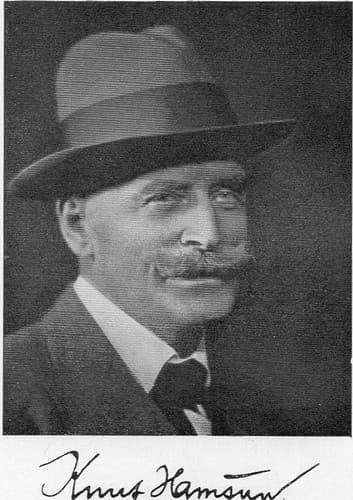
Knut Hamsun was a Norwegian writer who was awarded the Nobel Prize in Literature in 1920. Hamsun's work spans more than 70 years and shows variation with regard to consciousness, subject, perspective and environment. He published more than 20 novels, a collection of poetry, some short stories and plays, a travelogue, works of non-fiction and some essays.







