“Grief is a thing with feathers. A bird. A crow. A thing that flies in and out of your life.”
— The narrator's initial description of Grief personified as a crow.

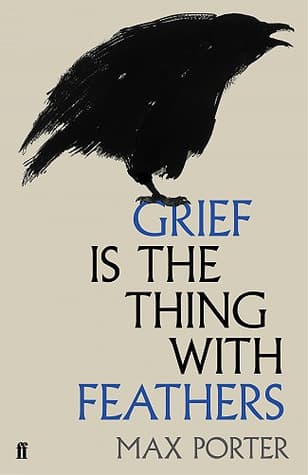
Max Porter (2015)
Genre
Literary Fiction / Fantasy
Reading Time
120 min
Key Themes
See below
Sign in to track this book
After their mother's death, two boys and their grieving father are visited by Crow, a crude, fish-eating trickster who becomes their unlikely therapist and a living symbol of grief.
A scholar and his two young sons deal with the sudden, accidental death of their mother. The father, focused on his academic work about Ted Hughes, is overwhelmed by the practicalities and emotional weight of his new life. In their raw grief, a large, sentient Crow appears in their London flat. This Crow, a chaotic and boisterous creature, announces it will stay with the family until they no longer need it. Its presence is both terrifying and comforting, a manifestation of their sorrow and a disruptive force that keeps them from falling into despair. The boys are wary but curious, while the father is initially confused and resistant to this strange intruder.
Crow's healing methods are unusual. It is loud, messy, and confrontational, often mimicking the mother's voice, challenging the father's intellectualized grief, and making the boys face their raw emotions. It eats their food, makes a mess, and invades their personal space, showing the disruptive nature of grief itself. Crow's presence is a constant, almost physical, reminder of their loss. Yet, it also offers a strange companionship and a focal point for their shared trauma. The father, though bothered by Crow, cannot dismiss it, recognizing a primal force at work.
The story often shifts to the father's thoughts, where he deals with overwhelming sadness, the daily tasks of raising two boys alone, and vivid, often painful, memories of his deceased wife. He thinks about their life together, her unique qualities, and the sudden void she left. His background in Ted Hughes and Sylvia Plath's poetry helps him understand his own grief, finding parallels in their artistic expressions of loss and despair. He struggles with guilt, regret, and the fear of forgetting his wife, while also navigating his sons' evolving grief.
The two young boys process their mother's death in different ways. The older boy becomes withdrawn and reflective, finding comfort in quiet activities and internalizing his sorrow. The younger boy, more openly expressive, sometimes acts out, showing his confusion and anger through bursts of energy or frustration. Crow acts as a strange guardian and provocateur for them, sometimes comforting, sometimes challenging, reflecting their changing emotional states. The father sees their struggles, often feeling helpless, but also witnessing their resilience and the unique bond they share in their loss.
Crow acts as both confidant and tormentor. It speaks directly to the father, offering brutal truths about grief and the inevitability of loss, often using crude language. It challenges the father's attempts to intellectualize or avoid his pain, making him face the raw reality of his situation. Yet, Crow also shows deep empathy and understanding, especially towards the boys. It recognizes their suffering and, in its own way, provides a sense of being seen and understood, even when its methods are jarring.
Memories of the mother are always present, both a source of pain and a lifeline. The father replays moments, both significant and everyday, struggling with the fear that these memories will fade or change. He tries to keep her alive through stories and shared recollections with his sons. Crow often interjects, sometimes mocking the sentimentality of memory, but also acknowledging its power. The boys, too, hold onto their own fragmented memories, which change as they grow and process their loss, shaping their understanding of who their mother was.
The story covers several months, showing the slow, non-linear process of grieving. The initial shock and acute pain gradually give way to a different kind of sorrow—a dull ache that becomes part of their daily lives. The father notices the subtle changes in his own and his sons' behaviors, the moments of fleeting joy that begin to reappear, and the gradual adjustment to a life without their mother. Crow's presence remains constant, but its intensity fluctuates, reflecting the changing nature of their grief. The family learns to live with the absence, even as it remains a profound part of their existence.
As the family slowly heals and adjusts, Crow occasionally hints at its eventual departure. It observes their progress, noting when they laugh again, find comfort in each other, or manage a day without being consumed by sorrow. Crow's purpose, it repeatedly states, is to stay until they no longer need it. Its comments suggest its own demeanor softens, recognizing its disruptive, healing work is almost done. The father, while still wary, also recognizes that Crow's presence, though painful, has been important for their survival.
The father and sons gradually establish new routines and rituals that help them navigate their changed lives. The father takes on both parental roles, learning to cook, manage household affairs, and attend to his sons' emotional needs. The boys find new ways to play and interact, finding comfort in their bond and in simple daily activities. While the mother's absence is always felt, they begin to build a new normal, a life that includes their loss rather than being defined solely by it. This adaptation marks a significant step in their healing, even as grief remains an undercurrent.
When the family reaches a point where they can function, laugh, and find moments of peace, Crow finally departs. Its departure is quiet, almost unnoticed, like the gradual fading of acute grief. The family is left with the lingering impact of Crow's chaotic, yet transformative, presence. They are changed by the experience, having faced their deepest sorrows and emerged, not unharmed, but with a renewed capacity for life. Crow leaves behind a void, but also a space for the family to continue their healing on their own terms, carrying their grief as a part of their lives, not an all-consuming force.
The Protagonist
He transforms from a man paralyzed by grief and intellectual detachment to one who begins to embrace the raw, messy reality of his loss and his new role as a single parent, learning to live with grief rather than be consumed by it.
The Antagonist/Healer/Trickster
Crow remains largely static in its nature but evolves in its interactions, becoming slightly less aggressive as the family heals, signifying its purpose is being fulfilled.
The Supporting
He learns to carry his grief internally while slowly re-engaging with the world and finding comfort in his brother and father.
The Supporting
He moves from overt expressions of pain and confusion to a more settled, though still present, understanding of his loss.
The Mentioned
Her memory evolves from a source of acute pain to a cherished, integrated part of the family's new reality.
The book explores grief as a messy, non-linear, and often irrational process. It shows grief not as a clean, stage-based journey, but as a chaotic, intrusive, and transformative force, personified by Crow. Grief is both destructive and, paradoxically, a way to new understanding and connection. The father's struggle to intellectualize his pain versus Crow's insistence on raw emotion highlights the many sides of loss, including anger, confusion, and deep sadness. The book suggests that grief is not something to overcome, but something to live with and integrate into one's life.
“Grief is the thing with feathers / That perches in the soul / And sings the tune without the words / And never stops at all.”
Love and memory are closely tied to grief. The family's deep love for the deceased mother fuels their sorrow, but also provides the lasting connection that sustains them. The father constantly revisits memories, both painful and comforting, fearing he will forget her. Remembering, sharing stories, and even seeing her traits in his sons, becomes a way of keeping her alive. The story suggests that love continues beyond death, appearing in the echoes of memory and the continuation of life through those left behind. Memory, while painful, is also a vital lifeline.
“He was a man who knew the value of a good memory, for he knew that without it, the past was nothing but a series of unconnected events.”
The book explores the challenges of single parenting immediately after a great loss. The father, a scholar, is suddenly faced with the everyday yet overwhelming tasks of childcare, cooking, and emotional support, all while dealing with his own grief. The story shows the tension between his personal sorrow and his responsibility to his sons, highlighting his struggles with guilt, inadequacy, and the desperate need to protect them. It portrays the resilience of children and the fierce, protective love of a parent, even when that parent feels broken. The boys' different needs also make the father adapt his approach.
“I will get better at this. I will. I have to.”
The surreal presence of Crow, a talking, sentient bird, adds an element of the absurd to the story. This absurdity reflects the illogical and overwhelming nature of sudden death and grief itself. The mix of the mundane (a London flat, everyday tasks) with the fantastical (a personified Crow) shows how life can become utterly strange and nonsensical when tragedy strikes. Crow's often crude humor and unconventional advice further emphasize this, suggesting that sometimes, the only way to cope with deep sorrow is to accept the inherent absurdity of existence.
“I am a crow, but I am also a poet. I am a monster, but I am also a healer. I am a trickster, but I am also a truth-teller.”
Grief is embodied as a physical, sentient, and disruptive character.
Crow serves as the central plot device, personifying the raw, messy, and often irrational nature of grief. Its physical presence in the family's home forces them to confront their sorrow directly. Crow's actions – its messiness, its crude language, its mimicry of the deceased mother – externalize the internal turmoil of the characters, making grief a tangible force they must interact with. This device allows for an exploration of grief that moves beyond abstract emotion into a dynamic, confrontational relationship, driving the narrative forward through its disruptive and ultimately therapeutic interventions.
The narrative alternates between the father's internal monologue and Crow's direct address.
The novel employs a polyphonic narrative structure, primarily shifting between the first-person perspective of the father and the first-person voice of Crow. This allows for a multifaceted exploration of grief: the father's intellectualized, poetic, and deeply personal struggle, contrasted with Crow's primal, chaotic, and universal commentary on loss. Occasionally, the 'boys' also contribute brief, fragmented thoughts, adding another layer. This device creates a rich, complex understanding of grief, showing its individual and collective impact, and highlighting the different ways characters process and express their pain.
The father's academic work on Ted Hughes' collection 'Crow' provides a meta-textual layer.
The father's profession as a Ted Hughes scholar, specifically on his 'Crow' poems, is a crucial literary allusion. It provides a meta-textual framework, where the fictional Crow directly parallels Hughes' mythical, dark, and often violent poetic figure. This device allows the novel to explore themes of grief, death, and the primal forces of nature through an established literary lens. It also highlights the father's struggle to reconcile his academic understanding of grief with his raw, personal experience, creating a tension between intellectualization and lived emotion. The allusion enriches the novel's thematic depth and provides a familiar, yet twisted, context for the fantastical element.
The deceased mother's absence is a powerful, driving force in the narrative.
While the mother is physically absent, her presence is profoundly felt throughout the entire novel. Her absence is not merely a void but an active, shaping force that dictates the characters' actions, thoughts, and emotional states. The father's memories, the boys' longing, and Crow's very existence are all reactions to this central absence. This device emphasizes how loss fundamentally alters the landscape of a family's life, making the 'missing' person the most significant character, driving the plot through the characters' attempts to cope with and eventually integrate this profound void into their new reality.
“Grief is a thing with feathers. A bird. A crow. A thing that flies in and out of your life.”
— The narrator's initial description of Grief personified as a crow.
“And the crow said, 'I am here to help you.' And the man said, 'I don't need help.' And the crow said, 'Oh yes you do.'”
— An early exchange between the widower and the Crow.
“He's not a pet, he's a responsibility. A symbol of what's happened.”
— One of the boys describing the Crow to his brother.
“A dad-shaped hole. A mum-shaped hole. Two boys, each with their own particular kind of emptiness.”
— Reflecting on the void left by the mother's death.
“You think you're going to be okay. You think you're going to get through this. But you're not. You're going to be broken.”
— The Crow's blunt assessment of the widower's future.
“Sometimes you just have to sit there and let the world do its thing. Let it be ugly. Let it be beautiful.”
— The widower's evolving perspective on life after loss.
“He was a man who loved his wife. He was a man who lost his wife. And the two things were inseparable.”
— Describing the widower's identity after his wife's death.
“The boys were good at being boys, which was a kind of grief in itself.”
— Observing how the children cope with their mother's absence.
“Grief is a house where the furniture has been rearranged by a madman.”
— A vivid metaphor for the disorienting nature of grief.
“We were learning how to live with the impossible. How to make space for it.”
— The family's journey of adapting to their new reality.
“The Crow did not leave. He merely became less visible. Less loud. Less necessary.”
— Describing the Crow's gradual departure as the family heals.
“It was not a story about dying. It was a story about living.”
— The overarching theme of the book, as expressed by the narrator.
“What do you do when the thing you love most in the world is gone? You carry on.”
— A simple, profound statement on resilience in the face of loss.
“Grief is a thing with feathers. But it is also a thing with roots. Deep roots.”
— A final reflection on the enduring nature of grief and love.
Ready to see how well you understood this book? Take our interactive quiz with 10 questions.

Biography coming soon.







