“I understood that the world was nothing, a mechanical chaos of casual, brute enmity . . . I was alone.”
— Grendel's early realization about the world's indifference.

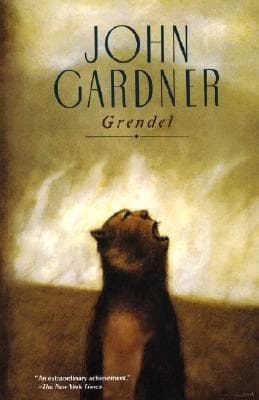
John Gardner (1971)
Genre
Fantasy / Philosophy
Reading Time
175 min
Key Themes
See below
Sign in to track this book
Grendel, the monster from *Beowulf*, tells his own story, offering a dark and often cynical look at the human epic that condemned him.
Grendel, a smart monster, lives in a cave with his silent mother. He watches the human world, especially King Hrothgar's busy mead hall, Hart. He feels both drawn to and disgusted by humans, particularly their ability to create and destroy. He lives a life of constant boredom and philosophical worry, broken up by his raids on Hrothgar's hall, where he eats sleeping men. This pattern of watching, thinking, and attacking has gone on for twelve years, making him the feared, unseen force bothering the Danes.
A blind poet, the Shaper, comes to Hrothgar's hall. The Shaper, with his lyre and strong voice, tells tales of heroic deeds, the glory of the Danes, and the fight between good and evil, placing Grendel firmly on the evil side. Grendel is deeply moved by the Shaper's art, even though he knows the songs are made up and twist history. He finds himself drawn to the beauty and order the Shaper brings to the chaotic world, feeling a strange, almost religious awe, despite his cynicism.
Bothered by the Shaper and his own inner turmoil, Grendel visits an old, powerful dragon in a cave full of gold. The Dragon is a nihilistic, all-knowing creature who dismisses all human efforts, including art, religion, and heroism, as meaningless. He tells Grendel that his purpose is to be an 'irritant,' an 'eternal enemy' to humans, forcing them to define themselves. The Dragon's cynical view greatly affects Grendel, hardening him and confirming his role as an outsider.
During their meeting, the Dragon, seemingly on a whim, casts a spell on Grendel, making him immune to human weapons. This new invincibility further isolates Grendel, as it removes any risk from his raids. He can no longer be truly threatened by humans, solidifying his role as an unchallengeable force of destruction. This curse, while making him powerful, also traps him in his monstrous identity, cutting off any remaining hope of connecting with humanity.
Hrothgar's kingdom faces constant threats from King Hygilac. To avoid war, Hrothgar marries his beautiful sister, Wealhtheow, to Hygilac. However, Hygilac rejects her, and she returns to Hart, becoming Hrothgar's queen. Wealhtheow represents purity, selflessness, and grace, bringing peace to the hall. Grendel is briefly captivated by her beauty and goodness, feeling a moment of empathy and even considering sparing her. Her presence briefly challenges his cynical view, but his monstrous nature wins out.
Unferth, a boastful and insecure hero in Hrothgar's court, challenges Grendel to a fight. Grendel, amused, easily beats him but doesn't kill him, instead throwing apples at him and making fun of his idea of heroism. Humiliated, Unferth follows Grendel back to his cave, planning to fight him to the death there. However, Grendel simply carries him back to Hart unharmed, further undermining Unferth's heroic image and showing how useless human courage is against his invincibility.
Hrothgar's young nephew, Hrothulf, arrives at Hart. Grendel watches Hrothulf's subtle plans and his growing desire to take the throne from Hrothgar's young sons. Grendel sees the human capacity for betrayal and violence, even within their own families and political systems. He sees Hrothulf as another example of humanity's destructive side, further solidifying his belief in their inherent corruption and the repeating nature of power struggles.
The Shaper, now old and weak, eventually dies. His death is important for Grendel. Without the Shaper's songs, the world seems to lose its made-up meaning and beauty, returning to a more chaotic and uncaring state. Grendel feels a strange mix of relief and deep loss, recognizing the power the Shaper had over his own perceptions. The storyteller's death reinforces the Dragon's nihilistic message, leaving Grendel with a deeper sense of the world's ultimate meaninglessness.
A ship carrying Geatish warriors, led by the strong hero Beowulf, arrives in Denmark. Grendel, who had become comfortable in his invincibility and philosophical despair, senses a new and different kind of threat. He watches Beowulf with a mix of curiosity and worry, noting the hero's great strength and firm resolve. Beowulf's arrival marks a turning point, as Grendel's long reign of terror will now face its biggest challenge.
Grendel begins his final raid on Hart. He enters the hall, expecting another easy meal, but Beowulf, pretending to sleep, meets him. A brutal battle follows. Beowulf, with superhuman strength, grabs Grendel's arm. For the first time, Grendel feels real fear and pain, realizing his invulnerability is useless against Beowulf's grip. In a desperate struggle, Grendel's arm is torn from his body. Mortally wounded, he flees the hall, leaving a trail of blood.
Bleeding heavily, Grendel stumbles through the forest, his mind full of thoughts about his coming death. He questions his existence, his role as the 'brute existent,' and whether things happen by chance or design. He meets a tree and, in his pain, talks to it, imagining it mocking him. As he collapses at the edge of the abyss near his cave, he sees the forest animals, who always ignored him, now watching him die, their eyes filled with a strange, indifferent curiosity.
As the animals watch, Grendel falls into the abyss. In his last moments, he cries out, 'Poor Grendel's had an accident... So may you all.' His words are a final, ironic comment on the random nature of existence and the shared fate of all beings. His death, a triumph for humanity, is presented by Grendel as a mere accident, an inevitable end to his meaningless life, leaving the reader to consider the true nature of heroism and monstrousness.
The Protagonist
Grendel evolves from a curious, somewhat naive observer to a hardened, cynical nihilist, ultimately finding a strange acceptance in his role as the 'brute existent' before his death.
The Antagonist/Supporting
Hrothgar's arc shows the erosion of a king's power and spirit under the weight of an unyielding, irrational enemy, leading to a state of near despair before Beowulf's arrival.
The Supporting
The Shaper's influence waxes and wanes for Grendel, with his death marking the final collapse of Grendel's lingering belief in imposed order.
The Supporting
The Dragon's role is largely static, serving as a philosophical catalyst for Grendel's embrace of nihilism.
The Supporting
Wealhtheow's influence is brief but significant, representing a fleeting challenge to Grendel's hardened cynicism.
The Supporting
Unferth's arc is one of repeated humiliation, as Grendel systematically dismantles his self-perception as a hero.
The Antagonist
Beowulf's arc is brief but decisive, fulfilling his heroic destiny by defeating Grendel.
The Supporting
Hrothulf's arc shows the early stages of a power-hungry individual, foreshadowing future human conflict.
This is the main theme, heavily influenced by existentialist thought. Grendel constantly struggles with life's meaninglessness, deciding that all human efforts—heroism, art, and religion—are ultimately arbitrary. The Dragon is the main voice for this, telling Grendel his existence is just an 'accident' and the universe doesn't care. Grendel's last words, 'Poor Grendel's had an accident... So may you all,' sum up this idea, suggesting life and death are random events without grand purpose. The Shaper's death also supports this, as the world's constructed meaning fades with the storyteller.
“The world is a meaningless swirl of stuff, and you are a tiny, insignificant part of it. Your life is a mere accident. You are a brute existent.”
The novel explores how art, especially the Shaper's poetry, shapes human perception and creates meaning, even if based on lies. The Shaper's songs turn ordinary history into heroic epics, giving the Danes purpose, identity, and a moral structure. Grendel, despite his intellectual cynicism, is deeply affected by the Shaper's art, drawn to its beauty and the order it brings. This theme shows the human need for stories and how they can build reality, offering comfort and drive in a chaotic world. The Shaper's death makes Grendel feel the world has lost its 'pattern.'
“He knew that what he was saying was false, but I also knew that it was true. This was the terrible power of art.”
Grendel's life is defined by deep loneliness. As a monster who can think and feel, he is caught between the animal and human worlds, belonging to neither. He is the ultimate 'other,' hated and feared by humans, which forces him into an antagonistic role. His attempts to connect are met with violence or misunderstanding, reinforcing his isolation. This theme looks at the psychological cost of being an outcast and how society defines itself by creating an enemy. Grendel's constant watching of humans from afar highlights his separation and his desire for, yet inability to achieve, true belonging.
“I was Grendel, Ruiner of Meadhalls, Wrecker of Kings! But I was also Grendel, lonely and misunderstood, an outcast.”
The novel dissects traditional ideas of heroism, often showing it as flawed, self-serving, or even absurd. Grendel repeatedly mocks Unferth's heroic attempts, revealing his insecurity and the performative nature of his bravery. Grendel sees human heroes as driven by vanity, fear, or a need for the Shaper's praise, rather than true moral courage. Even Beowulf, the classic hero, is shown from Grendel's view as a cold, almost mechanical force, lacking the emotional depth that would make his heroism truly meaningful to Grendel. This theme questions the real motives behind heroic actions.
“A hero is an accident. A hero is a dead man who was in the wrong place at the wrong time.”
The story points out the endless cycle of violence, both between humans and Grendel, and among humans themselves. Grendel's raids are a response to his isolation and the perceived absurdity of human life, but they also keep the cycle of fear and retaliation going. The political scheming in Hrothgar's court, especially Hrothulf's ambition, shows that humans are naturally prone to conflict even without an outside monster. This theme suggests that violence is a basic part of existence, a continuous force that shapes history and relationships, making real peace hard to find.
“The world is a machine that runs on blood.”
The story is told entirely from Grendel's subjective and often biased viewpoint.
By narrating the story through Grendel's eyes, Gardner immediately challenges the traditional heroic epic. Grendel's perspective is cynical, philosophical, and often self-pitying, providing a radically different interpretation of events and characters (like Hrothgar, Unferth, and Beowulf) than would be found in the original 'Beowulf.' This device allows the reader to empathize with the 'monster' and question the black-and-white morality often presented in heroic tales. Grendel's intellectual musings and philosophical debates with himself and the Dragon shape the entire tone and meaning of the novel, making him an unreliable but compelling guide to the human world.
The Dragon symbolizes cosmic indifference and nihilistic philosophy.
The Dragon serves as a powerful symbol of the universe's ultimate indifference and the philosophy of nihilism. His hoard of gold represents the material wealth that humans strive for, which he sees as meaningless. His ancient wisdom is entirely devoid of hope or purpose, offering Grendel a stark, deterministic view of existence. The Dragon's advice and pronouncements are pivotal in solidifying Grendel's cynicism and shaping his understanding of his own role as an 'eternal enemy.' He is less a character and more a philosophical embodiment, pushing Grendel further into his despair.
The novel is a direct re-telling and philosophical commentary on the Old English epic 'Beowulf'.
Gardner's 'Grendel' is a masterful example of intertextuality, directly engaging with and subverting the familiar narrative of the 'Beowulf' epic. By telling the story from the monster's perspective, it forces readers to reconsider the traditional hero-villain dynamic. The novel assumes a reader's familiarity with the original epic, using those established characters and plot points as a foundation upon which to build new philosophical and psychological layers. This device allows Gardner to explore themes of good and evil, heroism, and the nature of storytelling itself by directly referencing and recontextualizing a foundational work of Western literature.
Each chapter is loosely associated with a sign of the Zodiac, reflecting Grendel's philosophical journey.
The novel's twelve chapters correspond to the twelve signs of the Zodiac, though this connection is often subtle and symbolic rather than literal. Each sign subtly influences the mood, Grendel's state of mind, or the events of the corresponding chapter. For example, the first chapter (Aries) reflects Grendel's youthful, impulsive energy, while later chapters might align with signs representing introspection, conflict, or transformation. This device adds a layer of cosmic fatalism to Grendel's journey, suggesting a predetermined path or a cyclical nature to his philosophical and physical existence, reinforcing the idea of an indifferent universe.
“I understood that the world was nothing, a mechanical chaos of casual, brute enmity . . . I was alone.”
— Grendel's early realization about the world's indifference.
“The world is all a pointless accident. I exist, nothing else.”
— Grendel reflecting on his own existence and the meaninglessness of the world.
“Poor Grendel's had an accident . . . So may you all.”
— The dragon's cynical pronouncement to Grendel.
“You improve them, my boy. You improve them. . . . You are the brute existent by which they learn to define themselves.”
— The dragon explaining Grendel's role in the human world.
“They were doomed, of course, but so was I. . . . We are all of us, more or less, in the same boat.”
— Grendel's realization of shared mortality with humans.
“So much for the truth. Truth is a dream, for madmen, drunkards, and fools.”
— Grendel's cynical view on the concept of truth.
“I had become a carrier of the curse. I had given them a purpose, as we all must.”
— Grendel acknowledging his unwilling role in shaping human purpose.
“I create the whole world, blink by blink.”
— Grendel's solipsistic view of his perception creating reality.
“A man's got to do what a man's got to do.”
— Grendel's mocking interpretation of human platitudes.
“The world resists me and I resist the world.”
— Grendel's constant struggle and antagonism with his environment.
“I alone exist. I alone see and hear. I alone think, at least in this way.”
— Grendel's ultimate sense of isolation and unique consciousness.
“It was a silly, nay, an insane, an uncalled-for and outrageous thing to do . . . but I did it.”
— Grendel describing his impulse to destroy the Shaper's hall.
“The Shaper remains, of course, but it's an old man's story. . . . A new Shaper will come.”
— Grendel musing on the enduring power of storytelling and myth.
“I am Grendel, Ruiner of Meadhalls, Wrecker of Kings!”
— Grendel embracing his destructive identity, though often with a sense of weariness.
Ready to see how well you understood this book? Take our interactive quiz with 10 questions.
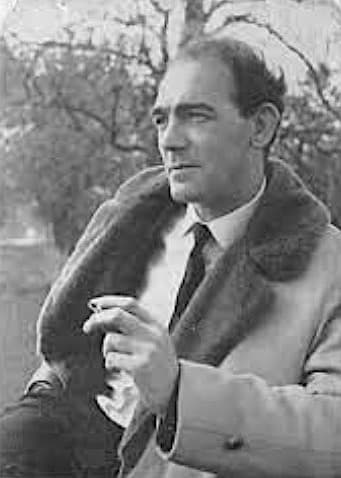
John Gardner may refer to:







