“Every life is a stack of a million impossibilities. And what are we to do but to greet every new possibility, every new impossible, with the best of who we are?”
— Luxa talking to Gregor about the future and overcoming challenges.

Suzanne Collins (2007)
Genre
Fantasy / Children's / Young Adult
Reading Time
550 min
Key Themes
See below
Sign in to track this book
As a war to end all wars begins and a dark prophecy foretells his death, Gregor must face his own growing darkness and solve a mysterious code to save the Underland and his family, even if it means sacrificing himself.
Gregor, now thirteen, returns to the Underland with his younger sister, Lizzie, after their mother gives birth to a new baby, Hazard. They are immediately taken to Regalia, the human city, where the full 'Prophecy of Time' is finally revealed. The prophecy speaks of a coming war with the rats, the warrior's death (Gregor's), and the Underland's ultimate fate. Gregor is upset by the news of his own predicted death, which the Regalians had kept from him. This knowledge casts a shadow over his resolve, but he understands his responsibility to protect the Underland and his family, especially with his mother and baby Hazard still in the Overland.
The rat army, led by the Bane, begins its march towards Regalia, leaving destruction and fear. The humans of Regalia, led by Queen Luxa and the council, are in a bad situation. Their numbers are low, and their alliances are weak. They discuss defense plans, with some wanting a direct fight and others a more careful approach. Gregor, despite his worry about the prophecy, feels pressure to lead their military decisions, often disagreeing with the more traditional council members who are slow to trust a 'surface-dweller'.
Knowing they need an advantage, Gregor and Luxa work to understand the old 'Code of Claw'. This secret text, thought to hold keys to beating the Bane, is written in a complex language few understand. Their efforts are made harder by the urgency of the war and constant rat attacks. Through hard work and their combined knowledge of Underland history and language, they begin to uncover its hidden meanings, hoping to find a weakness in the Bane's strong defenses or a way to win that does not involve Gregor's predicted death.
Baby Hazard, Gregor's youngest sibling, becomes very sick with a mysterious illness that puzzles the Underland healers. His condition quickly worsens, and the healers say that only a rare and powerful flower, found deep in unknown, dangerous lands, can save him. This adds another layer of emotional stress and urgency for Gregor. He feels a strong responsibility for his family, and the thought of losing Hazard is unbearable. A small, desperate group forms, including Gregor, Luxa, and other trusted friends, to go on a dangerous quest to find this life-saving flower before it is too late for the baby.
Gregor's group travels into the dangerous Firelands, a volcanic and harsh part of the Underland. Here, they meet new species and face unexpected environmental dangers, testing their endurance and teamwork. During their trek, they find old ruins and forgotten carvings that give important information about the 'Code of Claw' and Underland history. These discoveries hint at the true nature of the Bane's power and origins, suggesting a deeper, more complex conflict than they first thought. The Firelands also challenge Gregor's leadership, forcing him to make hard choices under extreme pressure.
Deep in the Firelands, Gregor's group makes a shocking discovery: a hidden princess, thought to be long lost. This princess, whose identity and family are at first unknown, has a vital link to the Underland's past and the 'Code of Claw'. Her existence complicates politics but also offers new hope. Through talking with her and further understanding the code, they uncover a critical weakness in the Bane's seemingly unbeatable plan. This weakness is not physical but psychological or ideological, offering a different way to win that could avoid Gregor's predicted death.
After getting the rare flower for Hazard and finding important information, Gregor's group returns to Regalia. Hazard's condition slowly gets better with the medicine, bringing some relief. The new princess is presented to the Regalian council, causing a stir but also bringing some groups together. With the rat army now dangerously close, the humans, along with their allies (the gnawers, bats, and some crawlers), increase their preparations for the final fight. Gregor shares the insights from the 'Code of Claw' and the princess, shaping their defense strategy and boosting morale, despite the threat of his own fate.
The long-feared war finally begins. The Bane's large rat army launches a brutal attack on Regalia. The city's defenses are pushed to their limits as waves of rats overcome the outer areas. The battle is fierce and bloody, with many deaths on both sides. Gregor, leading the human and allied forces, fights with desperate courage, always aware of the prophecy over him. Luxa, Boots, and the other characters are all involved in the conflict, each playing a role in defending their home. The size and brutality of the war push Gregor to his physical and emotional limits.
During the battle's chaos, Gregor finally confronts the Bane. This is not a simple physical fight; Gregor understands the true meaning of the 'Code of Claw' and the prophecy's subtle words. The prophecy speaks of the warrior's death, but the code shows a way to see this as the death of the 'warrior spirit' or 'warrior's path' rather than Gregor's actual death. By cleverly using the Bane's own psychological weaknesses and empathy, Gregor disarms the Bane's control over his army. He does not kill the Bane in a traditional way, but creates a situation that leads to the Bane's mental and spiritual defeat, ending his rule of terror.
The war ends, leaving Regalia and the Underland scarred but victorious. The Bane's defeat brings a new time of peace, though it requires much rebuilding and healing. Deaths are mourned, and the survivors begin the hard process of healing. Gregor, having fulfilled the prophecy in an unexpected way, is called a hero. However, the war has deeply changed him. He makes the hard decision to return to the Overworld with his family, understanding that his place is no longer only in the Underland. He leaves his friends and the life he knew, but with the promise of future visits and a lasting bond between the two worlds.
The Protagonist
Gregor transforms from a reluctant hero into a decisive leader who ultimately redefines the prophecy through his actions and chooses a path of peace over endless war.
The Supporting
Luxa grows into a more confident and compassionate ruler, learning to balance tradition with the need for change and ultimately leading her people into a new era of peace.
The Supporting
Boots remains a beacon of innocence and empathy, her unique connection to the crawlers proving instrumental in the war and fostering understanding.
The Supporting
Lizzie matures and adapts to the Underland, becoming a more resilient and understanding individual, capable of supporting Gregor through his darkest moments.
The Antagonist
The Bane rises to ultimate power, only to be defeated not by force but by the unraveling of his ideological foundations and the exposure of his psychological weaknesses.
The Supporting
Ares remains a steadfast and courageous ally, embodying unwavering loyalty and sacrifice until his ultimate, heroic death.
The Supporting
Ripred, a survivor and pragmatist, continues to be a crucial, if morally ambiguous, ally, helping to guide Gregor through the complexities of the war.
The Supporting
Twitchtip, initially a reluctant participant, finds her courage and actively uses her prophetic abilities to aid Gregor, ultimately playing a critical role in the war's resolution.
A main theme is whether prophecies are unavoidable fate or if people can change or rethink them. Gregor struggles with the 'Prophecy of Time' predicting his death, leading to inner conflict and despair. However, solving the 'Code of Claw' and finding the 'princess' show that prophecies can be unclear and open to interpretation. Gregor's actions show that while prophecies may guide events, individual choices shape how they come true, allowing for an outcome that avoids the worst predictions. This is clear when Gregor defeats the Bane by breaking his spirit rather than killing him, thus fulfilling the 'death of the warrior' metaphorically.
““The warrior will die. He will fall as a leaf in the winter. And the Bane will reign.””
The novel shows the cycle of war, its causes, and the great cost it takes on everyone. The long conflict between the Underland species, fueled by old grudges and the Bane's ambition, highlights the pointlessness and suffering in endless fighting. The book suggests that real victory comes not from destroying others, but from breaking the cycle through empathy, understanding, and a willingness to seek peace. The final outcome, where Gregor chooses a path of reconciliation rather than continued bloodshed, emphasizes that peace needs active effort and a change in perspective from all sides. The initial reaction to the prophecy, focusing only on violence, contrasts sharply with the final solution.
““War. That’s all they ever talk about. War and death and prophecies.””
Family is a strong motivation for Gregor throughout the series, and in this last book, his responsibility to his loved ones is most important. His drive to protect Boots, Lizzie, and baby Hazard motivates many of his dangerous actions, even when facing his own predicted death. Hazard's illness and the search for his cure show the deep family bonds and how far one will go to ensure their well-being. This theme extends beyond his immediate human family to his chosen family in the Underland, including Luxa and Ares, showing the strength found in loyalty and mutual support. Gregor's final decision to return to the Overworld reinforces that his main responsibility is to his family's safety and well-being.
““I couldn’t leave them. Not Boots. Not Lizzie. Not Hazard. Not now.””
The Underland is a place of prejudice, with deep hatred between the different species—humans, rats, bats, crawlers, and others. The Bane uses these divisions, fueling hatred and fear to gain power. However, the story also shows that these prejudices can be overcome through individual acts of kindness, understanding, and alliance. Gregor's relationships with Ares (bat), Ripred (rat), and the crawlers show that cooperation across species is not only possible but necessary for survival. The 'Code of Claw' itself speaks of a forgotten history of unity, suggesting that prejudice is learned and can be unlearned, leading to a more peaceful existence.
““The Bane wants us to be afraid of each other, to hate each other. That’s how he wins.””
A series of ancient verses foretelling the climactic war and Gregor's fate.
The Prophecy of Time is a central plot device that drives the narrative forward. It establishes the overarching conflict, creates suspense, and provides a framework for Gregor's journey. Its ambiguity, particularly regarding the 'warrior's death,' allows for multiple interpretations and keeps both the characters and the reader guessing. The prophecy acts as a source of both dread and motivation, forcing Gregor to confront his destiny while simultaneously seeking ways to subvert or reinterpret it. Its eventual fulfillment in an unexpected way highlights the theme of free will versus fate.
A cryptic ancient text containing secrets to defeating the Bane.
The Code of Claw serves as a critical mystery that Gregor and Luxa must decipher. It functions as a source of hidden knowledge, providing clues and strategies that are not immediately apparent. The act of decoding it introduces intellectual challenges and allows for the revelation of historical context and deeper meanings behind the prophecies. Its contents ultimately provide the key to understanding the Bane's true weakness and how the Prophecy of Time can be fulfilled without Gregor's literal demise, making it instrumental in the final resolution of the war.
A perilous journey to find a rare flower to save baby Hazard.
The quest for the cure for baby Hazard's illness serves multiple functions. It provides a secondary, personal motivation for Gregor amidst the larger war, emphasizing his role as a protector of his family. It also forces the characters into new, dangerous territories (the Firelands), allowing for the introduction of new creatures, environmental challenges, and the discovery of crucial information related to the 'Code of Claw' and the 'princess'. This subplot adds urgency and emotional depth, reminding Gregor of what he is fighting for beyond the grand political conflict.
The antagonist's use of fear, manipulation, and ideological division.
The Bane's primary plot device is not brute strength alone, but his mastery of psychological warfare. He exploits existing prejudices and fears among the Underland species, using propaganda and manipulation to divide and conquer. His ability to twist prophecies and histories to his advantage creates a potent, non-physical threat. This device forces Gregor to confront the Bane not just with swords, but with intellect and empathy, ultimately leading to a resolution that is more about breaking a cycle of hatred than a simple battle of might.
“Every life is a stack of a million impossibilities. And what are we to do but to greet every new possibility, every new impossible, with the best of who we are?”
— Luxa talking to Gregor about the future and overcoming challenges.
“The greatest weapon in the Underland is not a sword, or a claw, or a fang, but the heart of a warrior who knows what he fights for.”
— Ripred's reflection on true strength.
“Sometimes you have to break the rules to save what's right.”
— Gregor contemplating difficult decisions.
“It’s not about winning or losing anymore. It’s about surviving.”
— Gregor's perspective on the war's escalating stakes.
“The past is a stubborn thing. It holds on tight.”
— Ripred discussing the lasting impact of history and trauma.
“Hate is a weapon, but love is the shield.”
— A reflection on the contrasting forces at play in the war.
“Fear is a powerful enemy, but hope is even stronger.”
— Gregor's internal struggle and ultimate resolve.
“You can never truly know someone until you’ve walked a mile in their claws.”
— A variation of an idiom, applied to the different species.
“The hardest part of any journey is often the last step.”
— Anticipating the final confrontation.
“Sometimes, the only way to heal is to face the wound head-on.”
— Dealing with past traumas and losses.
“There are no easy answers in war, only choices that lead to more choices.”
— Gregor's realization about the complexity of leadership.
“Even in the darkest caves, there is always a glimmer of light, if you know where to look.”
— A message of hope amidst despair.
“Being a warrior isn't about how many you can defeat, but how many you can protect.”
— Ripred's evolving understanding of true strength.
“The greatest sacrifices are often made in silence.”
— Reflecting on the unsung heroes of the war.
Ready to see how well you understood this book? Take our interactive quiz with 10 questions.
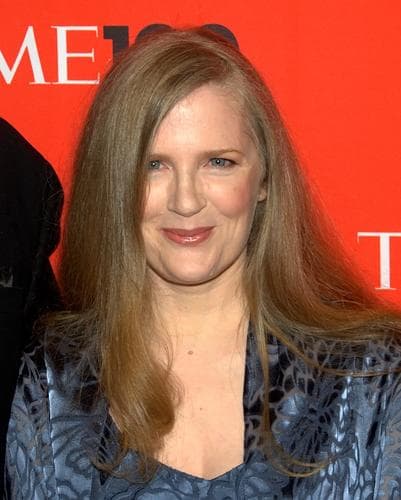
Suzanne Collins is an American author and television writer. She is best known as the author of the young adult dystopian book series The Hunger Games.







