“There are things you can't outrun, no matter how fast you are.”
— Early in the book, reflecting on the lingering grief after the fire.

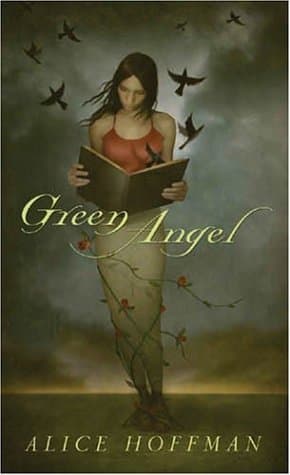
Alice Hoffman (2003)
Genre
Fantasy / Science Fiction / Young Adult
Reading Time
120 min
Key Themes
See below
Sign in to track this book
After a disaster, a grieving girl named Green retreats into her ruined garden and her own skin, trying to erase her past until mysterious encounters make her face the possibility of healing and finding love again.
Fifteen-year-old Green lives a good life with her mother, father, and younger sister, Aurora, in a house with a beautiful garden. One day, while Green is with her first boyfriend, Ash, a fire destroys the nearby city, killing her entire family. Green returns to a desolate place, her home untouched but her world broken. She finds a small, burned bird and buries it, which starts her deep grief and withdrawal. The disaster leaves her an orphan, physically unharmed but emotionally devastated, with only memories of her family and their absence.
Overwhelmed by her loss, Green renames herself 'Ash,' a reminder of the fire that took her family. She stays in her home, avoiding everyone, including her only friend, Sarah. Ash stops speaking, communicating only through notes. She starts tattooing her skin with a needle and ink, covering her body with images of leaves, thorns, and eventually a dark angel. This self-mutilation shows her emotional pain and her attempt to erase her past self, believing she no longer deserves beauty or happiness.
One day, three mysterious figures appear in Ash's neglected garden. The first is a young boy, initially called 'Witch Child' by Ash, who is quiet and seems to understand her pain. The second is a girl named 'Maple,' who is good with plants and begins to tend to the garden, bringing life back to the desolate space. The third is a boy named 'Diamond,' who is strong and helps with repairs around the house. These strangers, all survivors of the same disaster, slowly begin to break through Ash's tough exterior, offering friendship without asking for much.
Maple, with her connection to nature, works to restore Green's once lively garden. She plants new seeds, cares for struggling plants, and brings color back to the desolate area. As the garden slowly revives, so does a bit of life within Ash. She watches Maple, curious about her resilience and hope. Tending to the garden, a place tied to her past and family, becomes a silent symbol for Ash's own potential for healing and regrowth. The 'Witch Child' also helps by finding and burying small treasures.
Ash slowly starts talking more with the 'Witch Child,' realizing the child is a girl named Heather. Heather is very sensitive and seems to feel others' emotions, especially Ash's deep sadness. She communicates through gestures and quiet observations, often leaving small, meaningful objects for Ash. Heather's presence is a constant, gentle reminder of innocence and vulnerability. Her quiet empathy helps Ash feel seen and understood without the pressure to speak or explain her pain. Heather's sensitivity also highlights Ash's own emotional state.
After months of silence, Ash finally starts to speak, first in whispers, then slowly regaining her voice. She begins to share parts of her past, her memories of her family, and the horror of the fire with Maple, Diamond, and Heather. Talking about her pain is a key step in her healing. Her new friends listen without judgment, giving her a safe place to process her trauma. Sharing stories creates a bond between them, replacing her isolation with a sense of belonging and mutual understanding.
Ash eventually reveals the truth behind her self-inflicted tattoos. Each image – the thorns, the withered leaves, the dark angel – represents a part of her grief, guilt, and belief that she does not deserve happiness. She explains how tattooing herself was a way to punish herself, to physically show the darkness she felt inside, and to erase the 'Green' she once was. Her friends listen with compassion, helping her understand that these marks, though born of pain, can also be a symbol of survival and resilience.
Ash becomes convinced that her younger sister, Aurora, did not die in the fire but that her spirit is trapped or lost. This belief gives her a new purpose. She searches for signs, interprets dreams, and seeks ways to communicate with Aurora, believing that freeing her sister's spirit will also free her own. This quest becomes a strong driving force, allowing Ash to direct her grief into a constructive, if imaginary, endeavor. Her friends support her, understanding how much she needs this search for closure.
During her search for Aurora's spirit, Ash discovers a small, green bird, a symbol of hope and rebirth. She names it the 'Green Angel,' believing it is Aurora or a messenger from her. The bird represents a tangible connection to her past and a promise of a future. Caring for the Green Angel, a living creature, helps Ash reconnect with the part of herself that was once 'Green,' the girl who loved her garden and her family, and find a fragile sense of peace and acceptance.
Through her interactions with Maple, Diamond, and Heather, and her journey with the Green Angel, Ash slowly begins to forgive herself for surviving the fire. She confronts the immense guilt she carried, understanding that her survival was not a betrayal but a chance for new life. The tattoos, once symbols of self-punishment, start to become a record of her journey. She acknowledges her past but chooses not to be defined only by it, embracing the possibility of healing and finding beauty even after great loss.
As the garden grows and her heart begins to mend, Ash reclaims her original name, Green. She realizes that her family would want her to live, find joy, and keep growing. She has found a new family in Maple, Diamond, and Heather, and together they create a life with quiet resilience and hope. Green understands that while the scars of her past will always remain, they do not have to control her future. She looks forward, embracing the possibility of new growth, love, and a life lived in honor of those she lost.
The Protagonist
Green transforms from a silent, self-punishing 'Ash' consumed by grief and isolation into 'Green,' a resilient young woman who reclaims her voice, finds a new family, and begins to heal.
The Supporting
Maple remains a steadfast source of hope and life, helping Green to find her own path to healing without undergoing a dramatic personal change herself.
The Supporting
Diamond consistently provides a grounding and protective presence for Green, helping to create a stable environment for her recovery.
The Supporting
Heather's presence serves as a constant, gentle mirror to Green's emotional state, remaining an empathetic and intuitive figure throughout the story.
The Mentioned
Aurora's memory remains a powerful catalyst for Green's emotional journey, guiding her towards acceptance and a renewed sense of purpose.
The Mentioned
Her memory serves as a foundational element of Green's past and influences Green's connection to the garden and nature throughout her healing process.
The Mentioned
Ash represents a lost past and a brief, unfulfilled connection from before the disaster, without a significant arc within the main narrative.
The main idea of the novel is the huge impact of grief and loss after a disaster. Green's initial reaction – renaming herself 'Ash,' isolating herself, and self-mutilating – clearly shows how destructive unaddressed trauma can be. The story explores the different stages of grief, from denial and anger to the slow, painful process of acceptance. The ashes outside her house and the tattoos on her skin are constant physical signs of her internal devastation, as she covers herself in dark ink to try and erase who she once was.
“What I wanted was to erase myself, to be someone else, to be anyone else.”
Despite the initial despair, the novel champions healing and rebirth. Maple's restoration of Green's neglected garden is a strong symbol for Green's own emotional recovery. As the garden slowly comes back to life, so does Green's spirit. The 'Green Angel' bird symbolizes hope and new beginnings, showing that even after great destruction, life can find a way to grow again. This is clear as Green stops using the name 'Ash' and takes back 'Green,' embracing growth.
“Sometimes the world is a dark and terrible place. But there are times when it can surprise you.”
At first, Green isolates herself completely, believing she must bear her pain alone. However, Maple, Diamond, and Heather's unexpected arrival in her garden highlights the power of human connection. These strangers, also survivors, offer companionship, understanding, and a safe space for Green to process her trauma. Their presence breaks through her isolation, allowing her to speak again, share her story, and eventually form a new, unconventional family, showing that healing is rarely a solitary journey. Their quiet support helps her rebuild her life.
“Sometimes the only way to heal a wound is to let someone else see it.”
Green's struggle with identity is central to her journey. She first rejects her old self, 'Green,' and uses the name 'Ash' as a symbol of her devastation. Her self-inflicted tattoos are an attempt to physically change her identity, believing she no longer deserves beauty or happiness. The story's arc involves her gradual re-acceptance of her true self, acknowledging her past pain while also embracing the person she is becoming. Reclaiming her name 'Green' shows her acceptance of her past and her renewed hope for the future.
“I was Ash, and Ash was all that was left.”
The garden represents Green's inner state and potential for renewal.
The garden serves as a powerful symbol throughout the novel. Initially, it is a vibrant, idyllic space reflecting Green's happy family life. After the disaster, it becomes overgrown and neglected, mirroring Green's emotional devastation and withdrawal. As Maple begins to tend to it, bringing life back to the plants, the garden symbolizes Green's slow and arduous journey towards healing and rebirth. Its transformation from desolation to flourishing life directly parallels Green's internal transformation from 'Ash' to 'Green'.
A direct representation of Green's emotional state and identity shift.
Green's decision to rename herself 'Ash' is a direct and potent symbol of her profound grief, self-punishment, and desire to erase her past identity. 'Ash' represents the residue of the fire, the devastation, and her perceived worthlessness. Her eventual reclamation of the name 'Green' signifies her healing, her acceptance of her survival, and her renewed connection to life, growth, and hope. It is a clear marker of her psychological journey and the restoration of her sense of self.
Physical manifestations of Green's grief, guilt, and self-punishment.
Green's self-inflicted tattoos are a crucial plot device, serving as a physical manifestation of her internal pain and guilt. Each tattoo – the thorns, the withered leaves, the dark angel – tells a part of her story of loss and self-blame. They are a way for her to punish herself and to outwardly display the darkness she feels inside. As she begins to heal, the tattoos' meaning subtly shifts, becoming a chronicle of her survival rather than just symbols of her despair, representing her journey through pain.
A symbol of hope, rebirth, and a connection to Aurora's spirit.
The small, green bird that Green finds and names the 'Green Angel' is a powerful symbol of hope and rebirth. It represents a tangible connection to her lost sister, Aurora, and a manifestation of the life and beauty that can emerge even after devastation. Caring for the bird helps Green to reconnect with her nurturing side and to find a fragile sense of peace and purpose, guiding her towards accepting life's enduring magic and the possibility of new beginnings.
“There are things you can't outrun, no matter how fast you are.”
— Early in the book, reflecting on the lingering grief after the fire.
“Some things, once broken, can never be put back together.”
— Green's internal thoughts about her family and the world after the disaster.
“The only way to get over a bad thing is to find something good in it.”
— Green's grandmother offering advice on coping with tragedy.
“Grief is a garden where all sorts of things can grow.”
— A metaphor used to describe the complex nature of sorrow and its potential for unexpected growth.
“Sometimes you have to break things to make them right.”
— Green's realization about the necessity of confronting her pain and the past.
“The past is a place you can visit, but you can't live there.”
— A reminder about moving forward from past traumas.
“Love is a kind of magic, and it can make things happen that you never thought possible.”
— Reflecting on the power of connection and affection amidst despair.
“The world keeps turning, even when you wish it would stop.”
— Green observing the relentless march of time despite her personal tragedy.
“You can't choose what happens to you, but you can choose how you react.”
— A lesson learned about personal agency in the face of uncontrollable events.
“There are always stories to tell, even when you think there are none.”
— Highlighting the enduring nature of human experience and narrative.
“Darkness can't drive out darkness; only light can do that.”
— Green's understanding of the need for positivity and healing to overcome despair.
“Being alive is a gift, even when it hurts.”
— A profound realization about the value of existence despite suffering.
“Sometimes the greatest strength is found in letting go.”
— Green learning to release her grip on what was lost to embrace what remains.
“We are all made of stardust and dreams.”
— A poetic reflection on the inherent magic and potential within every individual.
“The future is always a garden waiting to be planted.”
— An optimistic outlook on the possibilities that lie ahead, despite past hardships.
Ready to see how well you understood this book? Take our interactive quiz with 10 questions.

Alice Hoffman is a celebrated American novelist known for her magical realism and explorations of family, love, and loss. Her notable works include the bestselling 'Practical Magic' series, 'The Museum of Extraordinary Things,' and 'The Rules of Magic.' Hoffman's poignant storytelling and vivid imagery have earned her widespread critical acclaim and a dedicated readership.







