BookBrief
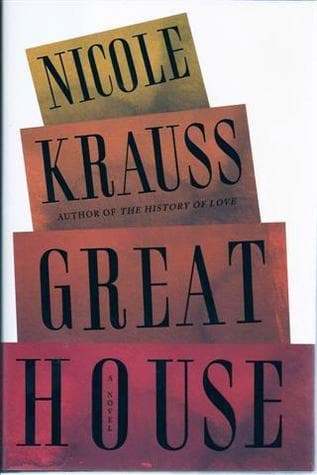
Great House cover
Archivist's Choice

Great House

Nicole Krauss (2010)

Genre

Literary Fiction / Historical Fiction

Reading Time

360 min

Key Themes

See below

Track Your Reading

Sign in to track this book

A mysterious desk with many drawers connects people across continents and generations, each dealing with loss, inherited trauma, and the lasting power of memory during historical events.

Synopsis

Four stories connect through a large, multi-drawered desk. In New York, Nadia, a novelist, has written at the desk for twenty-five years. She inherited it from Daniel Varsky, a Chilean poet who vanished. When Leah arrives, claiming to be Daniel's daughter and wanting the desk back, Nadia's life changes. She faces her past and the desk's true owner. In London, Arthur cares for his dying wife, Lani. After Lani's death, he finds a lock of hair and uncovers her past, revealing her experiences during the Holocaust and her childhood connection to the desk. In Jerusalem, Yoav, an antiques dealer, rebuilds his father's study, which was stolen by Nazis in Budapest in 1944. His search for authenticity and memory leads him to the desk that was once his family's. A fourth story follows the desk itself, tracing its journey from a Hungarian Jewish family, through World War II, to Chile, and then to New York. Each person deals with loss, memory, and the objects that hold their histories. The desk becomes a symbol of what is taken, what is remembered, and what connects them through time and place.
Reading time
360 min
Difficulty
Medium
Pacing
Slow
Mood
Melancholy, Reflective, Atmospheric, Introspective
✓ Read this if...
You enjoy intricate, character-driven literary fiction with a focus on memory, loss, and the objects that connect us to the past, presented through multiple, interwoven narratives.
✗ Skip this if...
You prefer linear plots, fast-paced action, or clear-cut resolutions, as this book is reflective, fragmented, and delves deeply into psychological landscapes.

Plot Summary

Nadia's Inheritance

Nadia, a novelist in upstate New York, has spent twenty-five years writing at a large, multi-drawer desk. She inherited it from Daniel Varsky, a Chilean poet who disappeared in the 1970s. Nadia had a brief, intense affair with Daniel. The desk became an important object in her life, a symbol of her connection to him and her writing. One day, a young woman arrives, claiming to be Daniel's daughter and demanding the desk back. This event disrupts Nadia's quiet life and makes her confront her past and the desk's true ownership.

Aaron's Discovery

Aaron, an elderly man in London, cares for his dying wife, Lani. As he sorts through her belongings, he finds a small, braided lock of hair. This object reveals a secret about Lani's past: a hidden child and a betrayal from decades ago. The discovery upsets Aaron, forcing him to rethink his marriage and the woman he thought he knew, even as she is dying.

Yoav's Quest

Yoav, an antiques dealer in Jerusalem, is dedicated to rebuilding his late father's study, which was stolen by Nazis in Budapest in 1944. His father, an intellectual, had a deep connection to his books and study. Yoav believes that by recreating the study, he can reconnect with his father's memory and recover what was lost. He carefully searches for furniture, books, and artifacts that match his father's descriptions, driven by a desire to mend the past.

The Desk's Journey to Chile

Daniel Varsky, a charismatic and politically active young poet in Santiago, Chile, acquires the large desk. It becomes central to his life, a place where he writes poetry, hosts intellectuals, and discusses politics. The desk symbolizes his intellectual pursuits and literary career. His relationship with the desk is personal and creative, making its eventual loss more painful. He is a hopeful figure whose life and work are tied to the desk before his disappearance during the Pinochet regime.

Nadia's Refusal and Recollections

Nadia first refuses to give the desk to the young woman who claims to be Daniel's daughter. She recounts her affair with Daniel Varsky, describing their intellectual and physical connection. She remembers the desk as a silent witness to their shared moments and her own writing, which she felt was influenced by Daniel and the desk's history. For Nadia, the desk is not just furniture; it holds memory, grief, and inspiration. Giving it up feels like erasing a part of her identity and history with Daniel.

Aaron's Confrontation with Lani's Past

As Lani's health worsens, Aaron is troubled by the secret of the lock of hair and the hidden child. He confronts Lani, but her illness makes communication difficult. He struggles to accept this new information about her past betrayal and hidden life. The discovery casts a shadow over their marriage, making Aaron question their shared history even as he faces her death. He feels hurt and confused, made worse by his inability to fully understand or forgive before it is too late.

Yoav's Father's Story

Yoav's story explores his father's experiences as a young man during the Holocaust in Budapest. His father, a scholar, saw his family's home destroyed and his study plundered by the Nazis. The loss of his books and intellectual space was not just material; it was a deep spiritual and cultural devastation. Yoav's quest to rebuild the study is an attempt to heal these wounds and honor his father's resilience and intellectual legacy.

The Desk's Hungarian Origins

The desk's story begins with a wealthy Jewish family in Hungary, specifically with the patriarch, a scholar. The desk was central to his study, a place of learning and family gatherings. It represented stability, tradition, and intellectual pursuit within the family. This peaceful past is violently interrupted by the Nazi invasion and the looting of their home, starting the desk's long journey across continents and through different hands, each adding new meaning and loss.

Nadia's Acceptance and Letting Go

After much thought about her past and Daniel's legacy, Nadia agrees to give the desk to the young woman, whom she accepts as Daniel's daughter. This act of letting go is painful but also freeing. She realizes that the desk's true meaning is not in her owning it, but in its ability to connect generations and carry the stories of its owners. Giving it up is an acknowledgment of Daniel's lasting memory and his impact on her and his family.

Aaron's Grief and Revelation

After Lani's death, Aaron grieves, but also carries the weight of her secret. He continues to think about the lock of hair and the hidden child, understanding that Lani's life was more complex and perhaps more tragic than he realized. The revelation, though painful, deepens his understanding of her, not as a perfect wife, but as a woman who carried her own burdens and made difficult choices. His journey is about accepting the hidden parts of a loved one and mourning the person she was, completely.

Yoav's Partial Restoration

Yoav continues his work of assembling his father's study. He recovers some pieces, but the task is never truly finished. The act of searching and rebuilding becomes more important than full restoration. It is a continuous process of memory, mourning, and connection to his heritage. The impossibility of full recovery mirrors the irreversible losses of the Holocaust, but the effort itself is an act of resistance against forgetting, showing the power of memory and the human need to honor the past.

The Desk's Continued Journey

The novel ends with the understanding that the desk, though physically separate in each story, is a symbol of memory, loss, and the connection of human lives across time and place. It holds the marks of all its owners, their stories, joys, and sorrows. Its journey represents the lasting legacy of objects and how they can bind people to their pasts, families, and each other, even when separated by continents and generations. The desk is not just an object but a record of human experience.

Principal Figures

Nadia

The Protagonist

Nadia moves from stubborn attachment to the desk to a profound act of relinquishment, understanding that true connection lies beyond physical possession.

Aaron

The Protagonist

Aaron's unwavering devotion is tested by a devastating secret, forcing him to reconstruct his understanding of his wife and their shared life.

Yoav

The Protagonist

Yoav dedicates his life to recreating a lost past, finding meaning not in full restoration, but in the ongoing act of remembrance itself.

Daniel Varsky

The Supporting

Though his physical presence is brief, Daniel's legacy and the mystery of his disappearance profoundly shape the lives of others, particularly Nadia and his daughter.

Lani

The Supporting

Lani's life, as revealed through her dying moments, uncovers a secret that redefines her relationship with Aaron and her own identity.

Daniel's Daughter

The Supporting

Her arrival catalyzes Nadia's emotional journey towards relinquishment, asserting the rights of a new generation to ancestral objects and stories.

Yoav's Father

The Mentioned

His life story, marked by intellectual pursuit and profound loss, becomes the driving force behind his son's quest for remembrance and restoration.

Hungarian Patriarch

The Mentioned

His ownership establishes the desk's original context of intellectual and familial heritage, a world shattered by war and loss.

Themes & Insights

Memory and Loss

The novel explores how people deal with personal and historical loss, and how memory tries to create permanence against its certainty. Nadia holds onto the desk as a physical reminder of Daniel, fearing that giving it up means losing him forever. Yoav's life is a quest to rebuild his father's study, fighting against the erasure of the Holocaust. Aaron's discovery of Lani's secret makes him rethink decades of shared memories. The characters are defined by what they have lost and their efforts to keep those losses alive, showing memory as a powerful, sometimes painful, force.

What do we pass on to our children and how do they absorb our dreams and losses?

Narrator/Front Flap

The Power of Objects

The central desk is more than furniture; it holds the histories, emotions, and identities of its owners. It acts as a way to access memory and a silent witness to important life events. For Nadia, it links her to Daniel and her creative self. For Daniel, it was a center of intellectual and political activity. For Yoav's father, it was the heart of his intellectual world. The desk gains meaning with each owner, becoming a holder of stories and a tangible link between different lives across continents and generations. Its movement and ownership drive much of the story, showing how objects can have great symbolic and emotional weight.

Connecting these stories is a desk of many drawers that exerts a power over those who possess it or have given it away.

Narrator/Front Flap

Identity and Legacy

The characters deal with who they are, who they were, and what they will leave behind. Nadia's identity as a writer is tied to the desk and Daniel's influence. Aaron questions Lani's true identity after finding her secret, and by extension, his understanding of their shared life. Yoav's identity is linked to his father's legacy and the trauma of the Holocaust; his mission is to preserve that legacy. The novel explores how personal histories, secrets, and inherited traumas shape individual identities and how these are passed on, sometimes unknowingly, to future generations. The idea of legacy goes beyond family lines to shared experiences and the objects that embody them.

How do we respond to disappearance, destruction, and change?

Narrator/Front Flap

Interconnectedness and Solitude

Despite the physical distance and personal isolation many characters experience (Nadia's solitude, Yoav's singular quest), the novel shows their deep connection through the desk's shared history. The desk travels from Hungary to Chile, then to America, linking these seemingly different lives. Each character's story, while distinct, shares themes of loss, memory, and the search for meaning, creating a shared human experience. The novel suggests that even in deep solitude, people are part of a larger, invisible web of human history and shared fate, often through objects and the stories they carry.

The desk takes on more and more meaning, and comes finally to stand for all that has been taken from them, and all that binds them to what has disappeared.

Narrator/Front Flap

Plot Devices & Literary Techniques

The Great Desk

A multi-drawer desk that serves as the central unifying object and symbol.

The desk is the primary plot device, acting as a tangible link between the disparate narratives. It is not merely a prop but a character in itself, accumulating history, meaning, and emotional weight with each owner. Its physical journey across continents and through different historical periods connects the characters' lives and traumas. The desk symbolizes memory, loss, creativity, and the enduring power of objects to carry stories. It serves as a catalyst for Nadia's internal conflict and represents the continuity of human experience despite profound loss and change.

Multiple First-Person Narrators

The story is told through the distinct, subjective voices of its main characters.

The novel employs multiple first-person narrators (Nadia, Aaron, Yoav) whose stories are interwoven but not directly overlapping in real-time. This device allows for deep psychological insight into each character's inner world, their unique perspectives on memory, loss, and identity. It creates a mosaic-like structure, gradually revealing the broader themes and the desk's significance from different angles. The distinct voices highlight the subjective nature of memory and how personal histories are constructed, while the common thread of the desk implicitly connects their otherwise separate lives.

Non-Linear Narrative

The story jumps between different time periods and geographical locations.

The novel's structure is non-linear, moving back and forth in time and across various geographical locations (New York, London, Jerusalem, Chile, Hungary). This device mirrors the fragmented nature of memory and trauma, allowing the reader to piece together the desk's history and the characters' connections gradually. It builds suspense and reveals information in a way that deepens the emotional impact of each revelation. The non-linear approach emphasizes how past events continue to resonate in the present, shaping characters' lives and their understanding of themselves and the world.

The Lock of Hair

A small, seemingly insignificant object that reveals a profound secret.

The lock of hair discovered by Aaron is a classic example of a 'macguffin' or a symbolic object that triggers a major plot development. Its small size belies its immense significance, unraveling a lifelong secret about Lani's hidden child. This device introduces themes of betrayal, hidden identities, and the profound impact of untold histories. It serves as a tangible piece of evidence that forces Aaron to confront a reality he never knew existed, showcasing how even the smallest artifacts can carry immense narrative weight and emotional consequence.

Critical analysis

Notable Quotes

Perhaps the world was like a great house, and we were but tenants, each with our own small room, occasionally venturing out into the common spaces, but mostly living in the privacy of our own narratives.

A reflection on individual lives and shared spaces, particularly in relation to the recurring motif of houses and their inhabitants.

Memory, after all, is not a record, but a storyteller.

A contemplation on the nature of memory and its subjective, reconstructive qualities.

The things that bind us are often the things we cannot name.

Exploring the unspoken connections and burdens shared between people, often through objects or experiences.

A chair is not just a chair. It is a repository of all the bodies that have ever sat in it.

Focusing on the idea of objects carrying the weight of their past and the lives that interacted with them.

To forget is to make a choice, even if an unconscious one.

Discussing the active, rather than passive, nature of forgetting and its implications.

We leave traces, even when we think we've disappeared.

Reflecting on the enduring impact individuals have, even after their physical presence is gone.

Every object has a secret life, a story it could tell if only we knew how to listen.

Emphasizing the hidden narratives and significance embedded within everyday items.

The past is not dead. It is not even past. It is a presence, always, in the air we breathe, the ground we walk on, the stories we tell.

A powerful statement on the inescapable influence and persistence of history.

What is a life, after all, but a series of rooms, some entered, some exited, some never seen?

Using the house metaphor to describe the journey and experiences of a life.

Love, too, is a kind of haunting. It stays, long after the loved one is gone.

Exploring the enduring nature of love as a form of lingering presence or memory.

Sometimes the greatest burden is the one you choose to carry.

Discussing the voluntary nature of certain emotional or historical burdens.

We are all made of stories, and when one story ends, another begins, often in the same place, with the same echoes.

Highlighting the cyclical nature of narratives and human experience.

The weight of absence can be heavier than the weight of presence.

Reflecting on the profound impact of what is missing, rather than what is there.

There are things we inherit that are not visible, but are felt, deep in the bones.

Exploring the idea of inherited trauma, memory, or experiences that are not explicit but deeply ingrained.

Quiz

Test Your Knowledge

Ready to see how well you understood this book? Take our interactive quiz with 10 questions.

10
Questions
~5
Minutes
?
Best Score

Key Questions (FAQ)

The central object is a large, ornate desk with many drawers. It is repeatedly passed between characters across different continents and time periods, acting as a physical and symbolic anchor for their stories of loss, memory, and inheritance.

About the author

Nicole Krauss

Nicole Krauss is an American author best known for her four novels Man Walks into a Room (2002), The History of Love (2005), Great House (2010) and Forest Dark (2017), which have been translated into 35 languages. Her fiction has been published in The New Yorker, Harper's, Esquire, and Granta's Best American Novelists Under 40, and has been collected in Best American Short Stories 2003, Best American Short Stories 2008 and Best American Short Stories 2019. In 2011, Nicole Krauss won an award from the Anisfield-Wolf Book Awards for Great House. A collection of her short stories, To Be a Man, was published in 2020 and won the Wingate Literary Prize in 2022.







