“I loved her against reason, against promise, against peace, against hope, against happiness, against all discouragement that could be.”
— Pip reflects on his unrequited love for Estella.

Charles Dickens (1992)
Genre
Historical Fiction
Reading Time
1200 min
Key Themes
See below
Sign in to track this book
In 19th-century England, an orphan's sudden rise to gentlemanly 'great expectations' becomes a gilded cage, showing the true cost of ambition and the pain of misplaced hope.
Philip Pirrip, known as Pip, is a young orphan living with his harsh older sister, Mrs. Joe Gargery, and her kind blacksmith husband, Joe, in the marshlands of Kent. While visiting his parents' graves, Pip meets an escaped convict, Abel Magwitch, who threatens him and demands food and a file to remove his leg-iron. Terrified, Pip steals a pork pie and some brandy from his sister's pantry and a file from Joe's forge, giving them to Magwitch in secret the next morning. Later, soldiers capture Magwitch and another convict, Compeyson, near the village, and Magwitch confesses to stealing food, protecting Pip.
Some time later, Pip's Uncle Pumblechook arranges for Pip to visit Satis House, the old mansion of the wealthy, reclusive Miss Havisham. Miss Havisham, dressed in her old wedding gown with clocks stopped, lives in eternal dimness. She wants Pip to 'play' with her adopted daughter, Estella, a beautiful but cold girl who treats Pip poorly, reminding him of his rough hands and common background. Despite Estella's unkindness, Pip is drawn to her and the grand, though decaying, world of Satis House, starting his wish to become a gentleman.
Pip continues his visits to Satis House for several months, often enduring Estella's teasing and Miss Havisham's strange remarks. He also often sees Orlick, Joe's ill-tempered assistant, who dislikes Pip. Eventually, Pip must be officially apprenticed to Joe as a blacksmith. He reluctantly accepts, feeling this life is beneath him and not compatible with his dreams of marrying Estella and becoming a gentleman. His visits to Miss Havisham stop, though his hopes remain due to Estella and the mysterious feel of Satis House.
Four years into his apprenticeship, Pip is visited by the London lawyer, Mr. Jaggers, who tells him he has received 'great expectations' from an anonymous benefactor. Pip is to be educated as a gentleman and will inherit a large fortune when he comes of age. He is to leave for London immediately and cannot ask about his benefactor. Pip immediately assumes Miss Havisham is his secret patron, believing she intends for him to marry Estella. Happy at this apparent confirmation of his dreams, Pip prepares to leave his humble life, which saddens Joe.
In London, Pip stays with Herbert Pocket, a kind and hopeful young man he met at Satis House during a childhood boxing match. Herbert, son of Miss Havisham's cousin Matthew Pocket, becomes Pip's close friend and confidant. Pip also begins his education with Matthew Pocket and meets other characters connected to Mr. Jaggers, including Jaggers's clerk, Wemmick, and Bentley Drummle, a rude young man. Pip quickly adjusts to his new life, developing expensive habits and growing distant from his old friends, Joe and Biddy, whom he now sees as common.
Estella returns to London as a beautiful, sophisticated young woman, now under Miss Havisham's care and being prepared for society. Pip's strong feelings for her grow, and he often goes with her to social events. Estella, however, repeatedly tells Pip she has no heart and cannot love, yet Pip misinterprets her warnings as a sign of her unique nature and his special bond with her. He continues to believe that Miss Havisham is preparing them for marriage, strengthening his certainty that his 'great expectations' are leading him directly to Estella.
On a stormy night, when Pip is twenty-three, the convict he helped as a child, Abel Magwitch, secretly returns to his rooms. Magwitch reveals he is Pip's true, anonymous benefactor, having made a fortune sheep farming in Australia and using his wealth to make Pip a gentleman. Pip is horrified by this news, his dreams broken as he realizes his fortune comes from a criminal, not Miss Havisham, and that his hopes of marrying Estella now seem impossible. He is also in danger, as Magwitch's return to England is punishable by death.
Pip, with Herbert's help, plans to get Magwitch out of the country. During this time, the complex history of Magwitch, Compeyson, Miss Havisham, and Estella slowly comes out. Pip learns that Compeyson was the man who left Miss Havisham at the altar, driving her to madness, and that he was also Magwitch's former crime partner. Pip discovers that Estella is Magwitch's daughter, given up as an infant and adopted by Miss Havisham through Mr. Jaggers. Her mother is Jaggers's housekeeper, Molly, who was acquitted of murder years ago, a secret Jaggers has kept.
Pip's attempt to help Magwitch escape fails when Compeyson, having told the authorities, appears. A fight happens between Magwitch and Compeyson in the Thames, ending in Compeyson's death and Magwitch's severe injury and recapture. Magwitch is tried, condemned, and dies in prison before his execution, with Pip by his side, having grown to care for the old convict. Meanwhile, Pip confronts Miss Havisham, who expresses deep regret for manipulating Estella and Pip. Soon after, she accidentally catches fire while sitting by the hearth and dies from her injuries. Estella marries the cruel Bentley Drummle, fulfilling Miss Havisham's desire for her to break hearts.
With Magwitch's death, Pip's 'expectations' are legally taken by the Crown, leaving him penniless and in debt. He falls seriously ill, suffering from fever. Joe Gargery, hearing of his condition, comes to London and nurses him back to health with kindness and forgiveness, paying off his debts. During his recovery, Pip sees the value of Joe's selfless love and his own past ingratitude. Once recovered, Pip returns to the village, planning to propose to Biddy, only to find that she and Joe have married, finding happiness together. Pip accepts this and blesses their marriage.
Pip, having lost his fortune and his romantic hopes, decides to leave England. He joins Herbert Pocket in his business in Cairo, where he works for eleven years, becoming a successful partner. He returns to England an older, wiser, and humbler man. Visiting the old Satis House, now in ruins, he meets Estella. She has been widowed, her marriage to Drummle having been unhappy, and she too has suffered and changed. The novel ends with Pip and Estella walking hand-in-hand out of the ruins, suggesting a possible future together, though the exact nature of their relationship is left unclear.
The Protagonist
From an innocent country boy, Pip transforms into a snobbish gentleman, only to be humbled by the truth of his benefactor and ultimately find redemption and self-acceptance.
The Supporting
Trained to be heartless, Estella endures a miserable marriage that ultimately breaks her spirit but allows her to develop empathy and a capacity for genuine connection.
The Supporting
Joe remains consistently kind and good-hearted throughout the novel, serving as a moral anchor for Pip's journey.
The Supporting
Consumed by revenge and bitterness, Miss Havisham eventually recognizes the harm she has caused, leading to a moment of remorse before her tragic death.
The Supporting
From a terrifying convict, Magwitch becomes a devoted, generous benefactor, whose true character and paternal love are revealed before his tragic death.
The Supporting
Herbert remains a steadfast and kind friend, gradually achieving moderate success with Pip's help.
The Supporting
Jaggers remains largely unchanged, a morally ambiguous but highly effective legal professional, revealing his hidden kindness only through his care for his housekeeper, Molly.
The Supporting
Biddy grows from a quiet, intelligent girl into a capable and loving woman, finding happiness and stability with Joe.
The Antagonist
Compeyson remains a consistently villainous and manipulative character, ultimately meeting a deserved end.
The novel explores the social hierarchy of Victorian England and Pip's strong ambition to rise above his humble background. Pip's 'great expectations' are driven by his desire to become a gentleman, which he connects with wealth, education, and marrying Estella. This ambition makes him ignore the worth of people like Joe and Biddy, leading him to dislike his past and those who love him. Dickens critiques the superficiality of class differences, showing that true gentility is found in character and moral behavior, not in birth or wealth, as seen in Joe and Magwitch.
“''I was a gentleman, and I was proud of it.'”
Love in 'Great Expectations' is often painful, unreturned, or destructive. Miss Havisham's life is a monument to her heartbreak, leading her to make Estella a tool for revenge against men. Estella, in turn, cannot love, having been raised without a heart, and her relationships bring unhappiness. Pip's love for Estella causes constant suffering and delusion. In contrast, Joe's unconditional love for Pip, though often unappreciated, is a pure and redeeming force. The novel explores how circumstances can twist love and the deep impact of emotional trauma.
“'I have been bent and broken, but – I hope – into a better shape.'”
Guilt and shame are central to Pip's journey. He feels ashamed of his background, of Joe, and later, ashamed and repulsed by Magwitch's criminal past. His 'great expectations' are initially built on snobbery and self-deception. The news that Magwitch is his benefactor forces Pip to face his prejudices and the real source of his wealth, leading to a time of moral reckoning. His redemption comes through his care for Magwitch, his humility in accepting Joe's help, and his eventual understanding of the value of kindness and loyalty.
“'I was better than a gentleman, I was a man.'”
Dickens examines the usual ideas of gentility. Pip's first idea of a gentleman is based on wealth, manners, and social status, causing him to scorn Joe. However, characters like Joe and Magwitch, despite their lack of social standing, show true gentility through their kindness, loyalty, and honesty. Conversely, 'gentlemen' like Compeyson and Bentley Drummle are cruel, manipulative, and corrupt. The novel argues that real gentility comes from moral character, empathy, and selflessness, rather than from inherited status or acquired wealth.
“'If you can't get to be oncommon through going straight, you'll never get to do it through going crooked.'”
Throughout the novel, appearances mislead, hiding harsh realities. Satis House, with its decaying grandeur, hides Miss Havisham's bitterness and the manipulation of Estella. Estella's beauty and sophistication hide her inability to love. Mr. Jaggers's professional manner hides a complex past and a role in many characters' lives. Most importantly, Pip's 'great expectations' and his perceived benefactor are not what they seem, leading to a shocking discovery that breaks his illusions and forces him to face the truth behind his fortune.
“'That was a memorable day to me, for it made great changes in me. But, like many other memorable days, it took its leave for ever.'”
Pip narrates his life story as an older, wiser man looking back.
The entire novel is narrated by Pip from a future perspective, looking back on his youth and development. This allows for a rich sense of irony, foreshadowing, and moral commentary, as the older Pip reflects on the mistakes and naivety of his younger self. The reader is privy to Pip's interior thoughts and emotional journey, creating a deep connection, but also experiencing the story through his often-flawed perceptions, which are later corrected by his mature understanding.
A decaying mansion representing Miss Havisham's arrested life and the corrosive effects of revenge.
Satis House, meaning 'enough' in Latin, is a central symbol. It is frozen in time, with clocks stopped at the moment of Miss Havisham's jilting, and everything within it is decaying. It represents Miss Havisham's emotional stagnation, her inability to move past her trauma, and the corrosive nature of her revenge. It also symbolizes the false promise of wealth and gentility that initially captivates Pip, trapping him in a destructive dream built on decay and bitterness.
The withholding and eventual revelation of crucial familial relationships.
Dickens employs mistaken identity and hidden paternity as key drivers of the plot and suspense. Pip mistakenly believes Miss Havisham is his benefactor, leading to false hopes regarding Estella. The shocking revelation that Magwitch, the convict, is his true patron completely upends his world. Furthermore, the secrets surrounding Estella's parentage—that she is the daughter of Magwitch and Molly—add layers of tragic irony and complexity, connecting seemingly disparate characters and highlighting the entangled fates of individuals across social strata.
The central concept of anticipated wealth and social advancement.
The title itself, 'Great Expectations,' functions as a key plot device, representing Pip's anticipation of a grand future. These expectations are initially vague hopes, then solidify into the promise of anonymous wealth and a gentlemanly life. The motif drives Pip's ambition and snobbery, but also sets him up for disillusionment. The eventual subversion of these expectations, when the true source of his fortune is revealed, forces Pip to confront reality and redefine his understanding of success and happiness. The 'expectations' are ultimately less about money and more about Pip's moral education.
Subtle hints and unlikely connections that propel the narrative and reveal interconnectedness.
Dickens masterfully uses foreshadowing, often through seemingly minor details or character interactions, to hint at future revelations (e.g., the two convicts, the 'pale young gentleman' at Satis House). Coincidence plays a significant role in connecting the disparate threads of the plot: Pip's encounter with Magwitch, his visit to Satis House, Jaggers's involvement, and the eventual revelation of Estella's parentage. While some coincidences may seem improbable, they serve to weave a tightly interconnected web of fate and consequence, emphasizing how past actions ripple through lives.
“I loved her against reason, against promise, against peace, against hope, against happiness, against all discouragement that could be.”
— Pip reflects on his unrequited love for Estella.
“Take nothing on its looks; take everything on evidence. There's no better rule.”
— Mr. Jaggers advises Pip about judging people and situations.
“Suffering has been stronger than all other teaching, and has taught me to understand what your heart used to be.”
— Estella speaks to Pip after her unhappy marriage.
“Heaven knows we need never be ashamed of our tears, for they are rain upon the blinding dust of earth, overlying our hard hearts.”
— Pip reflects on his emotional growth after Joe's kindness.
“I have been bent and broken, but—I hope—into a better shape.”
— Pip describes his personal transformation at the novel's end.
“We need never be ashamed of our own tears.”
— Pip learns to embrace vulnerability through his experiences.
“Ask no questions, and you'll be told no lies.”
— Joe Gargery's simple philosophy about avoiding deception.
“The broken heart. You think you will die, but you just keep living, day after day after terrible day.”
— Miss Havisham reflects on her lifelong heartbreak.
“Life is made of ever so many partings welded together.”
— Pip observes the nature of relationships and farewells.
“I must be taken as I have been made. The success is not mine, the failure is not mine, but the two together make me.”
— Pip accepts his flawed nature and past mistakes.
“In a word, I was too cowardly to do what I knew to be right, as I had been too cowardly to avoid doing what I knew to be wrong.”
— Pip confesses his moral failings regarding Magwitch.
“It is a most miserable thing to feel ashamed of home.”
— Pip expresses shame about his humble origins.
“There was a long hard time when I kept far from me the remembrance of what I had thrown away when I was quite ignorant of its worth.”
— Pip regrets neglecting Joe and Biddy.
“Love her, love her, love her! If she favors you, love her. If she wounds you, love her. If she tears your heart to pieces—and as it gets older and stronger, it will tear deeper—love her, love her, love her!”
— Miss Havisham's twisted advice to Pip about Estella.
Ready to see how well you understood this book? Take our interactive quiz with 10 questions.
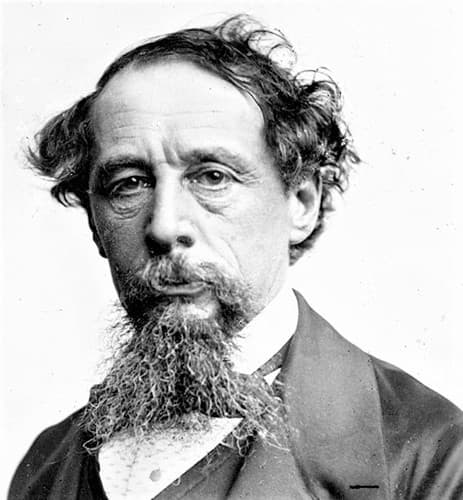
Charles John Huffam Dickens was an English writer and social critic who created some of the world's best-known fictional characters and is regarded by many as the greatest novelist of the Victorian era. His works enjoyed unprecedented popularity during his lifetime and, by the 20th century, critics and scholars had recognised him as a literary genius. His novels and short stories are widely read today.







