“The building was on fire, and it wasn't my fault.”
— Harry's opening line, setting the tone for his often-chaotic life.

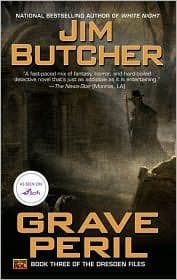
Jim Butcher (2001)
Genre
Fantasy / Mystery
Reading Time
750 min
Key Themes
See below
Sign in to track this book
When Chicago's spirit world erupts into a city-wide haunting, professional wizard Harry Dresden must find who is weaponizing the dead before their chaos claims him and everyone he cares about.
Harry Dresden is called by Michael Carpenter to investigate a haunting at Bianca St. Claire's mansion, a prominent Red Court vampire. There, Harry sees a terrifying vision of a woman being tortured by a shadowy figure. He tries to use a spirit-banishing spell but is interrupted by a powerful ghost, causing chaos. He saves Michael and Bianca from immediate danger, but the experience leaves him shaken and worried about the haunting's nature. This encounter sets the stage for increasing paranormal activity and introduces Bianca, a key player.
After the incident at Bianca's, Harry learns that Father Forthill, his spiritual advisor, has also been targeted by a malevolent spirit. The ghost attacks Father Forthill in his church, leaving him gravely injured. Harry realizes the hauntings are not random but are targeting people connected to him. This realization leads Harry to investigate more deeply, making him wonder who could be behind such a focused and malicious campaign. The personal nature of the attacks raises the stakes, pushing Harry to find answers quickly before more of his friends are harmed.
Warden Donald Morgan of the White Council appears, warning Harry about the increasing spirit activity. He reveals that the White Council knows about the situation and suspects a powerful magic-user is behind it, possibly one of their own. Morgan's presence highlights the seriousness of the threat and the chance of a larger magical war. He also expresses his distrust of Harry but admits Harry is in a unique position to investigate. This interaction forces Harry to consider that the antagonist might be someone with significant magical power and influence, making his task even more dangerous.
Harry investigates a haunting at Monica Sells' home, a woman who had previously hired him. He finds a powerful poltergeist causing great damage and terror. During the confrontation, Harry realizes the spirit is not just a ghost but a manifestation of an entity known as the Nightmare. This entity feeds on fear and regret and is being deliberately controlled. Harry temporarily banishes the Nightmare, but the encounter leaves him with a deeper understanding of the true threat: a deliberate magical attack using enhanced spirits.
While Harry investigates, Susan Rodriguez, his girlfriend and a reporter, is abducted by Red Court vampires. This event directly links the increasing hauntings to the Red Court, especially Bianca, who seems to be orchestrating events. Harry is devastated by Susan's disappearance and realizes the attacks are not just about him, but about drawing him into a larger conflict. Her abduction is a major turning point, turning the mystery into a desperate rescue mission and forcing Harry to confront the dangerous politics of the supernatural world.
Desperate to find Susan, Harry realizes he needs information and power beyond his own. He makes the dangerous decision to consult Mavra, a powerful Black Court vampire known for her knowledge of the supernatural underworld. Mavra, a terrifying and ancient being, agrees to help him, but at a high price. This alliance is risky, as Harry despises Black Court vampires, but his desperation for Susan's safety overrides his usual moral limits. Mavra provides cryptic clues and demands a future favor, further entangling Harry in dark supernatural politics.
Harry, with Michael Carpenter, Thomas Raith, and a team of Susan's friends (including some from the White Council), launches an assault on Bianca's heavily guarded estate to rescue Susan. The battle is fierce, involving vampires, ghouls, and other supernatural creatures. During the intense fight, Harry finds Susan, severely injured and partially turned into a Red Court vampire. The rescue is successful, but Susan's transformation adds a tragic and personal element to the conflict, forcing Harry to confront the irreversible consequences of the supernatural world.
After rescuing Susan, Harry learns that the Nightmare, the powerful entity causing the hauntings, is not just a tool but a sentient and malevolent being. He discovers that the Nightmare is the true antagonist, manipulating Bianca and others to feed on fear and despair. The Nightmare reveals its ability to possess and control individuals, making it a far more formidable and insidious foe than Harry first believed. This revelation shifts the focus from a vampire plot to a confrontation with a powerful, ancient spirit entity.
Harry tracks the Nightmare to a graveyard, where it has gathered immense power by preying on the fears of the dead and the living. A final, climactic battle happens between Harry and the fully manifested Nightmare. Harry uses all his magical abilities and cunning, but the Nightmare is a formidable opponent, able to twist his fears against him. The fight is desperate and brutal, pushing Harry to his limits as he tries to banish the entity before it can cause further destruction and claim more victims.
Harry ultimately defeats the Nightmare, but the victory comes at a terrible cost. In a desperate act, Harry uses a powerful ritual to banish the Nightmare, but the backlash leaves him severely weakened and causes lasting damage to his magical abilities. Susan's partial transformation into a Red Court vampire is irreversible, creating a painful rift in their relationship. The events of Grave Peril leave Harry deeply scarred, both physically and emotionally, setting the stage for future conflicts and solidifying his role as a protector in a dangerous world.
The Protagonist
Harry is forced to confront the personal cost of his work, learning that even victories can come with irreversible losses, particularly regarding his relationship with Susan.
The Supporting
Susan undergoes a traumatic transformation, losing part of her humanity and forcing her to grapple with a new, monstrous identity.
The Supporting
Michael continues to embody unwavering faith and selflessness, proving his dedication to protecting others, even at great personal risk.
The Antagonist
Bianca rises in power and influence within the Red Court, but ultimately becomes a victim and tool of a greater, more insidious evil.
The Antagonist
The Nightmare grows in power and influence, demonstrating its insidious nature, before being ultimately defeated by Harry Dresden.
The Supporting
Morgan continues to embody the rigid authority of the White Council, reluctantly acknowledging Harry's effectiveness while maintaining his personal distrust.
The Supporting
Thomas reveals his combat prowess and a deeper loyalty, showcasing his potential as an ally despite his vampiric nature.
The Supporting
Father Forthill survives a dangerous attack, reaffirming his faith and his role as a steadfast moral guide for Harry.
Harry's magical abilities come with great responsibility, and 'Grave Peril' shows the personal costs of wielding such power. His decision to intervene in supernatural conflicts directly leads to his loved ones being targeted, ending with Susan's partial transformation. This theme is clear in Harry's constant struggle to protect those he cares about while fighting forces beyond human understanding. The ending, where Harry is physically and emotionally scarred, emphasizes that even victories demand significant sacrifice, highlighting the heavy burden of being a protector in a world of magic and monsters.
““The building was in flames, the ceiling had fallen in, and I was on the floor, bleeding from a dozen cuts, with a demon trying to rip my throat out. I figured things couldn't get much worse.””
The novel explores the sacrifices made for love, especially through Harry's desperate attempts to save Susan. His love for her drives him to take extreme risks, including forming dangerous alliances and confronting powerful entities. Susan's abduction and transformation are direct results of Harry's involvement in the supernatural world, forcing both characters to deal with the irreversible changes to their relationship. This theme is also present in Michael Carpenter's strong commitment to his faith and family, and his willingness to fight alongside Harry against great odds. The tragic ending shows that love, while a powerful motivator, cannot always prevent heartbreak and loss.
““I'd put a bullet in the brain of the person who put her there, and I didn't care who it was.””
'Grave Peril' examines the power of fear and despair, embodied by the antagonist, the Nightmare. This entity feeds on negative emotions, amplifying them to cause chaos and destruction. The hauntings are not random acts but calculated attacks designed to create maximum terror and suffering. The novel explores how fear can be manipulated and used as a weapon, affecting not only direct victims but also those who witness the horror. Harry's fight against the Nightmare is a battle against hopelessness, showing the importance of courage and resilience when facing overwhelming dread.
““The greatest trick the devil ever pulled was convincing the world he didn't exist. The greatest trick the Nightmare ever pulled was convincing its victims it was just a bad dream.””
The story highlights the blurred lines between good and evil in the supernatural world, forcing Harry to make morally difficult choices. His reluctant alliance with Mavra, a Black Court vampire, to get information about Susan's whereabouts, is a clear example. Harry, a wizard committed to fighting evil, must temporarily compromise his principles to achieve a greater good. This theme questions traditional ideas of heroes and villains, showing that sometimes, to fight the darkest evil, one must enter morally gray areas and interact with beings they despise. The White Council's rigid rules often prove unhelpful, forcing Harry to forge his own path.
““There are no heroes or villains in this world, Harry. Only people trying to do what they think is right, and people who don't care.””
A progressively more dangerous series of paranormal attacks.
The story employs an escalating threat, starting with isolated hauntings and gradually revealing a wider, more personal, and more powerful supernatural danger. This device builds suspense as Harry realizes the attacks are not random but targeted, eventually uncovering the true antagonist: the Nightmare. Each new incident raises the stakes, from Father Forthill's injury to Susan's abduction, compelling Harry and the reader deeper into the mystery and increasing the sense of urgency. This progression ensures that Harry is always reacting to a growing danger, never truly getting ahead of the curve until the climax.
The direct targeting of Harry's friends and loved ones.
A key plot device is the direct targeting of Harry's personal connections. By having characters like Father Forthill and, most significantly, Susan Rodriguez, fall victim to the antagonist's machinations, the narrative immediately raises the emotional stakes. This transforms a general mystery into a deeply personal quest for Harry, motivating him to take desperate measures and making the consequences of failure far more impactful. The personal nature of the attacks not only fuels Harry's determination but also allows the reader to experience his emotional turmoil and understand the heavy burden of his profession.
An apparent antagonist who is later revealed to be manipulated by a greater evil.
Bianca St. Claire serves as a red herring villain. Initially, she appears to be the primary orchestrator of the hauntings and Susan's abduction, drawing Harry's ire and becoming the immediate target of his revenge. However, as the story progresses, it's revealed that Bianca herself is being manipulated and used by the true antagonist, the Nightmare. This device adds layers to the mystery, misdirecting both Harry and the reader, and ultimately making the true villain's reveal more impactful and terrifying, demonstrating the insidious nature of the Nightmare's influence.
The story is told entirely from Harry's subjective and often sarcastic viewpoint.
The entire narrative is presented through Harry Dresden's first-person perspective. This device allows for his sarcastic wit and internal monologue to color the storytelling, providing humor and insight into his character. However, it also means the reader's understanding of events is limited to Harry's perceptions, sometimes leading to misinterpretations or delayed revelations until Harry himself uncovers the truth. This makes the narrative engaging and personal, but also keeps certain plot twists hidden until Harry's own discovery, enhancing the mystery element.
“The building was on fire, and it wasn't my fault.”
— Harry's opening line, setting the tone for his often-chaotic life.
“I'm not going to die. I'm going to kick their ass.”
— Harry's resolve in the face of overwhelming odds during the masquerade.
“The world is full of monsters, and it's full of people who don't believe in them. That's what makes it so dangerous.”
— Harry reflecting on the ignorance of the mundane world regarding supernatural threats.
“There are some things worth fighting for. Even if you're not sure you can win.”
— Harry's internal monologue about his commitment to protecting others.
“Magic is dangerous. It's not a toy. It's not a parlor trick. It's power, and power kills.”
— Harry explaining the inherent risks and responsibilities of magic.
“Sometimes you have to do the wrong thing for the right reasons.”
— Harry grappling with difficult moral choices to achieve a greater good.
“Fear is a great motivator. Unfortunately, it's also a great paralyzer.”
— Harry observing the effects of fear on both himself and others.
“I'm a wizard. I solve problems. Usually with fire.”
— Harry's concise and slightly humorous self-description of his problem-solving methods.
“You can't always choose your battles, but you can always choose how you fight them.”
— Harry contemplating his approach to an unavoidable conflict.
“Being a hero isn't about being unafraid. It's about being scared to death and doing what needs to be done anyway.”
— Harry's definition of true heroism, often experienced firsthand.
“There's always another monster. Always another battle. Always another price to pay.”
— Harry's somber realization about the never-ending nature of his fight against evil.
“Never trust a Fae. Especially a pretty one.”
— Harry's ongoing caution regarding the manipulative nature of the Fae.
“Sometimes the best defense is a good offense. Sometimes the best offense is a bigger explosion.”
— Harry's practical, if destructive, approach to combat.
“When you're dealing with the supernatural, 'normal' is a relative term.”
— Harry acknowledging the absurdity and chaos of his daily life.
Ready to see how well you understood this book? Take our interactive quiz with 10 questions.

Biography coming soon.







