BookBrief
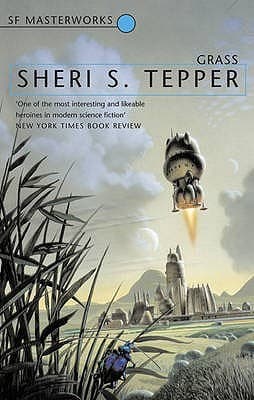
Grass cover
Archivist's Choice

Grass

Sheri S. Tepper (1989)

Genre

Fantasy / Spirituality / Science Fiction

Reading Time

12-14 hours

Key Themes

See below

Track Your Reading

Sign in to track this book

On a world where humans ride genetically-engineered, house-sized canids in ritualized hunts, a noblewoman uncovers the planet's terrifying immunity to a galaxy-wide plague, a secret intertwined with the very nature of its indigenous, horse-like inhabitants.

Synopsis

Generations after humanity fled to the planet Grass, a deadly plague ravages the galaxy, sparing only Grass. Ambassador Marjorie Westriding-Yrarier and her family are sent to investigate the planet's immunity. Upon arrival, they encounter the aristocratic human colonists who have adopted a dangerous, ritualized fox hunt involving enormous, mysterious hounds and the indigenous, equine-like 'foxen.' Marjorie's husband, Rigo, becomes obsessed with the hunt, while her daughter, Ginny, develops a strange connection with the foxen. As the plague's reach and political intrigue intensify, Ginny's brother, Tony, disappears, leading Marjorie to uncover the true nature of the hounds, the foxen, and the planet itself. She discovers that the hounds are a sentient, symbiotic species crucial to Grass's ecosystem, and the foxen are their 'keepers.' The plague, a deliberate act of galactic cleansing, is linked to an ancient alien intelligence that views humanity as a destructive force. Marjorie must make a devastating bargain to save humanity, even if it means sacrificing those she loves and betraying the very principles she holds dear. She ultimately uncovers the planet's true purpose as a living ark and a weapon, leading to a resolution that redefines humanity's place in the cosmos and forces a departure from Grass, forever changed.
Reading time
12-14 hours
Difficulty
Medium
Pacing
Moderate
Mood
Mysterious, Philosophical, Eerie, Thought-provoking
✓ Read this if...
You enjoy complex, thought-provoking science fiction with deep ecological themes, social commentary, and a strong sense of mystery.
✗ Skip this if...
You prefer fast-paced action, clear-cut heroes and villains, or shy away from philosophical discussions on humanity's role in the universe.

Plot Summary

Arrival on Grass

Marjorie Westriding, an Earth diplomat, is dispatched with her husband, Rill, and their children, Tony and Ginny, to the planet Grass. Humanity faces a devastating plague, the 'plague of ages,' which spares no world except for the mysterious Grass. Their mission is to discover the secret of Grass's immunity. Upon arrival, they are immediately struck by the planet's unique ecosystem, dominated by vast, sentient-like grasslands and a peculiar alien culture. The dominant human society on Grass is an aristocratic, fox-hunting gentry, descended from the original colonists, who live in isolated estates and maintain a rigid social structure. The Westridings find themselves outsiders in this strange, ritualistic world, struggling to understand its customs and the planet's true nature.

The Hunt and the Hounds

Marjorie, a keen observer, quickly becomes immersed in the local culture, particularly the elaborate fox hunts that are central to the Grassian gentry's lives. These hunts involve not only humans on horseback but also 'hounds,' alien creatures that resemble a cross between a horse and a dog, with an unsettling intelligence. Marjorie notices the hounds' strange behavior and their peculiar bond with their human riders. She learns that the hounds are more than just animals, they are an integral, almost sacred, part of Grassian society. She also observes the local 'foxes,' another alien species, which are not merely prey but seem to participate in the hunt in a ritualized, almost voluntary manner. The entire spectacle raises questions about the true nature of life and death on Grass.

The Plague's Reach and Political Intrigue

Despite Grass's initial immunity, whispers begin to circulate that the plague is starting to appear even there, albeit in a different form. The Westridings' mission becomes more urgent. However, the ruling gentry on Grass, particularly figures like the powerful Mrs. Dapple, resist outside interference and cling to their traditional ways, including their unique religion centered around the hunts. They believe the plague is divine punishment or a test, not a scientific problem. Marjorie faces significant opposition and subtle sabotage in her attempts to investigate, as the local authorities care more about maintaining their social order and sacred rituals than with finding a cure for a perceived 'alien' disease. The political landscape is full of hidden agendas and deep-seated prejudices.

Ginny's Connection and Tony's Disappearance

Marjorie's daughter, Ginny, a sensitive and somewhat reclusive child, forms an unusual bond with one of the hounds, a creature she names 'Fido.' This connection gives Ginny unique insights into the hounds' nature and the planet's subtle energies, often communicating with them non-verbally. Meanwhile, Marjorie's son, Tony, a curious and adventurous boy, disappears during one of the hunts. His disappearance sparks a frantic search and intensifies Marjorie's determination to uncover the planet's secrets. Tony's vanishing act is not merely an accident but seems connected to the deeper, hidden aspects of Grass, hinting at a sentience beyond human comprehension, and a world where the lines between hunter and hunted are blurred.

The Hounds' True Nature

Through her investigations, observations, and Ginny's unique connection, Marjorie begins to unravel the shocking truth about the hounds. They are not mere animals but highly intelligent, ancient beings, the true inhabitants of Grass, who have developed a complex, symbiotic relationship with the 'foxes' and, more recently, with humans. The hunts are not simply sport but an essential part of the hounds' life cycle and a form of ritualistic interaction between the species. The hounds manipulate their human riders, guiding them in a dance of survival and propagation. This revelation upends Marjorie's understanding of the planet and its inhabitants, revealing a millennia-old intelligence at play.

The Foxen and the Plague

Further investigation reveals that the 'foxes' are also sentient beings, known as Foxen, who are equally integral to Grass's ecosystem and the hounds' existence. The Foxen possess the planet's unique immunity to the galactic plague. The hunts, it turns out, are a complex process of population control and resource distribution, orchestrated by the hounds and the Foxen. The plague that affects humans is a biological weapon, and the Foxen have evolved a natural resistance. Marjorie realizes that the solution to the galactic plague lies not in human science alone, but in understanding and harnessing the unique biological and symbiotic mechanisms of the Foxen and the hounds, which have adapted to their environment over eons.

The Bargain and the Betrayal

Marjorie attempts to broker a delicate alliance between the human colonists, the hounds, and the Foxen. She proposes a way to extract the immunity from the Foxen without destroying their species, offering humanity a chance at survival. However, human fear, greed, and the rigid traditions of the Grassian gentry complicate matters. Some humans, particularly the more ruthless elements, see the Foxen and hounds as resources to be exploited rather than partners. There are betrayals and attempts to seize control of the immunity by force, threatening to shatter the fragile trust Marjorie has painstakingly built. The conflict highlights humanity's struggle to overcome its own destructive tendencies.

The Planet's True Purpose

Marjorie learns that Grass itself is a sentient entity, or rather, a complex ecosystem of interconnected intelligences — the hounds, the Foxen, and the very grasslands — all working together. The planet's immunity is not accidental but a deliberate, evolved defense mechanism. The hunts are a carefully managed system of life and death, an ancient ritual that sustains the delicate balance of the planet and its inhabitants. The hounds and Foxen are not just animals but guardians of a unique biological solution, a living archive of resistance against galactic threats. The planet is a sanctuary, a living laboratory, and its inhabitants hold the key to understanding universal biological resilience.

Tony's Transformation

Tony is eventually found, but he is no longer the same boy. He has been taken in by the Foxen and has undergone a profound, almost spiritual, transformation. He has gained a deeper understanding of their language, their ways, and the planet's interconnectedness. This transformation makes him an intermediary, a bridge between humanity and the Foxen, but it also separates him from his human family. His experience highlights the potential for human evolution and adaptation when confronted with truly alien intelligences, but also the sacrifice and loss of identity that can accompany such a profound shift. Tony's change is both a miracle and a tragedy, a demonstration of Grass's power.

The Resolution and Departure

Marjorie, with the help of Ginny and the transformed Tony, manages to secure the immunity from the Foxen, not through force, but through a negotiated understanding and respect for their species. The solution involves a carefully managed symbiotic relationship rather than exploitation. The Westridings prepare to leave Grass, carrying the cure for the galactic plague. However, they are all profoundly changed by their experiences. Marjorie has a new understanding of life, intelligence, and humanity's place in the cosmos. Ginny has found her voice and a unique connection to alien life. Tony has become something new, a hybrid consciousness. They depart with the cure, but the mysteries and lessons of Grass will forever shape their lives and the future of humanity.

Principal Figures

Marjorie Westriding

The Protagonist

Marjorie evolves from a pragmatic diplomat to a profound advocate for interspecies understanding, shedding her anthropocentric biases.

Rill Westriding

The Supporting

Rill grapples with the limitations of human science and the emotional weight of their alien surroundings, finding a quieter strength.

Ginny Westriding

The Supporting

Ginny transforms from a shy child into a powerful intermediary, embracing her unique connection to alien life.

Tony Westriding

The Supporting

Tony undergoes a radical transformation, becoming a hybrid consciousness and an ambassador for interspecies understanding.

Mrs. Dapple

The Antagonist

Mrs. Dapple remains largely static, a symbol of rigid tradition and resistance to change, ultimately unable to adapt.

The Hounds

The Supporting

The Hounds are revealed to be ancient, sentient beings, whose true nature and purpose drive the planet's unique ecosystem.

The Foxen

The Supporting

The Foxen are revealed to be sentient beings, the key to the galactic plague's immunity, and partners in Grass's unique ecosystem.

Themes & Insights

Interspecies Communication and Understanding

The novel explores the challenges and possibilities of communication between vastly different species. Marjorie's struggle to understand the Hounds and Foxen, and Ginny's intuitive connection, show that true understanding goes beyond language to empathy and a willingness to shed human-centered biases. The planet's ecosystem, a complex web of sentient life, forces humanity to reconsider its place in the universe. This theme is central when Marjorie tries to broker a deal with the Foxen, recognizing their intelligence and rights, rather than merely exploiting them for a cure.

"We think of ourselves as the apex, the crown of creation. But on Grass, we are merely another thread in a tapestry we barely comprehend."

Marjorie Westriding (internal monologue)

The Nature of Life and Death

Grass redefines life, death, and symbiosis. The ritualistic hunts are not merely sport but a vital, orchestrated cycle of life, death, and regeneration for the Hounds and Foxen. What appears brutal to human eyes is revealed to be a necessary, even sacred, process for the planet's ecosystem. The 'plague of ages' forces humanity to confront its own mortality and the interconnectedness of all life. Tony's transformation also blurs the lines between human and alien, suggesting that death can be a form of transformation rather than an end.

"What is death to us, is merely a different kind of life to them. A transformation, not an ending."

Narrator

Human Arrogance and Anthropocentrism

The novel critiques humanity's tendency to view itself as superior and to impose its own understanding on alien worlds. The Grassian gentry, with their rigid traditions and disdain for the 'animals,' exemplify this arrogance. Marjorie initially shares some of these biases but gradually sheds them as she uncovers the true intelligence of the Hounds and Foxen. The galactic plague itself can be seen as a consequence of humanity's unchecked expansion and lack of respect for other life forms. The story is a cautionary tale against assuming human-centric perspectives in a vast, diverse universe.

"We came here with our definitions, our certainties. Grass simply laughed at them."

Marjorie Westriding (internal monologue)

Tradition vs. Progress

The conflict between the entrenched traditions of the Grassian gentry and the need for scientific progress to combat the plague is a major theme. Mrs. Dapple and her ilk resist any change or outside interference, clinging to their ancient rituals and beliefs even in the face of universal catastrophe. Marjorie represents the drive for progress and adaptability. The novel suggests that while tradition can provide stability, rigid adherence to it can be dangerous and ultimately self-destructive, especially when confronted with existential threats. A balance must be found between honoring the past and embracing necessary evolution.

"Tradition is a comfortable blanket, until it smothers you."

Marjorie Westriding (internal monologue)

The Price of Survival

The desperate search for a cure for the galactic plague forces humanity to consider the ethical implications of survival. Is it acceptable to exploit another species for one's own gain? Marjorie's journey is about finding a way to secure humanity's survival without destroying the unique ecosystem of Grass or betraying the trust of its inhabitants. Tony's transformation, while offering a solution, also comes at a personal cost, highlighting that survival might require radical change and the shedding of old identities. The novel asks what humanity is willing to sacrifice, and what it might become, to continue existing.

"Survival is not merely living. It is living in a way that is worth living."

Narrator

Plot Devices & Literary Techniques

The Galactic Plague

A mysterious, deadly disease ravaging the galaxy, driving the plot.

The 'plague of ages' is the inciting incident and central mystery of the novel. It is a devastating, widespread disease that spares no planet except Grass, making the planet the sole focus of humanity's hopes. The plague serves as a powerful external threat, forcing Marjorie's mission and creating immense urgency. Its nature and origin are gradually revealed to be more complex than a simple pathogen, ultimately tying into the planet's unique biology and the larger galactic ecosystem. It acts as a catalyst for humanity's self-reflection and interspecies engagement.

The Ritualistic Hunts

The central, symbolic activity of Grassian human society, masking deeper alien processes.

The elaborate fox hunts are a prominent cultural feature of the human colonists on Grass. Initially presented as a barbaric sport, they are gradually revealed to be a highly ritualized, essential component of the planet's alien ecosystem, orchestrated by the Hounds and Foxen. The hunts serve as a narrative device to introduce the alien species, their complex interactions, and the deeper mysteries of Grass. They are a red herring, diverting human perception from the true nature of the planet, while simultaneously being the key to understanding it. They symbolize the human tendency to misinterpret alien cultures through their own lens.

Ginny's Empathy/Connection

A unique, intuitive bond with alien life forms, serving as a key to understanding.

Ginny Westriding's innate empathy and her ability to form a deep, almost psychic, connection with the Hounds serve as a crucial plot device. Her unique perspective allows Marjorie to gain insights into the Hounds' intelligence and the planet's subtle communications that would otherwise be inaccessible. Ginny acts as a bridge between human and alien understanding, providing crucial information and emotional depth. Her connection highlights the potential for non-linguistic communication and the idea that children, with their less rigid worldviews, might be more open to truly alien experiences.

The Sentient Planet/Ecosystem

The entire planet of Grass operates as a single, interconnected, intelligent entity.

Grass itself functions as a sentient, or at least highly intelligent and interconnected, ecosystem. The Hounds, Foxen, and even the grasslands are not separate entities but parts of a larger, self-regulating biological consciousness. This device challenges anthropocentric notions of intelligence and life. The planet's 'sentience' is not a single brain, but a distributed network, orchestrating its own defense and survival. This concept provides the ultimate explanation for Grass's immunity and forces characters to reconsider their understanding of agency and life itself.

Critical analysis

Notable Quotes

The universe is a place of terrible beauty and magnificent terror. It is not for us to understand it, but to live within it, and to try to make our small part of it a little better.

Marce speaking about the vastness of existence and human purpose.

Sometimes the greatest evils are done by those who believe themselves to be doing good.

A reflection on the motivations behind the actions of the ruling hierarchy.

Fear is a powerful tool, and those who wield it often find themselves wielding a double-edged sword.

Observations on the control exerted by the powerful over the populace.

The truth is not always what we want to hear, but it is always what we need to know.

Marce grappling with difficult revelations about the true nature of Grass.

To be human is to be flawed, to make mistakes, and to learn from them. It is also to be capable of great love and great cruelty.

A general philosophical musing on the nature of humanity.

We build our prisons with our own beliefs, and sometimes the hardest chains to break are those we forge ourselves.

Commenting on the societal and personal dogmas that restrict freedom.

The greatest mystery is not out there among the stars, but here, within ourselves.

A character contemplating the inner complexities of human nature.

Hope is a fragile thing, easily crushed, but it is also the most resilient of all human emotions.

Reflecting on the persistence of hope amidst dire circumstances.

Sometimes the only way to find your way home is to get lost first.

Marce's journey of displacement and eventual understanding.

The past is not dead; it is not even past. It lives within us, shaping who we are and what we will become.

Exploring the lingering effects of history and ancestral influence.

Nature has its own laws, and they are often harsher than any we might devise.

Observations on the brutal ecology of the planet Grass.

To truly see, one must first be willing to question everything they believe to be true.

Marce's process of uncovering the hidden truths of the world around her.

Power corrupts, not just the powerful, but also those they rule.

A critique of the hierarchical and oppressive social structures.

The universe does not care about our intentions, only our actions.

A stark reminder of the consequences of choices, regardless of motive.

Quiz

Test Your Knowledge

Ready to see how well you understood this book? Take our interactive quiz with 10 questions.

10
Questions
~5
Minutes
?
Best Score

Key Questions (FAQ)

The core premise of 'Grass' revolves around a deadly interstellar plague, known as the 'plague,' that is decimating humanity across the galaxy. Grass is the only known planet immune to this plague, prompting the human aristocracy, led by the Marq family, to migrate there in hopes of finding a cure or understanding its immunity. They establish a new society on Grass, mirroring their old aristocratic ways.

About the author