“All my life I have been a prisoner of these two words: 'delicious' and 'exquisite.'”
— L'Artiste (Pierre) reflecting on his life as a food critic and the limitations of his vocabulary.

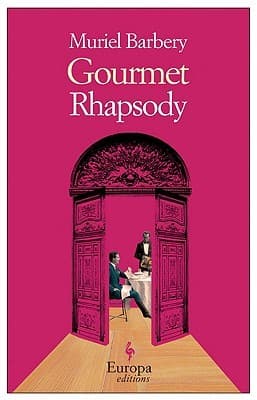
Muriel Barbery (2009)
Genre
Literary Fiction
Reading Time
120 min
Key Themes
See below
Sign in to track this book
On his deathbed, the world's most feared food critic embarks on a nostalgic, internal quest for a single, forgotten sublime flavor, while those he judged offer their sharp, often scathing, final assessments of his life.
Pierre Arthens, the world's most influential food critic, is on his deathbed in his luxurious Parisian apartment. Surrounded by medical staff and his estranged family, his mind is consumed not by regret or reconciliation, but by a desperate quest for a forgotten, sublime flavor from his past. This 'Flavor par excellence' is his singular obsession, a taste he believes holds the key to his understanding of life and death. He reviews his memories, trying to pinpoint the exact moment and dish that contained this elusive sensation, while his family and staff observe his final hours, each with their own complex feelings about the formidable man he was.
Arthens's internal monologue drifts back to his childhood. He remembers his wealthy, aristocratic parents who provided him with every material comfort but little emotional warmth. His early experiences with food were often solitary, yet they began to shape his extraordinary palate. He recounts specific meals and tastes from his youth, from the bland nursery foods to the elaborate, formal dinners prepared by household staff. These early memories highlight the development of his critical faculties and his growing detachment from genuine human connection, even as his relationship with food deepened.
The narrative shifts to the perspective of Arthens's childhood friend, the son of a butcher. This character recounts how Arthens, even as a young boy, displayed an innate superiority and an almost cruel detachment. He remembers Arthens's fascination with the butcher shop and its sensory details, but also his friend's inability to truly connect with people from different social strata. The butcher's son's account paints a picture of a gifted but emotionally stunted child, already forming the foundations of the unfeeling critic he would become, obsessed with sensation over sentiment.
One of Arthens's former lovers provides her perspective, detailing their passionate but ultimately doomed relationship. She speaks of his intense charm and intellectual brilliance, particularly concerning food, but also his emotional unavailability. She describes how he approached their intimacy with the same critical, analytical detachment he applied to cuisine, dissecting every moment rather than experiencing it fully. Her narrative reveals the pain of being loved by a man who could appreciate a dish more deeply than he could appreciate a human heart, ultimately leading to their separation and her lingering resentment.
Arthens's internal monologue returns to his professional life, detailing his rise to prominence as a food critic. He recalls the thrill of discovering new flavors, the power he wielded with his pen, and the respect and fear he commanded from the culinary world. He describes the meticulous process of tasting, analyzing, and judging, and the satisfaction he derived from shaping gastronomic trends. This period solidified his identity as a detached arbiter of taste, further isolating him from genuine human connection while elevating his public persona to an almost mythical status.
Arthens's daughter offers a scathing critique of her father. She speaks of his emotional neglect, his constant criticism, and his prioritization of his career over his family. She recounts painful childhood memories where her achievements were dismissed and her feelings ignored, overshadowed by his grand pronouncements on food. Her testimony highlights the devastating impact of his self-absorption on those closest to him, revealing the personal cost of his professional success and the deep divide that exists between them, even in his final moments.
A young, aspiring chef recounts his experience with Arthens, whom he initially idolized. He describes his fervent desire to impress the great critic, to earn his praise and validation. He details the immense pressure of preparing a meal for Arthens, and the crushing disappointment when his efforts were met with indifference or a dismissive review. This perspective underscores Arthens's formidable reputation and the almost god-like power he held over the careers of chefs, while also revealing his inability to nurture talent or offer genuine encouragement.
In a surprising shift, Arthens's cat provides a unique and poignant perspective. The cat, observing its master's final struggle, sees beyond the critic's formidable exterior. It notes the subtle shifts in Arthens's breathing, the way his hand twitches, and the vulnerability in his eyes. The cat's narrative, devoid of human judgment, reveals a glimmer of Arthens's inner turmoil and his deep, albeit unacknowledged, connection to the simple pleasures of existence, hinting at a hidden tenderness beneath his gruff exterior.
As Arthens drifts closer to death, the elusive memory finally crystallizes. He recalls a childhood moment on a beach, eating a perfectly fresh oyster. It wasn't an elaborate dish, but a simple, unadulterated taste of the sea, consumed with an innocent joy and a complete absence of judgment. This memory, free from the intellectualization and critical analysis that defined his career, represents the pure, untainted essence of flavor and connection to life itself. The realization brings him a profound sense of peace and understanding.
With the memory of the perfect oyster firmly in his mind, a serene expression settles on Pierre Arthens's face. He has found his 'Flavor par excellence,' not in a complex, gourmet creation, but in a simple, pure taste from his past, symbolizing an innocence and unadulterated pleasure he had long forgotten. He takes his final breath, leaving behind a legacy of both culinary genius and emotional desolation. His death marks the end of an era for the culinary world, but for his family and acquaintances, it is the culmination of a lifetime of extreme emotions provoked by his singular, complex personality.
The Protagonist
Arthens begins as a formidable, unfeeling critic and ends with a moment of profound, simple realization about the true nature of flavor and joy, transcending his lifelong intellectualization.
The Supporting
Her arc is static, remaining deeply wounded by her father's past actions, unable to forgive him even in his final moments.
The Supporting
Her arc is static, having moved on from the relationship but still bearing the scars of Arthens's emotional unavailability.
The Supporting
His arc is static, providing a consistent external view of Arthens from childhood.
The Supporting
His arc is static, having been shaped by his encounter with Arthens's unyielding judgment.
The Supporting
Its arc is static, serving as a constant, unjudgmental presence.
The novel explores the multifaceted nature of taste, moving beyond mere sensory perception to encompass memory, emotion, and personal history. Arthens's lifelong pursuit of the 'perfect' flavor is initially an intellectual and analytical endeavor, marked by his rigorous critical standards. However, his final epiphany reveals that true perfection in taste is not in complexity or refinement, but in simple, unadulterated pleasure tied to an innocent moment of being, as seen in his memory of the oyster. This theme questions whether true culinary bliss is found in high art or in fundamental, visceral experience, suggesting the latter is ultimately more profound.
“What is a flavor, after all? A memory. A memory, in this case, that had been lost for too long.”
Arthens's brilliance as a critic comes at the cost of profound emotional isolation. His relentless pursuit of sensory perfection and his analytical approach to life leave him detached from genuine human connection. The perspectives of his family and former lover underscore his inability to nurture relationships, to offer affection, or to see others beyond their utility or their ability to satisfy his intellectual curiosity. This theme highlights the destructive power of prioritizing intellectual and professional achievement over emotional intimacy, leading to a lonely death despite a life of immense public success. His critical lens, while honed for food, ultimately blinds him to human warmth.
“He dissected people with the same clinical precision he applied to a dish, finding their flaws, savoring their qualities, but never truly letting them touch him.”
Memory is the central engine of Arthens's final quest. His dying hours are dominated by the search for a specific, lost taste, which he believes holds a profound significance. The novel demonstrates how memory can be a powerful, almost tangible force, shaping our understanding of ourselves and our past. The 'Flavor par excellence' is not just a taste, but a gateway to a forgotten emotional state, an innocence lost to his critical persona. The various characters' memories of Arthens also highlight how individual perceptions of the past construct a complex, often contradictory, portrait of a person.
“A taste is a memory. Not just of the food, but of the moment, the light, the company. The whole world contained in a single bite.”
The novel critiques the arrogance and immense power wielded by critics, particularly those who operate with a detached, almost cruel, sense of superiority. Arthens embodies this, with his judgments capable of making or breaking careers and his general disdain for those he deems inferior. The perspectives of the young chef and his daughter vividly illustrate the damaging impact of such unchecked power and constant criticism. The story suggests that while critical discernment can elevate standards, it can also breed an insufferable elitism that ultimately diminishes the critic's own humanity. His final realization about the simple oyster subtly undermines his lifelong professional stance.
“He judged everything, everyone, with an air of absolute certainty, as if his palate were the sole arbiter of truth.”
The story is told through alternating first-person narratives.
The novel employs a mosaic of first-person narratives, switching between Pierre Arthens's internal monologue and the voices of various characters connected to him: his family, lovers, acquaintances, and even his cat. This device allows for a multi-faceted portrait of Arthens, revealing his complexity and the profound, often contradictory, impact he had on those around him. It highlights the subjective nature of truth and memory, preventing any single character's view from dominating and offering a richer, more nuanced understanding of the protagonist than a single narrative voice could achieve.
Arthens's dying thoughts drive the central quest.
Pierre Arthens's dying internal monologue serves as the primary narrative engine, propelling the plot forward as he searches for the 'Flavor par excellence.' This device allows direct access to his thoughts, memories, and critical faculties, revealing his intellectual prowess and his emotional isolation. It contrasts sharply with the external perspectives, offering a raw, unfiltered look at his final, most vulnerable moments, and ultimately guiding the reader through his journey of self-discovery and his eventual epiphany about the nature of taste and life.
An elusive, desired object that drives the protagonist's actions.
The 'Flavor par excellence' acts as a MacGuffin, a plot device that drives Arthens's final quest. It is an unspecified, sublime taste from his past that he desperately seeks to recall before he dies. While its true identity remains hidden for most of the novel, the search for it provides the overarching structure and motivation for Arthens's introspection and memory recall. Its eventual reveal as a simple oyster is significant, subverting expectations and reinforcing the novel's themes about the true nature of pleasure and perfection.
“All my life I have been a prisoner of these two words: 'delicious' and 'exquisite.'”
— L'Artiste (Pierre) reflecting on his life as a food critic and the limitations of his vocabulary.
“We are all dying, so it's a matter of choosing how to live.”
— L'Artiste's internal monologue about embracing life's pleasures despite its inevitable end.
“The only true journey is the one that leads to the source of taste, to the heart of memory.”
— L'Artiste's philosophical musing on the nature of culinary experience and its connection to the past.
“To eat is to incorporate a territory, to taste a landscape, to make a place one's own.”
— L'Artiste's poetic description of the profound act of eating and its connection to origin.
“The greatest joy in life is to be desired, but the greatest torment is to desire.”
— L'Artiste's reflection on the bittersweet nature of desire and its fulfillment.
“I have always believed that food is not just sustenance, but an art form, a language, a history.”
— L'Artiste's core belief about the multifaceted nature of cuisine.
“A good meal is a symphony, where each ingredient plays its part, contributing to the overall harmony.”
— L'Artiste comparing a well-prepared meal to a musical composition.
“The true gourmet is not one who eats a lot, but one who eats well, with discernment and pleasure.”
— L'Artiste distinguishing between gluttony and true appreciation of food.
“We spend our lives chasing after something we call happiness, without realizing that it's often right there, in the simplest of things.”
— L'Artiste's musing on the elusive nature of happiness and where it can be found.
“Childhood is a country where you can always return, if only in your memories and your tastes.”
— L'Artiste reflecting on the power of taste to evoke nostalgic memories of childhood.
“The true measure of a man is not how much he has, but how much he enjoys what he has.”
— L'Artiste's philosophy on valuing experience and enjoyment over material possessions.
“To taste is to know, to understand, to remember. It is an act of profound connection.”
— L'Artiste's deep appreciation for the sensory experience of taste.
“There are flavors that speak to the soul, that whisper secrets of the past and promises of the future.”
— L'Artiste's poetic interpretation of the emotional and historical resonance of certain tastes.
“Life is a banquet, and most poor fools are starving to death.”
— L'Artiste's lament about those who fail to appreciate the richness of life's experiences.
Ready to see how well you understood this book? Take our interactive quiz with 10 questions.

Muriel Barbery is a French novelist and philosophy teacher. Her 2006 novel The Elegance of the Hedgehog quickly sold more than a million copies in several countries.







