“I am not afraid of storms, for I am learning how to sail my ship.”
— Amy March reflects on her personal growth and resilience.

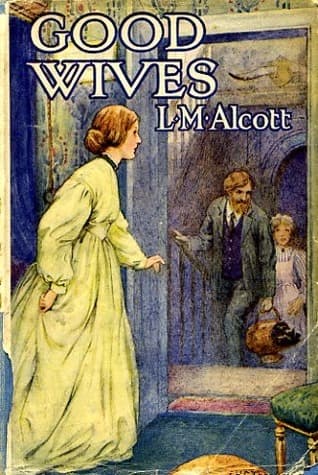
Louisa May Alcott (1870)
Genre
Children's / Historical Fiction / Young Adult / Romance
Reading Time
360 min
Key Themes
See below
Sign in to track this book
The March sisters navigate adulthood, love, and societal expectations as they grow into 'good wives' in post-Civil War America.
A year after the events of 'Little Women,' the March sisters are changing. Meg is engaged to John Brooke and preparing for married life. Jo, at 16, is finding her voice as a writer, publishing sensational stories. Beth continues her quiet life at home, still frail but finding joy in music and family. Amy, now 13, is developing into a refined young lady, focusing on her artistic goals and social graces. Laurie, having confessed his love for Jo and been rejected, decides to travel to Europe with his grandfather, Mr. Laurence, to further his education and overcome his disappointment. The sisters deal with these changes, supporting each other through new romantic prospects, career ambitions, and the passage of time.
Meg March marries John Brooke in a simple ceremony. This marks the first sister to leave the family home. Their early married life has domestic happiness, but also the realities of managing a household on a modest income. Meg, initially prone to extravagance, learns the value of frugality and hard work. She struggles with household management, making mistakes like buying expensive silk she cannot afford and feeling overwhelmed by cooking and cleaning. John, a patient husband, supports her through these challenges. They gradually learn to navigate their shared life, finding contentment in their small, loving home despite financial constraints.
Jo, seeking independence and new experiences, moves to New York City to work as a governess for Mrs. Kirke and write more seriously. There, she meets Professor Bhaer, an older, kind, intellectual German scholar who challenges her writing style and encourages her to write with more substance. Back home, Laurie, who has returned from Europe, confesses his deep love for Jo and proposes marriage. Despite their long friendship and affection, Jo realizes she does not love him romantically. She rejects his proposal, explaining that she sees him as a brother and fears their personalities would clash in marriage. She prefers to maintain her independence.
After Jo's rejection, a heartbroken Laurie returns to Europe with his grandfather. He tries to forget his sorrows in idleness and frivolous pursuits, which worries Mr. Laurence. Meanwhile, Amy, who has always wanted to travel, gets her wish when Aunt March invites her to go on a European tour. In Europe, Amy thrives, embracing the culture, art, and social etiquette. She works to improve her artistic skills and refines her manners, becoming a graceful and sophisticated young woman. Her time abroad helps her gain perspective and maturity, moving beyond her earlier vanity to appreciate deeper values.
Beth's fragile health, never fully recovered from her scarlet fever, begins to decline more noticeably. She becomes weaker and more withdrawn, spending her days quietly at home, often playing the piano or observing nature. Aware of her impending death, Beth faces it with gentleness and courage, finding comfort in her faith and her family's love. She has quiet, conversations with Jo, preparing her for the inevitable and expressing her peaceful acceptance of her fate. Her illness is a somber note in the family's lives, drawing them closer and showing the preciousness of their time together.
While in Europe, Amy and Laurie meet again in Nice. Laurie, still dealing with his heartache over Jo, is initially moody and aimless. Amy, now a poised and empathetic young woman, gently challenges his self-pity and encourages him to find purpose. As they spend more time together, their old friendship deepens. Laurie is captivated by Amy's maturity, grace, and artistic sensibility. Amy is touched by his kindness and vulnerability. Their shared experiences abroad and mutual understanding gradually lead to a romance, surprising both of them and delighting their families.
Beth's condition worsens, and she passes away quietly at home, surrounded by her loving family. Her death is a loss for the March family, leaving a deep void, especially for Jo, with whom she shared a special bond. The family grieves, but they also find comfort in Beth's peaceful acceptance and the beautiful memories she left behind. Her passing marks a turning point, showing the fragility of life and the strength of family love. It also prompts deeper reflection on mortality and purpose among the remaining sisters.
Devastated by Beth's death, Jo returns home, finding comfort in her memories and her mother. During this grief, she corresponds with Professor Bhaer, who offers her companionship and encouragement. His thoughtful letters and genuine concern for her well-being begin to soften Jo's independent spirit and open her heart to new possibilities. She realizes the depth of his character and the intellectual stimulation he provides, which she finds more fulfilling than her earlier pursuit of sensational literature. Their friendship deepens, laying the groundwork for a connection.
After their romance in Europe, Laurie proposes to Amy, and she accepts. Their engagement is met with enthusiasm by Mr. Laurence, who sees Amy as a perfect match for his grandson. They return to America, eager to share their news with the March family. Jo, initially surprised, quickly embraces the happiness of her sister and old friend, recognizing their suitability. The family celebrates the engagement, finding renewed joy and hope after Beth's passing, and looking forward to the future of the new couple.
Meg and John's family grows with the arrival of twins, a boy named Demi and a girl named Daisy. Meg embraces motherhood with joy, exhaustion, and renewed purpose. She finds fulfillment in nurturing her children and managing her household, showing how much she has matured from her earlier struggles with domesticity. Her focus shifts entirely to her family. She becomes a loving and capable mother, finding her happiness in the simple, everyday moments of her home life. Her journey shows the traditional path of a 'good wife' in the 19th century.
Professor Bhaer, having saved enough money, travels to America to visit Jo and the March family. His arrival brings quiet joy to the household. He quickly endears himself to everyone with his gentle nature, wisdom, and kindness. Jo, observing him with her family and seeing his interactions with her nieces and nephews, recognizes her affection for him. She realizes that her independence does not preclude love and that Bhaer offers a partnership based on mutual respect, intellectual stimulation, and deep affection, a different kind of love than she had previously imagined.
During a walk in the rain, Professor Bhaer proposes to Jo, confessing his love and his desire to provide for her. Jo, overcoming her initial surprise and touched by his sincerity, accepts his proposal. Their engagement is celebrated by the March family, who recognize Bhaer as a worthy and loving partner for their unconventional Jo. The story ends with Jo and Professor Bhaer inheriting Plumfield, Aunt March's old estate, and turning it into a co-educational boarding school for boys and girls. They embark on this new venture together, blending their love for children and education, promising a future filled with purpose, family, and intellectual growth.
The Protagonist
From a fiercely independent and career-focused young woman, Jo learns to embrace a different kind of love and partnership, finding fulfillment in both family and shared purpose.
The Supporting
Meg transforms from a somewhat romantic and occasionally vain girl into a practical, loving, and fulfilled wife and mother, finding contentment in domestic life.
The Supporting
Beth's arc is one of quiet decline and serene acceptance, culminating in a peaceful death that deeply impacts her family and shapes Jo's path.
The Supporting
Amy transforms from a self-absorbed and somewhat childish girl into a sophisticated, empathetic, and artistically accomplished woman, finding love and a fulfilling partnership.
The Supporting
Laurie moves from a youthful, unrequited love for Jo to a mature, fulfilling partnership with Amy, growing in responsibility and purpose.
The Supporting
Professor Bhaer's arc is consistent, serving as a beacon of intellectual and moral guidance for Jo, eventually fulfilling his role as her loving husband and partner.
The Supporting
Marmee remains a steadfast source of wisdom and love, providing consistent guidance and support as her daughters grow and face life's challenges.
The Supporting
John Brooke remains a consistent and supportive figure, growing into his role as a loving husband and father without significant personal transformation.
The Supporting
Mr. Laurence continues his role as a generous and wise patriarch, finding joy in his grandson's eventual happiness and the March family's extended presence.
The Supporting
Aunt March remains a consistent character, providing opportunities and challenges for the girls, culminating in her generous legacy.
'Good Wives' explores the challenges and changes of growing up. Each March sister navigates this transition differently: Meg embraces marriage and motherhood, learning the practicalities of domestic life. Jo struggles with societal expectations versus her desire for independence and a career, eventually finding a balance. Amy refines her character and social graces through travel and art, finding love. Beth faces her mortality with quiet dignity, showing a different kind of maturity. The novel details their individual journeys through love, loss, career goals, and the formation of their adult identities. It illustrates the varied paths women could take in the 19th century.
“They were good wives, these girls, and they had chosen their life work, which was to make happy homes for their husbands.”
The book explores the complexities of love. It shows romantic love through Meg and John's practical, devoted marriage, Laurie and Amy's mature partnership, and Jo and Professor Bhaer's intellectual and affectionate bond. Beyond romance, the novel emphasizes family love, particularly the sisterly affection that binds the Marches together through joy and sorrow, especially Jo's love for Beth. It also touches on platonic love and mentorship, as seen in Jo and Professor Bhaer's initial relationship. The story suggests that true love is not always passionate or glamorous, but often built on respect, companionship, and shared values.
“I can't love anyone else, and I'll never marry if you won't have me, Jo.”
A central theme, particularly for Jo, is the struggle to find purpose beyond traditional gender roles and maintain independence. Jo wants a career as a writer, initially compromising her artistic integrity for money but later seeking more meaningful work. Her rejection of Laurie shows her desire for self-determination. Amy also seeks purpose through her art and refinement, while Meg finds hers in creating a loving home. The novel explores how women of the era navigated their personal ambitions within societal limits. It suggests that purpose can be found in various ways, not just through conventional marriage.
“I want to do something splendid... something heroic or wonderful that won't be forgotten after I'm dead. I don't know what it is, but I'm on the watch for it, and mean to find it.”
The most significant instance of this theme is Beth's prolonged illness and eventual death. Her passing affects each sister, particularly Jo, who struggles with the grief of losing her closest confidante. The family's mourning and healing process show their resilience and the strength of their bonds. Beth's death helps characters grow and reflect, reminding them of life's fragility and the importance of cherishing loved ones. It also prompts Jo to re-evaluate her life choices and embrace a more settled future.
“There are many Beths in the world, shy and quiet, sitting in corners till needed, and living for others so cheerfully that no one sees the sacrifices till the little cricket on the hearth stops chirping, and the sweet, modest face is seen no more.”
While exploring independence, the novel also champions the value of domestic life and a strong family unit. Meg's journey into marriage and motherhood shows the joys and challenges of creating a home. The March household is a central haven, a place of comfort, moral guidance, and unwavering support. Even Jo, who initially resists domesticity, eventually finds fulfillment in establishing a family and a home with Professor Bhaer at Plumfield. The book suggests that a well-ordered, loving home is a source of happiness and a foundation for personal growth and societal contribution.
“Home is a happy place, for there we are always sure of a kind welcome.”
Letters convey character development and advance plot across distances.
Letters play a crucial role in 'Good Wives,' particularly when characters are separated by distance. Laurie's letters from Europe reveal his initial despair and later his growing affection for Amy. Jo's correspondence with Professor Bhaer from New York allows their intellectual and emotional connection to develop gradually, even before they acknowledge their romantic feelings. These letters provide insight into the characters' inner thoughts and emotions, advance the plot by sharing significant news (like engagements), and bridge geographical gaps, allowing the reader to witness character evolution and relationship dynamics that would otherwise be difficult to portray.
The sisters' distinct, yet often mirrored, paths to adulthood.
The novel uses parallel journeys to highlight the different paths women take in life. Jo and Amy, for instance, both travel to new places (New York and Europe, respectively) to pursue their ambitions and mature, but their experiences and eventual outcomes are distinct. Jo seeks intellectual and creative independence, while Amy refines her social and artistic graces, eventually marrying Laurie. Similarly, Meg's domestic journey parallels, yet contrasts with, Jo's independent one. This device allows Alcott to explore diverse definitions of 'good wives' and successful womanhood within the constraints of the era.
Homes represent stages of life, aspirations, and character growth.
The various homes in 'Good Wives' serve as powerful symbols. Meg's small cottage, initially a source of domestic struggle, becomes a symbol of her growth into a capable wife and mother, representing the beauty of a self-made home. Aunt March's grand estate, Plumfield, initially represents an old, rigid way of life, but its transformation into a vibrant co-educational school under Jo and Professor Bhaer symbolizes new beginnings, progressive ideals, and the merging of love, family, and purpose. The March family home, still central, remains a symbol of unwavering love and familial warmth.
Beth's decline and passing drive emotional development and plot progression.
Beth's ongoing illness and eventual death serve as a major plot device and emotional catalyst. Her fragility and quiet suffering underscore the transient nature of life and deepen the bonds within the family. Her passing directly impacts Jo, forcing her to confront grief, re-evaluate her independent nature, and ultimately open her heart to Professor Bhaer. It also brings the family closer, highlighting their resilience and the enduring power of their love. Her death marks a significant turning point, ushering in a more mature phase for all the surviving characters.
“I am not afraid of storms, for I am learning how to sail my ship.”
— Amy March reflects on her personal growth and resilience.
“Love is a great beautifier.”
— Meg March observes how love transforms people's appearances and spirits.
“I'd rather take coffee than compliments just now.”
— Jo March prioritizes practicality over flattery.
“Don't try to make me grow up before my time...”
— Beth March expresses her desire to remain innocent and childlike.
“Housekeeping ain't no joke.”
— Hannah Mullet, the family servant, comments on the challenges of domestic work.
“Money is the root of all evil, and yet it is such a useful root that we cannot get on without it.”
— Aunt March discusses the paradoxical nature of wealth.
“I think she is growing up, and so begins to dream dreams, and have hopes and fears and fidgets, without knowing why or being able to explain them.”
— Marmee March observes Meg's transition into adulthood.
“”
— Description of Jo March's spirited and impulsive nature.
“You have a good many little gifts and virtues, but there is no need of parading them, for conceit spoils the finest genius.”
— Marmee advises humility to her daughters.
“I want to do something splendid... something heroic or wonderful that won't be forgotten after I'm dead.”
— Jo March expresses her ambition for a meaningful life.
“The sun has set, no night birds sing, and the wind has gone down with the sun.”
— Descriptive passage setting a tranquil evening scene.
“She was one of those happily created beings who please without effort, make friends everywhere, and take life so gracefully and easily that less fortunate souls are tempted to believe that such are born under a lucky star.”
— Description of Amy March's charming and effortless social grace.
“Work is wholesome, and there is plenty of it for everyone; it keeps us from ennui and mischief, is good for health and spirits, and gives us a sense of power and independence better than money or fashion.”
— Marmee March extols the virtues of work and productivity.
Ready to see how well you understood this book? Take our interactive quiz with 10 questions.
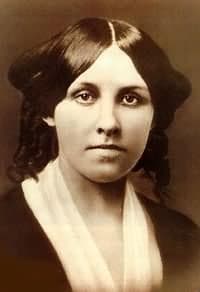
Biography coming soon.

Dan Gemeinhart
4.5

Kate O'Hearn
4.4

Jeanne Birdsall
4.4

Jen Wang
4.4

Wendelin Van Draanen
4.3

John Marsden
4.3

Chris Van Allsburg
4.3

Jennifer A. Nielsen
4.2