“Being good enough means you’re good enough for yourself, not for your parents, not for your school, not for the Ivy League. Just for you.”
— Patti's realization about self-worth beyond external validation.

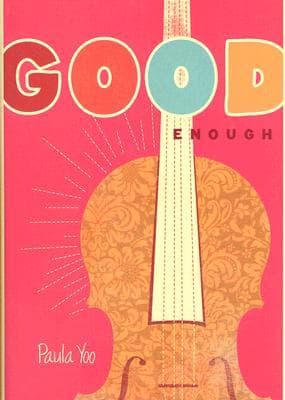
Paula Yoo (2008)
Genre
Young Adult / Romance
Reading Time
320 min
Key Themes
See below
Sign in to track this book
A Korean-American overachiever struggles to reconcile her parents' Ivy League dreams and strict rules with her love for a trumpet player and her musical passions outside of classical violin.
Patti Pak is a high school junior, living under her Korean-American parents' great expectations. Her life is about getting perfect grades, playing violin well, and preparing for the SATs, all to attend an Ivy League university (HarvardYalePrinceton, as her parents call it). Her older sister, Sarah, is at Yale, setting a high standard. Patti spends weekdays at school and evenings studying and practicing violin, with weekends often filled with tutoring or music lessons. Her best friend, Liz, offers some humor and understanding, but even Liz struggles to fully understand Patti's intense home life. Patti's parents are strict, often comparing her achievements to Sarah's and stressing their family's standing in the Korean community. This constant scrutiny makes Patti feel 'not good enough.'
The SAT scores arrive. Patti scores 2250, which is good, but her parents are disappointed. They expected a perfect 2400, or at least closer to Sarah's score. Her father's quiet disapproval and her mother's repeated complaints about her 'average' performance hurt Patti. She feels like a failure, which strengthens her belief that she can never truly please them. This event shows the emotional cost of her parents' perfectionism and makes her question if her efforts will ever be enough. The pressure to retake the test quickly grows, adding more stress to her already busy schedule of AP classes and violin practice.
Patti tries out for the All-State Orchestra, a very competitive musical group. She puts her all into the audition, playing her violin with feeling. She gets a spot as assistant concertmaster, a respected role, but her parents are disappointed she did not get concertmaster. This again shows their desire for absolute perfection. During All-State rehearsals, Patti meets Ben, a charming and talented trumpet player. He is funny, relaxed, and shares her love for music, especially rock music, which is different from her classical training. Ben's calm manner and real appreciation for her music impress Patti, giving her a welcome break from her high-pressure world. She finds herself drawn to his carefree attitude.
Patti and Ben start spending more time together during All-State rehearsals and breaks. Their talks show a shared love for music beyond classical, especially their admiration for 'The Broken Hearts,' an indie rock band. Ben's humor and his strong resemblance to the band's lead singer further draw Patti in. She thinks about him often, a distraction her parents would forbid. Their growing connection feels exciting and risky, as any romantic interest is forbidden by her parents' rules for college preparation. Patti struggles to balance her feelings for Ben with the guilt of straying from her planned path.
Ben invites Patti to a concert for 'The Broken Hearts,' her favorite band. Despite her hesitation, knowing her parents would never approve, Patti decides to go. She makes up a detailed lie about studying with Liz. The concert changes Patti. She feels a freedom and excitement she rarely experiences in her structured life. Dancing and singing with Ben, she realizes there is a world beyond her parents' expectations, a world where she can just be herself and enjoy life. This night confirms her feelings for Ben and increases her desire for more personal freedom, but also increases her worry about keeping her secret life.
Returning home after the concert, Patti feels both happy and worried. Her parents, especially her mother, are subtly suspicious of her late return and vague explanations. Guilt bothers her, but the memory of the concert and her time with Ben makes it feel worth it. The next few days are tense, with her parents watching her activities more closely and reminding her constantly of her school duties. Patti feels more and more suffocated by their control and the weight of her secret. She starts to resent the constant pressure, realizing that her parents' idea of happiness for her may not match her own.
As college application season nears, Patti faces writing her personal essay. The question asks about a significant experience or person that has influenced her, making her confront who she truly is and what she genuinely wants. Her parents, of course, expect an essay highlighting her school achievements and dedication to violin, perfectly suited for an Ivy League admissions committee. However, Patti cannot write a real essay that fits their expectations. She deals with the conflict between her parents' dreams for her and her growing desire for a life that includes Ben, rock music, and a sense of personal choice. The essay becomes a symbol for her inner struggle.
What had to happen, happens: Patti's parents find out about her relationship with Ben. It likely comes out through a phone call, a text message, or a classmate's comment. The confrontation is loud, with her parents showing great anger and disappointment, accusing her of risking her future and shaming the family. Her mother is especially upset, feeling betrayed by Patti's deception. They forbid her from seeing Ben again, take her phone, and set even stricter rules, isolating her. Patti is devastated, feeling misunderstood and trapped. This argument is a turning point, where Patti realizes she can no longer quietly follow her parents' every demand.
After the argument, Patti, though initially crushed, starts to find her voice. She realizes that while she loves her parents, she cannot give up her own happiness and identity to fulfill their dreams. She starts to subtly resist, expressing her true feelings about her future, her interest in music beyond classical, and her desire for a more balanced life. This is not an easy or quick process; it is a series of small, brave steps. She tells Liz how she feels and, through secret ways, tells Ben, who supports her. Patti decides that she needs to define 'good enough' for herself, instead of letting her parents define it for her.
Patti starts to research colleges with good music programs, not just Ivy League schools. She rewrites her college essay to show her true self and her interests, including her love for both classical and rock music, and her personal growth. While her parents still resist, Patti stands firm in her choices. There is a slow, uneasy peace, as her parents slowly start to accept her individuality, realizing that their strict control might be pushing her away. Patti applies to a range of schools, including some not on her parents' 'approved' list. She continues to play violin, but now for her own enjoyment, not just as a means to an end. She also manages to keep her relationship with Ben, though still somewhat secretly, finding a way to combine her personal life with her school work.
Patti receives her college acceptance letters. She may not get into all the 'HarvardYalePrinceton' schools her parents wanted, but she gets into good universities, including one with a strong music program that truly excites her. The novel ends with Patti making a choice that shows her own goals and values, not just her parents'. She understands that 'good enough' is personal and that her worth is not only defined by school awards or parental approval. Her relationship with Ben is steady, and she looks forward to a future where she can pursue her interests, keep her identity, and manage her relationship with her parents more evenly. She has learned to speak for herself and define her own success.
The Protagonist
Patti transforms from a compliant overachiever burdened by external expectations into a self-assured young woman who defines her own success and happiness.
The Supporting
He remains largely steadfast in his traditional views, but shows subtle signs of acknowledging Patti's individuality towards the end, softening his stance slightly.
The Supporting
She maintains her intense pressure throughout the story, but towards the end, she begins a slow, grudging acceptance of Patti's choices, driven by a desire to maintain family harmony.
The Supporting
Liz remains a steadfast friend, consistently supporting Patti's growth and self-discovery.
The Supporting
Ben serves as a catalyst for Patti's self-discovery, remaining a supportive and understanding partner as she navigates her personal struggles.
The Supporting
Sarah's character remains largely static, serving as a benchmark for Patti's parents rather than undergoing significant personal development within the narrative.
The Mentioned
Mrs. Lee's character does not have an arc, serving as a background element to illustrate societal pressures.
The Mentioned
The band serves as a static symbol of freedom and shared passion.
The main theme is Patti's journey to define her own identity apart from her parents' expectations. She first hides her true desires, like her love for rock music and her attraction to Ben, to fit the 'perfect Korean-American daughter' image. Through her experiences with Ben and her struggle with the college essay, Patti learns that her worth is not only tied to school achievements. She learns to accept her varied personality and stand up for what truly makes her happy, choosing a path that fits who she is rather than her parents' vision.
“"What if 'good enough' for me wasn't 'good enough' for them? And what if 'good enough' for them wasn't 'good enough' for me?"”
This theme explores the conflict between the high expectations of immigrant parents and their children's growing personal desires. Patti's parents, especially her mother, want their daughter to succeed and have social standing, seeing an Ivy League education as the main goal. This directly conflicts with Patti's growing need for independence, her interest in non-classical music, and her desire for a romantic relationship. The novel shows the cultural aspects of this conflict, where parental love often comes through strong pressure, and children feel a deep duty to honor their family, even if it means sacrificing their own happiness. The peak of this theme is the confrontation when Patti's relationship with Ben is revealed.
“"Your sister got 2350. You got 2250. Is that good enough? Is that excellent?"”
The novel looks at the challenges faced by second-generation immigrant children dealing with two different cultures. Patti lives in a mostly American high school, where her peers have more freedom, but returns home to a household with traditional Korean values of respect, family duty, and academic rigor. Her parents' focus on 'HarvardYalePrinceton' and their strict rules about dating show their cultural background and their hopes for their children to succeed in America while keeping their heritage. Patti's struggle is to find a balance between honoring her heritage and embracing the individual parts of American youth culture, without feeling like she has to choose one over the other.
“"But my parents didn't understand. They didn't understand anything about being a regular American teenager."”
A main theme is changing the definition of 'success.' Patti's parents define success only by Ivy League acceptance, perfect scores, and respected achievements. Patti, however, slowly learns that true success includes personal happiness, self-acceptance, and following one's interests, even if they do not match traditional measures of achievement. Her relationship with Ben and her love for 'The Broken Hearts' teach her that fulfillment can come from unexpected places. The novel suggests that a well-lived life is one where a person defines their own 'good enough' instead of following outside, often culturally imposed, standards.
“"Maybe 'good enough' was subjective. Maybe it depended on who was doing the judging."”
A recurring phrase symbolizing Patti's parents' singular ambition for her.
This phrase is constantly repeated by Patti's parents, encapsulating their unwavering and singular goal for her future: acceptance into an elite Ivy League university. It functions as a symbol of the immense pressure Patti faces and the narrow definition of success her parents hold. The repetition emphasizes the almost obsessive nature of their ambition and serves as a constant reminder of Patti's perceived shortcomings when she doesn't meet their impossible standards. It highlights the cultural values placed on prestigious education and acts as a comedic yet poignant shorthand for parental expectations.
A symbol of both external pressure and Patti's internal passion.
The violin is a multifaceted symbol in the novel. Initially, it represents the instrument of her parents' ambition; Patti practices diligently not just out of love, but out of obligation and to achieve awards like Assistant Concertmaster. It's a tool for college applications. However, as Patti grows, the violin also becomes a conduit for her own personal expression and love for music, particularly when she starts to play for herself rather than for her parents' approval. It symbolizes her innate talent and her struggle to reclaim her own relationship with her art, moving from a burden to a source of joy and self-discovery.
A symbol of rebellion, freedom, and Patti's authentic self.
The indie rock band 'The Broken Hearts' serves as a powerful symbol of Patti's hidden desires and her yearning for freedom. Their music represents a world outside of classical music and academic rigor, a world where Patti can be spontaneous, passionate, and simply herself. Her shared love for the band with Ben strengthens their connection and provides a tangible reason for her first major act of rebellion (attending the concert). The band's name itself could subtly allude to the emotional turmoil Patti experiences as she navigates her conflicting loyalties and desires, feeling 'broken-hearted' by her parents' expectations.
A narrative device to explore Patti's internal conflict and self-discovery.
The college essay serves as a crucial plot device that forces Patti to confront her true identity and aspirations. The seemingly straightforward task of writing about herself becomes an intense internal struggle, as she grapples with whether to write what her parents want to hear or what she genuinely feels. It's a microcosm of her larger conflict between external expectations and personal desires. The process of writing and rewriting the essay allows the reader to witness Patti's evolving understanding of herself and her courage to articulate her own vision for her future, ultimately becoming a testament to her growth.
“Being good enough means you’re good enough for yourself, not for your parents, not for your school, not for the Ivy League. Just for you.”
— Patti's realization about self-worth beyond external validation.
“Sometimes you have to break a few rules to find out what you really want.”
— Patti contemplating her choices and the expectations placed upon her.
“What if my dream isn't their dream? What if it's not even a dream they can understand?”
— Patti's internal struggle with her parents' high expectations for her future.
“Love isn't about being perfect. It's about being perfect for each other, even with all your imperfections.”
— Patti reflecting on her budding romance and the complexities of relationships.
“The hardest part of growing up is realizing your parents are just people too, with their own fears and dreams.”
— Patti gaining new perspective on her parents' motivations.
“Maybe being good enough isn't about getting into the best college, but about finding where you truly belong.”
— Patti questioning the traditional definition of success.
“You can't live someone else's life, no matter how much they want you to.”
— A friend's advice to Patti about asserting her independence.
“The fear of not being good enough can sometimes be more paralyzing than actually failing.”
— Patti's internal monologue about her anxieties.
“Sometimes the biggest adventures start with the smallest steps, like talking to the boy you're not supposed to like.”
— Patti embarking on a new romantic interest.
“It's okay to change your mind. It's okay to not have all the answers right now.”
— Patti grappling with her future plans and feeling uncertain.
“There's a difference between respecting your parents and letting them dictate your entire life.”
— Patti distinguishing between filial piety and personal freedom.
“The perfect plan is often the enemy of a good life.”
— Patti realizing the limitations of rigid planning.
“Being brave isn't about not being scared, it's about doing it anyway.”
— Patti confronting a difficult conversation or decision.
“Sometimes you have to disappoint people to make yourself happy.”
— Patti making a choice that goes against her parents' wishes.
Ready to see how well you understood this book? Take our interactive quiz with 10 questions.

Biography coming soon.