“Man is a beautiful animal, who thinks himself a god, and in his lust for power, will defile even the stars.”
— Darrow reflecting on humanity's flaws and ambition.

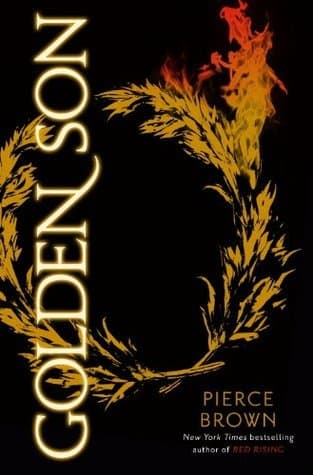
Pierce Brown (2015)
Genre
Fantasy / Science Fiction / Young Adult
Reading Time
540 min
Key Themes
See below
Sign in to track this book
Haunted by a lost love and leading a revolution, Darrow, a Red posing as a Gold, must navigate the Society's politics and combat to dismantle their empire, all while battling his own desire for revenge.
After his victory at the Institute, Darrow, known as 'The Reaper,' is a celebrated hero among the Golds but feels conflicted. ArchGovernor Nero adopts him into House Augustus, seeing him as a useful piece in his political games. Darrow struggles with the constant deception and the weight of his mission, often feeling alone despite his success. He reunites with friends from the Institute, including Sevro, Cassius, Roque, and Mustang, but their camaraderie is strained by politics and past conflicts. Darrow is haunted by Eo's memory and the sacrifices made, always questioning if his actions honor her vision or if he is becoming like his enemies. His training continues with Fitchner, pushing him to master Gold warfare and politics.
Darrow, Sevro, Mustang, and other successful Institute students go to the Academy, a military school where they learn fleet command, strategy, and political maneuvering. ArchGovernor Augustus pushes Darrow to excel, using him as a symbol of his house's power. Darrow becomes more involved in Gold politics, learning their games while secretly working for the Sons of Ares. He forms a close bond with Mustang, developing feelings for her despite his initial doubts about their different castes. The Academy ends with intense war games, which are not just simulations but a brutal test of skill and loyalty, designed to find future leaders of the Society's military.
During the Academy's war games, which become a real conflict on Ganymede, Darrow commands a fleet. He achieves a victory against forces led by the Ash Lord, a powerful rival of House Augustus. This battle is important, as Darrow uses the chance to help the Sons of Ares, saving many lowColors used as cannon fodder. His actions get the attention of the Sons of Ares, who start to see him as a leader, and also raise suspicions among some Golds, especially Roque, who becomes wary of Darrow's tactics and influence. The battle establishes Darrow's reputation as a military genius but also puts him in a more risky position.
After the victory on Ganymede, ArchGovernor Augustus holds a ball to celebrate Darrow's success and strengthen his political standing. Darrow navigates the social scene, making allies and enemies. He dances with Mustang, their connection growing, and observes the power plays among the highGolds. During the ball, Darrow learns of ArchGovernor Septimus's plot to undermine Augustus and Darrow. He also has a tense meeting with the Sovereign, Octavia au Lune, who subtly questions his loyalties. Darrow realizes the extent of the danger he is in and the ruthlessness of the Society's elite, making him more determined to bring them down.
The Sons of Ares carry out an operation to expose corruption within the Society, using Darrow's information. However, during the chaos, the Sovereign's forces corner Darrow. Cassius au Bellona, Darrow's former friend and rival, reveals Darrow's true identity as a Red. Cassius, seeking revenge for his brother Julian's death and manipulated by the Sovereign, publicly unmasks Darrow, exposing him as a Red changeling and a traitor. This revelation shatters Darrow's world, destroying his persona and putting his life in immediate danger. He is captured and tortured, his mission seemingly failing.
Just as Darrow faces execution, Sevro and the Howlers rescue him, revealing themselves as high-ranking Sons of Ares members. Darrow learns that Fitchner, his mentor, is Ares, the rebellion's leader. This revelation is a shock, as Darrow deals with the deception. Ares explains their plan: to use Darrow as a symbol and weapon to dismantle the Society. Darrow is taken to the Sons of Ares' hidden base, where he meets other rebellion figures and begins to understand the network working for freedom. He is given the choice to commit fully to the rebellion or be left behind.
With his identity revealed, Darrow, now committed to the Sons of Ares, begins to describe his vision for a new, fair society—a Republic. He aims for lasting freedom and justice for all Colors, not just revenge. Mustang, shocked by the betrayal and Darrow's true identity, struggles with her loyalties. She is torn between her feelings for Darrow and her duty to her family and the Society she grew up in. Darrow tries to convince her to join, appealing to her sense of justice and intelligence, but she remains conflicted, unsure if she can trust him after such a lie.
The Sovereign, Octavia au Lune, angry about Darrow's escape and the Sons of Ares' growing influence, launches a counterattack. She uses her resources and skill to hunt down the rebels. During this time, the Sons of Ares suffer a blow: Fitchner, their leader Ares, is captured. In a show of power, the Sovereign publicly executes Fitchner, broadcasting his death across the solar system. This act deeply affects Darrow and Sevro, Fitchner's son. The loss of Ares is a setback for the rebellion, creating a leadership gap and fueling Darrow's desire for revenge, but also strengthening his resolve to finish what Fitchner started.
After Fitchner's death, Darrow takes on a more prominent leadership role within the Sons of Ares, though not yet officially Ares. He plans to capture the Sovereign's flagship, the 'Pax,' a symbol of her power. This operation is dangerous, requiring careful planning and execution. Darrow leads a team of Howlers and other rebels in a covert infiltration, navigating the ship's defenses and overcoming resistance. Capturing the 'Pax' is a moral victory for the rebellion and a strategic blow to the Society, showing Darrow's growing tactical skill and ability to inspire loyalty.
As the rebellion gains momentum, Darrow prepares for a major attack. However, he is surprised by a betrayal: Roque, his long-time friend, reveals his allegiance to the Sovereign. Roque, disappointed by Darrow's lies and the rebellion's chaos, believes Darrow is destructive and chooses to side with the established order. This betrayal leads to a battle, as Roque uses his knowledge of Darrow's tactics to ambush the Sons of Ares. Darrow confronts Roque in a showdown, a clash between former friends that shows the tragic costs of the war and the deep divisions within the Gold caste. The battle tests Darrow's leadership and his ability to overcome personal loss for the cause.
The Protagonist
Darrow evolves from a vengeful infiltrator to a reluctant but capable leader, grappling with the moral complexities of war and the cost of his deceptions.
The Supporting
Mustang navigates conflicting loyalties, moving from a staunch Society loyalist to questioning its foundations dues to Darrow's influence.
The Supporting
Sevro continues his unwavering loyalty to Darrow and the rebellion, facing personal tragedy with the death of his father but growing in resolve.
The Supporting
Cassius descends into vengeful manipulation, culminating in his devastating betrayal of Darrow.
The Supporting
Roque's loyalty to Darrow erodes due to Darrow's lies and the resulting chaos, leading him to betray the rebellion out of a belief in upholding the Society's order.
The Supporting
Nero maintains his manipulative hold on power, using Darrow as a pawn until Darrow's exposure threatens his standing.
The Antagonist
The Sovereign consolidates her power and retaliates against the growing rebellion, becoming a more direct and brutal antagonist.
The Supporting
Fitchner guides Darrow and reveals his true identity as Ares, ultimately sacrificing himself for the rebellion.
Darrow's existence in 'Golden Son' is a lie. He constantly struggles with his dual identity as a Red in Gold skin, questioning if he is losing himself in 'The Reaper' persona. This theme explores the psychological cost of deception, the blurring lines between his true self and his created identity, and the moral compromises needed to achieve his goals. His struggle is clear in his thoughts and strained relationships, especially with Mustang, who sees through his facades but is hurt by his lies. The public revelation of his identity is the climax of this theme, forcing him to confront who he really is.
“I am Darrow, but I am also the Reaper. Which is the lie? Which is the truth? I don't know anymore.”
The book shows the realities and moral complexities of revolution. Darrow's mission, though noble, requires sacrifice, violence, and manipulation. The costs are not just physical, seen in the deaths of allies like Fitchner, but also emotional, as Darrow loses friends like Cassius and Roque to betrayal and misunderstanding. The story questions if the ends justify the means, showing the damage to innocent lives and the psychological scars left on those fighting for freedom. The theme shows that even a good cause can demand terrible prices.
“Freedom is a lonely road, and the road to it is paved with the bones of good men.”
Loyalty and betrayal are key to the plot. Darrow forms strong bonds with Sevro, Mustang, Cassius, and Roque, only to see these relationships tested and, in some cases, broken. Cassius's betrayal is due to revenge and manipulation, while Roque's comes from a clash of ideals and a perceived breach of honor. These betrayals show the treacherous nature of the Society and the personal cost of Darrow's mission. Conversely, Sevro's loyalty shows the power of true friendship amidst chaos, giving Darrow important emotional support.
“I trusted him. We were brothers, once. Now he hunts me.”
Darrow's initial reason for joining the rebellion was revenge for Eo's death. However, as he progresses and takes on leadership, he deals with Eo's broader vision of a just and free society. The theme explores the tension between personal revenge and the pursuit of systemic justice. Darrow must learn to use his rage for change rather than giving in to blind vengeance, which could make him as tyrannical as the Golds he fights. His desire to build a Republic, rather than just destroy, shows this struggle.
“We are not just destroying. We are building. We are building a new world.”
'Golden Son' examines how power works within the hierarchical Society. From the ArchGovernors to the Sovereign, the book shows how absolute power corrupts, leading to manipulation, oppression, and casual cruelty. Darrow's infiltration exposes the decadence, political maneuvering, and moral decay of the Gold elite. The theme shows how even those who claim to act for 'order' or 'tradition' are often driven by self-interest and a desire to keep their privileged positions, continuing a system built on exploiting lower Colors.
“The Society is a beautiful lie, built on the backs of slaves.”
A central deception driving the entire plot.
Darrow's transformation into a Gold changeling is the fundamental plot device of the series, and particularly 'Golden Son.' It allows him to infiltrate the highest echelons of the Society, providing an insider's perspective on their culture, politics, and military. This device creates constant tension, as Darrow lives in fear of exposure, and fuels his internal conflict regarding his identity. It also serves as a powerful metaphor for class and identity, highlighting how appearance and perceived status dictate one's place in the Society. The eventual revelation of his true identity is a major turning point, shattering his carefully constructed world.
Complex web of alliances and betrayals among the Gold Houses.
The intricate political landscape of the Gold Society, with its shifting alliances, rivalries between Houses (Augustus, Bellona, Arcos, etc.), and the overarching power of the Sovereign, acts as a crucial plot device. Darrow is forced to learn and master these 'games,' using manipulation, strategy, and charisma to navigate the treacherous environment. This device provides much of the external conflict, forcing Darrow to outwit powerful opponents and make difficult choices that have widespread implications for the rebellion. The grand ball and the war games are prime examples of this political chess match.
Darrow's elite, loyal, and ruthless strike force.
The Howlers, led by Sevro and fiercely loyal to Darrow, serve as a critical plot device. They are Darrow's personal army and the visible arm of the Sons of Ares' covert operations. Their skill, ruthlessness, and unwavering devotion allow Darrow to execute daring missions that would otherwise be impossible. They represent the bond of camaraderie and the effectiveness of a dedicated, unconventional fighting force against the more rigid, traditional military of the Society. Their presence reinforces the theme of loyalty and provides moments of intense action and emotional support for Darrow.
The constant undercurrent of escalating conflict and strategic maneuvers.
The entire novel is set against the backdrop of an impending or ongoing war, both within the Gold hierarchy and between the Society and the burgeoning rebellion. This constant threat provides urgency and high stakes for all Darrow's actions. The Academy's war games, the Battle of Ganymede, and the Sovereign's retaliations are all manifestations of this device. It allows for large-scale military engagements and showcases Darrow's strategic genius, while also emphasizing the devastating human cost of the conflict. It pushes Darrow towards greater leadership and forces him to make increasingly difficult military decisions.
“Man is a beautiful animal, who thinks himself a god, and in his lust for power, will defile even the stars.”
— Darrow reflecting on humanity's flaws and ambition.
“Break the chains, Darrow. Break them all.”
— Ares's enduring command to Darrow, a call to rebellion.
“I would have lived in peace. But my enemies brought me war.”
— Darrow's internal justification for his violent path.
“You cannot make a man a slave if he refuses to think of himself as one.”
— Darrow's realization about the power of the mind over oppression.
“The greatest trick the devil ever pulled was convincing the world he didn't exist.”
— Lysander quoting a common saying, hinting at hidden enemies.
“Love is not a compromise. It is a sacrifice.”
— Octavia au Lune's cynical view of love and relationships.
“Hope, Darrow, is a dangerous thing. It can make a man lose his mind.”
— Sevro warning Darrow about the perils of idealism.
“Fear is a tool. It can be used to control, or it can be used to motivate.”
— Darrow's understanding of how to manipulate fear.
“Every man has his price, Darrow. The trick is finding out what it is.”
— Fitchner's pragmatic view on human weakness and manipulation.
“Even in the darkest night, there is always a dawn.”
— A recurring theme of resilience and hope amidst despair.
“Sometimes, the only way to save a life is to take one.”
— Darrow's grim understanding of the necessities of war.
“A man without a cause is a man without a soul.”
— Darrow reflecting on the importance of purpose.
“The stars are not just for the Golds anymore.”
— Darrow's declaration of a new era, challenging the hierarchy.
“Power is not given. It is taken.”
— Darrow's belief in seizing power rather than waiting for it.
Ready to see how well you understood this book? Take our interactive quiz with 10 questions.

Biography coming soon.







