“Sometimes the best way to get over someone is to get under a pile of vintage clothes.”
— Main character Mallory starts her vintage quest after a bad breakup.

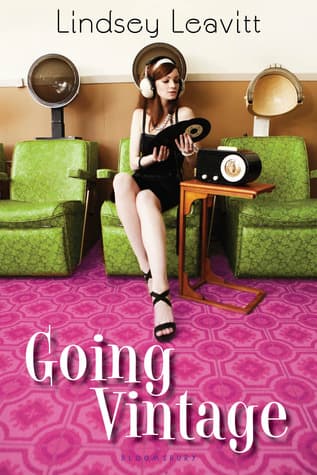
Lindsey Leavitt (2013)
Genre
Young Adult / Romance
Reading Time
320 min
Key Themes
See below
Sign in to track this book
After her boyfriend cheats, a heartbroken teen ditches technology and tries to live by her grandmother's 1962 to-do list, only to find that old-fashioned goals are tricky in the modern world.
Mallory is heartbroken when she catches her long-term boyfriend, Jeremy, cheating with an online girlfriend. Disappointed with modern relationships, she looks for comfort in her grandmother's attic. There, she finds a list of goals her Grandma Charlie made in 1962, called 'How to Be a Classy Dame.' Inspired by what she sees as the past's simplicity, Mallory decides to try a vintage experiment. She vows to live without modern technology and follow her grandmother's list to 'de-Jeremy' her life. Her first step is to get rid of her smartphone and live a more traditional life, which confuses her sister, Ginnie, and her best friend, Chloe.
Following Grandma Charlie's first goal, 'Run for pep club secretary,' Mallory attends the first Pep Club meeting. She feels out of place in her vintage clothes but is determined to see it through. Here, she meets Oliver, the charming and slightly sarcastic president of the Pep Club. To her surprise, she soon learns that Oliver is Jeremy's cousin, which makes her vintage quest more complicated. Despite the initial awkwardness, Oliver is interested in Mallory's unusual behavior and her commitment to her retro style, setting up their growing connection.
Mallory tackles the second item on her grandmother's list: 'Host a fancy dinner party.' She carefully plans a menu from old cookbooks and invites her friends, Chloe and Oliver, along with her sister, Ginnie. However, her lack of modern appliances and cooking experience leads to several funny problems. The meal is far from perfect, with burnt dishes and unexpected kitchen challenges. Despite the cooking chaos, the evening helps Mallory and Oliver bond, as they laugh over the mistakes. The event shows Mallory's determination but also how impractical some vintage ideas are in a modern world.
The third goal, 'Sew a dress for Homecoming,' is a big challenge for Mallory, who has no sewing experience. She buys an old pattern and fabric but quickly feels overwhelmed by how complex the task is. Her attempts result in tangled threads and frustration. Oliver, seeing her struggles, offers to help, showing a surprising talent for sewing that he learned from his mother. Their time together working on the dress brings them closer, building a sense of friendship and deepening their connection. This shared activity further blurs the lines between Mallory's vintage quest and her growing feelings for Oliver.
As Mallory gets deeper into her vintage project, she starts asking her Grandma Charlie more about her life in 1962. She notices differences between her grandmother's memories and the seemingly perfect image the list shows. Through old letters, yearbooks, and hints, Mallory begins to put together a more complex and sometimes conflicting picture of her grandmother's past. She discovers that Grandma Charlie's life was not as 'classy' as the list suggested, and that there were hidden struggles and choices that shaped her grandmother's journey. This makes Mallory question the true nature of 'simpler times.'
The fourth item on the list, 'Find a steady,' becomes more complicated for Mallory as her feelings for Oliver grow. While she is still trying to get over the pain of Jeremy's betrayal, Oliver's kindness, humor, and shared interests make him an important person in her life. She struggles with whether pursuing a relationship with Oliver fits her vintage goals or if it is just a modern distraction. The idea of a 'steady' from the 1960s contrasts with the freedom of modern dating, adding internal conflict for Mallory as she deals with her growing emotions for Oliver.
A talk with Jeremy gives Mallory more details about his cheating, showing how deep his online relationship was. He admits that his online girlfriend, 'Melody,' was an important emotional connection for him, and that Mallory's increasing focus on her own life and less attention to him led him to seek connection elsewhere. While this does not excuse his actions, it makes Mallory face her own faults in their relationship and the complexities of modern connections. This painful truth helps her move past the initial shock and begin to heal, understanding that the problems were not just about technology.
For the final goal, 'Do something dangerous,' Mallory first struggles with its meaning. She considers various literal ideas but eventually realizes that the most dangerous thing she can do is to be truly vulnerable and honest about her feelings and her past. This leads to a heartfelt talk with Oliver where she opens up about her heartbreak, her fears, and the real reasons behind her vintage experiment. This act of emotional bravery is the most dangerous and transformative step on her journey, allowing her to drop her protective vintage shell and embrace real connection.
Pressured by Mallory's questions and seeing her granddaughter's journey, Grandma Charlie finally tells the full truth behind her 1962 list. She reveals that the list was not just about being a 'classy dame' but was a way she coped after a significant heartbreak and personal challenge in her own life. She shares how she used the list to regain control and redefine herself, much like Mallory is doing. This confession gives Mallory a deeper understanding of her grandmother's strength and the complex reality of her past, showing that even 'simpler times' had their own difficulties and heartbreaks.
Mallory attends Homecoming in the dress she and Oliver sewed together, a symbol of her journey. She realizes that while the vintage style brought her comfort and a new perspective, she does not need to completely reject modern life or love to heal. At the dance, she shares a meaningful moment with Oliver, strengthening their connection and acknowledging her feelings for him. She dances, not as a girl trying to escape the present, but as someone who has learned from the past and is ready for her future, combining lessons from vintage life with the realities of her modern life.
Mallory finds a healthy balance, bringing valuable lessons from her vintage experiment into her modern life. She does not completely abandon technology but uses it more thoughtfully. She appreciates the charm of vintage culture but understands that true happiness and connection come from being present and real. Her relationship with Oliver grows, built on honesty and mutual respect, rather than a forced adherence to a past era. She learns that while the past can offer guidance, it should not control one's entire life, and that true strength comes from navigating the complexities of the present.
The Protagonist
Mallory transforms from a heartbroken and tech-dependent girl into a self-aware young woman who understands the complexities of both past and present, finding her own path to happiness.
The Love Interest
Oliver helps Mallory to open up and trust again, ultimately becoming her 'steady' not through vintage rules, but through genuine connection.
The Supporting
Grandma Charlie moves from a somewhat enigmatic figure to a crucial confidante, sharing her own past to guide Mallory.
The Supporting
Ginnie remains a consistent, albeit sarcastic, voice of modern reality, helping Mallory to see her vintage experiment from an outside perspective.
The Supporting
Chloe remains a steadfast friend, embodying modern friendship and offering unconditional support to Mallory.
The Mentioned
Jeremy's role is primarily to initiate Mallory's journey and later to provide a catalyst for her deeper self-reflection.
Mallory's vintage experiment begins as a way to escape, avoiding the pain of her modern heartbreak and the difficulties of current relationships. By trying to live in 1962, she hopes to find a 'simpler time' where such betrayals might not happen. However, as the story continues, she learns that the past had its own problems and that true healing comes not from escaping, but from facing her emotions and the realities of her present. This appears in her struggles with vintage tasks and her eventual realization that Grandma Charlie's past was not as simple as it seemed.
“Maybe the past wasn't simpler. Maybe we just remember it that way.”
The novel explores what it means to be real, both to oneself and in relationships. Mallory's vintage project first feels real to her desire for purity, but she eventually discovers that true authenticity means embracing her true self, flaws and all, rather than taking on an idealized persona from the past. Her journey involves removing layers of societal expectations and personal insecurities to understand what truly makes her happy. This is clear in her struggle with the 'steady' and 'dangerous' goals, where she learns that being emotionally vulnerable is the most authentic and risky act.
“Being real, truly real, was the scariest thing of all.”
A main theme is the difference between an idealized view of the past and its real complexities. Mallory first sees 1962 as a time without modern problems, especially infidelity caused by technology. However, through her grandmother's stories and her own experiences, she discovers that the past had its own heartbreaks, social pressures, and personal struggles. Grandma Charlie's confession reveals that her 'classy dame' list was a coping mechanism, not a reflection of a perfect life. This theme encourages a nuanced understanding of history and personal stories.
“I was looking for a time when things were simple, but maybe simple was just a story we tell ourselves.”
Mallory's journey is about healing from broken trust and learning to love again. Jeremy's betrayal shatters her belief in relationships, making her think that modern love is flawed. Her vintage experiment is an attempt to find a safer, more predictable form of love. However, through her growing relationship with Oliver, she learns that true love requires vulnerability, honesty, and a willingness to take risks, regardless of the era. She realizes that trust is earned through consistent actions and open communication, not by following old rules.
“Falling in love wasn't about following rules. It was about taking a leap.”
A list of five goals from 1962 that guides Mallory's vintage experiment.
The list serves as the central structural device, providing Mallory with concrete objectives for her vintage project. Each item ('Run for pep club secretary,' 'Host a fancy dinner party/soiree,' 'Sew a dress for Homecoming,' 'Find a steady,' 'Do something dangerous') propels the plot forward, creating specific challenges and opportunities for character development. It acts as a set of rules that Mallory tries to follow, but ultimately, her interpretation and deviation from these rules reveal her growth and understanding of authenticity. The list is initially a rigid guide, but becomes a catalyst for self-discovery.
The story is told from Mallory's perspective, offering direct access to her thoughts and feelings.
The first-person narrative allows readers to intimately experience Mallory's heartbreak, her motivations for the vintage experiment, and her evolving internal struggles. This perspective emphasizes her emotional journey, making her relatable and her growth more impactful. It also highlights her sometimes naive understanding of the past and her gradual realization of its complexities, as we witness her internal dialogue and reflections on the differences between 1962 and the present.
Vintage items represent Mallory's desire for simplicity, purity, and escape from modern pain.
Throughout the novel, Mallory's choice of vintage clothing, her use of analog items (like a rotary phone), and her immersion in retro culture symbolize her attempt to shed her modern identity and escape her heartbreak. The vintage dress she sews with Oliver, for example, becomes a symbol of their growing connection and her willingness to blend the past with the present. As her understanding of the past evolves, so does her relationship with these objects, moving from rigid adherence to a more integrated appreciation.
Stories and revelations about Grandma Charlie's 1962 life parallel and inform Mallory's journey.
Grandma Charlie's recollections and the eventual full confession of her past serve as a parallel narrative that deepens the main plot. These insights into the 'real' 1962 challenge Mallory's idealized notions and provide context for her own experiences. The gradual unveiling of Grandma Charlie's heartbreak and resilience helps Mallory understand that 'simpler times' were not without their own challenges, offering guidance and a sense of shared experience across generations.
“Sometimes the best way to get over someone is to get under a pile of vintage clothes.”
— Main character Mallory starts her vintage quest after a bad breakup.
“Every dress tells a story. And I was about to go find out what mine was.”
— Mallory decides to live by a vintage rulebook, each rule tied to an item of clothing.
“Maybe the point of going vintage wasn't just to find old things, but to find old parts of yourself.”
— Mallory reflects on her journey and what she's learning.
“Love isn't about finding the perfect person, it's about finding the person who makes you feel perfect.”
— A wisdom shared with Mallory about relationships.
“The past isn't something to run from, it's something to learn from.”
— Mallory grapples with her past mistakes and heartbreaks.
“Sometimes you have to break a few rules to find your own.”
— Mallory starts to deviate from her strict vintage rulebook.
“Being yourself is the best vintage you can be.”
— A realization Mallory has about authenticity.
“You can't force a feeling, just like you can't force a zipper that's too small.”
— Mallory's friend, Chloe, offers practical and humorous advice.
“Real love doesn't make you feel small. It makes you feel like you can conquer the world.”
— Mallory contrasts her current feelings with past relationship experiences.
“Maybe the best way to move on is to realize you never really stopped moving at all.”
— Mallory reflects on the continuous nature of life and growth.
“Every stitch, every seam, every faded memory is part of the beauty.”
— Mallory appreciating the imperfections and history of vintage items.
“It's not about being perfect, it's about being perfectly you.”
— A message of self-acceptance that Mallory learns.
“A dress can change your day, but the right person can change your life.”
— Mallory's evolving understanding of what truly matters.
“Sometimes the greatest adventures are the ones you don't plan for.”
— Mallory's unexpected journey leads to unforeseen discoveries.
Ready to see how well you understood this book? Take our interactive quiz with 10 questions.