“The meaning of life is that it stops.”
— A character's reflection on mortality and the brevity of existence.

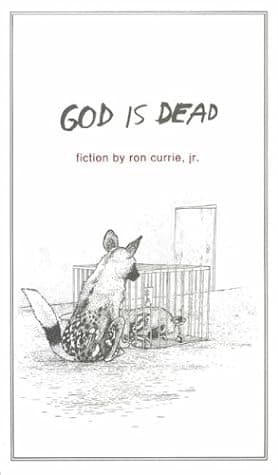
Ron Currie Jr. (2007)
Genre
Literary Fiction / Fantasy / Spirituality / Science Fiction / Philosophy
Reading Time
180 min
Key Themes
See below
Sign in to track this book
After God dies as a Dinka woman in Darfur, humanity faces chaos, worshipping children, fighting over free will, and grappling with its unchanged flaws.
News spreads globally: God came to Earth as a Dinka woman in Sudan and died in the Darfur desert. Michael, a journalist, first reports the event, which is met with disbelief, then strange acceptance. Villagers find the Dinka woman, Mary, and scientists confirm her death. Her body, showing no decay, becomes a focus for reverence and science. The world grapples with a deceased deity, leading to widespread crises, new religious movements, and a re-evaluation of human purpose.
After God's death, society falls into disarray. Old religions collapse, and new, often strange, cults appear. Some feel despair, others liberation. Governments try to maintain order as people question existence. The news affects everyone differently: some commit suicide, others embrace pleasure, and many seek new meaning in a godless world. The story shows how different cultures and people process the event, highlighting the human need for belief.
An international team of scientists and theologians gathers at God's death site in Darfur. They study the Dinka woman's perfectly preserved body, defying biological laws. Dr. Evelyn Reed, a geneticist, hopes to find the scientific basis of the divine form. Their efforts meet with awe and frustration, as the body offers no conventional answers. The site becomes a pilgrimage, a research lab, and a battleground of ideas, with each group interpreting the remains by their own beliefs.
God's death leads to many new belief systems. Some worship the Dinka woman's body, others turn to science, reason, or nihilism. One movement involves parents worshipping their children, seeing them as the new sacred hope. Other groups, like the Determinists, believe God's death confirms a fated universe, leading to radical actions. The novel explores how humans create meaning, even after ultimate loss, showing how beliefs adapt under duress.
God's death sparks a global conflict between two philosophical groups: Determinists and Free Willers. Determinists believe God's death means all events are predetermined, often acting with fatalism, sometimes destructively. Free Willers argue humanity is now fully responsible for its choices, advocating for personal agency. These ideological differences escalate into literal wars in various regions, with armies fighting over the nature of existence and human responsibility.
Paradoxically, in mental institutions worldwide, patients insist God is not dead or that a new god has emerged. Often dismissed as delusional, their 'madness' reflects spiritual insights or a refusal to accept the new reality. The novel uses these characters to explore belief, sanity, and the comfort of faith. Their conviction, despite evidence, shows the resilience of the human spirit and its capacity for hope.
Michael, the journalist who first reported God's death, becomes a reluctant celebrity. His initial pride turns to a burden as he sees the global chaos his reporting helped start. He struggles with his own faith and the moral implications of his role. He revisits the Darfur site, hoping for answers or redemption. His journey reflects the wider human struggle to balance personal responsibility with cosmic events and live with the consequences of profound news.
A moving theme is the relationship between parents and children in a world without God. With traditional morals shattered, many parents feel lost, unsure how to teach values. This leads to 'child worship,' where parents elevate their children to god-like status, seeing them as hope and inherent goodness. This new devotion, while seemingly harmless, brings challenges, including pressure on children and a distorted sense of self-importance among the young.
Despite God's death, everyday life continues in familiar ways. People still worry about jobs, relationships, and daily routines. Small-town gossip still circulates, teenagers still rebel, and people still fall in love. This contrast of cosmic tragedy with human routine creates absurd humor and highlights human resilience. It suggests that even without a divine presence, human drives and social structures persist, adapting to the new reality with deep thought and surprising normalcy.
As the initial shock fades, humanity searches for new meaning, both collectively and individually. Philosophers, artists, and ordinary people try to build new ethics, reasons for living, and ways to understand suffering and joy. Some find comfort in human connection, others in science, and still others in personal kindness. The story explores the diverse paths people take to fill the void God left, showing the human need for purpose and how we define it in a changing world.
Ultimately, the novel suggests that while a divine presence may be gone, many basic parts of the human condition remain. Love, loss, conflict, forgiveness, and the search for connection still define human experience. Teenagers still struggle with identity, parents still guide children, and communities still form bonds. God's absence does not erase human nature but makes humanity confront its own strengths and weaknesses, its capacity for good and evil, without divine judgment or reward.
Mary's body, the Dinka woman who embodied God, remains preserved in the desert. It is a silent, unchanging reminder of the event. It continues as a site of pilgrimage, scientific study, and debate. Its existence serves as a constant reminder of God's brief earthly presence and demise. The mystery of her body, its preservation, and its meaning continues to fuel human speculation, ensuring that God's death remains a central, unresolved question for generations, shaping humanity's future.
The Central Figure/Incarnation of God
Her arc is static in terms of personal development but profoundly impactful through her symbolic role as the deceased God, defining the world's new reality.
The Supporting
Michael evolves from an ambitious reporter to a man burdened by the weight of cosmic truth, seeking to understand the chaos he helped unleash.
The Supporting
She begins as a purely scientific observer but is increasingly confronted with the limitations of science in explaining the divine, prompting a deeper, more philosophical inquiry.
The Antagonistic/Supporting
As a collective, their arc involves the escalation of their ideology into conflict, showcasing the dangers of absolute belief systems.
The Protagonistic/Supporting
Their collective arc involves the development and defense of their philosophy, leading to widespread societal restructuring and conflict.
The Supporting
Their arc illustrates a societal adaptation to the absence of God, demonstrating the creation of new, sometimes problematic, forms of devotion.
The Mentioned/Supporting
Their collective presence remains largely static but serves to continuously question the 'truth' of God's death.
This theme is about humanity's reaction to God's literal death. The novel explores the deep existential crisis that follows, as people and societies cope with a universe without divine oversight. It shows how people try to fill this void: through new cults, scientific study, pleasure, or finding meaning in human connection and child worship. This theme questions the human need for belief and purpose, and how these are redefined when the ultimate source of meaning is gone. For example, the widespread practice of 'child worship' directly addresses this void.
“And it came to pass that the world, having been stripped of its God, looked around for something else to worship, and finding nothing, began to worship itself.”
With God's death, the old debate between fate and free will becomes urgent and often violent. The rise of Determinists, who believe all actions are predetermined, and Free Willers, who assert absolute human agency, leads to global conflicts. This theme explores how the absence of a divine plan forces humanity to face its responsibility for choices and destiny, and the extreme lengths people go to defend their understanding of cause and purpose. The wars between these groups directly show this theme.
“If God was dead, then either everything was predetermined, or nothing was. And both were terrifying.”
The novel explores what it means to believe, both in a divine being and in secular ideas. It examines how faith can bring comfort, control, or conflict. From the firm belief of mental patients who still think God exists, to the fervent devotion of child worshippers, the book shows how humans create and hold onto belief systems, even against strong evidence. It highlights the psychological and social roles of faith, and its persistence even after the object of worship is gone.
“Even in the absence of God, the human heart was a factory for gods.”
Despite the cosmic event of God's death, the novel highlights the lasting resilience of the human spirit and the surprising absurdity of daily life. While deep philosophical questions exist, people still worry about mundane tasks, relationships, and local gossip. This contrast shows humanity's ability to adapt, find humor, and carry on, even when existence's foundations are shaken. It suggests that some parts of the human condition are unchangeable, lasting beyond divine presence or absence, showing a stubborn will to live and connect.
“The world had ended, or so they said, but the dishes still needed washing.”
Michael, the journalist who reports God's death, embodies this theme. His initial success becomes a heavy burden as he sees the global chaos his reporting helped start. This theme explores the weight of knowing a world-changing truth and the responsibility that comes with it. It also applies to humanity as a whole, now forced to bear the full burden of its existence, morality, and future without divine guidance or judgment, making every choice and action highly significant.
“To know that God was dead was to be alone in a way no human had ever been alone before.”
The central inciting incident and a metaphorical expression.
This device is the core premise of the novel. By making God's death a literal, verifiable event, Currie immediately establishes a world of extreme philosophical and existential consequence. It's not just a metaphorical 'death of God' in the Nietzschean sense, but a physical reality that demands a new understanding of existence. This event serves as the ultimate catalyst, forcing every character and society to re-evaluate their beliefs, morality, and purpose, setting the stage for all subsequent conflicts and transformations.
A tangible, unchanging relic of the impossible.
The perfectly preserved body of Mary, the Dinka woman who embodied God, serves as a constant, tangible reminder of the impossible event. It defies scientific explanation and traditional notions of decay, becoming a focal point for both scientific inquiry and new forms of worship. This device grounds the fantastical premise in a concrete, physical reality, providing a persistent source of mystery and debate that continues to shape the world long after the initial shock, solidifying the 'truth' of God's demise.
A mosaic of global reactions and individual struggles.
The novel employs a fragmented narrative structure, presenting a series of vignettes and mini-stories from various characters and locations around the world. This device allows Currie to explore the multifaceted impact of God's death on diverse cultures, belief systems, and individual psyches. It creates a comprehensive, yet intimate, portrait of a world in transformation, highlighting the universality of human struggle while showcasing the specificity of individual responses, providing a rich tapestry of reactions to the unprecedented event.
A narrative that explores complex philosophical questions through its plot.
The entire novel functions as a philosophical allegory, using the fantastical premise of God's death to explore profound questions about existence, meaning, morality, and human nature. The plot, characters, and conflicts (like the Determinists vs. Free Willers) are designed to represent and dramatize these abstract philosophical concepts. This device allows the author to engage with deep intellectual debates in an accessible and compelling narrative form, prompting readers to consider their own beliefs about a godless world.
“The meaning of life is that it stops.”
— A character's reflection on mortality and the brevity of existence.
“God is dead. God remains dead. And we have killed him. How shall we comfort ourselves, the murderers of all murderers?”
— A direct reference to Nietzsche's famous quote, used to frame the novel's central premise.
“Perhaps the only difference between a hero and a villain is the side of the story you're on.”
— A character contemplating moral ambiguity and perspective.
“We are all just stories in the end, and we'd do well to make them good ones.”
— A poignant thought about legacy and the narratives we create for ourselves.
“The greatest trick the devil ever pulled was convincing the world he didn't exist. The greatest trick God ever pulled was convincing the world he did.”
— A cynical and provocative statement on belief and deception.
“There are no atheists in foxholes, they say. But there are plenty of dead men.”
— A grim observation on faith and the reality of death in extreme circumstances.
“Sometimes the most profound truths are found in the most ridiculous places.”
— A reflection on unexpected sources of wisdom and insight.
“Hope is a terrible thing, but it's all we've got.”
— A bittersweet sentiment about the enduring, yet often painful, nature of hope.
“The universe doesn't care about your feelings. It just is.”
— A stark reminder of the indifference of the cosmos to human emotions.
“Maybe the point isn't to find the meaning of life, but to create it.”
— An empowering thought on agency and the construction of personal meaning.
“We invent gods because we can't bear the thought of being alone.”
— A psychological interpretation of religious belief stemming from fear of isolation.
“Every ending is just a new beginning, if you're brave enough to see it.”
— A hopeful perspective on change and resilience in the face of conclusion.
“The only thing worse than not knowing is thinking you know, and being wrong.”
— A cautionary thought on false certainty and the dangers of ignorance.
“Love is the only miracle that makes sense.”
— A character's ultimate conclusion about the most profound and tangible human experience.
Ready to see how well you understood this book? Take our interactive quiz with 10 questions.

Biography coming soon.







