“The purpose of a universe is to create a new universe.”
— Leto II reflecting on the grand cosmic scale of his Golden Path.

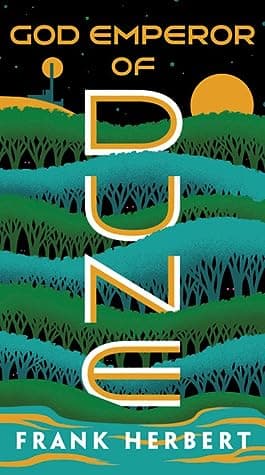
Frank Herbert (1981)
Genre
Fantasy / Spirituality / Science Fiction / Philosophy
Reading Time
15-20 hours (approx. based on 587 pages)
Key Themes
See below
Sign in to track this book
For 3,500 years, the immortal, part-sandworm God Emperor Leto Atreides II has ruthlessly guided humanity along his 'Golden Path,' manipulating destiny and sacrificing his own humanity to ensure mankind's ultimate survival against an unknowable, existential threat.
3,500 years after merging with a sandworm, Leto II Atreides rules the known universe as the immortal God Emperor of Dune, having transformed Arrakis into a green paradise, though his worm-like body is immense and grotesque. He enforces a brutal peace, the 'Golden Path,' to save humanity from extinction. His Fish Speakers, an all-female army, maintain order. An Ixian Ambassador, Hwi Noree, arrives, ostensibly to negotiate, but Leto suspects a deeper Ixian plot. A new Duncan Idaho ghola, the latest in a long line, is delivered to Leto's citadel, Tuono, on Arrakis. This ghola, like his predecessors, is a gift from the Bene Gesserit and the Ixians, meant to serve as Leto's companion and guard, but also a potential tool against him.
Siona Atreides, a direct descendant of Leto's sister Ghanima, leads a small, covert rebellion against the God Emperor. She despises his tyranny and his monstrous form. Leto, with his prescient vision, knows Siona's movements and even orchestrates many of the events that bring her into contact with him. He allows her to escape capture multiple times, subtly guiding her actions and those of her fellow rebels. Siona is a part of Leto's Golden Path, as she has a unique genetic trait that makes her invisible to prescience, a trait Leto intends to propagate throughout humanity to prevent future tyrants from ever enslaving the species with their visions.
The Bene Gesserit, the Spacing Guild, and the Tleilaxu, though outwardly subservient, are secretly plotting Leto's downfall. The Bene Gesserit fear his control over humanity's genetic future and seek to regain their influence. The Guild chafes under his absolute monopoly on space travel, which he controls through his spice hoard. The Tleilaxu, masters of genetic manipulation and ghola production, provide the Duncan Idahos and monitor Leto, hoping to learn his secrets and eventually replace him. Leto is aware of their plans, viewing them as necessary pressures to refine his Golden Path, allowing them just enough leeway to believe they have agency while ultimately serving his grand design.
Hwi Noree, an Ixian Ambassador, arrives at Leto's citadel. She is a fascinating and beautiful woman, meticulously crafted by the Ixians to be perfectly empathetic and appealing to Leto, a living weapon designed to seduce and ultimately betray him. However, Leto, despite his monstrous form and millennia of isolation, is genuinely drawn to Hwi. Their conversations reveal a surprising depth of emotion in Leto, a yearning for genuine connection that he believed long lost. Hwi, in turn, is genuinely captivated by Leto's intellect and the sadness she perceives beneath his tyrannical exterior, developing real affection for him despite her original mission.
The Duncan Idaho ghola struggles with his programmed loyalty to Leto versus his innate desire for freedom and justice. He is appalled by Leto's tyranny and his monstrous form, yet also drawn to the God Emperor's intellect and the strange, almost paternal affection Leto shows him. Leto intentionally tests Duncan, pushing him to question his purpose. Siona Atreides is eventually captured by the Fish Speakers and brought to Tuono, where Leto begins her direct tutelage. He forces her to confront the reality of his Golden Path, showing her visions of humanity's past and potential future extinction, trying to make her understand the necessity of his harsh rule and her role in it.
Leto subjects Siona to the 'Trial of the Worm,' an ordeal where she is forced to run across the open desert, pursued by a sandworm. This experience, orchestrated by Leto, is designed to awaken her deep genetic memory and her unique trait: the ability to become invisible to prescience. Siona survives the trial, emerging with an understanding of her genetic heritage and the terrifying implications of prescience. She realizes the horror of a future where all humans could be seen and controlled by a single prescient being, and begins to grasp the necessity of Leto's Golden Path to break this cycle, even if she still despises his methods.
Leto, surprising everyone including himself, proposes marriage to Hwi Noree. This act of genuine affection further complicates the Ixian plot, as Hwi has truly fallen in love with Leto. Meanwhile, the various factions—the Bene Gesserit, the Guild, the Tleilaxu, and even Siona's rebels—converge on their final plan to assassinate the God Emperor. They believe that by removing him, they can restore the old order and humanity's freedom. Leto, fully aware of their intentions through his prescience, allows their plot to unfold, knowing it is the necessary catalyst for the next stage of the Golden Path.
The assassination plot culminates at the Bridge of Habbanya, where a hidden energy weapon, provided by the Ixians and triggered by Siona and Duncan, is aimed at Leto. Leto, riding his Royal Cart, approaches the bridge with Hwi Noree by his side. The weapon fires, destroying the bridge and sending Leto plummeting into the river below. The water, anathema to his sandworm body, causes his skin to rupture, releasing thousands of sandtrout. He dies, but not before delivering his final message to Duncan and Siona, confirming the success of the Golden Path. Hwi Noree also perishes in the explosion, a tragic victim of the grand design.
Upon Leto's death, the thousands of sandtrout released from his body immediately seek out water, beginning the process of terraforming Arrakis back into a desert planet, thus reviving the sandworms. This event, known as the 'Scattering,' forces humanity to spread across the galaxy, pushed by the fear of prescient control and the renewed scarcity of spice. Siona and Duncan Idaho, now free, are left to guide humanity into this new era. The Golden Path, Leto's sacrifice, ensures that humanity will diversify and spread so widely that no single prescient being can ever again control or destroy them, guaranteeing their long-term survival.
The Protagonist/God Emperor
From a lonely, all-knowing tyrant, Leto embraces his final sacrifice, transitioning from a controlling figure to the ultimate enabler of humanity's true freedom.
The Supporting/Protagonist
Duncan evolves from a conditioned servant to a free individual, accepting his unique role as a protector and progenitor of the new humanity.
The Protagonist
Siona transforms from a rebellious, naive leader into a profound understanding of her destiny, becoming the key to humanity's future freedom.
The Supporting
Hwi's arc is brief but impactful, evolving from an engineered tool to a woman experiencing genuine love and ultimately sacrificing herself with Leto.
The Supporting
Moneo remains a steadfast, if conflicted, servant of the Golden Path, dying in service to Leto's ultimate plan.
The Supporting
Nayla's arc is one of unwavering devotion, culminating in her unwitting role as the instrument of her God's death.
The Mentioned/Antagonists
Their arc involves attempting to undermine Leto's control, ultimately failing to prevent the Golden Path but adapting to its consequences.
The Mentioned/Antagonists
Their arc reflects their struggle against Leto's control over spice, leading to their participation in the assassination plot.
The Mentioned/Antagonists
Their arc involves their continuous attempts to understand and replicate Leto's powers, ultimately failing but continuing their manipulative practices.
Leto II's transformation into the God Emperor grants him near-immortality and absolute power, but at the cost of his humanity and personal happiness. His monstrous form and millennia of isolated rule show the loneliness and suffering that come with such a burden. His tyranny, while benevolent in its ultimate goal, crushes individual freedom and leads to stagnation, forcing humanity into a prolonged, uncomfortable peace. This theme explores the moral compromises required for what one believes is the greater good, and the corruption of absolute power, even when wielded by a prescient being.
“I am a bridge. I am the Golden Path. I am the future. And I am lonely. Oh, so lonely.”
The central theme of the Golden Path is Leto's desperate, millennia-long plan to save humanity from self-destruction or extinction by prescient control. He foresees a future where humanity becomes trapped and ultimately destroyed, and his drastic measures—terraforming Arrakis, enforcing a tyrannical peace, and breeding for prescience-proof genes—are all aimed at forcing humanity into a 'Scattering' across the galaxy. This ensures genetic diversity and a vast spread that makes them immune to any future tyrant's prescient vision, guaranteeing their long-term survival, even if it means sacrificing individual freedom in the present.
“My Golden Path is a thing of terrible beauty, a thing of ultimate terror. It is the only way.”
Several characters grapple with their identity. Duncan Idaho, as a ghola, constantly questions his purpose and his humanity, trying to reconcile his programmed loyalty with his innate sense of self. Siona Atreides discovers her genetic heritage and her role in humanity's future, forcing her to redefine herself from a simple rebel to a progenitor. Leto II himself, despite his monstrous form, retains vestiges of his human consciousness, yearning for connection and reflecting on the man he once was. This theme explores how individuals find their true selves amidst external pressures and predetermined destinies.
“I am Duncan Idaho. I am always Duncan Idaho. And I am never Duncan Idaho.”
Despite Leto's monstrous form and millennia of isolation, the book explores the human need for love and connection. His unexpected love for Hwi Noree, an Ixian designed to manipulate him, shows his remaining humanity and his deep loneliness. The complex, almost paternal relationship he shares with Duncan Idaho, and his manipulative yet loving guidance of Siona, demonstrate his desire for meaningful bonds, even as he sacrifices them for the Golden Path. This theme suggests that even in extreme circumstances, the capacity for love and empathy persists.
“I am a monster. But I am a monster who can love.”
The ecological transformation of Arrakis is a central backdrop. Under Leto's rule, the once-desert planet has been terraformed into a lush, green world, a stark contrast to its original state. This change, however, comes at the cost of the sandworms, which are nearly extinct, and the spice, which is entirely controlled by Leto. Leto's death then triggers the reversal of this process, releasing sandtrout that will once again turn Arrakis into a desert, reviving the great worms and the spice cycle. This theme explores the impact of human (and post-human) intervention on planetary ecosystems and the balance of nature.
“Arrakis has been a green jewel, a testament to my power. Now it must return to its proper form.”
Leto II's prescient vision and multi-millennial plan to save humanity from extinction.
The Golden Path is the overarching plot device and driving force of the narrative. It is Leto II's prescient vision of humanity's future, revealing two paths: one leading to inevitable extinction, and the other, the Golden Path, leading to long-term survival. This path necessitates Leto's tyrannical rule, his monstrous transformation, the terraforming of Arrakis, and the breeding of a prescience-proof human line. Every event in the book, from Siona's rebellion to Leto's own death, is orchestrated by Leto to fulfill the Golden Path, making it a form of predestination that characters struggle against or conform to.
A recurring clone, symbolizing humanity's enduring spirit and a tool for Leto's psychological warfare.
The repeated resurrection of Duncan Idaho as a ghola serves multiple purposes. He is a constant companion and guard for Leto, but also a psychological tool. Leto uses each ghola to test human loyalty, morality, and the limits of conditioning. Duncan represents the enduring human spirit, capable of both loyalty and rebellion, and his presence allows Leto to maintain a semblance of human interaction. The gholas also highlight the Tleilaxu's genetic mastery and their covert attempts to understand Leto, while also providing a consistent heroic archetype for readers.
The ability to see the future, which both empowers and entraps Leto, and which Siona's genes defy.
Prescience is a fundamental element of the Dune universe. Leto II's vast prescient abilities allow him to see the Golden Path and orchestrate events over millennia. However, prescience also creates a trap, as knowing the future can make it inevitable, removing free will. The critical limitation introduced in this book is the 'prescience-proof' gene, embodied by Siona. This genetic trait, which makes individuals invisible to prescient vision, is the ultimate goal of the Golden Path, ensuring humanity's future freedom from any potential prescient tyrant. It is both a narrative challenge and solution within the story.
Leto's all-female army, symbolizing his control and the inversion of traditional power structures.
The Fish Speakers are Leto II's elite, all-female army and police force, maintaining order throughout the Imperium. Their existence signifies Leto's complete control and his deliberate subversion of traditional gender roles and power structures. They are fiercely loyal, highly disciplined, and fanatically devoted to the God Emperor, acting as both enforcers of his peace and a symbol of his absolute authority. Their religious devotion is a key aspect, demonstrating how Leto has transformed society to serve his long-term goals, even if it means stripping away individual agency.
The verdant planet, a symbol of Leto's power and a key component of his ecological manipulation.
Arrakis, once a desert planet, has been transformed by Leto II into a lush, green world, filled with rivers and forests. This ecological transformation is a powerful symbol of Leto's absolute power and his ability to reshape entire planets. It also serves as a crucial plot point: by eliminating the desert, Leto has driven the sandworms (and thus the spice) to near extinction, giving him complete control over the universe's most vital resource. His death reverses this process, returning Arrakis to its desert state and releasing the sandtrout to revive the worms and the spice cycle, directly enabling the Scattering.
“The purpose of a universe is to create a new universe.”
— Leto II reflecting on the grand cosmic scale of his Golden Path.
“The greatest danger to the universe is always its own complacency.”
— Leto II's internal monologue about the stagnation he seeks to prevent.
“A leader must be an actor. The people must believe in the mask.”
— Leto II explaining the necessity of his public persona and sacrifice.
“The future is a thing to be shaped, not predicted.”
— Leto II considering the active role he plays in guiding humanity.
“The most dangerous thing in the universe is a man who is sure he is right.”
— Leto II's internal reflection on the nature of fanaticism and certainty.
“Survival is the ability to swim in chaos.”
— Leto II's understanding of humanity's long-term resilience.
“All governments suffer a recurring problem: power attracts pathological personalities.”
— Leto II's observation on the inherent flaws of political systems.
“The Golden Path is not a path of peace. It is a path of survival.”
— Leto II clarifying the harsh reality and necessity of his tyrannical rule.
“To be truly free, one must first be truly alone.”
— Leto II pondering the isolation required for ultimate freedom and vision.
“The only constant is change, and the only certainty is uncertainty.”
— Leto II's philosophical musings on the nature of existence.
“History is a matter of convenient fictions.”
— Leto II's cynical view on how past events are recorded and interpreted.
“Love is a dangerous thing. It can make you forget yourself.”
— Leto II's cautious perspective on emotions, given his long-term goals.
“The universe is a thing of patterns, and those who can see the patterns control the universe.”
— Leto II reflecting on his prescient abilities and their implications for control.
“Tyranny is the exercise of power over others, but the greater tyranny is the exercise of power over self.”
— Leto II considering the internal struggles and self-control required for his role.
Ready to see how well you understood this book? Take our interactive quiz with 10 questions.
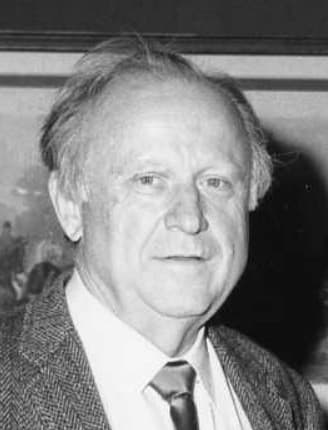
Franklin Patrick Herbert Jr. was an American science fiction author best known for the 1965 novel Dune and its five sequels. Though he became famous for his novels, he also wrote short stories and worked as a newspaper journalist, photographer, book reviewer, ecological consultant, and lecturer.







