“There are things in the world that are more important than being safe.”
— William struggles with his fear and duty to save the castle.

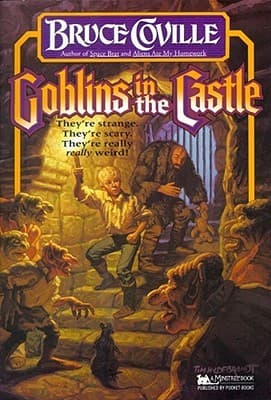
Bruce Coville (1992)
Genre
Fantasy / Children's / Young Adult
Reading Time
176 min
Key Themes
See below
Sign in to track this book
A curious boy in a secret-filled castle goes on a nighttime quest to find out why it moans, discovering a world of goblins, magic, and unexpected fate.
William, a young boy, lives in Toad-in-a-Cage Castle with his guardian, the Duke. The castle has many secret passages, trapdoors, and a large, dark dungeon. William spends his days exploring these hidden spots, often with his only friend, the unusual, green-skinned Igor, who knows the castle's secrets well. However, William is increasingly bothered by strange moaning sounds that echo through the castle every night. He wants to find out where they come from, believing they hold a clue to the castle's true nature and perhaps his own unknown past, as he does not remember his parents.
Driven by curiosity, William starts to investigate the moans more actively. One night, he follows the sounds and finds the Duke sneaking into a hidden room. Peeking through a crack, William sees the Duke with a small, green, and rather smelly creature—a goblin. This creature is the source of the nightly moans, which are actually songs of longing and sadness. William is shocked by the discovery and the Duke's secret, realizing the castle has more inhabitants than he thought. The Duke is surprisingly gentle with the creature, adding to William's confusion.
After his first discovery, William talks to Igor, who finally tells him the truth: a community of goblins lives in the deep caverns beneath Toad-in-a-Cage Castle. Igor himself is a goblin, though human-sized, tasked with protecting his family. The moaning William heard was the goblin's Song of Sadness, a sad song for their lost home and their current trouble. William, at first surprised, feels a strange connection to these hidden beings and a growing sense of responsibility toward them.
William then confronts the Duke, who, with Igor's help, explains the full story. Generations ago, the Duke's ancestors made a deal with the goblins, offering them shelter beneath the castle in exchange for certain services, mainly guarding a powerful magical item. The current Duke is bound by this old agreement. However, the Duke reveals that the goblins are in danger; their numbers are decreasing, and a mysterious illness affects them. He expresses his concern and his wish to help them, showing a kind side William had not fully seen.
William, now fully aware and involved, joins Igor in looking into the goblins' sickness. They go down into the deep, damp caverns where the goblins live, seeing their trouble firsthand. The goblins are weak, their skin losing its bright green, and their songs are full of sadness. The elder goblins explain that their life force is linked to the 'Heart of the Mountain,' a magical crystal that has been slowly dimming. They believe its fading power is causing their illness, and only its restoration can save them. William feels great sympathy for the suffering creatures.
The goblins reveal an old prophecy saying a human child, a 'Son of the Castle,' will one day help them restore the Heart of the Mountain. William realizes this prophecy refers to him, making his role in their fate clear. The quest requires finding a specific magical ingredient to re-energize the crystal. With the Duke's hesitant approval and Igor as his guide, William gets ready to leave the castle for the first time, venturing into the outside world to fulfill the prophecy and save the goblins. His journey is a big change in his young life.
William and Igor begin their dangerous journey, their first challenge being the Whispering Woods. This old forest has strange creatures and illusions. They meet mischievous sprites who try to lead them off course and must use their cleverness to find their way through the confusing paths. Igor's knowledge of nature and his sharp senses prove very helpful, while William's courage and determination grow with each problem they overcome. The journey is not just physical; it tests their bond and William's new understanding of the magical world beyond the castle walls.
Their quest leads them to a dangerous mountain peak, where the magical ingredient—a rare, glowing moss—is said to be. Unfortunately, the moss is guarded by a grumpy, old dragon. William, using his quick thinking and a clever distraction made by Igor, manages to get a small sample of the moss without directly facing the powerful beast. This encounter is a major test of William's bravery and resourcefulness, proving he can do more than he ever imagined. They barely escape the dragon's anger, the valuable moss secured.
With the glowing moss in hand, William and Igor rush back to Toad-in-a-Cage Castle. They are met by the worried Duke and the sick goblin community. Preparations for the ritual to restore the Heart of the Mountain are quickly made. The goblins gather around the dimming crystal, their hopes resting entirely on William. The air in the cavern is thick with anticipation and desperation as William, guided by Igor and the goblin elders, gets ready to apply the magical moss to the crystal, hoping to reverse the fading power and save their kind.
William carefully places the glowing moss onto the Heart of the Mountain. Slowly, the crystal begins to pulse with new light, growing brighter and stronger. A wave of strong energy washes over the goblins, and they visibly get back their strength and color. Their songs, once sad, turn into joyful melodies of celebration and thanks. The goblins are saved, and a new time of hope begins for them. William, having completed his task, feels a strong sense of achievement and belonging. The castle, once a mysterious place, now feels like a true home, made richer by its hidden inhabitants.
The Protagonist
William transforms from a sheltered, curious boy into a courageous hero who embraces his destiny and finds a true sense of belonging.
The Supporting
Igor moves from being a secretive protector to openly sharing his heritage and becoming a crucial partner in William's quest.
The Supporting
The Duke shifts from a secretive and isolated figure to an open and supportive guardian, embracing his role in the castle's destiny.
The Supporting
The goblin community moves from a state of decline and despair to one of renewed health and hope thanks to William's intervention.
The Mentioned
The Dragon remains a static obstacle, serving its role as a guardian.
The Mentioned
Their influence is historical and foundational, not subject to personal arc.
The story shows the importance of looking past what things seem to be and what we think we know, to understand and care for others. William first thinks the castle's moans are scary, but when he finds the goblins, he quickly changes from fear to compassion. His ability to connect with the suffering goblins, despite their differences, makes him go on a dangerous quest. This idea comes out when William sees the goblins' trouble firsthand in their caverns, recognizing their shared weakness and worth, which is different from the Duke's first secrecy due to fear of human judgment.
“He knew, with a sudden, startling clarity, that the moans were not of evil, but of an aching, profound sadness.”
A main theme is that hidden worlds and secret lives exist alongside the familiar. Toad-in-a-Cage Castle itself shows this, with its many secret passages and the entire goblin civilization living beneath its floors. The story explores the idea that what we see on the surface is often only a small part of the truth. William's journey from not knowing to fully understanding these hidden realities highlights the magic and complexity that can lie just beneath ordinary life. This theme creates a sense of wonder and makes the reader think about what else might be unseen.
“The castle, he realized, was not just stone and mortar, but a living, breathing secret.”
The story looks at the weight of responsibility and the idea of fate. William, an orphan, discovers he is the 'Son of the Castle' meant to save the goblins. This news puts a big burden on him, but he bravely accepts it. The Duke also deals with the responsibility of keeping an old agreement. The story suggests that fate is not just what happens, but a call to act that needs courage, sacrifice, and a commitment to a greater good. William's choice to go on the quest, despite its dangers, shows his acceptance of this responsibility.
“He was the one. He was the child of the prophecy, and the fate of an entire people rested on his small shoulders.”
William's quest is not just about saving the goblins; it is also about finding his own place and understanding who he is. As an orphan with no memory of his past, he first feels separate. His connection with Igor and the goblins, and his part in saving them, gives him a strong sense of belonging. The castle, at first just a place to live, becomes a true home where he is needed and valued. This theme shows how helping others and embracing one's unique purpose can lead to a stronger sense of self and community.
“For the first time, William felt not just like a resident of the castle, but a part of its very heart, its deepest secret.”
Foreshadows William's role and provides narrative direction.
The ancient prophecy concerning the 'Son of the Castle' serves as a classic narrative device to establish William's unique importance and to drive the plot forward. It gives William's journey a sense of predetermined significance, transforming his personal curiosity into a quest of cosmic import. It also justifies the goblins' trust in him and explains why only a human child can restore the Heart of the Mountain, adding a layer of magical destiny to the story.
A magical artifact central to the goblins' survival and the story's conflict.
The 'Heart of the Mountain' is a powerful magical crystal that directly links to the vitality and well-being of the goblin community. Its fading power creates the central conflict of the story – the goblins' illness and impending doom. As a plot device, it provides a clear objective for William's quest and a tangible measure of the stakes involved. Its restoration signifies not just a cure, but a renewal of hope and life for an entire species, acting as a magical macguffin with profound implications.
Creates mystery, facilitates plot movement, and symbolizes hidden truths.
The labyrinthine nature of Toad-in-a-Cage Castle, with its extensive network of secret passages, trapdoors, and hidden rooms, is a crucial plot device. It initially builds a sense of mystery and allows William to explore and discover the castle's secrets. More importantly, it facilitates the hidden existence of the goblins and allows characters like the Duke and Igor to move unseen. Symbolically, these passages represent the hidden truths and unexplored aspects of the world and William's own identity.
A recurring motif that foreshadows the goblins' plight and evokes empathy.
The goblins' nightly 'Song of Sadness' is a powerful recurring motif. Initially, it functions as a mystery that draws William's curiosity. Once its source is revealed, it becomes a direct expression of the goblins' suffering, their longing for their lost home, and their dwindling hope. As a plot device, it evokes empathy from both William and the reader, highlighting the goblins' vulnerability and reinforcing the urgency of William's quest to save them. Its transformation into a song of joy at the end signifies their salvation.
“There are things in the world that are more important than being safe.”
— William struggles with his fear and duty to save the castle.
“Sometimes the bravest thing you can do is admit you're scared.”
— William is encouraged by one of the castle inhabitants to face his fears.
“A good story never dies, not as long as someone remembers it.”
— Discussion about the enduring nature of tales and legends.
“Being a hero isn't about being fearless. It's about doing what needs to be done even when you are afraid.”
— William learns the true meaning of heroism during his quest.
“The world is a much stranger place than most people imagine.”
— Reflecting on the magical and unusual occurrences within and around the castle.
“Even the smallest creature can make a difference.”
— Highlighting the contributions of the goblins and other non-human characters.
“Laughter is a powerful weapon against despair.”
— The goblins often use humor to cope with difficult situations.
“It's not what you are, but what you do that truly matters.”
— Challenging stereotypes about goblins and other magical creatures.
“Every castle has its secrets, and every secret has its story.”
— William uncovers the hidden history of the castle and its inhabitants.
“Sometimes the most unlikely allies are the ones you need the most.”
— William forms an unexpected alliance with the goblins.
“True strength isn't just in your muscles, but in your heart and your mind.”
— William realizes that wit and compassion are as important as physical prowess.
“A promise made is a promise kept, no matter how difficult.”
— Characters demonstrate their commitment to their word.
“Fear can make you do foolish things, but it can also make you brave.”
— William's journey is driven by both his fear and his growing courage.
“Magic isn't always grand and flashy; sometimes it's just a little bit of wonder in the everyday.”
— Discovering the subtle magical elements present in the castle.
Ready to see how well you understood this book? Take our interactive quiz with 10 questions.

Bruce Coville is a prolific American author known for his engaging middle-grade fantasy and science fiction novels. He is celebrated for popular series like "The Unicorn Chronicles," featuring "Into the Land of the Unicorns," and "The "Aliens" series, including "My Teacher Is an Alien." His accessible writing style and imaginative storytelling have made him a beloved figure in children's literature.







