“Go tell it on the mountain, over the hills and everywhere; go tell it on the mountain, that Jesus Christ is born.”
— The opening lines of the novel, setting a spiritual and musical tone.


James Baldwin (2001)
Genre
Literary Fiction / Historical Fiction / Spirituality
Reading Time
360 min
Key Themes
See below
Sign in to track this book
In 1930s Harlem, young Johnny Grimes struggles with his abusive stepfather's fiery damnation and the weight of a destiny he wants to escape.
On his fourteenth birthday, John Grimes, a sensitive boy in 1930s Harlem, feels the heavy atmosphere of his stepfather Gabriel's fundamentalist church, the Temple of the Fire Baptized. He feels separate from his family and aware of his own sinfulness, especially his sexual desires. At a Saturday night revival service, John is overwhelmed by the fervent preaching and the congregation's ecstatic spiritual experiences. He resists the call to the altar, fighting his stepfather's strict beliefs and his own growing identity. The service ends with a personal and terrifying spiritual struggle on the 'threshing-floor,' where John faces his fears and desires.
Driven by strong inner conflict and the church's overwhelming pressure, John collapses at the altar, entering a trance. He sees vivid visions and feels strong sensations, reliving his past, facing his perceived sins, and wrestling with the Devil. This spiritual battle is shown as a physical struggle, with John writhing and crying out. His mother, Elizabeth, watches with hope and fear, having had her own conversion. Eventually, John emerges, feeling cleansed and reborn, though still disoriented about what this means for his future. Church members embrace him as a new convert.
The story goes into the past of Gabriel Grimes, John's stepfather and a Deacon at the Temple. Born into a religious Southern family, Gabriel felt an early call to preach but struggled with his own desires. He had an affair with a woman named Esther, who became pregnant. Despite his guilt and attempts to balance his faith with his actions, Gabriel left Esther and their child. He feared exposure would ruin his spiritual reputation. This betrayal and his later marriage to Deborah, a woman scarred by rape, show the deep hypocrisy and unresolved guilt that defines much of Gabriel's character and his harsh treatment of his family.
Gabriel marries Deborah, a woman brutally raped in her youth. The rape left her unable to have children and deeply religious. Deborah, though loving and loyal, has a quiet strength and understands Gabriel's inner turmoil and hypocrisy. She knows about his past affair with Esther and their son, often acting as a moral guide and silent accuser. Their marriage is marked by Gabriel's struggles with his past sins and his public image as a righteous man. Deborah's strong faith and her own suffering contrast with Gabriel's self-righteousness, often forcing him to face his own failures, even if he doesn't want to.
Gabriel's older sister, Florence, also a church member, deeply resents him. She has seen his past sins, his abandonment of Esther, and his general hypocrisy. She often feels overlooked by her family. Florence's bitterness comes from her own unfulfilled life and her view of Gabriel's moral failures, which she believes he has never truly made up for. She often challenges Gabriel's authority and his claims of righteousness, hinting at his hidden past. Her presence reveals the flaws in Gabriel's careful image and hints at the eventual uncovering of his deepest secrets.
The story shifts to Elizabeth, John's mother, telling her life. She grew up in the South, leaving its oppressive racial climate for Harlem with her beloved aunt. In New York, she fell in love with Richard, a kind and smart but disillusioned man. Richard, a secular intellectual, struggled with the systemic racism and poverty they faced. He eventually killed himself after being falsely accused of theft and beaten by the police. Elizabeth, pregnant with John, was left heartbroken and vulnerable. This tragedy led her to the church and later to Gabriel, seeking comfort and stability for herself and her unborn child.
Elizabeth's relationship with Richard is shown as a deep and loving bond, a sharp contrast to her later marriage with Gabriel. Richard represented intellectual freedom and a shared understanding of the world's injustices. However, his inability to reconcile his ideals with the harsh realities of racism and poverty led to his despair. His false accusation and suicide left Elizabeth devastated, deeply affecting her trust and security. This past trauma explains Elizabeth's quiet strength and her desperate desire to protect John from the world's harshness and Gabriel's strict rules. It also shows the deep scars racial injustice leaves.
After Richard's death, a pregnant Elizabeth, alone and vulnerable, married Gabriel. She sought the security and spiritual guidance the church and Gabriel offered, hoping to provide a stable home for John. However, Gabriel never truly accepted John as his son, seeing him as a constant reminder of Elizabeth's past and a symbol of sin. His resentment and harshness toward John create a dysfunctional family, fostering John's feelings of alienation and unworthiness. Elizabeth, caught between her love for John and her dependence on Gabriel, often struggles to protect her son from his stepfather's cruelty, leading to a life of quiet suffering.
The morning after John's powerful conversion, the family is still shaken. John feels a mix of peace and unease, grappling with his new spiritual commitment. Gabriel, while outwardly celebrating John's salvation, feels deep jealousy and resentment. He sees John's experience as a challenge to his own authority and a reminder of his own unresolved sins. Florence, still bitter, continues to make veiled remarks about Gabriel's past. Tension fills the household as the fragile image of piety begins to break under the weight of old secrets and conflicts. The stage is set for a confrontation.
Florence, in a moment of bitter triumph, finally tells Elizabeth about Gabriel's past affair with Esther and the existence of his illegitimate son. She shows old letters and photographs as proof, shattering Elizabeth's illusions about her husband's righteousness. Elizabeth is devastated by the betrayal and the realization of Gabriel's deep hypocrisy. This revelation confirms Elizabeth's long-held suspicions about Gabriel's cruelty toward John, whom she now understands was likely resented for reasons connected to Gabriel's own illegitimate child. The truth unleashes years of suppressed anger and pain, leading to a major crisis in the family and the church.
Armed with Florence's revelations, Elizabeth confronts Gabriel, releasing years of suppressed anger and pain. The argument is fierce and emotional, exposing the deep resentments, betrayals, and hypocrisy that have defined their marriage and family life. Gabriel, trapped and exposed, is forced to face his past sins, though he struggles to truly repent. John, witnessing this explosive confrontation, gains a deeper understanding of his family's complex history and his stepfather's true nature. The family is fractured, the future uncertain, but the truth, however painful, has finally come to light, forcing them to deal with their past.
The Protagonist
John moves from a state of internal rebellion and confusion to a powerful, albeit disorienting, spiritual conversion, which marks the beginning of his journey towards self-discovery and understanding of his family's complex history.
The Antagonist/Supporting
Gabriel's arc is largely stagnant, as he struggles to maintain his facade of righteousness, ultimately facing exposure of his past but showing little genuine repentance.
The Supporting
Elizabeth endures years of quiet suffering, eventually confronting Gabriel with the truth of his past, leading to a moment of release and potential for greater honesty.
The Supporting
Florence moves from silently observing and hinting at Gabriel's hypocrisy to actively exposing his past, bringing long-hidden truths to light.
The Supporting
Deborah's arc is primarily historical, showing her quiet suffering and unwavering faith despite Gabriel's betrayals, influencing his conscience even after her death.
The Supporting
Richard's arc is tragic and complete before the main narrative, serving as a pivotal influence on Elizabeth's life and John's identity through his absence and the circumstances of his death.
The Mentioned
Esther's arc is entirely historical, serving as the source of Gabriel's deepest secret and a catalyst for the eventual family reckoning.
The Supporting
Roy remains largely static, representing youthful rebellion and Gabriel's favoritism, serving as a foil to John's more introspective nature.
The novel looks at the hypocrisy in some religious communities, especially through Gabriel Grimes. Gabriel preaches damnation but secretly has a past full of adultery, abandonment, and unacknowledged guilt. His harshness toward John comes from his own unconfessed sins and his inability to balance his desires with his spiritual calling. The intense, ecstatic atmosphere of the Temple of the Fire Baptized offers comfort to some but also creates a place for judgment and repression. This stifles real spiritual growth and creates a culture of fear instead of true love. This theme is key to understanding the oppressive world John fights against.
“He was a man who had preached the Word for nearly thirty years, and had never been able to believe it. He had been a man who had been called to be a saint, and had been unable to be anything but a sinner.”
John Grimes's journey is about finding his own identity amidst the overwhelming expectations of his family and church. He struggles with his growing sexuality, his artistic interests, and his desire for a life beyond his stepfather's strict faith. His conversion, while deep, is also confusing. He grapples with what it means to be 'saved' and how that fits with his true self. The stories of Elizabeth and Gabriel also show their past searches for identity, shaped by racism, trauma, and spiritual calling. This shows how these unfulfilled searches affect the next generation.
“He wondered how he would ever be able to tell them who he was, or what he felt, or what he wanted.”
The past heavily influences every character, shaping their current actions and relationships. Gabriel is haunted by leaving Esther and their illegitimate son; his guilt appears as cruelty toward John. Elizabeth carries the trauma of Richard's death and the racial injustices that caused it, which influences her protective nature and her choices. Florence is bitter from her own unfulfilled life and her knowledge of Gabriel's secrets. The cycle of sin, suffering, and unacknowledged truth passes down through generations. This shows how unresolved historical and personal traumas continue to affect individuals and families, making real freedom hard to achieve.
“The past is all around us, in the faces of the living, in the faces of the dead.”
While not always central, racial injustice forms a constant background that shapes the characters' lives and choices. Elizabeth's move from the South to Harlem, Richard's disillusionment and suicide due to false accusations and police brutality, and the general struggles of the Black community in 1930s Harlem all highlight the systemic racism they face. This external oppression adds to the characters' inner conflicts and anxieties, influencing their search for comfort, whether in religion or other escapes. The pressure of living in a racist society makes personal struggles worse, making the search for dignity and meaning even harder.
“The world he lived in was an evil world, and he was not strong enough to change it.”
The novel explores the complex and often conflicting nature of spirituality. It shows the intense, visceral experience of religious revival and conversion within the Temple of the Fire Baptized, showing its power to uplift and its potential for repression and emotional manipulation. John's conversion is a personal and physically demanding event, but its meaning remains unclear. It raises questions about whether it is true salvation or a surrender to group pressure. The different forms of faith—Deborah's quiet endurance, Gabriel's showy righteousness, Elizabeth's search for comfort—highlight the various ways people engage with their beliefs, often revealing human flaws and desires beneath religious appearances.
“The Holy Ghost was riding on the air, and it was the air that was riding on the Holy Ghost.”
Inner thoughts and feelings are presented directly, often without conventional narrative filtering.
Baldwin frequently employs stream of consciousness, particularly in Part One during John's conversion experience and in the 'Prayers' sections for Gabriel and Elizabeth. This technique allows direct access to the characters' raw emotions, memories, and internal conflicts, making their spiritual and psychological struggles deeply intimate and immediate. For instance, John's intense battle on the 'threshing-floor' is rendered through fragmented thoughts, sensory details, and visions, immersing the reader in his subjective experience of spiritual torment and ecstasy. This device is crucial for conveying the profound internal lives of the characters.
The story jumps back in time to reveal the pasts of key characters.
The novel's structure is non-linear, with the central event of John's conversion in Part One serving as a pivot. Parts Two and Three delve into the extensive flashbacks of Gabriel's and Elizabeth's lives, respectively. These flashbacks are not merely exposition; they are deeply woven into the present narrative, revealing the psychological and historical roots of the family's dysfunction and the characters' motivations. This device allows Baldwin to gradually unveil the complex web of secrets, betrayals, and traumas that define the Grimes family, making the eventual confrontations much more impactful and providing crucial context for John's predicament.
Biblical imagery and references infuse the narrative with spiritual meaning and critique.
Baldwin extensively uses religious symbolism and allusions, drawing heavily from the Bible and the practices of the Pentecostal church. Concepts like the 'threshing-floor,' the 'Holy Ghost,' and the language of sin and salvation are central. This device not only grounds the story in its specific cultural and religious context but also allows Baldwin to explore the dual nature of faith—its potential for both liberation and oppression. The symbolism often highlights the hypocrisy of characters like Gabriel, whose actions contradict the spiritual ideals he preaches, while also conveying the profound, almost mystical, experiences of characters like John during his conversion.
The narrator has full knowledge of all characters' thoughts and feelings.
The novel is told from a third-person omniscient perspective, but it often shifts its focus intimately to the internal lives of specific characters (John, Gabriel, Elizabeth). This allows the narrator to reveal the hidden thoughts, secret sins, and unspoken desires that characters keep from each other and the outside world. This device is particularly effective in exposing the deep-seated hypocrisy of Gabriel and the unspoken suffering of Elizabeth, providing the reader with a comprehensive understanding of the complex psychological landscape of the Grimes family and the motivations behind their actions, even when they are not explicitly stated.
“Go tell it on the mountain, over the hills and everywhere; go tell it on the mountain, that Jesus Christ is born.”
— The opening lines of the novel, setting a spiritual and musical tone.
“He knew that the Lord was not to be found in the heights of the mountain, but in the valley of humiliation.”
— Gabriel's internal reflection on the nature of faith and suffering.
“Everyone had been born, it seemed to him, to suffer, and to make other people suffer.”
— John Grimes's cynical observation about human nature and the pervasive presence of pain.
“Life, in his experience, was a fire, and the great thing was to walk through it.”
— Gabriel's perspective on the trials and tribulations of life, particularly in his youth.
“For the wages of sin is death; but the gift of God is eternal life through Jesus Christ our Lord.”
— A biblical verse frequently quoted and referenced throughout the novel, emphasizing the consequences of sin.
“He knew that the hand of God was on him, and that it would never leave him.”
— John's realization during his spiritual awakening on the threshing-floor.
“The church was very beautiful to him, and very terrible.”
— John's complex feelings about the church, a place of both solace and fear.
“He was a stranger in the house, an alien in the city, and a pilgrim on the earth.”
— Gabriel's sense of isolation and his spiritual journey.
“But the Lord had touched him, had laid His hand on him, and had said, 'Arise, and shine; for thy light is come, and the glory of the Lord is risen upon thee.'”
— Another biblical passage that resonates with John's conversion experience.
“He hated the world, and he hated himself.”
— John's internal struggle with self-loathing and resentment before his spiritual breakthrough.
“The world was a whore, and he, Gabriel, was a child of God.”
— Gabriel's rigid, self-righteous view of the secular world versus his own perceived piety.
“He was not free, because he was afraid.”
— John's realization about the nature of his own bondage to fear and expectations.
“The light of God was darkness to him, and the darkness was light.”
— A paradoxical statement reflecting John's confusion and the inversion of his understanding before his spiritual awakening.
“He felt that he was going to die, and he did not care.”
— John's profound despair and weariness before his spiritual experience.
Ready to see how well you understood this book? Take our interactive quiz with 10 questions.
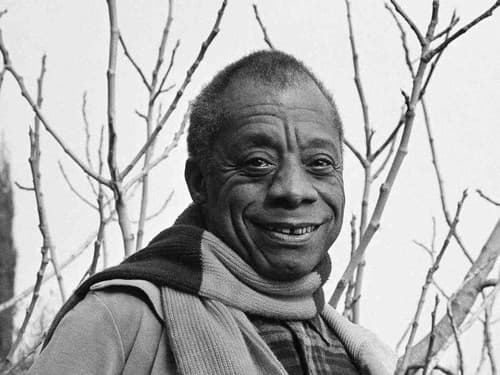
James Arthur Baldwin was an American writer. He garnered acclaim for his work across several forms, including essays, novels, plays, and poems. His first novel, Go Tell It on the Mountain, was published in 1953; decades later, Time magazine included the novel on its list of the 100 best English-language novels released from 1923 to 2005. His first essay collection, Notes of a Native Son, was published in 1955.







