“Every man's island, Jean Louise, every man's hell.”
— Atticus Finch speaking to Jean Louise about the isolation of individual beliefs.

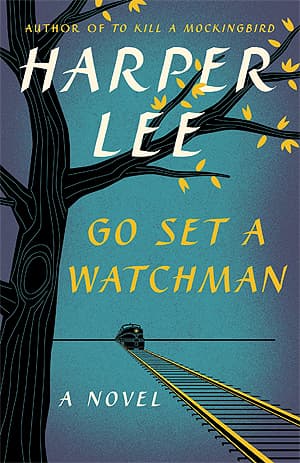
Harper Lee (2015)
Genre
Literary Fiction / Historical Fiction
Reading Time
9-10 hours
Key Themes
See below
Sign in to track this book
Twenty-six-year-old Jean Louise Finch confronts the painful truth that her father, Atticus, and her hometown of Maycomb are not the moral paragons she believed, forcing her to forge her own conscience in a changing South.
Twenty-six-year-old Jean Louise Finch, known as Scout in her youth, travels by train from New York City back to Maycomb, Alabama, for her annual two-week visit. Henry Clinton, a childhood friend and aspiring lawyer who works for her father, Atticus, and is also her suitor, accompanies her. Jean Louise thinks about her affection for Maycomb, despite its slower pace and traditional ways. She contrasts it with her independent life in New York. She looks forward to seeing Atticus and Aunt Alexandra, and the familiar routines of her hometown, unaware of the deep disappointment that awaits her regarding the people she holds dearest.
Upon her arrival, Jean Louise immediately faces her Aunt Alexandra's constant attempts to make her conform to traditional Southern womanhood. Aunt Alexandra, living with Atticus since Jem's death, disapproves of Jean Louise's independent lifestyle and New York ways, especially her choice not to wear a brassiere. She tries to set up Jean Louise with eligible bachelors and subtly criticizes her choices. Jean Louise finds these attempts stifling, but she endures them, understanding that her aunt's intentions, however misguided, come from a place of love and concern for her family's social standing in Maycomb.
One afternoon, Jean Louise overhears Aunt Alexandra discussing a local Citizens' Council meeting. Driven by curiosity and a vague unease, she secretly follows Atticus and Henry to the courthouse. To her shock, she sees them both sitting on the platform at a meeting where anti-Black speeches are being made, discussing ways to maintain segregation and resist the Supreme Court's desegregation ruling. This sight shatters her idealized image of Atticus as a symbol of justice and equality, plunging her into deep emotional turmoil and making her question everything she thought she knew about her father.
Disturbed by what she witnessed at the Citizens' Council meeting, Jean Louise confronts Henry Clinton. She presses him on his reasons for attending and his views on racial segregation. Henry, while acknowledging the ugliness of some of the rhetoric, explains his presence as a practical political move. He argues that change must come slowly and from within the community, not imposed externally. He also expresses concerns about the pace of desegregation and its potential impact on Maycomb's social structure. Their discussion shows a significant difference in their beliefs, straining their romantic relationship and further isolating Jean Louise in her moral crisis.
As Jean Louise deals with her current disappointment, a childhood memory resurfaces. She recalls an incident where she and Jem, after being invited to Calpurnia's church, were subjected to a racial slur by Calpurnia's grandson, Frank. Calpurnia, devastated, takes them home and later punishes Frank severely. This memory highlights Maycomb's complex racial dynamics, even within the seemingly harmonious relationship between the Finches and Calpurnia. It serves as an early, though unacknowledged, hint of the racial tensions that lie beneath the town's calm appearance. It also shows Calpurnia's deep love for the Finch children.
Overwhelmed by her discovery, Jean Louise finally confronts Atticus. She accuses him of hypocrisy, racism, and betraying the principles he taught her as a child. She is particularly enraged by his involvement with the Citizens' Council and his apparent support for segregation. Atticus, calm but firm, tries to explain his position. He argues that he is trying to guide Maycomb through a difficult transition and prevent more extreme groups from taking hold. He maintains that he is working within the system to protect the town, though his explanations do little to calm Jean Louise's deep sense of betrayal and anger.
Another important flashback occurs, this time to a conversation between a young Jean Louise and her Uncle Jack Finch. She recalls him teaching her about the importance of truth, the dangers of hypocrisy, and the complexities of human nature. He encourages her to question, to think for herself, and to always seek justice, even when it's difficult. This memory contrasts sharply with her current perception of Atticus, making his apparent change of heart even more painful. It also sets the stage for Uncle Jack's later role as a guide and mentor in her adult crisis of conscience.
Jean Louise, seeking solace and understanding, visits Calpurnia, hoping for the unconditional love and support she always received. However, Calpurnia, now older and living separately, treats Jean Louise with reserved politeness. She seems to dismiss Jean Louise's distress over Atticus, implying that Jean Louise doesn't truly understand the realities of their lives. This unexpected coolness from Calpurnia, whom Jean Louise had always seen as a second mother and a symbol of unwavering loyalty, deepens her sense of isolation and betrayal, making her feel completely adrift from her childhood anchors.
In the midst of her emotional breakdown, Uncle Jack Finch arrives. He engages Jean Louise in a direct and challenging discussion, criticizing her for her self-righteousness and her inability to see Atticus as a complex human being rather than a perfect idol. He explains Atticus's actions within the context of Maycomb's social and political situation, suggesting that Atticus, while perhaps flawed, is working to prevent worse outcomes. Uncle Jack forces Jean Louise to confront her own biases and the limits of her idealized view of her father and her hometown, starting her journey toward a more mature understanding.
Following Uncle Jack's intervention, Atticus speaks with Jean Louise again, offering a more complete explanation of his actions. He reveals that his involvement with the Citizens' Council is not an endorsement of their racist views, but a calculated strategy to moderate their extremism and prevent violence. He believes that by being present, he can subtly influence the group and ensure that the transition to desegregation, though slow, is managed without chaos. He explains that true change must come from within the community, guided by reason, and not imposed through force, urging Jean Louise to understand the nuances of practical politics.
Jean Louise, though still reeling, begins to process Atticus's explanation and Uncle Jack's insights. She starts to see her father not as a fallen idol, but as a complex man navigating difficult times, making imperfect choices with the best intentions. She realizes that her own moral absolutism was a form of immaturity, and that true integrity often involves compromise and strategic action. This new understanding marks a significant step in her emotional and intellectual growth, allowing her to appreciate the nuances of morality and the messy realities of social change.
By the end of her visit, Jean Louise's perspective on Maycomb has fundamentally shifted. She no longer views it through the nostalgic, idealized lens of childhood but with a more mature, though painful, understanding of its flaws. She recognizes that the town, like its people, is a mixture of good and bad, progressing slowly and imperfectly. While her disappointment is deep, it also leads to a more realistic and ultimately more compassionate acceptance of her roots, recognizing that her identity is linked to this place and its inhabitants, even with their imperfections.
The Protagonist
Jean Louise transitions from a naive idealist who idolizes her father to a more mature individual who accepts the complexities and flaws of her loved ones and her hometown.
The Supporting/Antagonist (initially perceived)
Atticus is revealed to be a more complex, fallible figure than his iconic 'To Kill a Mockingbird' portrayal, forcing Jean Louise and the reader to see him as a man of his time, making difficult, nuanced decisions.
The Supporting
Henry remains largely consistent in his views, serving as a foil to Jean Louise's evolving morality and representing the Maycomb she ultimately chooses to leave behind (romantically).
The Supporting
Aunt Alexandra's character remains largely static, serving as a representative of Maycomb's social expectations and a contrast to Jean Louise's burgeoning independence.
The Supporting
Uncle Jack acts as a catalyst for Jean Louise's growth, providing the necessary intellectual and emotional push for her to move beyond her youthful idealism.
The Supporting
Calpurnia's character remains largely consistent but her portrayal shifts from an idealized, unconditionally loving figure in Jean Louise's memory to a more realistic, complex individual with her own perspective on racial dynamics.
The Mentioned
Jem's character is static, serving as a symbol of Jean Louise's lost innocence and the past she struggles to reconcile with the present.
The Mentioned
Frank's character is static, serving only to highlight a specific childhood memory and the underlying racial complexities.
The central theme is Jean Louise's deep disappointment as her idealized view of her father and her hometown shatters. She returns to Maycomb expecting to find the moral certainty of her childhood, only to discover Atticus and other respected figures holding seemingly racist views. This forces her to confront the painful reality that her heroes are fallible and that the world is more complex than she imagined. The novel shows her struggle to reconcile the myth of her past with the uncomfortable truths of the present, marking her transition from youthful idealism to a more mature, though painful, understanding of the world.
“Every man's island, Jean Louise, every man's hell. His hell is his own, and not to be shared. You're no longer a child, you're a woman. You're an adult. You've got to live with your conscience.”
The novel explores the complexities of justice and morality, moving beyond the clear good-versus-evil story often associated with 'To Kill a Mockingbird.' Jean Louise initially believes justice is absolute, a principle upheld by Atticus. However, her discovery of his involvement with the Citizens' Council forces her to question what justice truly means and how it is achieved in a flawed world. Atticus and Uncle Jack argue for a more practical, nuanced approach, suggesting that sometimes one must work within an imperfect system to prevent worse outcomes. This challenges Jean Louise to re-evaluate her own moral absolutism and consider the compromises inherent in social and political change.
“You had to know a man's heart to know his conscience.”
The conflict between tradition and progress is a theme, especially in the American South during the Civil Rights era. Maycomb represents the deep-seated traditions and social hierarchies of the Old South, while Jean Louise, returning from New York, embodies modern, progressive ideals. The town struggles to adapt to the Supreme Court's desegregation ruling, clinging to its established ways. Atticus and Henry, in their own ways, represent attempts to navigate this tension, seeking to manage change at a pace they believe the community can absorb, even if it means appearing to uphold discriminatory practices. The novel highlights the painful and often messy process of societal evolution.
“Prejudice, a dirty word, and faith, a clean one, have something in common: they both begin where reason ends.”
At its core, the novel explores the evolving relationship between Jean Louise and Atticus. Jean Louise's identity is tied to her idealized perception of her father as a perfect moral compass. When this image shatters, their relationship experiences immense strain, forcing both to confront uncomfortable truths. The story follows Jean Louise's journey from a child's adoration to an adult's more complex understanding and acceptance of her father as a fallible human being, capable of both greatness and compromise. It is a story of how children must eventually 'go set a watchman' over their own consciences, independent of their parents.
“Every man's island, Jean Louise, every man's hell. His hell is his own, and not to be shared. You're no longer a child, you're a woman. You're an adult. You've got to live with your conscience.”
Jean Louise's return to Maycomb forces her to deal with her sense of identity and where she truly belongs. She has built a life in New York, embracing independence, but her roots are deeply embedded in Maycomb. The crisis she experiences highlights the tension between her individual values and the collective identity of her family and hometown. Her struggle to reconcile her past with her present, and her love for Maycomb with its inherent flaws, ultimately leads her to a more mature understanding of who she is and her connection to her heritage, even if it means accepting its imperfections.
“As I grew older, I was to hear this phrase, 'Go set a watchman,' used by some of the local ministers, but I never knew what it meant until today.”
Childhood memories that provide context and contrast to Jean Louise's adult experiences.
The novel heavily utilizes flashbacks to Jean Louise's childhood, particularly scenes involving Atticus, Jem, Calpurnia, and Uncle Jack. These memories serve multiple purposes: they establish the idealized image of Atticus and Maycomb that Jean Louise holds, highlight the moral lessons she learned, and provide stark contrasts to the disturbing realities she encounters as an adult. The flashbacks are crucial for understanding the depth of her disillusionment and for illustrating the journey from innocence to experience. They also offer glimpses into the backstory that predates 'To Kill a Mockingbird.'
A pivotal scene that shatters Jean Louise's idealized view of her father and Maycomb.
The scene where Jean Louise secretly observes Atticus and Henry at the Citizens' Council meeting is the central inciting incident of the novel. It acts as a catalyst for her profound disillusionment and triggers her moral crisis. By witnessing Atticus's apparent involvement in a segregationist gathering, her entire perception of him as an infallible moral hero is shattered. This moment forces her to confront the uncomfortable truths about her family, her town, and the complexities of racial politics in the South, setting the stage for the rest of her emotional and intellectual journey.
A recurring biblical allusion symbolizing one's conscience and moral independence.
The title 'Go Set a Watchman' is a direct reference to Isaiah 21:6, a biblical verse about a prophet instructing someone to be a lookout. In the novel, Uncle Jack explicitly uses this metaphor to explain to Jean Louise that everyone must eventually 'set a watchman' over their own conscience. It signifies the transition from relying on others (like Atticus) for moral guidance to developing one's own independent moral compass. This device encapsulates the novel's central theme of individual responsibility for one's beliefs and actions, even when those beliefs challenge cherished figures or community norms.
A seemingly idyllic Southern town that harbors deep-seated prejudices and resistance to change.
Maycomb functions as more than just a backdrop; it is a character in itself, representing the traditional, often resistant-to-change American South. Initially presented through Jean Louise's nostalgic gaze as a beloved, unchanging home, its true nature is revealed to be complex and flawed, grappling with racial tensions and the civil rights movement. The familiar landmarks and social structures of Maycomb highlight the personal stakes of the conflict for Jean Louise, as her emotional connection to the town intensifies her crisis. The setting underscores the theme of tradition versus progress and the difficulty of social change.
“Every man's island, Jean Louise, every man's hell.”
— Atticus Finch speaking to Jean Louise about the isolation of individual beliefs.
“Prejudice, a dirty word, and faith, a clean one, have something in common: they both begin where reason ends.”
— Jean Louise reflecting on the nature of prejudice and faith.
“It’s when a man can’t help himself that he trusts his father to.”
— Atticus explaining the trust between a child and their father.
“The one thing that doesn't abide by majority rule is a person's conscience.”
— Atticus's famous line, reiterated and given new depth in this context.
“I think I’ll be a little more than a lady. I’ll be an engineer.”
— Jean Louise expressing her ambitions beyond traditional gender roles.
“As you grew older, you were bound to discover that the old order changed. You were bound to discover that the world was not as you thought it was.”
— Jean Louise grappling with the disillusionment of adulthood and changing perspectives.
“I was born to a father who gave his life to the law and to justice.”
— Jean Louise reflecting on her father's dedication and its impact on her.
“You are a child, an ignorant, opinionated child. You have never been to Europe, you have never seen Russia, you have never seen a Communist. You don't know anything.”
— Henry Clinton chastising Jean Louise for her naive worldview.
“But what about your conscience? What about your father’s conscience?”
— Jean Louise challenging Atticus on his actions and their moral implications.
“It's not until you've lost your father that you realize what an extraordinary man he was.”
— Jean Louise contemplating her father's true character and impact.
“I’ll tell you something, Jean Louise. The time will come when you’ll be glad to have a friend, and a white one at that.”
— Uncle Jack warning Jean Louise about the realities of her community and the value of certain alliances.
“The town was a world, and it was a world of change, and a world of fear.”
— Description of Maycomb, highlighting its evolving social and racial tensions.
“He was a man, and she was a woman, and they were both in love, and it was a mess.”
— Jean Louise reflecting on her complicated relationship with Henry Clinton.
“There’s no such thing as a man who can’t be bought.”
— A cynical observation about human nature and corruption.
Ready to see how well you understood this book? Take our interactive quiz with 10 questions.

Nelle Harper Lee was an American novelist who wrote the 1960 novel To Kill a Mockingbird that won the 1961 Pulitzer Prize and became a classic of modern American literature. She assisted her close friend Truman Capote in his research for the book In Cold Blood (1966). Her second novel, Go Set a Watchman, has been confirmed to be an earlier draft of Mockingbird but was published in July 2015 as a sequel.







