“The only way to get rid of a temptation is to yield to it.”
— A general reflection on human nature, though not explicitly stated in 'Glory', it encapsulates a thematic undercurrent often found in Nabokov's work regarding desire and experience.


Vladimir Nabokov (2017)
Genre
Literary Fiction
Reading Time
240 min
Key Themes
See below
Sign in to track this book
A lovelorn Russian émigré, desperate to impress a woman and escape a life of perceived insignificance, embarks on a quixotic and ultimately tragic quest to illegally re-enter the Soviet Union.
The novel introduces Martin Edelweiss, a young Russian émigré, reflecting on his early life. Born into a privileged family in Tsarist Russia, his childhood is marked by a deep connection to nature and a detached relationship with his parents. His father, a wealthy landowner, is largely absent, while his mother, a beautiful but often melancholy woman, provides an inconsistent presence. The tranquility of their life is disrupted by the Russian Revolution. Martin and his mother are forced to flee, leaving behind their estate and the familiar landscapes of their homeland. This displacement shapes Martin's identity, creating a longing for a lost past and a feeling of being an outsider in his new European surroundings.
After their escape, Martin and his mother settle in Switzerland. Martin attends various schools, struggling to find his place among his peers and often retreating into his own inner world. He develops a deep, almost mystical attachment to Russia, a land he remembers through a child's eyes and which he idealizes as a place of beauty and meaning. During this period, he meets and becomes infatuated with Zina Mertz, a spirited and intelligent Russian girl also living in exile. Their relationship, however, is marked by Martin's shyness and Zina's independent nature, preventing it from developing into anything substantial, much to Martin's quiet despair. His experiences in Switzerland reinforce his sense of being adrift, fueling his desire for a grand purpose.
Martin moves to England to study at Cambridge University. He attempts to apply himself to his studies, particularly literature, but finds himself increasingly disengaged from academic life. His mind frequently wanders, preoccupied with romantic fantasies and a sense of dissatisfaction with his mundane existence. He feels a growing urge to perform some heroic deed, something that would give his life meaning and perhaps impress Zina, who remains a significant figure in his thoughts. He develops a fascination with 'glory' – a nebulous concept of courageous action and self-sacrifice. This period highlights his internal conflict between the expectations of a conventional life and his yearning for an extraordinary one.
During a break from his studies, Martin travels to Berlin, where he meets Zina Mertz again. He is still deeply in love with her and, mustering his courage, proposes marriage. Zina, however, gently but firmly rejects him. She expresses affection for him but states that she does not love him in the way required for marriage, finding him too passive and lacking clear direction in life. This rejection devastates Martin and exacerbates his feelings of inadequacy and aimlessness. It solidifies his conviction that he must achieve something remarkable, something that would prove his worth not only to Zina but also to himself. Her words, though painful, inadvertently push him towards his ultimate, perilous decision.
Following Zina's rejection and his continued dissatisfaction with his life, Martin begins to formulate a daring and dangerous plan. He decides he will secretly cross the border back into Soviet Russia, a venture he privately calls 'Zoorland' – a playful yet deeply significant name for his imagined heroic journey. He envisions this act as a personal pilgrimage, a way to reclaim his lost homeland, assert his courage, and achieve the 'glory' he so desperately craves. This idea becomes an obsession, consuming his thoughts and providing a singular focus for his previously aimless existence. He begins to make vague preparations, gathering information and fantasizing about the details of his clandestine adventure.
Martin dedicates himself to planning his 'Zoorland' expedition. He studies maps, learns basic Russian phrases, and considers various routes and disguises. He maintains strict secrecy about his true intentions, offering vague excuses to his mother and friends about travel plans or academic pursuits. He finds excitement and purpose in these preparations, feeling that he is finally taking control of his destiny. He experiences moments of doubt and fear, but these are quickly overshadowed by his unwavering resolve and the romanticized vision of his heroic return. His secrecy isolates him further, but he views it as a necessary part of his grand, solitary quest.
During his preparations, Martin encounters various Russian émigrés, each with their own perspective on their lost homeland. Some are bitter and politically active, yearning for the overthrow of the Bolshevik regime. Others have assimilated into European life, trying to forget the past. Martin finds himself unable to fully connect with either group. His own feelings for Russia are more personal and less political, a romanticized longing for a place of memory and identity. These interactions highlight his unique position and the individuality of his quest, setting him apart from the collective grievances or resignations of the émigré community. He feels an urgency to act, to bridge the gap between his idealized Russia and the harsh reality of the Soviet state.
With his preparations complete, Martin finally sets off. He travels by train, making his way eastward across Europe, his destination the Soviet border. The journey is filled with apprehension and exhilaration. He reflects on his life, his unrequited love for Zina, and the concept of 'glory' that has driven him to this point. He feels a sense of liberation as he leaves behind the comforts and constraints of his émigré life, embracing the unknown. The narrative emphasizes his internal state, his heightened senses, and the dreamlike quality of his journey as he approaches the threshold of his self-imposed adventure. He carries with him a sense of destiny, convinced that this act will define him.
Martin reaches the border region, a desolate and dangerous area. Under the cover of darkness, he attempts to cross into Soviet territory. The act itself is fraught with peril, requiring stealth, courage, and luck. The narrative builds tension as he navigates the fences, watchtowers, and patrols. He succeeds in crossing, a moment of profound, if fleeting, triumph. However, the immediate aftermath is not the glorious homecoming he imagined. He finds himself in a hostile and unwelcoming landscape, the reality of Soviet Russia different from his romanticized vision. The 'glory' he sought begins to feel hollow and dangerous, as he becomes aware of the mortal risks he has taken.
Once inside Soviet territory, Martin's brief triumph gives way to a grim reality. He encounters a local, possibly a border guard or a peasant, whose reaction is suspicion and hostility. The exact details of what happens next are vague, adding to the novel's enigmatic quality. The narrative implies that Martin is either captured or killed shortly after his infiltration. His fate is not explicitly stated, leaving the reader to infer the tragic outcome of his perilous adventure. The story concludes without a definitive resolution for Martin, emphasizing the futility and ultimate cost of his romanticized quest for 'glory' in a harsh, unforgiving world. His disappearance is his final, silent act of defiance.
The Protagonist
Martin evolves from a dreamy, passive youth into a man driven by a singular, self-destructive mission, ultimately finding a tragic form of 'glory' in his disappearance.
The Supporting
Zina remains largely consistent, serving as a foil to Martin's romanticism and a catalyst for his actions.
The Supporting
She remains a constant, if somewhat distant, maternal figure, representing the stability Martin ultimately abandons.
The Mentioned
Not applicable, as he is primarily a figure of memory and symbolism.
The Supporting
Remains a consistent, supportive friend, unaware of Martin's true intentions.
The Supporting
Not applicable, as the narrator is a stylistic device.
The novel explores Martin's romanticized pursuit of 'glory' – a heroic, self-sacrificing act – and the stark, often brutal reality he encounters. Martin idealizes the concept, believing it will give his life meaning and prove his worth, particularly to Zina. His 'Zoorland' project is born from this illusion. However, the narrative subtly undermines this ideal, showing the danger, loneliness, and probable futility of his quest. The ambiguity of his fate at the end suggests that true 'glory' in such a context is either unattainable or comes at an unbearable cost, far removed from the romantic fantasies he cherished. The contrast between his imagined triumph and the grim border crossing highlights this theme.
“He longed for something that would give his life a definite meaning, a purpose, a glory.”
Martin's life as a Russian émigré is central to his identity crisis. Displaced from his homeland at a young age, he constantly feels like an outsider in Western Europe. His idealized memory of Russia becomes a powerful, almost mystical force, representing a lost paradise and the true source of his identity. His decision to return, even illegally, is an attempt to reclaim this lost identity and bridge the gap between his past and present. The novel portrays the psychological impact of exile, the longing for roots, and the desperate measures individuals might take to reconnect with their heritage, even if it means confronting a changed and dangerous reality.
“He belonged nowhere, to no country, to no tradition, to no future.”
This theme is shown in the contrast between Martin's dreamy, idealistic nature and the more pragmatic perspectives of characters like Zina. Martin is driven by romantic notions of heroism, adventure, and unrequited love, shaping his perception of the world and his ultimate goal. Zina, on the other hand, is realistic and grounded, refusing to be swayed by Martin's vague aspirations. Her rejection, based on his lack of practical direction, pushes Martin further into his romanticized, perilous path. The novel suggests that while romanticism can inspire grand gestures, it often clashes with the harsh realities of life, particularly in the political climate of the 20th century.
“Zina was a realist, Martin was a romantic, and between them lay an abyss.”
Memory plays a role in shaping Martin's motivations. His childhood memories of Russia are highly idealized, filled with a nostalgic glow that contrasts sharply with the grim reality of the Soviet state. These memories fuel his longing and his 'Zoorland' project, becoming more vivid and appealing than his present life. The novel explores how memory can be selective, romanticized, and ultimately a powerful, sometimes deceptive, force. It highlights the human tendency to cling to a past that may no longer exist, especially for those in exile, and how this nostalgia can drive individuals to extraordinary, often tragic, actions.
“His Russia was a country of memory, a country that perhaps had never existed outside his imagination.”
The narrative often reflects Martin's subjective, romanticized perspective, blurring the line between his imagination and objective reality.
While the narrator is omniscient, the story is deeply filtered through Martin's romantic and often naive worldview. His idealized memories of Russia, his fantasies of 'glory,' and his interpretation of events are presented with a certain degree of irony that hints at their unreliability. The reader is invited to understand Martin's internal world but also to recognize the gap between his perceptions and the harsh external reality. This subtle unreliability is key to understanding the tragic irony of his quest, as his 'glory' is largely a product of his own mind.
Martin's private term for his perilous journey represents his romanticized, almost childlike, vision of his quest.
The name 'Zoorland' is a whimsical, invented term that Martin uses for his secret mission to re-enter Soviet Russia. It functions as a powerful symbol of his romanticism, his escapism, and the almost fantastical nature of his ambition. The childlike quality of the name contrasts sharply with the deadly seriousness of the venture, highlighting the gap between Martin's internal world and the external political reality. It encapsulates his desire for a personal, mythical adventure rather than a politically motivated act, setting him apart from other émigrés.
Martin's ultimate fate is left uncertain, enhancing the novel's themes of the futility of his quest and the elusive nature of 'glory'.
The novel deliberately leaves Martin's final fate unresolved after his border crossing. This ambiguity is a crucial plot device. It denies the reader the satisfaction of a clear heroic or tragic conclusion, instead emphasizing the profound and often silent cost of his actions. By not explicitly stating his death or capture, Nabokov underscores the idea that Martin's 'glory' was a personal, internal pursuit, and its external validation is irrelevant or impossible. The ambiguity forces the reader to confront the emptiness of a quest for an abstract ideal in a brutal world, making his disappearance more poignant than a definitive end.
“The only way to get rid of a temptation is to yield to it.”
— A general reflection on human nature, though not explicitly stated in 'Glory', it encapsulates a thematic undercurrent often found in Nabokov's work regarding desire and experience.
“It was one of those days when the air is so clear and bright that it seems to have been newly laundered.”
— Martin's observation of the weather, showcasing Nabokov's vivid descriptive prose.
“Youth is a kind of delicious madness.”
— A general reflection on the nature of youth and its inherent impulsiveness and joy.
“Happiness is only an occasional episode in the general drama of pain.”
— A somewhat melancholic reflection on the fleeting nature of happiness amidst life's struggles.
“He liked the idea of being a stranger, of moving through a world that was not quite his own.”
— Martin's feeling of detachment and wanderlust, a recurring motif in his journey.
“Every individual is a one-man nation.”
— A thought on the unique and self-contained nature of each person's experience.
“The past is a foreign country; they do things differently there.”
— A reflection on the distinctness and irrevocability of past events, though more famously associated with L.P. Hartley, this sentiment resonates with Nabokov's characters often looking back.
“There are some people who, in order to be happy, need to be unhappy.”
— An observation on the complex and sometimes paradoxical nature of human psychology and the pursuit of contentment.
“He had a passion for maps, for the intricate patterns of roads and rivers, the delicate tracery of borders.”
— Describing Martin's fascination with geography and the symbolic representation of the world.
“The greatest pleasure of all is in the escape, in the flight into the unknown.”
— Martin's yearning for adventure and his desire to break free from the mundane.
“Memory, like a house, has many rooms.”
— A metaphor for the complex and multi-layered nature of memory and recollection.
“One day, all this will be yours. But not yet.”
— A phrase that evokes a sense of deferred inheritance or future promise, reflecting Martin's aspirations.
“The world was a book, and those who do not travel read only one page.”
— A strong encouragement for exploration and experiencing different cultures, which aligns with Martin's journey.
“There are dreams that are more real than reality itself.”
— A reflection on the power of imagination and the vividness of inner life, often blurring the lines between what is real and what is perceived.
Ready to see how well you understood this book? Take our interactive quiz with 10 questions.
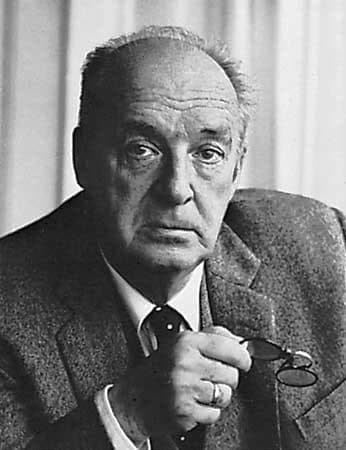
Vladimir Vladimirovich Nabokov, also known by the pen name Vladimir Sirin, was an expatriate Russian and Russian-American novelist, poet, translator, and entomologist. Born in Imperial Russia in 1899, Nabokov wrote his first nine novels in Russian (1926–1938) while living in Berlin, where he met his wife. He achieved international acclaim and prominence after moving to the United States, where he began writing in English. Nabokov became an American citizen in 1945 and lived mostly on the East Coast before returning to Europe in 1961, where he settled in Montreux, Switzerland.







