“Sometimes you have to stand up for what's right, even if you're standing alone.”
— Glory reflects on her decision to challenge segregation at the public pool.

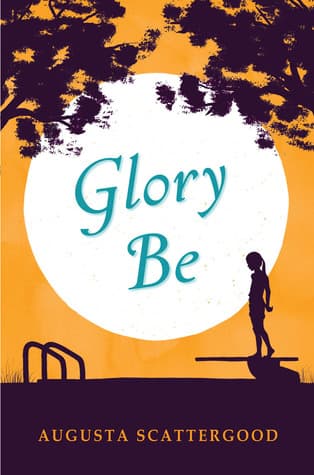
Augusta Scattergood (2011)
Genre
Children's / Historical Fiction / Young Adult
Reading Time
180 min
Key Themes
See below
Sign in to track this book
In 1964 Mississippi, eleven-year-old Glory navigates the difficult parts of friendship, family, and a town dealing with racial segregation as the local pool becomes a center for change.
Eleven-year-old Gloriana June Hemphill, known as Glory, looks forward to her twelfth birthday in the small, segregated town of Hanging Moss, Mississippi, in the summer of 1964. Her excitement is lessened by growing distance from her older sister, Jesslyn, who is busy with high school and a new boyfriend. Glory also feels a change in her friendship with her best friend, Frankie. Their usual easy relationship is strained, making Glory feel more alone. The town itself is talking about the public swimming pool, a main gathering place, and whether it will stay open, especially after a new girl arrives from the North, adding to the tensions in the community.
Sarah, a girl from Ohio, comes to Hanging Moss to stay with her aunt, a nurse at the local clinic. Sarah immediately stands out with her strong views on racial equality, openly questioning the town's segregation practices, especially about the public swimming pool. This makes many of the town's white residents uncomfortable, including Frankie, who quickly dislikes Sarah. Glory, at first careful, finds herself drawn to Sarah's different ideas. Meanwhile, the town council is set to vote on whether to close the public pool instead of integrating it, a decision that deeply divides the community and becomes a central point for the town's racial tensions. Glory's father, a respected local, tries to handle the difficult situation.
As the summer goes on, Glory starts to notice the widespread racial discrimination in Hanging Moss more clearly, mostly because of Sarah's direct observations and questions. Glory sees the 'Colored Only' signs and experiences the unspoken rules of segregation that she used to take for granted. She sees the clear differences in how white and Black residents are treated, especially when her grandmother, Mama, is sick and cared for by a Black nurse, Emma, at the clinic. Glory also learns about the Freedom Fighters and their work to register Black voters, a topic met with fear and hostility by many adults in her town. These experiences begin to change Glory's simple acceptance of her community's ways.
Mama's illness leads Glory to spend more time at the local clinic, where Sarah's aunt works. Here, Glory gets to know Emma, the kind and wise Black nurse who cares for Mama and other Black community members. Glory sees Emma's dedication and the quiet dignity of the Black patients. During her visits, Glory meets several Black children, including a young girl named Roosevelt, who is often at the clinic. These interactions, helped by Emma and Sarah's aunt, give Glory a look into a world beyond her segregated experiences, starting a sense of empathy and understanding that contrasts with the attitudes of her white community.
Frankie, deeply set in the town's traditional way of thinking, becomes more uncomfortable with Sarah's presence and Glory's growing openness to new ideas. Frankie's loyalty to the established order shows in subtle ways, like avoiding Sarah and making comments that reflect the town's resistance to change. This creates a big split between Frankie and Glory, as Glory struggles to deal with her long-standing friendship and her new understanding of injustice. The tension around the pool debate makes this divide worse, as Frankie sides with those who want to keep things as they are, while Glory questions the rightness of such decisions.
Glory goes with Sarah and her aunt to a meeting at a local Black church, a secret gathering of Freedom Fighters. There, she sees the community's quiet resolve to fight for their rights, especially the right to vote. She hears strong speeches and understands the risks these individuals are taking. During this meeting, a young Black boy, who had been at the clinic, gives Glory a pamphlet about voter registration. This direct contact with the movement deeply affects Glory, making the abstract idea of civil rights real and personal. It further strengthens her understanding of the injustices faced by the Black community and sparks conviction within her.
The town council meeting happens, and after much debate and tension, the council votes to close the public swimming pool rather than integrate it. This decision, while expected by some, leaves many, including Glory, feeling a sense of loss and injustice. The closure of the pool means more than just losing a place to swim; it shows the town's resistance to change and its unwillingness to accept equality. The time after is marked by quiet disappointment, as the community deals with the meaning of this choice and the deeper racial divides it shows, leaving a gap where a symbol of summer fun once was.
Glory's twelfth birthday arrives, a day she had looked forward to. While the celebration is somewhat quiet because of the lingering tension in the town and strained relationships, it marks a change for Glory. She receives a special gift from Emma, the nurse, a book of poetry about freedom and strength. This gift, along with her recent experiences, helps Glory confirm her new perspective. She recognizes that true friendship doesn't always mean agreeing, and that standing up for what's right is more important than blindly following the crowd. She begins to see her own part in shaping the future of her community, however small.
Despite their differences throughout the summer, Glory and Frankie begin to mend their friendship. Frankie, though still dealing with her own beliefs, shows signs of understanding Glory's perspective, even if she doesn't fully accept it yet. Their friendship, though changed, offers the promise of renewal, built on honesty and a shared past. Glory realizes that change is a slow process, and that even small acts of courage and understanding can make a difference. The summer ends with cautious hope, as Glory, now twelve, looks forward to a future where she can actively help create a more just world, carrying the lessons learned from Sarah, Emma, and her own awakened conscience.
The Protagonist
Glory transforms from an innocent, somewhat sheltered girl into a more aware and empathetic individual who begins to question the status quo and stand up for what she believes is right.
The Supporting
Frankie initially resists change and new ideas, causing a rift with Glory, but by the end, she shows glimmers of understanding and a willingness to reconcile, though her own growth is slower.
The Supporting
Sarah remains steadfast in her convictions, acting as a catalyst for Glory's growth and challenging the town's norms without significant personal internal change, as she arrives with already formed beliefs.
The Supporting
Emma remains a steady, compassionate presence, acting as a wise guide and example of resilience for Glory, without a significant personal arc of change within the story's timeframe.
The Supporting
Jesslyn's arc is less about internal change and more about her natural progression into adolescence, which creates a temporary distance from Glory.
The Supporting
Mama's primary role is to create a plot point (her illness) that facilitates Glory's exposure to new characters and experiences, rather than undergoing a significant personal transformation herself.
The Supporting
Glory's father grapples with the town's changing dynamics and the pressure to conform, trying to navigate a path that maintains stability while subtly acknowledging the need for fairness, showing a gradual internal struggle.
The Mentioned
Roosevelt's role is primarily symbolic; he acts as a direct link for Glory to the civil rights movement, rather than having a developed character arc.
The novel shows Glory's journey of self-discovery as she deals with adolescence and a racially charged summer. As she turns twelve, Glory's understanding of who she is connects with her growing awareness of the world's injustices. Her interactions with Sarah and Emma, and her observations of the civil rights movement, make her question her old beliefs and the identity she has from her segregated town. This leads to a more mature and empathetic understanding of her place in the world, different from her childhood innocence.
“It was like I was seeing things for the first time, things that had always been there.”
The main theme of the book is the widespread racial segregation in 1964 Mississippi and the starting Civil Rights Movement. The public swimming pool controversy shows the larger struggle for equality, highlighting the town's resistance to integration. Through Glory's eyes, the reader sees the 'Colored Only' signs, the separate waiting rooms, and the fear around voter registration efforts. The novel shows the quiet strength of the Black community, the bravery of the Freedom Fighters, and the deep prejudices of the white community, showing how these systemic injustices affect people.
“I knew it wasn't fair, but I didn't know what to do about it.”
The way friendships work is explored through Glory's relationships with Frankie and Sarah. The novel shows how different values and new political awareness can strain long friendships, as seen between Glory and Frankie. It also shows how new friendships, like that between Glory and Sarah, can challenge ideas and encourage growth. The theme questions what loyalty means: whether it means sticking with what's familiar or standing up for moral principles, even if it means alienating those you care about.
“Sometimes, doing the right thing meant doing it alone.”
The book shows different kinds of courage, from the clear activism of the Freedom Fighters to the quiet strength of characters like Emma. Glory's own courage grows as she moves from simply watching to actively questioning and, eventually, a quiet determination to support justice. Sarah's outspokenness and Emma's steady kindness show that courage isn't always loud; it can be found in challenging norms, offering care, and simply refusing to ignore injustice. The closure of the pool, while a defeat, also strengthens Glory's resolve to seek a more just future.
“It takes courage to change your mind, and even more to change other people's.”
A central symbol representing the town's racial divisions and resistance to change.
The public swimming pool is more than just a recreational spot; it serves as a powerful symbol of segregation in Hanging Moss. Its impending closure rather than integration becomes the focal point of the town's racial tensions and the central conflict for much of the story. The pool represents the deeply ingrained 'separate but equal' (or rather, unequal) mentality of the era. Its ultimate fate underscores the community's reluctance to embrace civil rights and highlights the sacrifices made by both sides in the struggle for equality, making the abstract concept of segregation tangible and personal for Glory.
A catalyst for Glory's awakening and an external challenge to the town's norms.
Sarah, the new girl from Ohio, functions as a classic 'catalyst character' in the narrative. Her arrival disrupts Glory's comfortable, albeit segregated, world. By openly questioning the town's racial practices and expressing progressive views, Sarah forces Glory to confront the injustices she previously overlooked. Sarah doesn't undergo a significant personal arc; instead, her role is to provoke thought, challenge the status quo, and provide Glory with an alternative perspective, thereby driving Glory's own internal growth and understanding of civil rights.
A setting and character that provide Glory with a window into the Black community and compassionate mentorship.
The local clinic, where Glory's grandmother receives care and where Emma works, serves as a crucial setting for Glory's education. It is a neutral space where Glory can observe the realities of segregation and witness the dedication and resilience of the Black community firsthand. Emma, the kind and wise Black nurse, acts as a mentor figure, offering Glory gentle guidance and demonstrating dignity in the face of prejudice. The clinic and Emma together provide Glory with a personal connection to the civil rights struggle, fostering her empathy and broadening her worldview beyond her segregated experiences.
A coming-of-age milestone that frames Glory's summer of transformation.
Glory's impending twelfth birthday acts as a structural device, marking a significant coming-of-age milestone. The entire summer's events unfold in the lead-up to this day, symbolizing her transition from childhood innocence to a more mature understanding of the world. The anticipation of her birthday frames her emotional and intellectual growth, making the lessons learned about friendship, justice, and self-discovery feel intrinsically linked to her personal development. By the time her birthday arrives, Glory is no longer the same girl; she has gained a deeper awareness of her own identity and her place in a changing society.
“Sometimes you have to stand up for what's right, even if you're standing alone.”
— Glory reflects on her decision to challenge segregation at the public pool.
“Change doesn't come easy, but it starts with one person.”
— Glory discusses the civil rights movement with her sister.
“Friendship shouldn't have a color.”
— Glory defends her friendship with a Black girl in her segregated town.
“The library is the one place where everyone is welcome.”
— Glory finds solace in the integrated public library.
“Silence can be just as loud as shouting.”
— Glory observes the town's reaction to civil rights protests.
“History isn't just in books; it's happening right now.”
— Glory realizes the significance of the 1964 Civil Rights Act.
“Sometimes the bravest thing you can do is ask a question.”
— Glory questions why the town pool is segregated.
“Home isn't just a place; it's the people who stand by you.”
— Glory finds support from her family and friends.
“Justice isn't a privilege; it's a right for everyone.”
— Glory learns about the civil rights movement in school.
“Fear can't stop change; it can only delay it.”
— Glory observes resistance to desegregation in her town.
“A small act of kindness can start a big change.”
— Glory helps a Black girl at the library despite social norms.
“The truth has a way of coming out, no matter how hard you try to hide it.”
— Glory uncovers secrets about her town's history.
“Standing up for others is standing up for yourself.”
— Glory joins a protest for equal rights.
Ready to see how well you understood this book? Take our interactive quiz with 10 questions.

Dan Gemeinhart
4.5

Kate O'Hearn
4.4

Jeanne Birdsall
4.4

Jen Wang
4.4

Wendelin Van Draanen
4.3

John Marsden
4.3

Chris Van Allsburg
4.3

Jennifer A. Nielsen
4.2