“There are no rules, only choices.”
— A recurring thought for the protagonist, Zoe, as she grapples with the limitations and possibilities of her world.

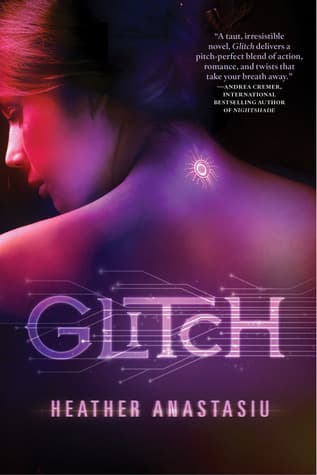
Heather Anastasiu (2012)
Genre
Fantasy / Science Fiction / Young Adult / Romance
Reading Time
300 min
Key Themes
See below
Sign in to track this book
In a future where technology suppresses emotions, a young woman's unusual 'glitches' awaken telekinetic powers and forbidden feelings. She must choose between conformity and a dangerous rebellion with other superpowered outcasts.
Zoe 7 is a typical seventeen-year-old in the Community. The Link, a neural network connected to implanted chips, suppresses emotions and free will. Her daily life follows the Link's suggestions, ensuring peace and conformity. One day, while working in the hydroponics lab, Zoe experiences a sudden malfunction – a 'glitch.' This glitch brings a flash of unique thought and a sense of self, a stark contrast to the usual Link-fed serenity. Alarmed, she tries to ignore it, knowing that glitches are reported and 'repaired,' a term for deactivation. She fears what this means for her structured life.
Zoe's glitches become more frequent and intense. One evening, alone in her living unit, a surge of emotion – anger mixed with fear – causes objects in her room to shatter and float. She realizes her glitches are not just internal thoughts but are becoming telekinetic powers. This terrifies her, as such abilities are unknown and would lead to immediate deactivation by the Community's Enforcers. She struggles to suppress these manifestations, trying to understand their source while fearing exposure and the loss of her controlled life.
After a particularly strong telekinetic episode, Zoe sees a strange, non-Link message on her display screen: 'Are you a Glitcher?' The message surprises her, suggesting she is not alone. Curious and desperate for answers, she follows the instructions to a secluded part of Sector 7. There, she meets Max, a charismatic and mysterious boy her age. Max reveals he is also a Glitcher, able to subtly change his appearance. He explains that other Glitchers exist and that the Community's control is not absolute. Max's presence introduces Zoe to a world beyond the Link's programming, bringing her both hope and apprehension.
Max takes Zoe to a hidden Glitcher safe house, a derelict building outside the monitored sectors. There, she meets Adrien, another Glitcher, who can see glimpses of the future. Adrien is more reserved and serious than Max, and his visions often carry a heavy burden. He shows Zoe a vision of the Community's true nature and the danger they all face, solidifying her understanding that the Link is a tool of oppression. The growing group of Glitchers begins to connect over their shared experiences and the implications of their powers, realizing they are part of a larger, secret resistance.
Under Max and Adrien's guidance, Zoe begins training her telekinetic abilities, learning to control the power surges that come with her emotions. She practices in secret, gaining a basic understanding of her strength. During this time, the relationships between the three deepen. Zoe feels drawn to Max's adventurous spirit, experiencing new emotions like excitement and attraction. At the same time, she feels a deep connection with Adrien, an empathetic understanding that goes beyond the Link's emotional suppression. She grapples with these new, complex feelings, recognizing them as part of her evolving identity as a Glitcher.
Adrien's visions point to important information within the Community's central data archives. The Glitchers decide on a daring mission to infiltrate the heavily guarded facility. Max uses his ability to create a distraction, while Zoe, with her developing telekinesis, helps disable security measures. The mission is dangerous, pushing Zoe to use her powers under extreme pressure for the first time. They manage to download encrypted data, but the experience leaves them shaken and aware of the risks of their rebellion against the Community.
After getting the data, Adrien and Max work to decrypt it. What they discover is horrifying: the Link was not created for humanity's benefit but to control free will, turning citizens into compliant drones. They learn that 'deactivation' is not just removing the chip but a complete erasure of identity, and that the Community actively hunts Glitchers. The data also reveals a 'Core' – the central hub of the Link – which they realize must be destroyed to truly free humanity. This revelation strengthens their resolve to fight for genuine freedom.
As the Glitchers plan their next move, a new Glitcher, a young girl named Anya, joins them. However, Anya is a Community informant. She betrays the group, leading Enforcers directly to their safe house. In the chaos, Adrien uses his precognitive abilities to warn Zoe and Max, sacrificing himself to ensure their escape. He is captured by the Enforcers, a devastating blow to the group. Zoe and Max are forced to flee, heartbroken and guilty, realizing the full extent of the Community's reach and the cost of their rebellion.
Devastated by Adrien's capture, Zoe and Max are determined to rescue him and continue their fight. They realize that to save Adrien and truly dismantle the Community's control, they must target the Core itself. They formulate a desperate, high-risk plan: infiltrate the central Community facility where the Core is housed, hoping to both free Adrien and disable the Link. This mission will require Zoe to use her telekinetic powers more powerfully and precisely than ever before, pushing her to her limits.
Zoe and Max execute their plan, infiltrating the heavily guarded Core facility. They face fierce resistance from Enforcers, forcing them to use their Glitcher abilities in open combat. Zoe's telekinesis becomes a powerful weapon, while Max's disguises provide crucial diversions. They locate Adrien, held in a containment unit, weakened but alive. The reunion is brief, overshadowed by the urgency of their mission. They face a dilemma: rescue Adrien immediately or prioritize destroying the Core, knowing that failure could mean deactivation for all of them.
Reaching the Core, the Glitchers discover it is protected by advanced, automated defenses. The battle is intense, testing their combined powers. Adrien, despite his weakened state, uses his visions to guide their attacks, identifying weaknesses. However, the Core's defenses are strong, and one of the Glitchers makes a heroic sacrifice to create an opening for Zoe to reach the Core. This act of selflessness deeply impacts Zoe, solidifying her understanding of true freedom and the bonds formed in rebellion.
With a surge of raw, powerful emotion, Zoe unleashes her telekinetic abilities, striking a critical blow to the Core. The facility shakes, and the Link momentarily falters, causing widespread disruption throughout the Community. People experience flashes of their own thoughts and feelings, a brief taste of freedom. Zoe, Max, and Adrien escape, but the victory is not absolute. They realize that while they have damaged the Core, it is not fully destroyed, and the Community's control will not easily break. The book ends with them finding refuge with other Glitchers, ready to continue their fight, knowing this is just the beginning of a larger war for humanity's freedom.
The Protagonist
Zoe transforms from a compliant, emotionless citizen into a powerful, self-aware leader who embraces her unique identity and fights for the freedom of others.
The Supporting
Max remains a steadfast and resourceful rebel, his determination solidified by the dangers they face.
The Supporting
Adrien endures capture and continues to be a crucial guide, proving his unwavering dedication to the Glitcher cause.
The Antagonist (briefly)
Anya's brief arc reveals her as a deceptive informant, highlighting the dangers of trust in their rebellion.
The Antagonist
The Enforcers remain a constant, unyielding threat, representing the oppressive force the Glitchers fight against.
The Antagonist (abstract)
The Link is revealed to be a tool of oppression, its power challenged but not fully broken by the end of the book.
The Antagonist (abstract)
The Core is partially disabled but not fully destroyed, leaving its ultimate fate uncertain and the fight ongoing.
The Mentioned
The citizens remain largely unaware but experience a brief awakening, hinting at future potential for freedom.
The main theme explores what it means to be truly human when emotions and independent thought are suppressed. Zoe's journey from a compliant 'unit' to a self-aware individual with unique powers questions the Community's idea of peace. Her 'glitches' are not flaws but the reawakening of her true self, leading her to accept her identity despite the dangers. The difference between the emotionless citizens and the Glitchers, who experience love, fear, and anger, shows the importance of choice and self-determination. This is clear in Zoe's initial fear of her own thoughts compared to her later acceptance of her telekinesis as part of who she is.
“My mind was mine. And the thought was terrifying.”
The novel presents a dystopian society where pain, war, and conflict have been removed at the cost of all human emotion and freedom. The Community offers a calm existence, but it is a gilded cage. The Glitchers' rebellion, though dangerous (as seen with Adrien's capture), represents the human desire for autonomy, even if it brings hardship and risk. The conflict between the 'peace' of the Link and the messy, dangerous reality of true freedom drives the plot, forcing characters to weigh security against self-determination. The Glitchers risk deactivation for the chance to feel and choose.
“Better to live a short, real life than a long, programmed one.”
Emotions are portrayed as both a dangerous anomaly within the Community and the source of the Glitchers' powers. Zoe's telekinesis connects directly to her strongest feelings – fear, anger, love. The Link's suppression of emotions allows the Community to maintain control, while the reawakening of these feelings in Glitchers empowers them to fight back. The book argues that emotions, even negative ones, are essential to the human experience and vital for connection, empathy, and the will to fight for what is right. This is powerfully shown when Zoe's telekinesis surges during moments of intense feeling, such as anger or determination.
“My powers were born from feeling. From everything the Link tried to erase.”
In a society where personal relationships are regulated and emotions are absent, the emergence of love and deep connection among the Glitchers is a revolutionary act. Zoe's developing feelings for both Max and Adrien are entirely new experiences, challenging her understanding of the world and herself. These relationships provide motivation, support, and a reason to fight for freedom beyond mere survival. The bonds formed between the Glitchers—friendship, loyalty, and romantic love—demonstrate the human need for connection and intimacy, which the Link tries to deny. Adrien's sacrifice for the group shows the power of these connections.
“I felt something for him, a warm, pulling sensation that had no name in the Link's language.”
A ubiquitous technological system that suppresses emotions and free will.
The Link serves as the primary instrument of control in the Community. It is an implanted neural network that feeds information and directives to citizens, effectively replacing independent thought and emotion with programmed conformity. As a plot device, it establishes the dystopian setting and the central conflict: the struggle against technological oppression. Glitches are presented as malfunctions in this system, providing the catalyst for the protagonist's awakening and powers. The Link's pervasive nature creates constant tension and defines the stakes of the Glitchers' rebellion.
Unexplained malfunctions in the Link that grant individuals unique abilities.
Glitches are the central supernatural element and the driving force of the narrative. They are presented as 'malfunctions' in the Link system that ironically grant individuals like Zoe, Max, and Adrien unique powers (telekinesis, appearance alteration, precognition) and, more importantly, free will and emotion. As a plot device, glitches serve as the origin of the protagonists' abilities and their rebellion. They symbolize humanity's inherent resistance to total control and provide the means for the characters to fight against their oppressors.
A seemingly utopian society built on the complete suppression of human emotion.
The Community functions as the dystopian setting, a world where peace and order are maintained through the complete eradication of individual thought and feeling. It serves as the antagonist society against which the Glitchers rebel. This setting highlights the theme of control versus freedom, showcasing the chilling 'perfection' achieved by sacrificing humanity. The Community's strict rules, constant surveillance, and the threat of 'deactivation' create a high-stakes environment for the Glitchers, emphasizing the courage required to defy the system.
Adrien's ability to see glimpses of future events.
Adrien's precognitive visions serve as a crucial plot device, providing vital information and guidance for the Glitchers' missions. His visions often reveal hidden dangers, strategic opportunities, and the true nature of the Community, propelling the plot forward and raising the stakes. This ability introduces elements of fate and destiny, while also adding tension as the Glitchers must interpret and act upon fragmented glimpses of the future. It underscores the importance of knowledge and foresight in their rebellion.
“There are no rules, only choices.”
— A recurring thought for the protagonist, Zoe, as she grapples with the limitations and possibilities of her world.
“Every secret comes with a price, and sometimes, the price is your own sanity.”
— Zoe reflects on the burden of the hidden truths she uncovers about her society and her own past.
“Love isn't a glitch, it's the most powerful program of all.”
— A realization Zoe has about the nature of her feelings for Adrian, defying the controlled environment they live in.
“Sometimes the greatest strength is knowing when to break the rules.”
— Zoe's internal monologue as she considers defying the established order to protect those she cares about.
“Memory is a funny thing. It can be a cage, or it can be a key.”
— Zoe contemplates the fragmented and manipulated memories that are central to the mystery of her world.
“The truth doesn't always set you free; sometimes it just gives you a new set of chains.”
— A cynical thought Zoe has after uncovering a particularly harsh reality about her existence.
“Even in a world designed for perfection, flaws find a way to bloom.”
— Zoe observes the imperfections and humanity that persist despite the attempts at control.
“Hope is a dangerous thing when you live in a cage, but it's also the only thing that keeps you flying.”
— Zoe's internal battle between despair and the enduring belief in a better future.
“What defines us isn't where we come from, but what we choose to become.”
— A central theme for Zoe as she learns about her origins and decides her own path.
“The greatest prison isn't made of bars, but of fear.”
— Zoe recognizes the psychological control exerted over her society.
“Sometimes the quietest whispers hold the loudest truths.”
— Zoe pays attention to subtle clues and hidden messages that reveal deeper realities.
“You can't erase the past, but you can choose how it shapes your future.”
— Zoe comes to terms with her history and decides to move forward rather than be defined by it.
“A perfect world is a world without choice, and that's no world at all.”
— Zoe's ultimate rejection of the controlled utopia presented to her.
Ready to see how well you understood this book? Take our interactive quiz with 10 questions.







