“The worst thing about a celebrity is that they can't be themselves. They have to be the idea of themselves.”
— Victor Ward reflecting on the nature of fame and public perception.


Bret Easton Ellis (1998)
Genre
Literary Fiction / Thriller / Mystery
Reading Time
12-15 hours
Key Themes
See below
Sign in to track this book
In 90s Manhattan, a model's celebrity-obsessed life spirals into a nightmarish conspiracy of terror and mistaken identity, blurring the lines between fame, fashion, and deadly mayhem.
Victor Ward, a handsome male model, lives a perfect life in 1990s Manhattan. He dates supermodel Chloe Byrnes, has an affair with another model, Alison Poole, and is about to open his nightclub, 'Nowhere.' His life is a whirlwind of exclusive parties, celebrity encounters, and constant media attention. Beneath the surface, Victor is disoriented by strange occurrences: he sees himself in photographs at events he never attended, and people know things about him that are impossible. One night, a shadowy figure named F. Fred Palakon offers Victor a lucrative but vague job locating a missing person for a film project, hinting at a darker reality beneath his glamorous life.
As the opening of 'Nowhere' approaches, Alison Poole, Victor's mistress, mysteriously disappears, leaving a cryptic message. This event, coupled with the increasing surrealism of his daily life, including encounters with doppelgangers and unsettling conversations, pushes Victor further into confusion. Despite his initial reluctance, Victor accepts F. Fred Palakon's job offer, which involves traveling to Europe under the guise of filming a documentary. He is given a new identity and instructed to locate a specific individual; the details remain vague. Victor leaves his glamorous New York life, relationships, and club project, embarking on a journey that feels less like a film shoot and more like an abduction into an unknown world.
Victor arrives in Europe and is immediately plunged into a bizarre and terrifying reality. He is introduced to a group of international models and celebrities who, under the direction of 'Bobby Hughes,' also operate as a terrorist cell. Their acts of violence, from bombings to kidnappings, are meticulously staged and filmed, blurring the lines between reality and performance art. Victor's mission, as explained by Palakon and the group, is to 'find Bobby Hughes,' a task that becomes convoluted as he encounters multiple individuals claiming to be or acting as Bobby Hughes. He is forced to participate in their horrific 'performances,' all while grappling with the realization that his glamorous past might have been a prelude to this violent, theatrical present.
As Victor is dragged from one European capital to another, participating in or witnessing brutal acts of terrorism, his sense of self unravels. The lines between his past in New York and his present in Europe, between his memories and the 'scripts' he's given, blur. He encounters characters from his past, like Chloe Byrnes and Alison Poole, who appear in unexpected and contradictory roles within the terrorist group, further destabilizing his perception of reality. Victor's objective shifts from 'finding Bobby Hughes' to understanding his own identity and the true nature of the 'film' he's supposedly making. He is haunted by fragmented memories and fears he might be losing his mind, or that his entire life has been a crafted illusion.
The terrorist group orchestrates a bombing in Paris, a planned event designed for media impact and filmed from multiple angles. Victor is present during the aftermath, witnessing the horrific consequences. This event marks an escalation in the group's violence and Victor's complicity. The bombing is presented as another 'scene' in the ongoing 'film,' yet the real-world casualties are undeniable. Victor's internal struggle intensifies as he tries to reconcile the glamour and detachment of the terrorists with the real suffering they cause. He questions whether any of his experiences are genuine or if he is merely an actor in a larger, more terrifying production, a puppet in a world where celebrity and terror are indistinguishable.
Victor learns more about Bobby Hughes, who is revered by the terrorist group as a visionary leader, an artist, and a prophet. The group's actions are often justified as part of Hughes's artistic vision, a form of radical performance art designed to expose the hollowness of modern society. Victor, while horrified by their methods, is also drawn into the mystique surrounding Hughes, hoping that finding the 'real' Bobby will provide answers to the chaos of his life. He encounters more individuals impersonating Hughes, each offering a different piece of the puzzle, yet none providing a definitive explanation. The constant confusion and the blurring of identities make it impossible for Victor to discern the truth from the deceptions.
Overwhelmed by the violence and psychological torment, Victor attempts to escape the terrorist group. He tries to contact authorities, but his efforts are thwarted, and he finds himself alone. During his escape attempts, he discovers that many people he thought were innocent bystanders or victims are actually complicit in the 'film.' He is eventually recaptured and subjected to further psychological manipulation. It is suggested that his entire journey, from the moment Palakon approached him in New York, has been a carefully orchestrated trap, a performance designed for him. The realization that he is not just a participant but potentially the unwitting star of this production pushes him to the brink.
Against all odds, Victor finds himself back in New York City, seemingly having escaped the European nightmare. He tries to resume his old life, reopening 'Nowhere' and reconnecting with Chloe Byrnes. However, the events in Europe have scarred him. He experiences unsettling flashbacks, sees familiar faces from the terrorist group in mundane settings, and struggles to differentiate between his memories and fabricated realities. The lines between his past glamorous life and the horrific European ordeal remain fluid. He questions whether his return to New York is real or just another layer of the 'film' he was forced to star in, unable to escape the sense of illusion and paranoia.
As Victor attempts to navigate his 'returned' life in New York, the distinction between his experiences in Europe and his current reality collapses. He encounters characters who contradict their past roles, and events from his glamorous New York life intertwine with the violence he witnessed abroad. He suspects that his entire existence, from his childhood to his modeling career, might have been a constructed narrative. The 'film' is not just about Bobby Hughes; it is about him. He confronts F. Fred Palakon and other figures, demanding answers, but is only met with obfuscation and unsettling suggestions that he is merely a character in an ongoing story. The novel ends with Victor's psychological breakdown, leaving the reader to question the authenticity of everything that has transpired.
In the concluding moments, Victor is lost, unable to distinguish between his 'real' life, the 'film,' and the various layers of deception. He is caught in an endless loop of celebrity, violence, and illusion. It is implied that there is no escape for him, and that his identity has been subsumed by the narrative created around him. The novel suggests that the 'film' is ongoing, and Victor is forever its star, performing his role in a world where fame, terror, and reality have become indistinguishable. His journey is not one of resolution but of eternal entrapment within the system he once embodied, a commentary on the consuming nature of celebrity culture.
The Protagonist
Victor transforms from a shallow, self-absorbed socialite into a psychologically shattered individual, stripped of his identity and trapped in a reality he can no longer discern.
The Antagonist/Manipulator
Palakon remains a consistent force of manipulation, his true nature and motives never fully revealed, serving as a constant symbol of the pervasive illusion.
The Supporting/Ambiguous
Chloe's character arc is less about personal development and more about her function as a mirror reflecting Victor's fragmented reality, her identity fluid and unreliable.
The Supporting/Ambiguous
Alison's arc, similar to Chloe's, is defined by her shifting roles and unreliable presence, highlighting the pervasive illusion.
The Antagonist/Symbolic
Bobby Hughes has no traditional arc; he remains an abstract, omnipresent force, representing the ultimate, ungraspable truth of the 'film.'
The Supporting
Mimi's arc is limited to her initial role, serving as a benchmark for Victor's 'normal' life before his descent.
The Supporting/Antagonistic
Ripley remains a consistent, chilling presence, representing the detached and complicit nature of the celebrity terrorists.
The Supporting/Antagonistic
Damien, like Ripley, serves as a consistent representation of the group's ideology and methods.
The Supporting/Ambiguous
Jamie's arc is left ambiguous, functioning as another element of Victor's uncertainty and the blurring of good and evil.
The novel blurs the lines between reality, performance, and hallucination, leaving Victor and the reader unable to discern what is true. Victor's identity as a model, a lover, and eventually a terrorist is constantly shifting, manipulated by unseen forces. The 'film' within the story is a metaphor for this illusion, suggesting that all of life, especially in a celebrity-obsessed culture, is a staged performance. Victor sees himself in photos he didn't take, encounters doppelgangers, and experiences conflicting memories, all contributing to the collapse of his subjective reality.
“What is real and what isn't? What is the point of living if you're just a character in someone else's movie?”
Glamorama critiques the superficiality, emptiness, and destructive power of celebrity. Victor's initial life is one of constant exposure, where image is everything and genuine connection is secondary. The terrorist group's actions are extreme forms of performance art, using violence and spectacle to achieve ultimate fame. The novel suggests that the pursuit of celebrity can dehumanize individuals, turning them into commodities or characters, and leading to moral decay and violence. The terrorists are models and actors, using their fame as a weapon and a shield.
“We're all just parts of a larger narrative, aren't we? And some narratives require a little more... spectacle.”
Ellis explores Jean Baudrillard's concept of hyperreality, where simulacra (copies without an original) become more real than reality itself. The 'film' is the ultimate simulacrum, with its staged terrorist attacks, celebrity 'actors,' and Victor's manufactured memories. The novel constantly refers to film tropes, scripts, and performances, suggesting that society has become so saturated with media and images that it can no longer distinguish between the authentic and the artificial. The events in Europe are an extension of the media spectacle of Victor's New York life.
“It's all part of the script, Victor. Don't worry about what's real. Just play your part.”
A central theme is the portrayal of violence not as a genuine act of aggression, but as a choreographed spectacle, a form of extreme performance art designed for media consumption. The terrorist attacks are filmed, edited, and presented as if they were movie scenes. This theme examines the desensitization to violence in modern media and questions the morality of aestheticizing suffering. The group's leader, Bobby Hughes, is revered as an artist whose canvases are cities and whose medium is chaos, forcing Victor to confront the beauty some find in destruction.
“We're not just making a statement, Victor. We're making art. The most profound art of our time.”
Victor begins as a naive, albeit superficial, character. His journey through the world of celebrity terrorism strips him of innocence and forces him to confront his moral compromises. He is compelled to participate in horrific acts, blurring his sense of right and wrong. The novel explores how easily individuals can be corrupted by power, fame, and the allure of a grand, if destructive, narrative. By the end, Victor is morally bankrupt and psychologically shattered, a casualty of the world he once embraced.
“I used to think I knew who I was. Now I'm just a series of reactions to a script I don't understand.”
Victor Ward's perception of events is constantly questioned, making it impossible to trust his account.
Victor Ward serves as an archetypal unreliable narrator. From the outset, his memories are fragmented, his perceptions are distorted, and he frequently hallucinates or experiences events that contradict reality. This device is crucial to the novel's themes of illusion and hyperreality, as the reader is forced to share Victor's disorientation and question the veracity of every event. The ambiguity of his mental state and the external manipulations make it impossible to determine what is 'real' and what is part of the 'film' or his own psychological breakdown.
The narrative frequently references itself as a 'film' or 'script,' blurring the lines between the story and its telling.
The concept of a 'film' being made is a central metafictional device. Victor is told he is starring in a film, and the terrorist acts are presented as 'scenes.' This blurs the boundaries between the narrative being read and the narrative being enacted within the story. It forces the reader to consider the constructed nature of all narratives, including the one they are consuming. This device reinforces the idea that life itself has become a performance, and characters are merely playing roles in a grand, often horrific, production.
Characters, including Victor himself, appear in multiple, often contradictory roles and identities.
Throughout the novel, Victor encounters individuals who look exactly like people he knows but are in different contexts, or familiar characters who reappear with entirely new personalities and allegiances. This frequent use of doppelgangers and shifting identities serves to disorient Victor and the reader, emphasizing the theme of fluid identity in a hyperreal world. It suggests that individuality is a construct, and that in a world of performance, anyone can be anyone, further eroding Victor's sense of self and reality.
The story jumps in time, repeats events with variations, and presents disjointed scenes.
The narrative structure of Glamorama is highly fragmented and non-linear. Events from Victor's past and present intertwine, often repeating with slight variations, making it difficult to establish a clear timeline or causal chain. This deliberate structural choice mirrors Victor's own fractured mental state and the novel's thematic exploration of a reality that has lost its coherence. It forces the reader to piece together a fragmented reality, much like Victor, contributing to the pervasive sense of confusion and disorientation.
“The worst thing about a celebrity is that they can't be themselves. They have to be the idea of themselves.”
— Victor Ward reflecting on the nature of fame and public perception.
“Everyone is a brand. We're all selling something.”
— A character's cynical observation about modern society and self-promotion.
“Nothing is real. Everything is a performance.”
— Victor's recurring thought, highlighting the novel's themes of artifice and illusion.
“I'm not saying I'm a bad person. I'm just saying I'm a product of my environment. And my environment sucks.”
— A character's self-justification and critique of their surroundings.
“The media creates monsters, and then the public devours them.”
— A commentary on the sensationalism of media and its impact on individuals.
“We're all just trying to get by, trying to make sense of a world that doesn't make any sense.”
— A moment of existential reflection amidst the chaos of the plot.
“You can't escape who you are, no matter how many times you change your name or your clothes.”
— A character confronting the inescapable nature of their true self.
“The only thing worse than being talked about is not being talked about.”
— A cynical take on the desire for attention, even negative attention.
“Everyone wants to be famous, but no one wants to do the work.”
— A character's observation about the superficial pursuit of celebrity.
“We live in a world where image is everything, and substance is nothing.”
— A critical statement about the values of contemporary society.
“Sometimes I think I'm just a character in someone else's movie.”
— Victor's increasing sense of unreality and being manipulated.
“Love is just a chemical reaction, a way for genes to perpetuate themselves.”
— A nihilistic view on the nature of love.
“The past is never dead. It's not even past.”
— A reflection on how past events and traumas continue to influence the present.
“We're all just trying to escape, aren't we? From ourselves, from our lives, from everything.”
— A moment of shared vulnerability and the universal desire for escape.
Ready to see how well you understood this book? Take our interactive quiz with 10 questions.
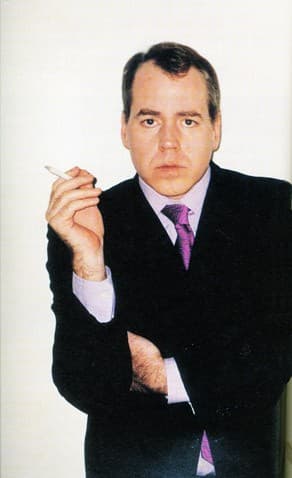
Bret Easton Ellis is a provocative American novelist known for his unflinching explorations of consumerism, celebrity, and violence in contemporary culture. His most famous works include "Less Than Zero" and the controversial bestseller "American Psycho," which was adapted into a film. Ellis's writing is characterized by its sharp social commentary and often transgressive subject matter.







