“The past, it was a thing you carried, a stone in your pocket.”
— Kit reflects on the weight of past events.

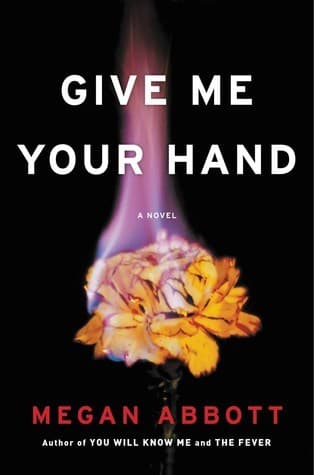
Megan Abbott (2018)
Genre
Thriller / Mystery
Reading Time
7-8 hours
Key Themes
See below
Sign in to track this book
A reunion between two former friends ignites a dangerous game of scientific ambition and buried secrets, threatening to shatter their carefully constructed lives.
Kit Owens, a high school student good at chemistry but without much ambition, finds her world changed by Diane Fleming's arrival. Diane, brilliant and intense, quickly becomes the top student in their advanced chemistry class, captivating their teacher, Mr. D. Kit is initially intimidated but also drawn to Diane's intensity. They form an unlikely friendship, spending hours studying together and pushing each other academically. Diane's focus and drive inspire Kit to take her own scientific aspirations more seriously, and their bond deepens amidst the competitive academic environment of their suburban high school, setting the stage for a complex relationship built on admiration, rivalry, and unspoken tensions.
One night, during a study session at Diane's house, Diane reveals a shocking secret to Kit. She confesses that she has been dissecting a cadaver in her basement, acquired illegally. She explains it as a personal scientific project, a way to understand the human body more intimately than textbooks allow. Kit is horrified and deeply disturbed by this revelation, struggling to see the brilliant, driven friend she knows alongside this macabre act. The secret creates an immediate, deep rift between them, introducing a dark, dangerous element to their friendship that Kit cannot ignore and fundamentally changes her perception of Diane and their bond.
The revelation of Diane's secret experiment leaves Kit deeply shaken and unable to fully trust Diane again. Their shared camaraderie is replaced by an uneasy tension, a silent acknowledgment of the dark knowledge that binds them. While they continue their academic pursuits, their intimate friendship fades. Kit tries to distance herself, grappling with the moral implications of Diane's actions and her own knowledge. After high school, their paths diverge. Kit pursues her scientific dreams, always haunted by the memory of Diane and the disturbing secret they shared, believing she has left that chapter of her life behind.
More than a decade later, Kit Owens is a respected forensic pathologist, working in a prestigious research lab. She is close to achieving her scientific dreams, driven by the ambition Diane once sparked. Kit is especially focused on securing a position working directly under the brilliant but eccentric Dr. Lena Svensson, a renowned scientist specializing in the study of female aggression and the human brain. The lab environment is highly competitive, filled with ambitious young scientists. Kit feels she is finally on the precipice of a breakthrough, having dedicated her life to her work and trying to outrun the shadows of her past.
Kit's carefully built professional world shatters when she discovers that Diane Fleming, the girl from her past, is also a candidate for the highly sought-after research position under Dr. Svensson. Diane has also pursued a career in science, her brilliance undiminished, and now is Kit's direct competitor. The shock of seeing Diane again, after so many years, brings back a flood of memories and anxieties. The old dynamics of admiration, rivalry, and the unspoken secret immediately resurface, threatening to destabilize Kit's professional aspirations and personal balance in the intense, competitive atmosphere of Dr. Svensson's lab.
The lab under Dr. Svensson is a pressure cooker, where researchers are pushed to their limits, often working long hours and competing fiercely for resources and recognition. Dr. Svensson herself is an imposing figure, demanding absolute dedication and intellectual rigor. With Diane's arrival, the competition intensifies, particularly between the two former friends. Their professional rivalry is layered with personal history, creating a palpable tension in the lab. Both women want to impress Dr. Svensson, each driven by their own complex motivations, making the environment ripe for manipulation and psychological warfare as they try to outmaneuver each other.
As the competition for the research position heats up, unsettling incidents begin to occur around Kit. Her research data is subtly altered, crucial notes go missing, and equipment malfunctions at critical moments. Kit suspects Diane, believing her old friend is using manipulative tactics to undermine her. The psychological games escalate, making Kit feel increasingly paranoid and isolated. These events force Kit to revisit the darker aspects of Diane's personality she witnessed in high school, wondering if Diane is capable of going to extreme lengths to achieve her goals, and if their past secret is somehow being used against her in the present.
As Kit investigates the unsettling events, she finds subtle, chilling connections to their shared past, specifically the cadaver dissection. Cryptic notes or misplaced items seem to reference details only Diane would know, making Kit increasingly certain that Diane is behind the sabotage. The psychological toll on Kit mounts as the past and present merge into a disorienting nightmare. She begins to question her own sanity and memory, wondering if she truly understands the full scope of Diane's motivations or if there's a deeper, more sinister game at play beyond mere professional rivalry, pushing her to confront the unresolved trauma of their shared secret.
Driven to her breaking point, Kit finally confronts Diane, accusing her of the sabotage and bringing up the memory of the cadaver. During this intense confrontation, Diane reveals a shocking truth: she was not the one who dissected the cadaver. Instead, she claims it was Kit herself, in a dissociative state, and that Diane merely covered for her, protecting her from the consequences. Diane presents what she claims is evidence to support this, twisting Kit's perception of her own memories and sanity. This revelation fundamentally shatters Kit's understanding of her past and her identity, leaving her reeling and questioning everything she thought she knew.
Devastated by Diane's accusation, Kit struggles to reconcile the new narrative with her own fractured memories. She revisits old journals, conversations, and physical evidence from her high school days, desperately searching for clarity. Through painstaking effort and piecing together subtle clues, Kit begins to reconstruct the events of that night. She slowly realizes that Diane's story, while plausible, has inconsistencies. Kit eventually uncovers the truth: it was indeed Diane who dissected the cadaver, but she meticulously manipulated Kit's memory and created a false narrative, planting false evidence and gaslighting Kit for years to protect herself and maintain a psychological hold over her.
Armed with irrefutable evidence and a reconstructed understanding of the past, Kit confronts Diane one last time, this time with Dr. Svensson present. Kit systematically lays out the truth of Diane's long-term manipulation, revealing how Diane orchestrated the cadaver incident and subsequently gaslighted Kit for over a decade, planting seeds of doubt and fear. She presents the evidence of the sabotage in the lab, demonstrating Diane's continued pattern of deception. The revelation exposes Diane not just as a manipulative rival, but as a deeply disturbed individual who preyed on Kit's vulnerability and ambition, leading to a dramatic and definitive end to their toxic relationship.
In the aftermath of the confrontation, Diane's professional reputation is destroyed, and she is dismissed from the lab. Kit, though deeply scarred by the experience, begins a difficult journey of healing and self-discovery. The ordeal forces her to confront her own vulnerabilities, her reliance on external validation, and the profound impact of past trauma. While the experience leaves an indelible mark, it also liberates Kit from Diane's psychological hold. She continues her work in Dr. Svensson's lab, now with a clearer sense of purpose and integrity, finally able to pursue her scientific ambitions on her own terms, free from the shadow of her former friend.
The Protagonist
Kit evolves from a manipulated victim of her past to a resilient woman who confronts and reclaims her own narrative, finding strength in truth and self-reliance.
The Antagonist
Diane remains a static character in her manipulative tendencies, her true nature revealed and ultimately leading to her professional downfall.
The Supporting
Dr. Svensson remains a consistent figure of scientific authority, eventually recognizing the truth of the manipulation within her lab.
The Mentioned
Serves as a catalyst for Kit's early scientific interest, but his role is confined to the past.
The novel explores how memory can be fallible, manipulated, and reconstructed. Kit's struggle to discern what truly happened in her past, particularly regarding the cadaver, highlights how personal narratives can be shaped by trauma, suggestion, and gaslighting. Diane's ability to twist Kit's recollections forces both Kit and the reader to question the reliability of memory itself, emphasizing that truth is often subjective and fragile, not objective. This theme is central to the mystery, as Kit must literally 'give her hand' to her past to piece together the real events.
““Memory is a tricky thing. It bends, it warps. It tells us what we need to hear.””
The book examines the intense and often destructive nature of female ambition, particularly in highly competitive fields like science. Both Kit and Diane are driven by a fierce desire for recognition and success, but their paths are defined by a toxic rivalry that goes beyond professional competition. It explores how societal pressures, personal insecurities, and the desire for validation can fuel a cutthroat dynamic, blurring the lines between mentorship, friendship, and outright sabotage. The lab under Dr. Svensson becomes a microcosm for these pressures, where women are pitted against each other to prove their worth.
““We were two girls, always pushing against each other, always trying to be the first.””
A core theme is the insidious power of psychological manipulation and gaslighting. Diane systematically undermines Kit's sense of reality, making her question her own memories, perceptions, and sanity. This manipulation begins in their youth with the cadaver incident and continues into adulthood, as Diane subtly sabotages Kit's work and plants seeds of doubt. The novel vividly portrays the devastating impact of such abuse, illustrating how a victim can become disoriented and lose trust in themselves, making it difficult to escape the manipulator's grasp.
““She had built a world around me, brick by brick, and then convinced me I'd built it myself.””
The story shows how unresolved past traumas and secrets can continue to shape and haunt individuals years later. The secret of the cadaver dissection, shared between Kit and Diane, acts as a constant, oppressive force, dictating their interactions and influencing their professional lives. Even after a decade, the past comes back, proving that one cannot truly escape or bury the darker chapters of their history. The novel suggests that true progress and healing can only occur when one confronts and processes these past events, rather than trying to outrun them.
““The past wasn't just behind you. It was always, always, right there.””
Kit's perspective is clouded by trauma and manipulation, making her an unreliable narrator.
Kit Owens serves as a subtly unreliable narrator due to the gaslighting she experiences from Diane and her own fractured memories of the past. Her perception of events, especially the cadaver incident, is deliberately distorted by Diane, causing her to doubt her own sanity and recollections. This device creates suspense and forces the reader to question what is real, mirroring Kit's own confusion. It highlights the psychological manipulation at play and makes the eventual revelation of the truth more impactful, as the reader experiences the unraveling of the false narrative alongside Kit.
The narrative alternates between Kit's high school years and her present-day career.
The novel employs a dual timeline structure, frequently shifting between Kit's adolescence with Diane and their present-day rivalry in Dr. Svensson's lab. These flashbacks are crucial for gradually revealing the history of their complex relationship, the origin of their shared secret, and the roots of Diane's manipulative tendencies. By juxtaposing the past and present, the device illustrates how deeply ingrained their dynamic is and how the past directly informs and fuels the current conflict, building suspense as the reader pieces together the full scope of their history.
Misleading clues and events designed to deflect suspicion.
Throughout the narrative, several red herrings are used to misdirect both Kit and the reader. The initial incidents of sabotage in the lab are designed to point directly to Diane, but the subsequent revelations about the cadaver incident and Kit's 'memory' are intended to shift suspicion onto Kit herself, or at least create enough doubt to paralyze her. These misdirections contribute to the mystery and the psychological thriller aspect, making it difficult to discern the true perpetrator and the full extent of the manipulation until the final reveals.
The cadaver acts as both a plot catalyst and a symbol of their shared, dark secret.
The cadaver in Diane's basement functions as both a MacGuffin, driving the initial wedge between Kit and Diane and serving as the central mystery that needs to be resolved, and a powerful symbol. Symbolically, it represents the dark, illicit nature of their bond, the crossing of moral boundaries, and the 'dead' secrets that haunt their relationship. It is the physical manifestation of Diane's pathological tendencies and the trauma that binds Kit, constantly reminding them of the irreversible event that defined their youth and continues to cast a shadow over their adult lives.
“The past, it was a thing you carried, a stone in your pocket.”
— Kit reflects on the weight of past events.
“There was a particular kind of terror that came with knowing someone else's secret, and knowing they knew you knew.”
— Kit feels the pressure of shared, dangerous knowledge.
“Friendship was a fragile thing, easily broken, but also, sometimes, surprisingly resilient.”
— Considering the complex nature of her friendship with Diane.
“We were good girls, mostly. And then we weren't.”
— Reflecting on the transformative and dark events of their youth.
“The lab was a place of sterile precision, a world apart from the messy, emotional chaos of life.”
— Kit finds a sense of order in her scientific work.
“Some things, once seen, could not be unseen.”
— Grappling with a disturbing memory or revelation.
“Every secret had a shelf life. Eventually, it spoiled.”
— Anticipating the inevitable exposure of hidden truths.
“It was easy to pretend things weren't happening when you were the one holding the scalpel.”
— Kit's detachment while performing dissections.
“The woods had a way of swallowing things whole, secrets included.”
— Describing the isolating and concealing nature of the woods where events unfolded.
“You couldn't outrun your own shadow, not forever.”
— A realization about the inescapability of one's past or nature.
“Desire, she'd learned, was a sharp-edged tool, capable of both creation and destruction.”
— Observing the powerful and dangerous force of human desire.
“The quiet ones, they were often the most dangerous.”
— An observation about a seemingly unassuming character.
“There was a cold comfort in the absolute certainty of death, unlike the shifting sands of life.”
— Kit's perspective as a scientist dealing with cadavers.
“Memory was a trickster, playing games with what was real and what was merely wished for.”
— Struggling with the reliability of her own recollections.
“Some bonds, once forged, could never truly be broken, only twisted.”
— Reflecting on the enduring and complex connection between Kit and Diane.
Ready to see how well you understood this book? Take our interactive quiz with 10 questions.

Biography coming soon.







