“I can remember a time when I was afraid of the dark. I was a child then. My mother would tell me stories to comfort me, and my father would light a candle.”
— John Ames reflecting on his childhood and the comfort provided by his parents.

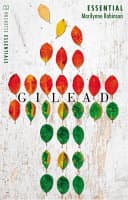
Marilynne Robinson (2020)
Genre
Literary Fiction / Historical Fiction / Spirituality
Reading Time
240 min
Key Themes
See below
Sign in to track this book
An aging pastor in 1956 Iowa writes letters to his young son, sharing his faith, family history, and the quiet wonders of a life lived with God and the echoes of abolitionist passion.
In 1956, the elderly Reverend John Ames, a Congregationalist pastor in Gilead, Iowa, begins a long letter to his seven-year-old son, Robert. Ames is seventy-seven and has a heart condition, knowing his life is ending. He wants this letter to be a legacy, a way for his son to know him and his family history, especially since Robert will grow up without a father. He thinks about his life, his calling, and the joy and unexpected grace of his late-life marriage to his younger wife, Lila, and the birth of their son. Ames aims to share wisdom and understanding of the world, his faith, and the complexities of life with Robert, recognizing that much of his own life has been solitary and thoughtful.
Ames explores the history of his grandfather, also named John Ames, a fierce abolitionist from Maine who moved to Kansas. His grandfather was a passionate, almost fanatical, preacher who actively supported the abolitionist cause, even fighting in armed conflicts before the Civil War. He 'preached men into the Civil War' and, at fifty, became a chaplain in the Union Army, losing an eye in battle. Ames describes the hidden items from his grandfather's past: a blood-stained shirt, a pistol, and a pocket Bible, all wrapped in an army blanket, which greatly influenced Ames's father. This grandfather represents a powerful, almost violent, kind of faith and conviction that contrasts sharply with his own and his father's more peaceful ways, yet Ames feels a deep connection to this ancestor.
Reverend Ames contrasts his grandfather with his father, another Reverend Ames, who was a gentle, peaceful man. His father struggled with the violent legacy of his own father, particularly the hidden gun and bloody shirts. Ames remembers his father, in old age, trying to bury his grandfather's pistol, a symbolic act of trying to reconcile the family's violent past with his own commitment to peace. This act deeply impressed upon young John Ames the weight of inherited history and the struggle between different interpretations of faith and duty. His father's quiet suffering and deep curiosity shaped Ames's own pastoral approach, focusing on thought and compassion rather than fiery speeches.
Ames recounts his solitary childhood in Gilead, marked by a deep love for reading and his father's quiet, thoughtful presence. He describes his early calling to the ministry, following his father and grandfather. His first marriage was short and sad, ending with the death of his wife and infant daughter during childbirth. This loss deeply affected him, leading to many years of solitary ministry in the same small town, where he served his congregation faithfully but largely alone. He thinks about the quiet routines of pastoral life, the beauty of nature, and his constant engagement with theological questions, seeing his long solitude as a time of deep spiritual growth.
Ames describes Lila's unexpected arrival in his life in his old age, a woman considerably younger than him with a mysterious past. He met her when she sought shelter in his church during a rainstorm. Their connection was immediate and deep, leading to a marriage that brought him immense joy and a sense of completeness he had never expected. He reflects on the grace of this late-life happiness, marveling at how God brought them together. Lila's quiet strength, her deep capacity for love, and her unique view of life enrich his world, challenging his long-held routines and deepening his understanding of human connection and divine plan.
The birth of his son, Robert, is the ultimate miracle and blessing of Ames's later life. He expresses overwhelming love for Robert, tempered by the sadness of knowing he will not see him grow up. The entire letter is based on this love and the desire to leave his son a tangible piece of himself. Ames observes Robert's innocent curiosity and energy, seeing in him a continuation of his own spirit and the future of his family line. He worries about the challenges Robert will face without a father and tries to condense a lifetime of wisdom and faith into a form his young son might one day understand and cherish.
A significant part of Ames's thoughts concerns his namesake, John Ames Boughton, known as Jack, the prodigal son of his best friend, Reverend Boughton. Jack is a brilliant but troubled young man who has caused his family much pain and disappointment. Ames has a deep, almost paternal affection for Jack, despite Jack's past wrongs, which include abandoning a woman and their child, and a period in prison. Jack's return to Gilead stirs a complex mix of hope, suspicion, and love in Ames. He sees in Jack a reflection of the human capacity for both great good and great error, and he grapples with the theological implications of grace and forgiveness in Jack's life.
Jack Boughton returns to Gilead, creating a subtle tension in the Ames household. Ames observes Jack's interactions with Lila and Robert with hope and apprehension. He notices Jack's quiet, almost sad demeanor, his intelligence, and his seemingly genuine affection for Robert. However, Ames also senses a hidden sorrow or burden in Jack, and a certain guardedness. He worries that Jack might disrupt his family's peace, especially given Jack's history of causing pain. Ames deals with his own urges to judge and protect, trying to show Christian kindness while remaining watchful.
Ames eventually has a serious conversation with Jack Boughton. During this discussion, Jack reveals more about his past, including abandoning a woman and child, and his feeling of unworthiness. He expresses deep shame and his struggle to reconcile with his past actions and find his place. Ames tries to offer comfort and theological insight, emphasizing grace and the possibility of redemption, even while acknowledging the deep pain Jack has caused. The conversation has both tenderness and unspoken tension, as Ames tries to understand Jack's deep spiritual and emotional burdens, recognizing their shared humanity.
Throughout the letter, Ames repeatedly returns to themes of grace, forgiveness, and God's constant presence in everyday life. He sees divine grace in his late-life marriage and his son's birth, in the beauty of nature, and even in the struggles and imperfections of people like Jack Boughton. He thinks about predestination and free will, and the mystery of suffering and redemption. His thoughts are deeply personal, rooted in his many years of pastoral service and his deep engagement with scripture. He seeks to give Robert a sense of wonder and respect for life, and an understanding that grace can be found even in unexpected places.
Ames reflects on the long line of preachers in his family, from his fiery abolitionist grandfather to his gentle pacifist father, and how their lives shaped him. He understands that his own life and faith are part of a continuous flow, and he hopes to pass on this spiritual inheritance to Robert. He sees his son as a continuation of this lineage, a vessel for future faith and meaning. He deals with the complexities of inherited beliefs and the individual's journey of faith, hoping that Robert will find his own path while staying connected to his ancestors' spiritual traditions. He emphasizes the importance of love, understanding, and the quiet pursuit of goodness.
As the letter nears its end, Ames offers final blessings to Robert and Lila. He expresses his deep love and gratitude for the life he has been given, especially the unexpected joys of his later years. He accepts his impending death peacefully, believing in the continuity of the soul and God's ultimate goodness. He encourages Robert to live a meaningful life, to cherish the world, and to always seek understanding and kindness. The letter becomes a final act of love and faith, a testament to a life lived in quiet devotion and deep thought, leaving his son with a profound and tender farewell.
The Protagonist
Ames moves from a long period of quiet solitude and intellectual faith to experiencing profound, embodied love and joy in his old age, culminating in a peaceful acceptance of his mortality.
The Supporting
While not a central arc, Lila finds stability and love with Ames, providing her with a home and family after a presumably difficult past.
The Supporting
As a child, Robert's arc is nascent, representing the potential for future growth and the continuation of his family's spiritual legacy.
The Supporting
Boughton's arc is largely static, serving as a foil and confidante for Ames, his primary struggle being his ongoing grief and hope for his son, Jack.
The Antagonist/Supporting
Jack's arc is one of a troubled return, seeking redemption and a place of belonging, though his ultimate fate remains ambiguous. He struggles with his past and his sense of unworthiness.
The Mentioned/Ancestral Figure
As an ancestral figure, his arc is historical, representing a period of radical faith and activism that shaped subsequent generations.
The Mentioned/Ancestral Figure
As an ancestral figure, his arc is historical, marked by his struggle to reconcile his pacifist beliefs with his father's militant past.
The novel deeply explores grace and redemption, especially through Reverend Ames's thoughts on his own life and on Jack Boughton. Ames marvels at the unexpected grace of his late-life marriage to Lila and Robert's birth, seeing them as undeserved blessings. He struggles to extend grace to Jack, who has caused much pain, but ultimately believes in redemption, even for the most 'lost' souls. This theme appears in Ames's constant internal dialogue about forgiveness, the mystery of divine love, and the human capacity for both error and spiritual renewal. He views grace not as an earned reward, but as a freely given, constant presence in the world.
“I have been wondering why it is that my life has been so blessed. I have had a wonderful wife, and a beautiful son, and a calling that has brought me into such intimate acquaintance with the sacred. It is all grace.”
Gilead is deeply concerned with how family history, especially spiritual and moral legacies, shapes individual lives across generations. Ames constantly thinks about his grandfather's radical abolitionism and his father's pacifism, and how these contrasting forces created him. The physical items—the pistol, the bloody shirt—symbolize the lasting presence of the past. Ames's letter to Robert tries to pass on this legacy, both the triumphs and the struggles, to his son, making sure that history is not forgotten but understood as a living force. The novel suggests that while we are shaped by our ancestors, each generation must also find its own path and reconcile with the burdens and blessings of inheritance.
“It has seemed to me sometimes as though the Lord has a special interest in the family, and that that interest is what creates the continuity of it, a kind of sacred bond between fathers and sons.”
Ames's long life of solitary ministry and intellectual reflection is central to the novel. His solitude is not loneliness, but deep thought, allowing him to engage deeply with scripture, theology, and nature. It is a space for spiritual growth and self-discovery. Even after his marriage, Ames keeps a thoughtful nature, finding meaning in quiet observation and internal dialogue. The act of writing the letter itself is a solitary, meditative process, allowing him to distill a lifetime of thought and experience. This theme highlights the value of introspection and the internal spiritual journey as a path to wisdom.
“I have always been a solitary man, and I have found great solace in that solitude. It has allowed me to listen to the whisper of God.”
Reverend Ames's story is a continuous exploration of faith's complexities. While deeply devout, he has doubts, especially when dealing with human suffering, sin, and God's will. His faith is intellectual and deeply felt, rooted in scripture and personal experience, but it is also constantly tested and refined. He questions his grandfather's fervent actions and ponders the reasons for Jack Boughton's struggles. The novel shows faith not as a fixed belief system, but as an ongoing, dynamic process of seeking, questioning, and ultimately, trusting in a benevolent, if sometimes mysterious, divine presence.
“It is a strange thing to be alive, to be a human being, to have a mind, a body, a soul. It is a mystery, and I have spent my life trying to understand it.”
The entire letter is framed by Ames's impending death and his deep love for his young son and wife. His awareness of mortality intensifies his appreciation for the preciousness of life and love. The letter is an act of love, a desire to transcend death and remain present for his son. Ames reflects on the bittersweet nature of late-life happiness, knowing it will be short-lived, yet finding immense gratitude in it. This theme explores how love, especially parental love, drives a desire for continuity and meaning beyond one's own lifespan, and how facing death can deepen one's appreciation for life's beauty and fragility.
“I love you, my son. I love your mother. I have loved this life. And I have loved God, who gave it to me.”
The entire novel is presented as a long letter from an elderly father to his young son.
The novel's structure as a letter from Reverend John Ames to his seven-year-old son, Robert, serves multiple functions. It provides an intimate, confessional tone, allowing Ames to share his deepest thoughts, memories, and theological reflections directly with the reader, who effectively becomes an eavesdropper on this intensely personal communication. This device also justifies the meandering, associative nature of Ames's narrative, as he freely shifts between past and present, family history and theological musings. It underscores the theme of legacy, as Ames attempts to leave a piece of himself for his son to discover after his death, making the act of writing itself a profound expression of love and a means of transcending mortality.
The narrative flows through Reverend Ames's thoughts, memories, and reflections in a non-linear fashion.
Reverend Ames's narration employs a stream of consciousness style, mimicking the natural flow of thought. He frequently shifts between present observations, distant memories of his childhood and ancestors, theological arguments, and reflections on his current relationships, particularly with Jack Boughton. This non-linear approach allows for a rich, layered exploration of Ames's inner world, revealing his complex intellectual and emotional landscape. It emphasizes the subjective nature of memory and experience, and reflects the contemplative mind of a man who has spent a lifetime in thought. The reader experiences the world through Ames's unique, highly personal lens, making the narrative feel deeply authentic and immersive.
Water imagery represents grace, cleansing, and the flow of life and time.
Throughout the novel, water imagery appears in various forms, subtly symbolizing themes of grace, cleansing, and the continuous flow of life and time. Ames often reflects on the beauty of rain, the local creek, or simply the act of washing. Lila's first appearance in Ames's church is during a rainstorm, suggesting a cleansing or new beginning. Water can also represent the baptismal grace of God, a constant, pervasive force in the world. This recurring motif reinforces the idea that divine presence is woven into the fabric of everyday existence and that life, like water, is a continuous, ever-changing journey, always moving towards an ultimate destination.
Jack Boughton embodies the biblical story of the wayward child returning home.
The character of John Ames Boughton (Jack) directly embodies the biblical archetype of the Prodigal Son. His history of leaving home, making bad choices, causing pain to his family, and then returning, creates a central dramatic and theological tension in the novel. Ames, like the father in the parable, grapples with extending unconditional love and grace to Jack, despite his past. This device allows Robinson to explore complex questions of forgiveness, redemption, and the nature of divine and human love. Jack's presence challenges Ames's deeply held beliefs and forces him to confront the practical application of Christian charity in a deeply personal way.
“I can remember a time when I was afraid of the dark. I was a child then. My mother would tell me stories to comfort me, and my father would light a candle.”
— John Ames reflecting on his childhood and the comfort provided by his parents.
“It has seemed to me sometimes that the Christian life is less about being good than about being willing to be forgiven.”
— Ames contemplating the essence of Christian faith and forgiveness.
“There’s a great beauty in the world, and I’m glad I’ve seen some of it.”
— Ames expressing gratitude for the beauty he has experienced in life.
“Love is holy because it is like grace. Grace is holy because it is like fire. Fire is holy because it is like love.”
— Ames musing on the intertwined nature of love, grace, and fire.
“You can go your whole life and not know a thing, and then in a minute it’s all clear.”
— Ames reflecting on moments of sudden clarity or understanding.
“This is an interesting planet. It was not designed for creatures of our kind.”
— Ames observing the world and the human condition within it.
“The past is a dream, and the future is a dream. All we have is now.”
— Ames's thoughts on the nature of time and the importance of the present moment.
“I have been a pastor for a long time, and I have seen a good many things. I have seen that people are very much alike.”
— Ames reflecting on his long career as a pastor and the commonalities he's observed in people.
“There are people who do not know how to love. They have to be taught.”
— Ames's conviction that love is a learned behavior.
“A man can be a Christian and not know it, or not want to know it. But he can’t be a Christian and not be a man.”
— Ames pondering the relationship between faith and human identity.
“It is a strange thing to be alive, and to know that you are alive.”
— Ames expressing wonder at the state of being conscious and alive.
“The Lord is merciful, and He is just. He is also mysterious. And sometimes He is silent.”
— Ames acknowledging the multifaceted nature of God.
“Sometimes I feel as if I am writing this letter to my own ghost.”
— Ames reflecting on the act of writing his letter, a legacy for his son, and his own mortality.
“There are some things you can't learn in a book. You have to live them.”
— Ames's belief in the importance of lived experience over theoretical knowledge.
Ready to see how well you understood this book? Take our interactive quiz with 10 questions.

Marilynne Summers Robinson is an American novelist and essayist. Across her writing career, Robinson has received numerous awards, including the Pulitzer Prize for Fiction in 2005, National Humanities Medal in 2012, and the 2016 Library of Congress Prize for American Fiction. In 2016, Robinson was named in Time magazine's list of 100 most influential people. Robinson began teaching at the Iowa Writers' Workshop in 1991 and retired in the spring of 2016.







