“It is not the strength of the body that counts, but the strength of the spirit.”
— Orrec's internal reflection on his father's expectations and his own burgeoning power.

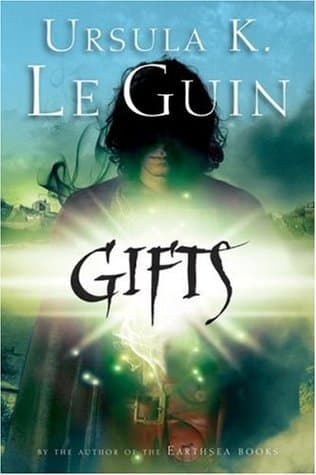
Ursula K. Le Guin (2004)
Genre
Fantasy / Science Fiction / Young Adult
Reading Time
350 min
Key Themes
See below
Sign in to track this book
In a land where inherited magical 'gifts' are both a source of power and a curse, two young friends defy their destructive legacies, choosing compassion over control in a world on the edge of magical warfare.
Orrec Caspro is born into the Caspro family, one of the most powerful and feared families in the Uplands, known for their dangerous 'unmaking' gifts. His father, Canoc, is ruthless, and Orrec grows up under the shadow of his family's reputation and the constant threat of his own gift appearing. He learns early that his gaze can 'unmake' things, causing them to disappear or wither. To protect others and himself, he begins wearing a blindfold, a sign of his self-imposed restraint and his fight against his inherited power. This decision sets him apart from other Uplanders, who often embrace or exploit their gifts.
Gry is a girl from the Bedger family, a clan known for their 'calling' gifts, especially the ability to call animals for hunting. Unlike her family, especially her mother, Gry finds calling and killing animals disturbing. She develops a deep empathy for the creatures and refuses to use her gift for the hunt, preferring to call them for companionship or observation. This refusal creates conflict within her family and clan, as her gift is seen as vital for their survival and status. She is often ostracized for her pacifist stance, which is considered a weakness or defiance.
Orrec and Gry, despite their different family backgrounds and gifts, form a deep friendship based on their shared struggles. They both carry the burden of powerful gifts they are unwilling to use in the destructive ways their societies expect. Orrec's blindfold and Gry's refusal to hunt become signs of their mutual resistance. Their conversations and interactions provide comfort and understanding, strengthening their bond. They often meet in secret, away from the scrutiny and judgment of their families, finding solace in each other's unconventional views.
The Caspro family maintains its dominance through fear and the strategic use of their 'unmaking' gifts. Orrec sees firsthand the consequences of defying his father, Canoc, and the power his family holds over others. He sees how their gifts are used to control and intimidate, creating a fearful atmosphere among other clans. Canoc frequently reminds Orrec of his duty and the expectation that he will inherit and use his gift to maintain the Caspro legacy. This constant pressure reinforces Orrec's determination to resist his own gift's destructive potential.
Gry's refusal to use her calling gift for hunting eventually reaches a breaking point with her family. Her mother, frustrated and ashamed by Gry's perceived weakness, publicly disowns her. The clan, seeing her as a burden and a threat to their traditions, agrees to cast her out. Gry is forced to leave her home, a harsh result of her nonconformity. This exile marks a turning point, forcing Gry to rely entirely on herself and her own moral compass, further solidifying her resolve to live by her own principles.
After Gry's exile, Orrec feels a greater urgency to understand and control his own gift. He confronts his father, Canoc, about the destructive nature of their family's power and his own desire not to use it in the same way. This confrontation is tense, as Canoc views Orrec's reluctance as weakness. Orrec, however, asserts his right to choose how he lives with his gift. He continues to wear the blindfold, not out of fear, but as a deliberate act of self-mastery, seeking to understand the true nature of his power beyond its immediate destructive capacity.
After being cast out, Gry makes the difficult journey from the Uplands to the Lowlands, a place she has only heard about in stories. She finds a different society, one where gifts are not central to daily life and people live in a more communal, less fear-driven way. She learns new skills, such as weaving and farming, and adapts to a life without the constant pressure of her gift. This experience broadens her perspective, showing her that there are other ways to live and contribute to a community, and that her 'weakness' in the Uplands is not a universal failing.
Driven by his desire to understand gifts beyond the narrow, destructive interpretations of the Uplands, Orrec decides to leave his home. He travels to various clans and regions, seeking those who use their gifts in different, non-harmful ways. He learns about healing gifts, gifts of insight, and gifts used for crafts and community building. This journey is a quest for knowledge and self-discovery, allowing him to challenge the beliefs about power and responsibility he grew up with. He begins to see his own 'unmaking' gift not just as destruction, but as a potential for change or transformation.
Orrec and Gry eventually reunite in the Lowlands, both having undergone significant personal changes. They share their experiences, finding that their journeys have led them to similar conclusions about the responsible use of power. Gry has embraced her ability to connect with animals, using it for understanding and companionship rather than control. Orrec, through his travels and introspection, begins to understand that his 'unmaking' gift might not solely be for destruction, but perhaps for clearing the way for new growth or change. Their reunion confirms their shared vision of a world where gifts are used for connection and creation, not fear and destruction.
Having found a deeper understanding of themselves and their gifts, Orrec and Gry decide to teach others about the responsible and compassionate use of power. They become advocates for a new way of thinking in the Uplands, challenging old traditions of fear and dominance. They aim to show that true strength is not in the ability to destroy or control, but in empathy, understanding, and the choice to use one's unique abilities for the greater good. Their journey is far from over, but they embark on this new path together, embodying the 'gifts of light' in a world previously dominated by darkness.
The Protagonist
Orrec transforms from a fearful boy burdened by his gift to a self-controlled young man who seeks to understand and redefine the nature of his power, ultimately choosing compassion over destruction.
The Protagonist
Gry evolves from an ostracized girl defying her family's traditions to an independent young woman who finds a new purpose for her gift in understanding and connection, rather than control.
The Antagonist/Supporting
Canoc remains largely static, serving as a representation of the oppressive power structures and traditional thinking that Orrec and Gry strive to transcend.
The Supporting
She serves as a catalyst for Gry's exile, reinforcing the high cost of defying Upland traditions.
The Supporting
He provides a brief moment of solace and validation for Gry, highlighting the potential for kindness even within a harsh system.
The novel explores how inherited power, especially through 'gifts,' can be both a blessing and a curse. Orrec and Gry deal with the immense responsibility that comes with their unique abilities. Orrec's 'unmaking' gift carries the burden of potential destruction, forcing him to wear a blindfold as a constant act of self-control. Gry's 'calling' gift, while seemingly benign, becomes a burden when it clashes with her moral convictions about killing. Both characters choose to redefine their responsibility, opting for a path of non-harm and understanding. They show that true power is in conscious choice and compassion, not just ability. This is clear in Orrec's journey to understand his gift's non-destructive potential and Gry's refusal to hunt.
“What is a gift, after all, but a thing given? And what is a gift that cannot be given, but a burden?”
The rigid, fear-driven society of the Uplands pressures individuals to conform to traditional uses of their gifts, often for dominance or survival. Gry's refusal to use her calling gift for hunting and Orrec's decision to wear a blindfold are acts of individuality that challenge these societal norms. Their nonconformity leads to ostracization and exile, showing the high cost of choosing one's own path. However, their journeys show that genuine strength and self-discovery come from following one's moral compass, even when it means defying traditions. Their friendship highlights finding solidarity in shared individuality.
“To be born with a gift was to be born with a fate. But what if one refused one's fate?”
Empathy drives both protagonists. Gry's deep connection to animals prevents her from using her gift for hunting, a radical act of compassion in her society. Orrec's fear of harming others leads him to blind himself, a physical sign of his empathetic concern. The novel suggests that true understanding and a higher way of living come from the ability to feel and act with compassion for others, rather than giving in to fear or the desire for power. Their goal is to build a society based on these principles, contrasting with the fear and cruelty in the Uplands. Gry's connection with the deer she calls but doesn't kill is a prime example.
“It was not a thing to be used, but a thing to be understood.”
Freedom in 'Gifts' is not just the absence of external restraint, but an internal state achieved through self-mastery and moral choice. Both Orrec and Gry are born into lives dictated by their gifts and societal expectations. Orrec's blindfold is an act of self-imposed restriction that paradoxically gives him a form of freedom from his gift's destructive impulses. Gry's exile, while a loss of her home, frees her from the oppressive expectations of her clan. Their journeys to the Lowlands and their eventual reunion symbolize their quest for a different kind of freedom—one where they can define their own purpose and use their gifts constructively, rather than being controlled by their power or by tradition.
“To choose not to use a gift might be the greatest gift of all.”
A physical and symbolic barrier representing self-control and the refusal to harm.
Orrec's blindfold is a central symbol. Physically, it prevents him from inadvertently 'unmaking' things with his deadly gaze. Symbolically, it represents his conscious choice to resist the destructive nature of his inherited gift and the expectations of his family. It is an act of self-imposed limitation that paradoxically grants him moral freedom and the strength to pursue a different path. The removal of the blindfold signifies a moment of potential danger or a deliberate, controlled application of his power, marking a shift in his understanding of his gift.
Contrasting geographical and societal settings that highlight different ways of life and values.
The stark contrast between the Uplands and the Lowlands serves as a significant plot device. The Uplands, with its scattered clans and reliance on powerful, often destructive, gifts, represents a society driven by fear, tradition, and dominance. The Lowlands, in contrast, offers a glimpse into a more communal, less gift-centric way of life, where people live in greater harmony and cooperation. This contrast provides a broader perspective for both Gry and Orrec, showing them that their Upland struggles are not universal and that alternative, more compassionate ways of living are possible, thus motivating their desire for change.
Opposing types of magical abilities that drive the central conflict and character arcs.
The specific nature of the 'unmaking' and 'calling' gifts are fundamental to the plot. Orrec's 'unmaking' gift, inherently destructive, forces him to confront the ethics of power and self-control. Gry's 'calling' gift, while seemingly benign, creates a moral dilemma when its traditional use conflicts with her empathy. These opposing gifts highlight different facets of power: one that takes away, and one that brings forth. Their individual struggles with these gifts form the core of their character development and their eventual quest to find non-destructive, compassionate uses for their abilities.
“It is not the strength of the body that counts, but the strength of the spirit.”
— Orrec's internal reflection on his father's expectations and his own burgeoning power.
“To be able to choose not to use a gift, that is a gift in itself.”
— Orrec contemplating his 'unmaking' gift and his desire for control.
“Fear is a great teacher, but it is a cold one.”
— Griffy's perspective on the dangers and lessons learned in the Uplands.
“The greatest gift is not what you have, but what you choose to do with it.”
— A recurring theme as Orrec and Gry analyze their inheritances.
“Sometimes the safest place is the one you make for yourself.”
— Gry's realization about creating her own security and identity.
“True power is not in destruction, but in creation, and in the refusal to destroy.”
— Orrec's ultimate understanding of his unmaking gift.
“We are all bound, one way or another. The trick is to choose your bonds.”
— Gry's thoughts on the constraints of her family and society.
“It's not the name of the gift that matters, but the heart of the giver.”
— Orrec and Gry discussing the nature of their family's inherited powers.
“Silence can be a shield, and a weapon.”
— Gry's use of her 'unbinding' gift, often without speaking.
“To be afraid of what you are is to be afraid of yourself.”
— Orrec's struggle with accepting his inherent abilities.
“The wildness in us is not something to be tamed, but understood.”
— Gry's connection to the natural world and her own untamed spirit.
“Stories are how we remember who we are, and who we might be.”
— The importance of oral tradition and family history in the Uplands.
“Sometimes the greatest courage is to walk away from a fight.”
— Orrec's decision to leave his family's legacy of violence.
“Love is not a gift you are given, but one you choose to give.”
— The developing relationship between Orrec and Gry.
Ready to see how well you understood this book? Take our interactive quiz with 10 questions.
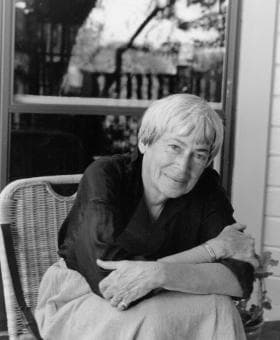
Ursula Kroeber Le Guin was an American author best known for her works of speculative fiction, including science fiction works set in her Hainish universe, and the Earthsea fantasy series. She was first published in 1959, and her literary career spanned nearly sixty years, producing more than twenty novels and over a hundred short stories, in addition to poetry, literary criticism, translations, and children's books. Frequently described as an author of science fiction, Le Guin has also been called a "major voice in American Letters". Le Guin said she would prefer to be known as an "American novelist".







