“Time is a mischievous thing. It plays hide-and-seek with the past and tag with the future.”
— Gideon reflecting on the nature of time travel and its complexities.

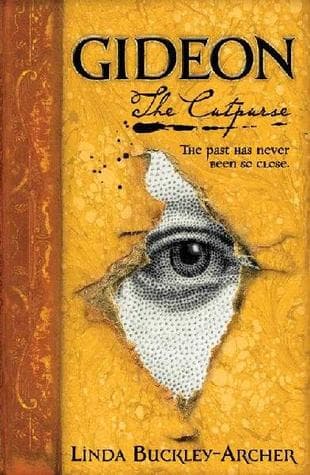
Linda Buckley-Archer (2006)
Genre
Fantasy / Children's / Historical Fiction / Science Fiction / Young Adult
Reading Time
9 hours 30 min
Key Themes
See below
Sign in to track this book
When two time-traveling 21st-century children literally drop into 18th-century London, a quick-witted cutpurse becomes their only hope against a menacing villain who steals their ride home and plunges them into a thrilling chase through history.
In 1763 London, the cutpurse Gideon Seymour tries to avoid the Tar Man when the sky rips open. From this hole, two children, Peter Schock and Kate Dyer, fall into the past. They are from the 21st century, having activated their scientist father's experimental antigravity machine, which also works as a time machine. The machine lands nearby. The Tar Man, a dangerous figure, seizes the machine and flees, leaving Peter and Kate stranded and their only way home in a villain's hands. Gideon, confused, finds himself responsible for the modern children.
Gideon, seeing the children are out of place, takes them through the streets of London. Peter and Kate are shocked by the lack of modern conveniences, the poverty, and the smells. Gideon explains the dangers, especially the Tar Man, a criminal who runs a network of spies and thieves. Their goal is to find the Tar Man and get the time machine back. Gideon uses his knowledge of the city's criminal world to begin their search, hoping to find the device before its true nature is discovered or it is destroyed.
Gideon, with Peter and Kate, finds one of the Tar Man's hideouts, a run-down building. They enter the lair, hoping to surprise the Tar Man and get the machine. They see the Tar Man's cruelty and the fear he causes. They find the machine, but before they can take it, they are discovered. A chase follows, forcing them to leave the machine to save themselves. They escape through the streets, but the experience shows them the great danger they are in and their enemy's cleverness.
After their first failure, Gideon decides they need help. He takes Peter and Kate to Mrs. Todd, a clever fence who runs a pawn shop. Mrs. Todd, though tough, has a soft spot for Gideon and knows a lot about the criminal world. She is skeptical of Peter and Kate's story at first but becomes interested in the 'strange device.' Mrs. Todd gives them important information about the Tar Man's movements and allies, confirming he is trying to understand the machine. She also helps them fit in by giving them period-appropriate clothing.
While Gideon continues his search, Peter and Kate experience 18th-century life. They are not used to the poor sanitation, the lack of medical care, and the constant threat of illness. Peter gets a fever, worrying Kate and Gideon. Gideon, despite his background, shows real care for the children, trying to find remedies and comfort them. This time shows their weakness and reliance on Gideon, strengthening their bond. Their modern minds are constantly challenged by the differences in their new surroundings.
Through his network, Gideon learns that the Tar Man is not just trying to sell the machine. He has hired a reclusive clockmaker named Mr. Alfred to study and, if possible, copy the device. The Tar Man plans to use the machine's power for his own gain, perhaps to control time or travel to the future for riches. This raises the stakes, as misusing the machine could harm history. Gideon realizes they must act fast to stop the Tar Man from fully understanding or using the time-traveling technology as a weapon.
Knowing the Tar Man's plans, Gideon, Peter, and Kate make a plan to enter Mr. Alfred's workshop, where the machine is being analyzed. They know the risks, as the workshop is likely guarded and Mr. Alfred is unpredictable. Peter, with his modern understanding of technology, believes he might be able to reactivate the machine once they reach it. Kate's quick thinking and Gideon's knowledge of stealth are key to their success. They prepare for what they know will be their most dangerous task, knowing this is their best, and possibly only, chance to return home.
The trio carries out their plan, using Gideon's cleverness and Peter and Kate's insights to get past security at Mr. Alfred's workshop. Inside, they find Mr. Alfred has made progress in understanding the machine, to the Tar Man's delight. A confrontation with the Tar Man and his henchmen follows. Gideon fights, while Peter and Kate try to reach the machine. Mr. Alfred, caught in the middle, is confused by what is happening. The workshop becomes a battleground, with the fate of the 21st century at stake.
In the chaos, Peter reaches the time machine and, using his father's notes and his own instincts, activates it. A shimmering portal, like the one that brought them to 1763, opens in the workshop. The Tar Man, seeing his prize escaping, lunges for it. Gideon steps in, protecting Peter and Kate. As the portal becomes stable, Peter and Kate know they must leave. Gideon, despite his affection for the children, urges them to go, knowing he belongs in his own time. He feels the sadness of their departure.
With a final goodbye to Gideon, Peter and Kate step through the shimmering portal, returning to their own time. The portal closes, leaving Gideon alone in the workshop with the defeated Tar Man and a confused Mr. Alfred. Gideon thinks about the events and the two children who were briefly in his life. Peter and Kate, back in their own time, are safe but changed by their adventure in 18th-century London. They remember Gideon's bravery and the realities of the past, their understanding of history and friendship changed.
The Protagonist
Gideon transforms from a self-serving rogue into a selfless protector, discovering a deeper sense of purpose and humanity through his bond with Peter and Kate.
The Protagonist
Peter matures from a somewhat sheltered modern boy into a resilient and resourceful individual, learning to navigate extreme adversity and contribute actively to their survival.
The Protagonist
Kate develops from a modern girl into a courageous and empathetic individual, learning to trust her instincts and navigate a dangerous world with resilience.
The Antagonist
The Tar Man remains a static character, driven by greed and power, whose schemes are ultimately thwarted but whose nature remains unchanged.
The Supporting
Mrs. Todd remains a steadfast, albeit cautious, ally to Gideon, offering support and information when it truly matters.
The Supporting
Mr. Alfred, initially oblivious to the true nature of his work, becomes a reluctant participant in the conflict, his intelligence exploited by the antagonist.
The Mentioned
Dr. Schock's influence is primarily in setting the initial premise and providing the means for the children's eventual return.
The novel shows the contrast between 21st-century comfort and 18th-century hardship. Peter and Kate's shock at the lack of sanitation, technology, and medical care (as when Peter gets sick) shows the differences. Their journey makes them adapt quickly, giving up modern conveniences and learning to navigate a dangerous world. Gideon, in turn, is confused by their modern slang and knowledge, creating moments of humor and tension. This theme highlights resilience and the ability to adjust to extreme situations, regardless of the time period.
“The air was thick with the smell of unwashed bodies, horse dung, and something indefinable but definitely unpleasant. 'It stinks!' Kate whispered, covering her nose. 'Welcome to London, children,' Gideon murmured, 'eighteenth-century style.'”
A central theme is the unexpected bond between the cutpurse Gideon and the two 21st-century children, Peter and Kate. At first, Gideon sees them as a burden, but his protective instincts soon appear. He risks his life for their safety, and Peter and Kate come to trust and rely on him, seeing him as a guardian. This bond goes beyond time and social class, showing that loyalty and affection can create strong connections even in unlikely circumstances, as seen in their farewell.
“'You are my responsibility now,' Gideon said, his voice firm, 'and I do not abandon my responsibilities.'”
The novel shows a clear difference between good and evil through its characters. Gideon, though a 'cutpurse,' shows a strong sense of morality, honor, and selflessness, especially in his care for the children. He represents the shades of 'good' within a morally unclear profession. In contrast, the Tar Man is purely evil, driven by greed, cruelty, and a desire for power. His willingness to harm others for personal gain shows the darker side of human nature. This theme explores how people choose their paths and the impact of those choices.
“'He is a man of no conscience,' Gideon warned, 'and no mercy.'”
The time machine itself drives the story and highlights the theme of technological power. The story explores the dangers when advanced technology falls into the wrong hands, as shown by the Tar Man's desire to use the machine for control and wealth. It also touches on the ethics of time travel, even by accident, and the possible disruption to history. The story suggests that great power, whether technological or personal, comes with great responsibility, and misusing it can have far-reaching effects.
“'This device... it holds the power to change everything,' Mr. Alfred murmured, his eyes wide with a mixture of awe and fear.”
The central object that transports characters through time and drives the conflict.
The antigravity/time machine, invented by Dr. Schock, is the primary plot device. It serves as the catalyst for Peter and Kate's journey to 1763 and becomes the central object of desire and conflict. Its advanced nature makes it both a source of wonder and a dangerous mystery in the 18th century. The machine's loss to the Tar Man is the main objective of the protagonists, and its eventual reactivation is their only means of returning home. Its functions, though not fully understood by all, are key to the narrative's progression and the high stakes involved.
The jarring contrast between 21st and 18th-century life, used for both humor and tension.
This device is manifested through Peter and Kate's reactions to 18th-century London – their disgust at the smells, their confusion over customs, and their constant references to modern technology and concepts (like 'toilet paper' or 'germs'). Conversely, Gideon and other 18th-century characters are bewildered by the children's strange clothing, speech, and knowledge. This contrast provides comedic relief but also highlights the immense danger the children face due to their inability to blend in, making them stand out as 'other' and vulnerable to suspicion and exploitation.
The intricate network of thieves, fences, and spies that serves as the story's setting and resource.
The detailed depiction of 18th-century London's criminal underworld acts as a vital plot device. Gideon's intimate knowledge and connections within this world (e.g., Mrs. Todd) provide the means for tracking the Tar Man and navigating the city's dangers. It's a source of information, hideouts, and unexpected allies. This setting adds a gritty, realistic backdrop to the fantastical elements of time travel, grounding the story in a vivid historical reality and providing constant challenges and opportunities for the protagonists.
The antagonist's widespread influence and numerous henchmen, creating constant threat.
The Tar Man's extensive network of spies, informants, and thugs is a crucial plot device. It ensures that the protagonists are constantly pursued and that their actions do not go unnoticed. This network provides a tangible and pervasive threat, raising the stakes and creating numerous chase scenes and close calls. It highlights the Tar Man's power and influence, making him a formidable antagonist and emphasizing the difficulty of Gideon, Peter, and Kate's quest to retrieve the machine and escape his clutches.
“Time is a mischievous thing. It plays hide-and-seek with the past and tag with the future.”
— Gideon reflecting on the nature of time travel and its complexities.
“A good cutpurse doesn't just take your purse; he takes your breath away with his daring.”
— Gideon's internal monologue about his skills and reputation as a thief.
“History isn't just dates and names; it's the echo of every choice ever made.”
— Mrs. Fredericks imparting wisdom about the living nature of history to Peter.
“The past is a foreign country; they do things differently there.”
— Peter's initial shock and disorientation upon arriving in 18th-century London.
“Courage isn't the absence of fear, but the triumph over it.”
— Gideon encouraging Peter when he is scared in a dangerous situation.
“Sometimes the greatest treasures aren't gold or jewels, but the people who stand by you.”
— Gideon realizing the value of friendship during a difficult moment.
“Every lock has a key, and every problem has a solution, if you're clever enough to find it.”
— Gideon's pragmatic approach to challenges and his confidence in his own ingenuity.
“The future is not set in stone, but woven with the threads of our present actions.”
— Mrs. Fredericks explaining the mutable nature of the timeline.
“Even the smallest pebble can cause a ripple in the grand river of time.”
— A warning about the potential impact of even minor changes to the past.
“London is a grand beast, always hungry, always roaring, always full of secrets.”
— Gideon describing the vibrant and dangerous city of 18th-century London.
“A true gentleman knows when to fight and when to run, and when to pretend he's doing neither.”
— Gideon's advice on navigating social and dangerous situations.
“It's not about being stronger, but smarter. The mind is a sharper weapon than any sword.”
— Gideon emphasizing the importance of intellect over brute force.
“The greatest adventure is often found not in seeking new lands, but in seeing old ones with new eyes.”
— A reflection on the transformative experience of time travel and perspective.
“Sometimes the only way to find your way home is to get thoroughly, wonderfully lost first.”
— Peter's journey of self-discovery while stranded in the past.
Ready to see how well you understood this book? Take our interactive quiz with 10 questions.

Biography coming soon.







