“The land is the only thing in the world worth working for, worth fighting for, worth dying for, because it's the only thing that lasts.”
— Bick Benedict's father expresses his deep connection to the Texas land.


Edna Ferber (1952)
Genre
Literary Fiction / Historical Fiction / Romance
Reading Time
12-15 hours
Key Themes
See below
Sign in to track this book
In a land as vast and untamed as the Texas it depicts, a spirited Virginia socialite marries a powerful cattle baron, only to discover their love is tested by searing heat, immense wealth, entrenched racism, and the shift from cattle to oil that defines a changing era.
Jordan 'Bick' Benedict, a wealthy cattle baron from Texas, travels to Ardmore, Virginia, to buy a prize racehorse named War Winds from the Lynnton family. Leslie Lynnton, a sharp, independent, and educated Southern belle, is initially put off by Bick's Texan demeanor and his lack of refinement. However, a mutual attraction develops. Despite their different backgrounds and Leslie's reluctance to leave her Virginia life, Bick proposes, and Leslie accepts. Their whirlwind courtship ends in marriage, setting the stage for Leslie's move to the isolated world of Reata, the Benedict family ranch in Texas.
Upon her arrival at Reata, Leslie faces the overwhelming scale and starkness of Texas. The ranch is immense, isolated, and governed by unwritten rules and traditions she finds alien. She struggles with the heat, the endless horizons, and the primitive living conditions compared to her Virginia upbringing. Her attempts to connect with the Mexican ranch hands meet Bick's patriarchal protectiveness and the racism of the era. She sees the social and economic divide, especially the exploitation and poor treatment of the Mexican laborers, which disturbs her and clashes with her sense of justice. Her independent spirit begins to chafe against the restrictive expectations of a Texas ranch wife.
Leslie's integration into the Benedict family is complicated by Bick's older sister, Luz Benedict. Luz, who managed Reata for years and has a deep possessiveness over the ranch and her brother, resents Leslie's presence and her progressive views. Their personalities clash frequently, especially regarding the treatment of Mexican workers and Leslie's attempts to introduce modern comforts and social awareness to Reata. Despite tensions, Leslie slowly asserts herself, subtly challenging Bick's traditional views and making small changes, though she often meets resistance from both Bick and Luz. She gives birth to their first child, Jordan Benedict III, known as 'Bickie'.
Jett Rink, a quiet and ambitious young ranch hand, works for the Benedicts. He harbors resentment for his lowly status and an attraction to Leslie. He is a distant relative of Luz Benedict, and upon Luz's death, she wills him a small, seemingly insignificant plot of land on the edge of Reata. This inheritance causes contention and mild amusement for the Benedicts. Jett, however, has a hunch about the land. He works tirelessly, enduring skepticism and ridicule, to drill for oil. His perseverance pays off when he strikes a massive oil well, transforming him overnight from a poor ranch hand into a wealthy oil tycoon. This discovery marks a shift in the economic landscape of Texas and foreshadows future conflicts.
Jett Rink's initial oil strike leads to further discoveries on his land, making him incredibly rich. His wealth and influence grow, challenging the dominance of cattle barons like Bick Benedict. The oil boom brings a new kind of prosperity and power to Texas. Jett, fueled by past resentments and a desire to prove himself, uses his wealth to build an empire, often flaunting it and deliberately clashing with the traditional values represented by Bick. The rivalry between the cattle and oil industries, personified by Bick and Jett, intensifies, reflecting the changing economic and social fabric of Texas. Jett maintains an unspoken, obsessive interest in Leslie and her family.
The Benedict children—Jordan Benedict III (Bickie), Judy, and Luz II—grow into adulthood, each grappling with their parents' expectations and the legacy of Reata. Bickie, despite his father's hopes, shows little interest in ranching, preferring medicine and later marrying a Mexican-American woman, Juana. Judy, the independent daughter, falls in love with a ranch hand, marrying him and choosing to stay on the land, much to Bick's initial disapproval. Luz II, the youngest, is more traditionally feminine and eventually marries a wealthy, older man. Leslie, while supportive of her children's choices, often mediates between their modern aspirations and Bick's more traditional, patriarchal views, especially regarding Bickie's marriage and Judy's choice of husband.
As years pass, Jett Rink's empire expands, making him one of the most powerful men in Texas. His unrequited obsession with Leslie Lynnton Benedict remains a constant tension. He builds a grand hotel, the 'Jett Rink Hotel,' symbolizing his wealth and his challenge to the old order. The novel ends with a massive party at Jett's new hotel, a lavish display of his power and an attempt to solidify his social standing. The Benedict family, including the now-grown children, attends. During the party, a drunk Jett Rink gives a rambling, self-pitying speech, revealing his insecurities and his continued fixation on Leslie. His behavior exposes the hollowness beneath his wealth.
At Jett Rink's party, Bick Benedict observes Jett's drunken, pathetic display and the casual racism of some of Jett's associates towards his daughter-in-law, Juana. Bick, who has always been proud and stoic, is disturbed. Later, at a diner, Bick confronts a racist proprietor who refuses to serve Juana and her family. Despite being an aging man, Bick engages in a physical fight, defending his family's honor and dignity. Though he loses the fight, the act represents a shift in his character. His ingrained prejudices begin to give way to a more inclusive understanding, largely influenced by Leslie's lifelong advocacy. This event shows the generational and social changes sweeping through Texas, forcing even the most traditional figures to adapt.
Following the confrontation at the diner, Bick and Leslie return to Reata. The incident, and the culmination of years of Leslie's influence, brings a quiet understanding between them. Bick, though still a man of his time, shows signs of growth and a deeper appreciation for Leslie's values. They reflect on their long marriage, the challenges they've faced, and the lives their children have chosen. Despite the changes in Texas—the decline of the cattle empire, the rise of oil, and the shift in racial dynamics—their love and partnership have endured. They recognize that while the old ways are fading, the spirit of Texas and the Benedict legacy will continue, albeit in new forms, through their diverse offspring.
The novel ends with Bick and Leslie, now elderly, sitting on their porch at Reata, observing the landscape and passing cars. They are an example of endurance and adaptation. They see their grandchildren, a mix of Anglo and Mexican heritage, embodying the future of Texas—a future that is more diverse and less bound by the rigid social structures of their youth. While the era of the unchallenged cattle baron is over, the Benedict name and the land of Reata persist. The story ends on a note of cautious optimism, acknowledging the challenges of prejudice and change, but also celebrating the strength of family, the enduring power of love, and the complex, evolving identity of Texas itself, shaped by both its past and its embrace of a more inclusive future.
The Protagonist
Leslie transforms from a somewhat naive Southern belle into a resilient, influential matriarch who subtly but profoundly shapes her husband and children's perspectives.
The Protagonist
Bick begins as an unyielding traditionalist but slowly evolves, influenced by Leslie and his children, to confront his own prejudices and embrace a more modern view of Texas.
The Antagonist
Jett rises from poverty to immense wealth, but his character arc is tragic, as his success fails to bring him happiness or genuine fulfillment, leaving him isolated and bitter.
The Supporting
Luz's character is largely static, representing the entrenched traditions and prejudices of old Texas; her death serves as a catalyst for major plot developments.
The Supporting
Bickie strives to forge his own identity apart from his father's legacy, ultimately finding fulfillment in medicine and a diverse family.
The Supporting
Judy finds happiness and purpose by choosing a life on the land with the man she loves, rejecting social climbing for genuine connection.
The Supporting
Luz II pursues a more conventional path of wealth and social status, representing a different facet of the Benedict legacy.
The Supporting
Juana's arc is about finding acceptance and asserting her dignity within a prejudiced society, becoming an integral part of the Benedict family's future.
The Mentioned
Angel's role is primarily to illustrate the systemic injustices faced by Mexican workers, catalyzing Leslie's advocacy.
This theme is central to the narrative, primarily represented by the contrast between the established cattle empire of the Benedicts (old money, land-based) and the oil wealth of Jett Rink (new money, self-made). The novel explores the clash of values, traditions, and social standing between these two forces. While the Benedicts represent dignity and rootedness, they are also tied to outdated prejudices. Jett Rink's wealth brings power but not necessarily refinement or happiness, showing the hollowness that can accompany sudden riches without a foundation of character. This conflict drives much of the plot and symbolizes the changing economic landscape of Texas.
“Oil was like a great black gush of money from the earth. It changed the face of Texas, and the faces of Texans.”
A pervasive theme, the novel exposes the deep-seated racism and exploitation faced by Mexican-American workers in Texas. Leslie Lynnton Benedict is the primary advocate against these injustices, continually challenging Bick's ingrained prejudices and the systemic inequalities on Reata. Specific scenes, like Leslie's efforts to help the sick child of Angel Obregón and Bick's final confrontation with the racist diner owner, show the human cost of prejudice. The theme explores how racism impacts individuals and families, and the slow, difficult process of challenging and overcoming such deeply entrenched societal norms across generations.
“You couldn't treat human beings like that, she thought, not even if they were Mexicans and you were a Texan.”
The novel is a portrait of Texas, chronicling its transformation from a cattle-dominated frontier to a modern state shaped by the oil boom and increasing cultural diversity. The land itself is a character, with its heat, endless horizons, and immense wealth. The shift from the cattle industry to oil represents a fundamental change in power, economy, and lifestyle. This theme is embodied by the conflict between Bick Benedict and Jett Rink, and by the evolving choices of the Benedict children, who represent the diverse future of the state. It is a story of progress and loss, as old ways give way to new.
“Texas was a place of extremes, of vastness and smallness, of cruelty and kindness, of boom and bust.”
The marriage of Leslie and Bick forms the emotional core of the novel. Their relationship is a complex partnership built on love, mutual respect, and constant challenge. Leslie's progressive views frequently clash with Bick's traditionalism, but these conflicts strengthen their bond and lead to personal growth for both. Their marriage navigates cultural differences, societal expectations, and the trials of raising a family in a rapidly changing world. It shows how a strong partnership can endure and thrive amidst differences, through communication, compromise, and commitment to each other.
“They were two separate people, yet one. She had changed him, and he, her. And in the changing, they had become more truly themselves.”
The concept of legacy, both material and moral, is a significant theme. The Benedicts struggle with the inheritance of the Reata ranch and the expectations that come with it. Bick wants his son, Bickie, to continue the cattle empire, but Bickie chooses medicine, creating a different kind of legacy. Jett Rink's inheritance of a small plot of land leads to a vast oil fortune, creating a new, disruptive legacy. The novel also explores the inheritance of values and prejudices, as Leslie strives to instill progressive ideals in her children, countering the ingrained racism of the older generation. The ending reflects on the diverse legacy of the Benedict family, a blend of Anglo and Mexican heritage.
“A man's legacy wasn't just the land he owned, but the children he raised, and the changes he made in the world.”
Narrative spanning decades, following multiple generations of a family.
The novel spans several decades, from Leslie's arrival in Texas in the early 20th century to the adulthood of her children and grandchildren. This device allows Ferber to explore the profound social, economic, and cultural transformations of Texas over time. By following the Benedict family through multiple generations, the author illustrates how traditions are challenged, prejudices are confronted, and legacies are forged and redefined. It provides a broad historical sweep against which the personal dramas unfold, highlighting the enduring impact of choices made in one generation on the next.
The stark contrast between two distinct ways of life.
The immediate and dramatic culture clash between Leslie Lynnton's refined Virginia upbringing and the raw, immense, and often brutal world of the Texas ranch is a primary driving force of the narrative. This device highlights Leslie's struggles with adaptation, her progressive views clashing with Bick's traditionalism, and her shock at the racial injustices she witnesses. It serves to emphasize the unique character of Texas and the challenges of integrating into a vastly different society, while also providing a framework for examining themes of identity, adaptation, and social change.
The vast Texas landscape as a reflection of character and themes.
The immense, unforgiving, and beautiful Texas landscape, particularly the Reata ranch, functions as a powerful symbol. Its vastness reflects the ambition and isolation of its inhabitants, while its harshness mirrors the struggles and prejudices faced by the characters. The land represents tradition, wealth, and identity for Bick Benedict, while for Leslie, it initially signifies confinement and alienness before she slowly comes to appreciate its wild beauty. The discovery of oil within the land symbolizes the changing face of Texas and the new sources of power and conflict that emerge.
Characters who highlight the traits of others through contrast.
Jett Rink serves as a significant foil to Jordan 'Bick' Benedict. While both are powerful self-made men in Texas, their methods, motivations, and ultimate outcomes are vastly different. Bick represents the established, land-based wealth and a certain stoic dignity, despite his flaws. Jett represents the volatile, ostentatious new money of oil, driven by resentment and ultimately finding his wealth hollow. Similarly, Leslie Lynnton acts as a foil to Luz Benedict, with Leslie's progressive, empathetic nature contrasting sharply with Luz's rigid, prejudiced traditionalism, highlighting the societal conflicts central to the story.
The narrative's explicit critique of societal issues.
Edna Ferber uses the narrative of "Giant" to deliver explicit social commentary, particularly on issues of racism, class inequality, and the exploitation of labor. Through Leslie's perspective, the novel directly challenges the prevalent prejudice against Mexican-Americans and critiques the vast disparity between the wealth of the ranch owners and the poverty of their workers. The author also comments on the changing values of American society, the shift from traditional agrarian wealth to industrial fortunes, and the enduring struggle for justice and equality in the face of ingrained societal norms. This device gives the novel a strong moral and ethical dimension.
“The land is the only thing in the world worth working for, worth fighting for, worth dying for, because it's the only thing that lasts.”
— Bick Benedict's father expresses his deep connection to the Texas land.
“You can't eat scenery.”
— Leslie Lynnton Benedict, a newcomer from Virginia, critiques the impracticality of Texas's vast but harsh landscape.
“Texas is a state of mind. Texas is an obsession. Above all, Texas is a nation in every sense of the word.”
— Narrator describes the unique cultural identity of Texas.
“Money isn't everything, but it's a long way ahead of what comes next.”
— Reflects the materialistic and competitive nature of Texas oil wealth.
“A man's got to do what a man's got to do.”
— Bick Benedict justifies his actions and responsibilities as a rancher.
“The only thing bigger than Texas is the sky above it.”
— Describes the immense scale and ambition associated with Texas.
“We're all just passing through, but the land remains.”
— Philosophical reflection on human transience versus the permanence of the land.
“In Texas, you either have oil or you don't, and if you don't, you're nobody.”
— Highlights the social hierarchy and economic divide driven by the oil boom.
“Love isn't always a grand passion; sometimes it's just showing up.”
— Leslie reflects on the practical aspects of her marriage to Bick.
“The old ways are dying, and the new ones aren't much better.”
— Commentary on the changing social and economic landscape of Texas.
“You can take the boy out of Texas, but you can't take Texas out of the boy.”
— Emphasizes the enduring influence of Texas identity on its people.
“Sometimes the biggest giants are the ones we create in our own minds.”
— Metaphorical reflection on the myths and realities of Texas grandeur.
“A woman's place is wherever she decides it is.”
— Leslie challenges traditional gender roles in Texas society.
“Wealth changes everything, and nothing.”
— Observes the paradox of how oil wealth transforms lives yet leaves core human issues unchanged.
Ready to see how well you understood this book? Take our interactive quiz with 10 questions.
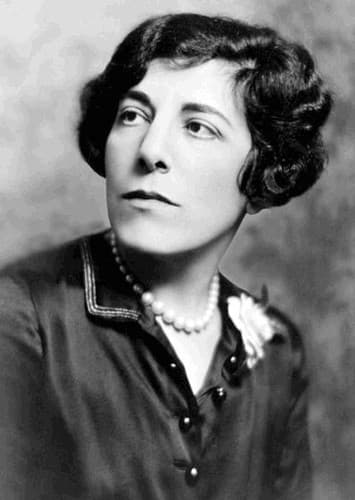
Edna Ferber was a Pulitzer Prize-winning American novelist and playwright. She is best known for her novels "Show Boat" and "Giant," which explored themes of American life and westward expansion. Her work often featured strong female characters and was adapted into successful films and musicals, cementing her legacy in American literature.







