“I can't believe how many times I've heard the phrase 'You can't judge a book by its cover' and yet I keep doing it.”
— Enid's internal monologue reflecting on her tendency to stereotype people.

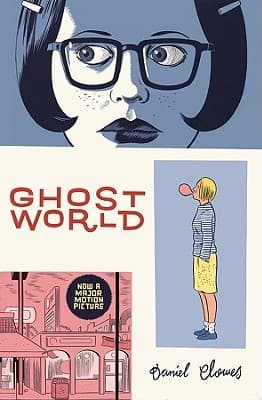
Daniel Clowes (1997)
Genre
Young Adult
Reading Time
60 min
Key Themes
See below
Sign in to track this book
In a post-graduation summer, cynical best friends Enid and Becky navigate the awkward start of adulthood and the unsettling prospect of their inseparable bond fracturing.
The story begins with Enid Coleslaw and Rebecca Doppelmeyer, two recent high school graduates, spending their summer without purpose. They go to diners, thrift stores, and their neighborhood, always watching and making cynical comments about the people they see. Their friendship is built on feeling like outsiders and a sharp, often cruel, sense of humor. One afternoon, they see an elderly, lonely man named Seymour at a yard sale, trying to sell his collection of old 78 rpm records. As a joke, Enid calls him, pretending to be a woman named 'Carol' interested in a date. This cruel joke starts a surprising series of events, showing their immaturity and their underlying search for connection in a world they see as 'ghostly' and empty.
After the prank call, Enid feels drawn to Seymour. She and Rebecca follow him to a diner, where Enid watches him with a mix of dislike and fascination. Enid, developing an interest in 'outsider art' and marginalized people, starts seeing Seymour not just as someone to mock but as a possible project or even a similar spirit in his loneliness. She continues to watch him from a distance, and eventually, through several chance meetings, she manages to start a hesitant conversation with him. Rebecca remains doubtful and somewhat disgusted by Enid's growing focus on Seymour, seeing him as just another 'loser' to be mocked.
Enid enrolls in a summer art class at a local community college, which Rebecca finds uninteresting. Her art teacher, Bob Skeetes, encourages her to find inspiration in the 'real world' and to challenge traditional art. This class gives Enid a new way to be creative and a different social group, though she still views it with her usual cynicism. While Enid explores her artistic identity, Rebecca stays mostly the same, preferring their usual routine of cynical observation and hanging out. The art class slowly creates a divide between the two friends, as Enid's interests begin to differ from Rebecca's.
Enid's interactions with Seymour become more frequent and personal. She learns about his passion for collecting old records and his detailed knowledge of obscure musicians. She visits his apartment, filled with his organized collections, and starts to see more to him than his awkward exterior. Seymour, in turn, finds a rare, though unusual, listener in Enid. Rebecca, however, is increasingly uncomfortable with this friendship, seeing Seymour as creepy and Enid's interest as strange. She expresses her discomfort, which Enid mostly ignores, further straining their relationship.
Wanting to help Seymour, Enid secretly places a personal ad for him, hoping to find him a partner. She then arranges a 'date' for him with a woman named Dana, whom she and Rebecca watch from afar. The date is a disaster, with Dana clearly not interested and Seymour unaware. When Seymour later confronts Enid, having learned about the ad and the 'Carol' prank, he is deeply hurt and angry. Enid, for the first time, truly understands the impact of her actions and feels real regret. This incident is a turning point, forcing Enid to face her own immaturity and the results of her detached cynicism.
As Enid continues with her art and her strange friendship with Seymour, Rebecca grows more frustrated. She feels left behind and unimportant by Enid's changing interests. Rebecca prefers the comfort of their old routines and shared cynical view, while Enid seems to be actively seeking new experiences and connections, however unconventional. Their conversations become more tense, and their once-strong friendship shows clear cracks. Rebecca starts spending more time alone or with other, less 'weird' acquaintances, showing a growing difference in their paths and a quiet resentment towards Enid's changing personality.
Enid takes part in her art class's final show, displaying her work, which often features found objects and a raw, unpolished style. Despite her efforts, her art gets a lukewarm response, and she feels misunderstood by her peers and even her teacher. This lack of outside approval strengthens her internal struggles and her feeling of being an outsider, unable to fully connect with the art world she wanted to join. The experience leaves her feeling more alone, highlighting the difficulty of finding a place or purpose in a world that does not seem to understand her unique perspective, even when she tries to express it.
Enid often sees an old, abandoned bus at a local, rarely used bus stop. She often dreams that this bus is a way to another life or a way to escape her current situation. One day, she sees a man waiting at the bus stop, even though the bus is not running. This seemingly ordinary observation deeply affects Enid. She realizes that the man is waiting for a bus that will never come, a sad comparison to her own feelings of waiting for something that may never arrive. This moment solidifies her decision to make a big change in her life, symbolizing a desire to break free from her current standstill.
As summer ends, Enid decides to leave town, taking the old, decommissioned bus she has been watching. She meets Rebecca at their usual diner, but their conversation is awkward and tense, showing the emotional distance that has grown between them. Enid tries to explain her decision, but Rebecca, hurt and confused, struggles to understand. Their goodbye is quiet and sad, a subtle acknowledgment that their intense, codependent friendship has ended. Enid boards the bus, leaving Rebecca behind, symbolizing her journey towards an unknown future and the painful but necessary act of moving on.
After Enid leaves, Rebecca is left alone, dealing with the sudden emptiness in her life. She returns to their familiar spots, but without Enid, these places feel empty and hollow. The once comforting routine of cynical observation now feels isolating. Rebecca sits in their usual diner, thinking about their friendship and the changes that pulled them apart. Her final scenes show her in quiet thought, coming to terms with the loss of her best friend and the daunting prospect of facing adulthood and finding her own identity without Enid. The 'ghost world' they once shared now feels more real and more solitary.
The Protagonist
Enid evolves from a detached, prank-playing cynic to someone who confronts the consequences of her actions and makes a decisive move towards an unknown future, accepting the painful reality of growing apart from her best friend.
The Protagonist/Supporting
Rebecca starts as Enid's inseparable companion but ends up alone, forced to confront the loss of their friendship and the reality of growing up without her closest confidante.
The Supporting
Seymour is initially a victim of a prank, then becomes an object of Enid's curiosity and a brief, complicated friendship, ultimately being hurt by Enid's actions but also finding a momentary connection.
The Supporting
Josh remains largely static, serving as a recurring background character who is a target of the girls' observations and occasional, fleeting attention.
The Mentioned
Bob Skeetes remains a static supporting character, serving as a catalyst for Enid's artistic exploration.
The main theme is Enid and Rebecca's deep feeling of being separate from society and their struggle to define themselves. They feel like outsiders, always watching and judging the 'normal' world around them, often with a cynical and superior attitude. This feeling of being an outsider is a way to cope, but it also leaves them feeling lost and without purpose. Enid's journey, especially her interest in Seymour and her art, is an attempt to find a unique identity outside of the shared cynical bubble with Rebecca, eventually leading her to physically leave in search of a place where she truly belongs, even if that place is unknown. Their 'ghost world' is both a safe place and a prison they created.
“This world is like a ghost world... all these people are like ghosts.”
The story explores the difficult shift from adolescence to adulthood and the changes that come with it, especially the end of very close teenage friendships. Enid and Rebecca's bond, once strong, is tested as their interests and paths diverge. Enid's growing curiosity and desire for new experiences conflict with Rebecca's preference for staying the same and shared cynicism. The story sadly shows the pain of realizing that some friendships, no matter how deep, cannot handle the pressures of individual growth. Their final, awkward goodbye at the diner shows this painful, but necessary, separation.
“I don't even know what I'm doing anymore. I just feel like I'm drifting.”
The story looks at the tension between cynical distance and real empathy. Enid and Rebecca initially bond over their shared cynicism and a habit of mocking those around them. However, Enid slowly develops a more complex view, especially through her interactions with Seymour. While her first engagement with him is based on a prank, it turns into something like empathy and a desire to understand, though awkwardly. This change creates tension with Rebecca, who stays firmly in their shared cynical worldview. The story suggests that while cynicism can be a defense, it can also stop real connection and understanding, showing the emotional cost of constant detachment.
“I just don't want to be like one of those pathetic people who just drift through life.”
Enid is always drawn to people and things she sees as 'different' — the socially awkward, the marginalized, the vintage, the forgotten. This includes Seymour, the old diner, the abandoned bus, and obscure music. She romanticizes these elements, seeing them as more real or interesting than the mainstream. However, the story often shows the reality of these 'others' to be more ordinary, sad, or complicated than her first idealized idea. Her attraction to the 'other' is part of her search for identity, but it also shows her tendency to project her own desires and meaning onto outside figures and objects, rather than finding it within herself. The 'ghost world' is filled with these 'others,' and her interaction with them is her way of trying to understand her own place.
“It's like a whole other world... a secret world, right in front of us.”
The primary method of character interaction and world-building is through cynical, witty observations.
Much of the story is driven by Enid and Rebecca's sardonic commentary on the people and places around them. Their dialogue is filled with sharp, often cruel, observations that reveal their shared worldview, their intelligence, and their alienation. This device allows the reader to experience the world through their unique, jaded lens, establishing their personalities and the dynamic of their friendship. It also serves to highlight the mundane and often absurd aspects of the 'ghost world' they inhabit, while simultaneously masking their underlying vulnerabilities.
An old, decommissioned bus stop represents stagnation, hope, and the possibility of escape.
The recurring image of the old, out-of-service bus stop and the bus itself is a powerful symbol. Initially, it represents the stagnation and lack of direction in Enid's life, a place where nothing ever truly moves forward. However, it gradually transforms into a symbol of hope and the possibility of escape. When Enid sees the lonely man waiting for the bus that will never come, it's a moment of profound realization. Ultimately, her decision to board the bus, even though it's decommissioned, signifies her active choice to leave her current life behind and embark on an unknown journey, breaking free from her perceived stagnation.
Enid's fascination with discarded items and retro aesthetics reflects her search for authenticity and identity.
Enid's interest in thrift stores, old records (like Seymour's 78s), and vintage clothing is a significant plot device. These 'found objects' represent a search for authenticity and meaning in a world she perceives as superficial and consumer-driven. Her artistic inclinations often involve repurposing these items. This fascination with the past and the discarded is a way for her to define herself against contemporary culture, creating a unique aesthetic and identity. It also reflects a yearning for something 'real' and substantial in her 'ghost world' of fleeting connections.
An initial cruel prank sets in motion the central character development for Enid.
The seemingly innocent, yet cruel, prank call Enid makes to Seymour, pretending to be 'Carol,' is a pivotal plot device. It not only introduces Seymour into the narrative but also serves as the catalyst for Enid's subsequent interactions and eventual, complicated friendship with him. This initial act of detached mockery gradually forces Enid to confront the real-world consequences of her cynicism and to develop a degree of empathy she previously lacked. The prank's revelation later serves as a moment of reckoning for Enid, pushing her towards self-reflection and growth.
“I can't believe how many times I've heard the phrase 'You can't judge a book by its cover' and yet I keep doing it.”
— Enid's internal monologue reflecting on her tendency to stereotype people.
“There's nothing wrong with being a loser, it just means you're good at something else.”
— Rebecca offering a cynical but comforting perspective to Enid.
“It's like, I want to be a part of the world, but I also want to be outside of it.”
— Enid expressing her conflicting desires for connection and detachment.
“Most people, they're just... waiting to die.”
— Enid's bleak observation about the general populace.
“The world is full of interesting people. You just have to know where to find them.”
— Josh attempting to encourage Enid to be more open-minded.
“I just don't want to become one of those people who just settle for whatever they can get.”
— Enid's fear of conformity and mediocrity.
“It's all so incredibly meaningless.”
— Enid's frequent lament about the pointlessness of life.
“We're like, totally outcasts. But we're cool outcasts.”
— Rebecca embracing their social status with Enid.
“Sometimes I think I'm the only sane person in the whole damn world.”
— Enid's feeling of intellectual superiority and isolation.
“Why do people always have to be so... normal?”
— Enid's frustration with societal expectations and lack of uniqueness.
“There's a fine line between being a recluse and being a loser.”
— Rebecca commenting on the social implications of isolation.
“I guess I just don't have a place anymore.”
— Enid's feeling of displacement as her life and friendships evolve.
“It's not about being happy, it's about being alive.”
— A more philosophical reflection, possibly from a secondary character or implied by the narrative.
“I'm not trying to be a snob or anything, but some people just don't get it.”
— Enid's elitist attitude towards popular culture and mainstream tastes.
Ready to see how well you understood this book? Take our interactive quiz with 10 questions.
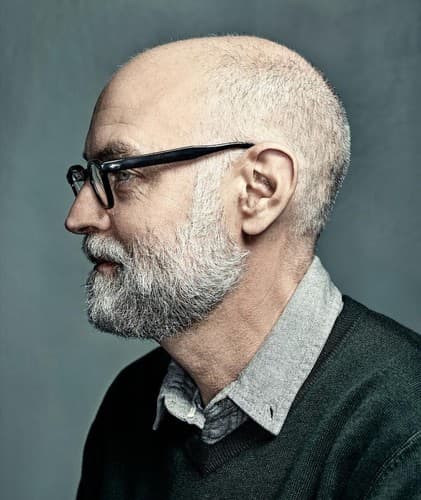
Daniel Clowes is a highly influential graphic novelist known for his witty and melancholic explorations of modern life. His seminal work, "Ghost World," was adapted into a critically acclaimed film and cemented his reputation for creating relatable, complex characters. Clowes is a key figure in the alternative comics scene, or "alt-comix," scene.