“When the earth trembles, it is because the people are rising.”
— A metaphorical reflection on social upheaval and revolution.

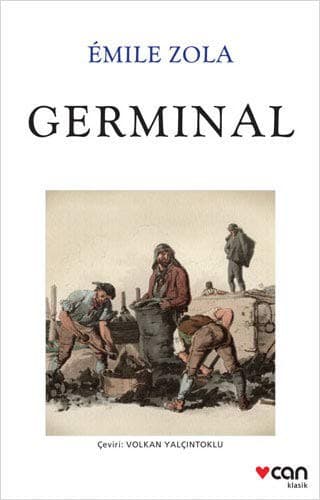
Emile Zola (2004)
Genre
Historical Fiction
Reading Time
12-15 hours
Key Themes
See below
Sign in to track this book
In the sooty depths of a 19th-century French coal mine, an unemployed railway worker ignites a desperate strike, forcing his starving comrades to choose between exploitation and the perilous, yet hopeful, fight for dignity.
Etienne Lantier, a young unemployed mechanic with a violent streak, arrives in the mining town of Montsou in northern France after being fired from his previous railway job. He immediately notices the bleak, desolate area and the large presence of the Le Voreux mine. Desperate for work, he is taken in by Maheu, a veteran miner who helps him get a job as a 'trammer' (wagon pusher) in the mine, replacing a deceased worker. Etienne moves in with the large Maheu family, including Maheude, the mother, and their many children, among them Catherine, a young girl with whom he quickly develops a relationship, and Zacharie, the eldest son. He is appalled by the harsh working conditions, the poverty, and the constant hunger that affect the mining community, quickly observing their daily struggles.
Etienne begins his work in the mine, doing hard labor, dealing with suffocating heat, and constant danger alongside the Maheu family. He works closely with Catherine, who does men's work, and finds himself drawn to her, despite her relationship with Chaval, a jealous and aggressive miner. The daily struggle for survival is clear; families like the Maheus barely earn enough to feed themselves, always in debt to the company store. Etienne observes the miners' resignation and their deep resentment towards the company. He also starts to learn, reading political pamphlets and discussing socialist ideas with Souvarine, an anarchist, and Rasseneur, a more moderate socialist, both of whom live in Montsou.
As conditions at the mine worsen, with the company imposing further wage cuts and fines, the miners' unhappiness grows. Etienne, with his understanding of socialist theory and his ability to express their complaints, gradually becomes a leader among his fellow workers. He organizes secret meetings, often in the 'Volcan' tavern run by Rasseneur, where he argues for collective action and a strike. His ideas resonate with the suffering miners, especially the Maheus, who are increasingly desperate. Catherine, torn between her family and her fear of Chaval, also finds herself drawn to Etienne's ideals and his personal appeal, making their relationship more complicated.
The Montsou Mining Company announces another wage reduction, pushing the already poor miners to their limit. This final insult rallies the community. Etienne, having prepared, calls for a general meeting in the forest, away from the company's eyes. In a strong speech, he states their complaints and proposes a strike, arguing that only by refusing to work can they force the company to listen. Despite some initial hesitation and fear, most of the miners, driven by hunger and desperation, vote to go on strike. This decision makes Etienne the recognized leader of the Montsou workers' movement, ready to confront the powerful mining company.
The strike begins, and the mines of Montsou fall silent. The first days have a fragile sense of unity and hope, but also immediate, crushing hardship. Families quickly run out of food and money, relying on small strike funds and others' generosity. Etienne works hard to keep morale up, organize patrols, and prevent scabs from breaking the strike. He tries to negotiate with the company, but the director, Hennebeau, refuses to give in. Tensions rise as the miners, especially women like Maheude, become more desperate and aggressive. Chaval, who first supported the strike, gives in to fear and hunger, and tries to force Catherine back to work, further straining his relationship with her and causing conflict with Etienne.
As the strike continues, hunger and desperation turn to rage. Etienne leads a group of striking miners, including Maheude and Levaque, through the mining villages, intimidating scabs and destroying company property. The violence increases when they confront a group of Belgian miners trying to work. Several scabs are attacked and killed, and the group, fueled by alcohol and anger, becomes uncontrolled. The director, Hennebeau, asks the authorities for military help. Meanwhile, Etienne's own morals are tested as he sees the brutal results of the strike, and his relationship with Catherine remains difficult, especially after Chaval takes her to another mine to work, making her a scab.
The arrival of the military, a company of soldiers, ends the strike violently. The soldiers are stationed throughout Montsou, intimidating the starving miners. Despite Etienne's efforts to keep up resistance, the miners, exhausted, starving, and now facing armed force, are defeated. One by one, they are forced to return to work, humiliated and broken. The Maheu family, having lost their patriarch and facing utter poverty, are among the last to give in. The strike, which had promised salvation, ends in failure, leaving the community even poorer and more demoralized. Etienne feels guilt and despair over the outcome, feeling responsible for his comrades' suffering.
In an act of vengeance and nihilistic idealism, Souvarine, the anarchist, secretly sabotages the Le Voreux mine. He loosens the bolts on the main supports, causing a massive collapse and flooding. The disaster happens while many miners, including Chaval, Catherine, and Etienne, are working underground. The mine falls into chaos, trapping dozens of workers. The sabotage is devastating, leading to widespread destruction and loss of life, far more than the casualties of the strike itself. Souvarine, seeing the chaos he caused, calmly leaves Montsou, his mission of destruction complete, leaving behind a scene of devastation and despair for the remaining community.
Etienne, Catherine, and Chaval are among those trapped deep within the collapsed mine. They are in a small pocket, cut off from the surface, with limited air and no food. The extreme conditions force them into a brutal struggle for survival. Chaval, always aggressive, continues to torment Catherine and clash with Etienne, even in their terrible situation. As days pass, their supplies run out, and the water level slowly rises. The claustrophobia and despair grow, leading to a violent confrontation between Chaval and Etienne over Catherine, which results in Chaval's death. This leaves Etienne and Catherine alone to face their fate, their complex relationship reaching its tragic end.
With Chaval dead, Etienne and Catherine are left alone in the dark, flooded tunnel. Facing certain death, their feelings for each other finally appear. They embrace, finding a moment of tenderness and love amidst the horror. Catherine confesses her love for Etienne, and they share a brief, intimate connection before her strength gives out. Weakened by starvation, thirst, and the rising water, Catherine dies in Etienne's arms. Etienne, heartbroken and near death himself, clings to life, clinging to Catherine's body, as rescue efforts above ground continue, unaware of the tragic love story unfolding below. He remains trapped, barely conscious, for several more days.
After days of being trapped, Etienne is found alive by rescuers. He is brought to the surface, emaciated and traumatized, the sole survivor of his group. The community, though devastated by the losses, greets his rescue with relief and sorrow. Etienne recovers physically, but is deeply scarred by what he saw and endured, especially Catherine's death. He attends the funerals of his comrades, including Maheu, and thinks about the suffering and sacrifices. Realizing that his work in Montsou is done, and that the immediate struggle is over, he decides to leave, heading for Paris, carrying with him the memories of the strike and the promise of future struggles for justice, a seed of revolution planted within him.
The Protagonist
Etienne transforms from a naive, angry drifter into a charismatic, yet ultimately tragic, leader of a failed revolution, gaining profound understanding of human suffering and the harsh realities of class struggle.
The Supporting
Catherine moves from a resigned acceptance of her brutal life to experiencing a brief, tragic moment of agency and love, only to be crushed by the forces of the mine and societal oppression.
The Supporting
Maheu transitions from a resigned, stoic miner to a desperate strike participant, ultimately sacrificing his life for a cause he initially doubted.
The Supporting
Maheude evolves from a weary, resigned mother to a fierce, revolutionary figure, driven to violence by desperation, and ultimately left utterly broken by loss.
The Antagonist
Chaval remains a consistently violent and self-serving character, ultimately succumbing to his own aggression and the mine's destruction.
The Supporting
Souvarine remains steadfast in his radical anarchist ideology, culminating in a devastating act of sabotage before his departure.
The Supporting
Rasseneur maintains his moderate socialist stance throughout, offering a contrast to Etienne's increasingly radical approach.
The Antagonist
Hennebeau remains largely unchanged, representing the entrenched, unyielding power of the capitalist system, despite his personal unhappiness.
The Mentioned
Dénizard serves as a static representation of the company's technical management.
The Supporting
Bonnemort remains a static, symbolic figure of the miners' long history of suffering and eventual, explosive rage.
The main theme of 'Germinal' is the class struggle between the poor miners and the wealthy, uncaring mine owners. Zola clearly shows the exploitation of the workers, who are paid little, live in bad conditions, and face constant danger, while the company directors live in luxury. The strike itself shows this struggle, as the miners try to assert their dignity and demand fair treatment against the strong power of capital. The novel shows the dehumanizing effects of industrial capitalism and the large gap between the working class and the rich.
“It was the awakening of the people, slowly germinating in the depths, the redoubtable pushing of a generation which was ripening for action.”
Zola depicts the poverty that defines the lives of the Montsou miners. The Maheu family, in particular, shows the constant hunger, debt, and lack of basic needs that degrade human life. This theme explores how extreme deprivation takes away dignity, forcing people into desperate acts and eroding their physical and moral well-being. The children are malnourished, the adults are aged early, and the entire community lives in constant struggle, showing how economic conditions can lead to the degradation of the human spirit and body.
“They were no longer men, but a herd of brutes, who had just been driven back into their stall.”
'Germinal' explores the cycle of violence that comes from oppression and desperation. Etienne's own violence, combined with the miners' anger, erupts during the strike, leading to destruction and death. The novel suggests that systematic exploitation leads to violent resistance. The different ideas of Etienne (socialism), Souvarine (anarchism), and Rasseneur (reformism) all deal with how to achieve change, with Souvarine's act of sabotage symbolizing the destructive potential of unchecked revolutionary passion. The novel ends with the idea that while this struggle ended in defeat, the 'germ' of revolution will grow again.
“The earth was germinating, and a black, avenging army of men was slowly sprouting in its furrows, germinating for the harvests of the coming century.”
Despite the suffering and defeat, the novel also shows the resilience and spirit of the people caught in this struggle. Characters like Maheude, who fiercely protects her family, and Etienne, who organizes and inspires, show a great capacity for endurance and hope against impossible odds. Even with starvation, military repression, and mine disasters, the miners continually find the strength to resist, to love, and to dream of a better future. Etienne's survival and his departure, carrying the 'germ' of future struggles, symbolize the persistent human drive for justice and change.
“And he heard the distant rumble of the revolution, still far off, which was slowly germinating in the depths of the earth.”
Zola's literary movement, emphasizing environmental and hereditary influences.
As a naturalist novel, 'Germinal' employs determinism, arguing that characters' fates are largely shaped by their heredity, environment, and social conditions. Etienne's inherited 'flaw' (violence), the miners' poverty, and their lack of education are presented as inescapable forces that dictate their choices and outcomes. The bleak landscape, the relentless mine, and the cyclical nature of poverty all contribute to a sense of predestination. This device is used to highlight the systemic nature of oppression and to argue that societal change, rather than individual will, is necessary to alter these predetermined paths. The novel meticulously details the physical and psychological toll of the mining environment on the characters.
The mine as a monstrous, living entity that consumes its workers.
Le Voreux mine is a powerful symbol throughout the novel. It is frequently personified as a ravenous, monstrous beast, 'devouring' men, 'breathing' its black smoke, and 'digesting' human lives for profit. Its machinery is described with organic, grotesque imagery, emphasizing its role as a living entity that consumes the miners' bodies and souls. The mine represents not just a workplace, but the entire capitalist system that exploits the working class. Its eventual collapse, caused by Souvarine, symbolizes the destructive potential of revolution against this oppressive system, but also the self-destructive nature of unchecked rage, as it buries the very people it was meant to liberate.
Symbolizes the seeds of revolution and new beginnings.
The title 'Germinal' refers to the seventh month of the French Republican Calendar, corresponding to late March and early April, a time of spring and germination. This symbolizes the 'germination' or 'sprouting' of a new era, the seeds of revolution being sown amidst the miners' suffering. Despite the tragic defeat of the strike, the novel ends with Etienne hearing the 'distant rumble of the revolution' and the idea that a 'black, avenging army of men was slowly sprouting in its furrows.' This suggests that while the immediate struggle failed, the ideas and the will for change have been planted and will inevitably grow, promising future struggles and a new social order. It offers a glimmer of hope amidst the overwhelming despair.
Contrasting the opulent lives of the bourgeoisie with the destitution of the miners.
Zola frequently employs juxtaposition to highlight the stark contrast between the extreme wealth and comfort of the mine owners and managers (like the Hennebeaus and Grégoires) and the abject poverty and suffering of the miners. Scenes depicting lavish dinners and comfortable homes are placed in close proximity to descriptions of starving families, dilapidated cottages, and the brutal conditions underground. This device serves to underscore the profound injustice and inequality inherent in the social structure, fueling the reader's outrage and providing a clear visual representation of the class divide that drives the novel's conflict. It emphasizes the moral bankruptcy of a system that allows such disparities.
“When the earth trembles, it is because the people are rising.”
— A metaphorical reflection on social upheaval and revolution.
“Bread! Bread! We want bread!”
— Chanted by starving miners during a protest march.
“The mine is a beast that devours men.”
— Describing the dangerous and exploitative nature of coal mining.
“We are the ones who make the wealth, and we are the ones who starve.”
— A miner's lament about economic inequality.
“Hope is the last thing to die in the heart of man.”
— A philosophical observation amidst despair.
“The strike is a war, and in war there are no rules.”
— Spoken during the violent miners' strike.
“Capital is a force that crushes everything in its path.”
— Critique of capitalist exploitation.
“In the darkness of the pit, we are all brothers.”
— Emphasizing solidarity among miners underground.
“The earth is a womb that gives life, but the mine is a tomb.”
— Contrasting natural fertility with industrial death.
“We will rise again from the ashes, like the seed in spring.”
— A hopeful vision of renewal after destruction.
“The rich sleep on silk, while we sleep on hunger.”
— Highlighting the stark contrast between classes.
“Every man has a right to live, not just to exist.”
— A call for dignity and basic human rights.
“The machine does not tire, but the man breaks.”
— Comment on dehumanizing industrial labor.
“In the end, it is not the strong who survive, but the united.”
— Advocating for collective action over individual strength.
Ready to see how well you understood this book? Take our interactive quiz with 10 questions.
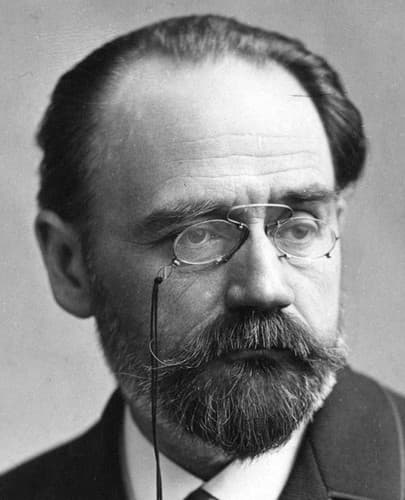
Émile Édouard Charles Antoine Zola was a French novelist, journalist, playwright, the best-known practitioner of the literary school of naturalism, and an important contributor to the development of theatrical naturalism. He was a major figure in the political liberalization of France and in the exoneration of the falsely accused and convicted army officer Alfred Dreyfus, which is encapsulated in his renowned newspaper opinion headlined J'Accuse…! Zola was nominated for the first and second Nobel Prize in Literature in 1901 and 1902.







