“It wasn't a secret that she was a girl. It was a secret that she was George.”
— Melissa thinks about how she presents to the world versus who she knows herself to be inside.

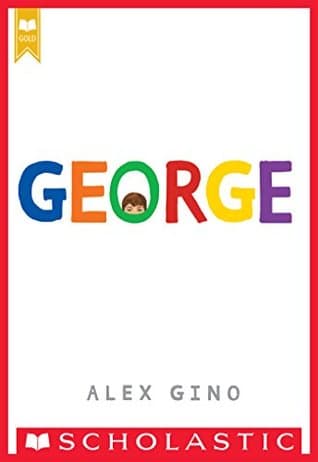
Alex Gino (2015)
Genre
Children's / Young Adult
Reading Time
240 min
Key Themes
See below
Sign in to track this book
A young transgender girl named George, who everyone sees as a boy, plans with her best friend to audition for the role of Charlotte in the school play, hoping to finally reveal her true self to the world.
George, a fourth-grader, lives with the secret that she is a girl, though everyone else, including her mother and older brother Scott, sees her as a boy. She often reads girls' magazines in secret and feels a deep difference between how she looks and who she is inside. This inner struggle causes her much worry and loneliness. She tells her best friend, Kelly, about some of her feelings, especially her wish to be a girl, but not the full extent of her identity. George keeps a sparkly pink shirt hidden, a symbol of her true self, and often feels like she is pretending in her daily life.
Ms. Udell, George's fourth-grade teacher, announces that the class will perform 'Charlotte's Web' for their school play. George is immediately drawn to Charlotte the spider and deeply wants to play the part. She feels a strong connection to Charlotte's wisdom and caring nature. However, when she tells Ms. Udell her interest, the teacher gently but firmly tells George she cannot audition for Charlotte because Charlotte is a female character, and George is a boy. This rejection crushes George and strengthens her feeling of being in the wrong body, making her more determined to find a way to show her true self.
Upset by Ms. Udell's decision, George tells Kelly, her best friend, about wanting to play Charlotte and about her true identity as a girl. Kelly is surprised at first but quickly becomes supportive and understanding. Together, they think of ways for George to be seen as a girl and to get the part. Kelly suggests George could audition for Charlotte in secret, or perhaps tell the teacher her identity. They decide on a plan: George will try out for Charlotte, and if she gets the part, she will use the chance to reveal her true self to the world, hoping the school play will be the perfect stage for her coming out.
Despite wanting to be Charlotte, George is cast as Wilbur, the pig, a male role. She attends rehearsals, but her heart is not in it. She feels a deep sadness and wrongness, watching her classmate, Melissa, rehearse as Charlotte. George often goes into her imagination, mentally rehearsing Charlotte's lines and movements, feeling a strong connection to the character's voice and wisdom. This inner conflict between her assigned role and her true desire for Charlotte makes her feel more unseen and misunderstood by the world around her, making her secret identity even heavier.
During a sleepover at Kelly's house, George finally gathers the courage to fully tell Kelly her secret. She tells Kelly that she is not just a boy who wants to play a girl, but that she *is* a girl. Kelly is very supportive, confirming George's feelings and offering steady friendship. They spend the night talking, with Kelly helping George try on some of her clothes and offering encouraging words. This moment strengthens their bond and empowers George, making her feel less alone in her journey. Kelly's acceptance becomes a key source of strength for George.
With Kelly's support, George continues to secretly practice Charlotte's lines and monologues, memorizing them perfectly. She reads the book 'Charlotte's Web' many times, understanding Charlotte's character deeply. She even practices her voice, trying to get the gentle yet firm tone she imagines Charlotte would have. George is set on showing everyone that she can be Charlotte, not just as an actress, but as a person who truly understands and connects with the character's core. This secret practice becomes a source of quiet strength and determination, feeding her hope for a chance to shine as her true self.
The day before the play's opening night, Melissa, the girl cast as Charlotte, gets a bad case of the flu and cannot perform. Panic spreads backstage, as Ms. Udell quickly tries to find a replacement. Seeing her chance, George, with Kelly's enthusiastic encouragement, goes to Ms. Udell and volunteers to step in as Charlotte. George explains that she knows all the lines and has been practicing. Ms. Udell is unsure because George is a boy, but with no other choices and George's earnest request, she reluctantly agrees to let George perform, though with much worry.
On opening night, George steps onto the stage as Charlotte. She wears a simple costume, but her performance is heartfelt and strong. During her final monologue, as Charlotte is dying, George intentionally changes a line. Instead of saying 'I am Charlotte,' she says, 'I am George, and I am a girl.' The audience is stunned for a moment, then gasps and whispers spread through the crowd. George says the line with steady belief, letting her true identity be seen and heard by everyone present, including her mother, who is clearly shocked and moved.
After the play, George's mother is overwhelmed and confused by George's public announcement. She takes George home, and they have a difficult but important conversation. George's mother expresses her love but admits her confusion and fear for George. George explains, as best she can, her lifelong feeling of being a girl. With the help of Kelly's mom, who is a therapist, George's mother starts to understand. She realizes that her child's happiness and authenticity are most important, and she slowly begins to accept George for who she truly is, promising to support her.
After the play and her mother's growing acceptance, George begins to live more openly as a girl. She starts using the name Melissa, a name she has always liked, and begins to dress in clothes that make her feel comfortable and true to herself. While not everyone immediately understands or accepts her, she finds steady support in Kelly and her family, and increasingly, from her own mother. The journey continues, but George feels a deep sense of relief and hope, knowing that she no longer has to hide who she truly is. She looks forward to a future where she can fully embrace her identity.
The Protagonist
George moves from hiding her true identity in secret to bravely revealing it publicly, leading to a journey of self-acceptance and finding external support.
The Supporting
Kelly's character remains consistently supportive, but her understanding of gender identity deepens as she supports George.
The Supporting
She moves from ignorance and confusion to a place of understanding, acceptance, and active support for George's true identity.
The Supporting
Initially rigid in her adherence to gender norms, Ms. Udell's perspective begins to shift after George's brave act, showing a capacity for growth and understanding.
The Supporting
Scott moves from typical sibling obliviousness to a more understanding and supportive brother.
The Mentioned
N/A, her role is primarily plot-driven.
The Supporting
N/A, she serves as a stable and knowledgeable supporting figure.
The main theme is George's journey to understand and accept her true gender identity as a girl, despite being assigned male at birth. It explores the inner struggle of living with a secret identity and the deep relief and joy that comes with self-acceptance. George's desire to play Charlotte shows her wish to be her true self. The book powerfully shows that identity is an inner knowing, not just defined by outer appearance or social expectations, as seen when George finally declares, 'I am George, and I am a girl.'
“When people looked at George, they thought they saw a boy. But she knew she wasn't a boy. She knew she was a girl.”
The steady friendship between George and Kelly is a key theme. Kelly's immediate acceptance and active support for George's true identity give George the courage and strength to face the world. Kelly helps George plan, offers comfort, and stands by her side, showing how much unconditional friendship can help someone find themselves. Without Kelly's support, George's path to self-acceptance and public revelation would be much harder, highlighting the importance of allies.
“'You're a girl,' Kelly said, her voice soft but firm. 'I get it. And it's okay.'”
The novel directly questions traditional gender roles and social expectations placed on people. Ms. Udell's first refusal to let George audition for Charlotte because 'she's a boy' shows these strict rules. George's entire struggle comes from society's two-sided view of gender. By playing Charlotte and stating her true identity, George breaks these expectations, making those around her rethink their ideas about gender and who can fill certain roles. The book supports a more inclusive and understanding way of looking at gender.
“'You can't play Charlotte, George,' Ms. Udell said gently. 'Charlotte is a girl.'”
George's journey shows great courage and openness. It takes incredible bravery for her to live with her secret, and even more to confide in Kelly. Her biggest act of courage comes during the play, where she publicly declares her true identity to an entire audience, knowing she might be judged or misunderstood. This act of openness is the turning point of the story, allowing her to live genuinely and inspiring others to open their minds. The book celebrates the strength found in being true to oneself, even when it is hard.
“'I am George, and I am a girl,' George said, her voice clear and strong.”
The play 'Charlotte's Web' serves as a mirror for George's internal journey.
The school play 'Charlotte's Web' is a central symbolic device. Charlotte, the wise and nurturing spider, represents George's desired feminine identity and her yearning to be seen as such. Wilbur, the pig, symbolizes George's current predicament: perceived as a boy (a male animal) and feeling trapped. George's desire to play Charlotte, and her eventual successful performance, directly parallels her journey of revealing her true self. The play provides a public stage for her private revelation, making the performance itself a powerful act of self-declaration and authenticity.
A hidden item of clothing representing George's secret identity and desire.
The sparkly pink shirt that George keeps hidden in her closet is a powerful symbol of her true gender identity and her suppressed desires. It represents the femininity she feels internally but cannot express externally. Keeping it secret highlights her fear of judgment and misunderstanding. The shirt is a tangible representation of her authentic self, a piece of her identity she cherishes and longs to wear openly. Its presence underscores the internal conflict and the longing for external congruence with her inner world.
The narrative focuses on George's internal thoughts and feelings.
While the book is written in the third person, it maintains a very close, limited perspective on George's experiences. This allows the reader deep insight into George's internal world, her anxieties, her hopes, and her profound sense of being a girl despite external perceptions. This device is crucial for building empathy and understanding for George's struggle, as readers directly experience her emotional journey and the disconnect she feels. It emphasizes that gender identity is an internal truth, experienced and known by the individual.
“It wasn't a secret that she was a girl. It was a secret that she was George.”
— Melissa thinks about how she presents to the world versus who she knows herself to be inside.
“She was a girl. She was a girl, she was a girl, she was a girl.”
— Melissa's internal affirmation of her gender identity.
“She wasn't going to just be George anymore. She was going to be Melissa.”
— Melissa's decision to embrace her true name and identity.
“The worst part was that she couldn't tell anyone. It was her secret.”
— Melissa feels isolated by her secret gender identity.
“She wanted to be Charlotte. Not because Charlotte was a girl, but because Charlotte was the main character.”
— Melissa's desire to play the lead role in the school play, 'Charlotte's Web,' which is usually played by a girl.
“It was just a name. But it was a name that meant she was a girl.”
— Melissa reflects on the significance of choosing her true name.
“Sometimes she felt like a puzzle piece that didn't fit anywhere.”
— Melissa's feeling of not belonging or being understood.
“She didn't need a boy to be happy. She just needed to be herself.”
— Melissa realizes her happiness comes from within, not from external validation or societal expectations.
“Being a girl wasn't about what you wore, or how you looked. It was about who you were, deep down.”
— Melissa's understanding of gender identity as internal, not superficial.
“She knew what it felt like to be told you couldn't be who you were.”
— Melissa empathizes with others who face similar struggles of identity.
“She just wanted to be seen for who she truly was, not who everyone else thought she was.”
— Melissa's desire for genuine recognition and acceptance.
“It wasn't easy, but it was worth it. To be herself.”
— Melissa reflects on the challenges and rewards of living authentically.
“Sometimes, the hardest thing to do was to be brave enough to be yourself.”
— A general reflection on the bravery required for self-acceptance and coming out.
“She felt like a secret that was trying to burst out.”
— Melissa's internal struggle to keep her gender identity hidden.
Ready to see how well you understood this book? Take our interactive quiz with 10 questions.

Alex Gino is the acclaimed author of the middle-grade novel 'George' (now published as 'Melissa'). Known for their inclusive and heartfelt storytelling, Gino tackles themes of identity and self-acceptance with sensitivity and humor. They are a passionate advocate for LGBTQ+ youth and strive to create stories that reflect the diversity of the world.

Dan Gemeinhart
4.5

Kate O'Hearn
4.4

Jeanne Birdsall
4.4

Jen Wang
4.4

Wendelin Van Draanen
4.3

John Marsden
4.3

Chris Van Allsburg
4.3

Jennifer A. Nielsen
4.2