“The gods play dice with the universe, but they also play blind man's bluff with our destinies.”
— Reflecting on the unpredictable nature of fate and divine intervention.

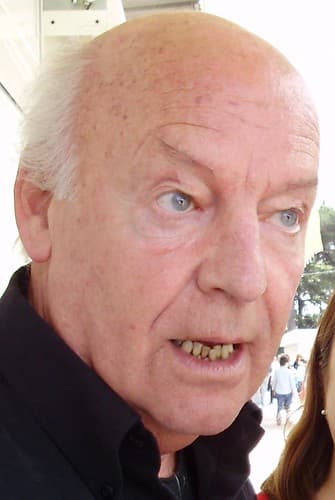
Eduardo Galeano (2014)
Genre
Thriller / Science Fiction
Reading Time
12-15 hours
Key Themes
See below
Sign in to track this book
Galeano's 'Genesis' reclaims history from a Latin American viewpoint, exploring pre-Columbian myths, European conquests, and the continent's lasting spirit.
Galeano begins 'Genesis' by sharing many creation stories from different indigenous cultures across the Americas. These stories include the Mayan Popol Vuh, which describes humans made from corn, and myths from the Inuit, Aztec, and other tribes. Each offers a view on how the world, humanity, and the universe began. These stories often feature deities, animal spirits, and natural elements as key figures in shaping existence. A common theme is a deep respect for nature and a cyclical view of time, setting the stage for the rich cultures that existed before Europeans arrived. Galeano presents these myths as historical documents, highlighting the spiritual and philosophical depth of pre-Columbian societies.
The story changes sharply with Christopher Columbus's arrival in the Caribbean in 1492. Galeano details the first meetings between European explorers and the indigenous Taíno people. Columbus, seeking gold and to spread Christianity, misinterprets the Taíno's generosity as naivety and their lack of material wealth as a sign they are ready for control. European weapons were both a source of wonder and fear for the natives. This section shows the deep cultural clash and the damaging effect of European diseases, which quickly began to kill the indigenous population. This set a harsh pattern for centuries across the continent.
Galeano describes Hernán Cortés's bold and brutal conquest of the Aztec Empire, led by Moctezuma II. The narrative details Cortés's alliances with unhappy indigenous tribes, his clever use of Malinche as an interpreter and advisor, and the eventual siege of Tenochtitlán. The clash of civilizations is clear: the advanced city planning and social structures of the Aztecs against the European desire for gold and religious fervor. The section ends with the destruction of Tenochtitlán, the killing of its people, and the systematic dismantling of a powerful empire. This marked a turning point in the history of Mesoamerica and the wider continent.
The discovery of large silver deposits in Potosí, in what is now Bolivia, becomes a main focus. Galeano shows how this mountain of silver funded the Spanish Empire's wealth at a huge human cost. Indigenous workers, forced into the mita system, worked in terrible conditions in the mines, dying from disease, accidents, and exhaustion. The demand for silver led to forced community relocations and the exploitation of indigenous people. Potosí, once a busy and rich city, is presented as a symbol of colonial greed and the destructive power of resource extraction, draining the continent of its wealth and its people.
As indigenous populations decreased due to disease and forced labor, Europeans looked to Africa for enslaved labor. Galeano tells the story of the transatlantic slave trade, from the journey across the Middle Passage to the inhumane conditions on plantations in the Caribbean and Brazil. The narrative stresses the dehumanization of enslaved Africans, the destruction of their cultures, and the suffering they faced. Despite the oppression, stories of resistance, rebellions, and the lasting spirit of African traditions are also shared, showing the resilience of those subjected to this system.
Galeano explores the experiment of the Jesuit Reductions in Paraguay. These missions, set up by Jesuit priests, aimed to create self-sufficient, communal societies for the Guaraní people, protecting them from Spanish and Portuguese slave raiders. The Reductions developed their own economies, education, and cultural mix, combining Christian teachings with Guaraní traditions. However, the narrative also touches on the paternalistic aspects of Jesuit rule and the destruction of these communities when the Jesuits were expelled from the Americas, leaving the Guaraní vulnerable again to colonial exploitation.
Throughout colonial rule, Galeano highlights many acts of resistance and rebellion. These include indigenous uprisings like Tupac Amaru II's in Peru, who led a rebellion against Spanish oppression, and many revolts by enslaved Africans. The narrative shows the courage and determination of those who fought back, often facing harsh retaliation. While many rebellions were put down, they represent a continuous fight for freedom and self-determination, showing that the spirit of resistance never fully died despite overwhelming odds.
The book moves into the era of independence, detailing the struggles of figures like Simón Bolívar and José de San Martín to free South America from Spanish rule, and the Mexican War of Independence. Galeano notes that these movements, while achieving political independence, often continued social and economic structures that oppressed indigenous peoples, Afro-descendants, and the poor. The narrative points out the irony that the new ruling elites, often criollos (descendants of Europeans born in the Americas), largely kept the colonial power dynamics. They simply replaced European monarchs with local strongmen and oligarchies, failing to bring true liberation for all.
After independence, Latin American nations became open to new foreign intervention, especially from Great Britain and later the United States. Galeano shows how these powers sought to control the region's natural resources – guano, nitrates, rubber, bananas, oil – through economic pressure, political manipulation, and military action. The narrative describes the creation of 'banana republics' and unfair trade agreements, ensuring that Latin America remained a supplier of raw materials to the industrialized world. This continued a cycle of dependence and slowed real development. This period shows the shift from direct colonial rule to neocolonialism.
Galeano chronicles the frequent rise of authoritarian regimes and military dictatorships across Latin America throughout the 19th and 20th centuries. These strongmen, often backed by foreign interests or local elites, suppressed opposition, violated human rights, and held power through violence and corruption. The narrative exposes the devastating effect of these regimes on citizens, the silencing of opposition, and the lasting legacy of fear and instability. While specific dictators and their actions are mentioned, the broader theme is the cyclical nature of political oppression and the struggle for democracy in a continent marked by outside interference and internal power struggles.
The Narrator/Implied Author
Not a character in the traditional sense, but his perspective evolves as he presents a comprehensive, critical history, solidifying his role as a chronicler of the oppressed.
The Collective Protagonist/Victim/Resistor
From independent, thriving societies to victims of conquest, then enduring centuries of oppression while maintaining a spirit of resistance and cultural survival.
The Antagonist/Catalyst
His arrival marks the beginning of the brutal colonial era, and his legacy is critically re-evaluated as one of devastation rather than discovery.
The Antagonist
A figure of relentless ambition who achieved military conquest but left a legacy of cultural annihilation and violence.
The Supporting/Tragic Figure
From powerful emperor to a leader overwhelmed and ultimately defeated by foreign invasion, symbolizing the fall of a great civilization.
The Supporting/Ambiguous Figure
From enslaved woman to essential interpreter and advisor for Cortés, her story is one of survival and navigating impossible allegiances.
The Collective Protagonist/Victim/Resistor
From free individuals to brutalized slaves, their arc is one of enduring suffering, maintaining cultural identity, and persistent, often violent, resistance.
The Supporting/Revolutionary
From a revolutionary leader fighting for independence to a figure whose grand vision for a united South America ultimately fractured, leaving a complex legacy.
The Supporting/Symbolic
From a sacred, life-giving entity to a raped and exploited resource, constantly enduring the abuses of human greed.
This is the main theme, appearing in every chapter. Galeano details the physical, cultural, and spiritual harm done to indigenous peoples and enslaved Africans by European colonizers. From initial killings and forced labor in mines and plantations to the destruction of cultures and languages, the book shows the high cost of 'discovery.' The violence is not just physical; it also erases indigenous histories and replaces them with Eurocentric stories. Continued exploitation by neocolonial powers after independence highlights how this violence lasts.
“''The conquistadors, like the plague, were everywhere. The disease they brought was not just smallpox, but greed.''”
Despite great oppression and genocide, Galeano emphasizes the resilience and enduring spirit of indigenous cultures. He begins with their rich creation myths, establishing their spiritual and intellectual heritage. Throughout the narrative, he highlights acts of resistance – from individual defiance to large-scale rebellions like Tupac Amaru II's revolt. Even when outwardly suppressed, cultural traditions, languages, and spiritual beliefs continue, often subtly integrated or practiced in secret. This theme offers a different story to the common history of victimhood, celebrating the agency and survival of native peoples.
“''They tried to bury us, but they didn't know we were seeds.''”
While Latin American nations gained political independence from Spain and Portugal, Galeano argues that true freedom remained out of reach. The theme explores how the new criollo elites often continued the same social and economic inequalities of the colonial era. It also details the rise of neocolonialism, where foreign powers (first Britain, then the United States) kept control over Latin America's resources and political systems through economic influence, military action, and support for authoritarian regimes. This cycle of dependence and exploitation meant the continent remained 'open' to the world, losing its wealth and potential.
“''The independence that was bought with blood was sold for gold.''”
Galeano's project is an act of historical recovery, showing how past events shape the present. He combines myths, historical documents, personal accounts, and poetic observations to create a picture of memory. The book suggests that understanding the origins of exploitation, racism, and inequality in the Americas is necessary for addressing current injustices. By presenting a fragmented yet connected narrative, he shows that history is not a straight line but a cyclical process, with past events echoing in the present. This theme stresses the importance of remembering the 'other' history.
“''History never says goodbye. History says, 'See you later.'''”
A fragmented, non-linear collection of short vignettes and historical accounts.
Galeano employs a mosaic narrative structure, presenting history not as a continuous, linear timeline but as a collection of hundreds of short, self-contained vignettes, anecdotes, myths, and historical facts. These fragments, often only a paragraph or a few sentences long, jump across time periods, geographical locations, and cultural perspectives. This device allows Galeano to cover vast stretches of history and numerous cultures without adhering to a single overarching plot. It mirrors the fragmented nature of memory and the diverse voices that make up the history of the Americas, encouraging the reader to connect the dots and draw their own conclusions about the patterns of power and oppression.
The use of evocative, metaphorical, and often emotionally charged language.
Galeano's writing is characterized by its highly poetic and lyrical quality, blurring the lines between history and literature. He uses vivid imagery, metaphors, and a rhythmic cadence to bring historical events and figures to life. This device allows him to convey the emotional weight of historical suffering and injustice, making the facts more impactful and memorable. Instead of dry historical recounting, the poetic prose infuses the narrative with a sense of wonder, tragedy, and outrage, engaging the reader on an emotional as well as intellectual level and distinguishing 'Genesis' from conventional historical texts.
Presenting history from the perspective of the marginalized and oppressed.
'Genesis' fundamentally functions as a counter-history or revisionist history. Instead of adhering to the dominant, Eurocentric narratives of 'discovery' and 'progress,' Galeano deliberately reclaims and foregrounds the perspectives of indigenous peoples, enslaved Africans, and the impoverished masses. This device challenges conventional heroes and villains, re-evaluating figures like Columbus and Cortés through the lens of their victims. By centering the voices and experiences of the marginalized, Galeano exposes the biases inherent in mainstream historical accounts and offers a radical reinterpretation of the making of the Americas, highlighting the suffering and resistance often omitted.
The use of stark contrasts and ironic observations to highlight historical injustices.
Galeano frequently employs irony and juxtaposition to underscore the absurdities and cruelties of history. He often places a lofty claim by a colonizer or conqueror immediately beside a brutal reality, or contrasts the beauty of indigenous cultures with the barbarity of their invaders. For example, he might describe the 'civilizing mission' of Europeans alongside their acts of torture and genocide. This device serves to expose hypocrisy, critique the justifications for conquest, and create a powerful emotional impact, forcing the reader to confront the inherent contradictions and moral failings within the historical record.
“The gods play dice with the universe, but they also play blind man's bluff with our destinies.”
— Reflecting on the unpredictable nature of fate and divine intervention.
“Memory is a beast that devours the present, leaving only the ghosts of what was.”
— A character grappling with traumatic memories that overshadow their current life.
“In the labyrinth of power, the only true guide is betrayal.”
— A cynical observation about the ruthless world of political maneuvering.
“The future is not written; it is whispered into existence by the choices we make today.”
— Emphasizing the agency of individuals in shaping their own future.
“Silence can be the loudest scream, if you know how to listen.”
— A detective interpreting unspoken cues in a tense interrogation.
“Every secret kept is a chain forged, binding us to the darkness we try to hide.”
— Exploring the psychological burden of holding onto hidden truths.
“The line between madness and genius is often just a matter of perspective, or success.”
— Discussing the reception of a brilliant but unconventional scientist.
“We build our prisons with the bricks of our fears, and the keys are always within reach.”
— A philosophical reflection on self-imposed limitations.
“The truth is a weapon, and like all weapons, it can wound the wielder as much as the target.”
— A character facing the difficult consequences of revealing a harsh truth.
“Hope is a fragile seed, easily crushed, but capable of blooming in the harshest deserts.”
— A moment of resilience amidst despair in a dystopian setting.
“To truly know a monster, you must first acknowledge the monster within yourself.”
— A protagonist confronting their own dark impulses while hunting a killer.
“Technology promises liberation, but often delivers only more sophisticated chains.”
— A critique of technological advancement in a surveillance-heavy society.
“The past is not dead; it is merely sleeping, waiting for the right moment to awaken and demand its due.”
— Foreshadowing the return of old conflicts and unresolved issues.
“Love, even in its most twisted forms, is the engine that drives us to creation or destruction.”
— Analyzing the motivations behind a complex character's actions.
Ready to see how well you understood this book? Take our interactive quiz with 10 questions.
Biography coming soon.







