“Everybody got to get their own ship. You can't be riding on nobody else's ship. Everybody got to get their own.”
— Aunt Ester's wisdom to Citizen Barlow about personal responsibility.

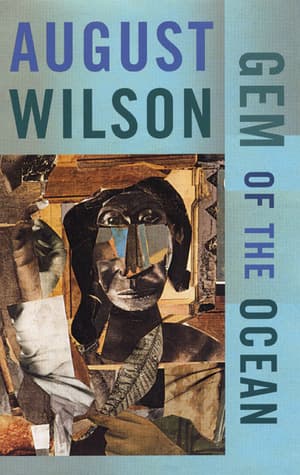
August Wilson (2006)
Genre
Historical Fiction
Reading Time
120 min
Key Themes
See below
Sign in to track this book
In 1904 Pittsburgh, a 287-year-old matriarch's home is a spiritual sanctuary where former slaves and a young seeker navigate new freedom, shaping a century of African American experience.
The play starts in 1904 at the home of Aunt Esther Tyler, a 287-year-old spiritual healer in Pittsburgh's Hill District. Eli, her caretaker, and Black Mary, her assistant, manage the house. Citizen Barlow, a young man from Alabama, arrives, troubled by guilt. He admits to stealing nails from a white man's mill, which led to another black man, Garret Brown, being wrongly accused and drowned while trying to escape. Citizen wants redemption and believes Aunt Esther can cleanse his soul, asking to be 'washed' by her. Solly Two Kings, an elder born a slave and a Union Army scout, also visits the house, bringing news and historical context.
The Hill District is troubled by a strike at the local mill, where black workers demand better conditions. Caesar, a black constable and business owner, represents the white establishment's oppressive power. He strictly believes in law and order, often at the cost of his own community. Caesar confronts Solly Two Kings about his activities, especially Solly's role in helping people escape the South through an Underground Railroad-like network, hinting at historical struggles for freedom. The strike shows the economic hardship and racial injustice faced by the community, with Caesar contrasting Aunt Esther's spiritual and communal values.
Solly Two Kings, deeply connected to his people's history of struggle, shares stories from his past. He talks about being a 'shoe-fly' during the Civil War, scouting for the Union Army and guiding runaway slaves to freedom. He still carries his walking stick, which he used to mark paths to liberation. Solly's current goal is gathering rocks to build a pyre, a symbolic act of resistance and remembrance. His talks with Eli and Black Mary often touch on the ongoing fight for dignity and the importance of remembering their ancestors' sacrifices. He is a living link to the past, reminding everyone of the continuous journey towards true freedom.
Citizen Barlow feels more and more guilty about Garret Brown's death. He struggles with how to make amends, seeking guidance from Aunt Esther. Meanwhile, the mill strike grows, and tensions rise. Solly Two Kings, driven by a desire for justice and a rejection of systemic oppression, takes a strong action. He sets fire to the mill, an act of defiance against exploitative conditions and a symbolic strike against the white power structure that has caused so much suffering. This act has major consequences, drawing Caesar's direct attention and intensifying the conflict.
To cleanse Citizen Barlow's soul, Aunt Esther prepares him for a deep spiritual journey. She performs a ritual, taking him on a metaphorical voyage to the 'City of Bones,' a mythical place off the coast of Africa, built from the bones of Africans who died during the Middle Passage. During this powerful, dream-like experience, Citizen faces his guilt, sees his ancestors' immense suffering, and receives spiritual guidance. This journey is for his personal release and connects him to his people's collective history and trauma, helping him understand the deeper roots of his community's struggles and his place within that legacy.
After the mill burning, Constable Caesar starts a relentless search for Solly Two Kings, whom he immediately suspects. Caesar, driven by his strict belief in law and order and his desire to keep his position within the white power structure, sees Solly's act as a direct challenge to his authority. He sees Solly as a criminal, not a liberator. This pursuit shows the deep disagreement between Caesar and the other residents of Aunt Esther's house, who see Solly's act as a desperate, though violent, cry for justice. The hunt increases the danger for Solly and highlights the instability of Black lives in 1904 Pittsburgh.
Black Mary, initially quiet, begins to assert herself more strongly as the conflict grows. She challenges Caesar directly, questioning his methods and his loyalty to the Black community. Her growing defiance shows a rising political awareness and a refusal to passively accept injustice. She defends Solly Two Kings, understanding his motivations, and stands firm against Caesar's threats. This change marks Black Mary's emergence as a strong, independent voice in the household, embodying resistance and the fight for community unity against oppressive forces.
Solly Two Kings, knowing Caesar is closing in, prepares for their inevitable confrontation. He sees his upcoming capture, and likely death, not as a defeat but as a final act of liberation and a sacrifice for his people. He understands his actions have consequences but believes the message of resistance is more important. He entrusts his legacy and the spirit of freedom to Citizen Barlow and the others. His resolve shows his lifelong commitment to fighting for dignity and justice, even against overwhelming odds, solidifying his role as a symbol of defiance against oppression.
Caesar eventually tracks Solly Two Kings to Aunt Esther's house. A tense confrontation leads to Caesar shooting and killing Solly. This violent act shatters the community's fragile peace and deeply affects everyone present. Afterward, Citizen Barlow, having had his spiritual journey and witnessed Solly's sacrifice, makes a key choice. He decides to take up Solly's walking stick, symbolically inheriting the role of resistance and the ongoing fight for freedom. This moment marks Citizen's change from a guilt-ridden youth to a man committed to his community's fight.
With Solly Two Kings gone, Citizen Barlow fully accepts his new responsibility. He is no longer defined by his past mistake but by his commitment to his people's future. He now understands the deeper meaning of freedom and the continuous fight needed to achieve it. Aunt Esther's spiritual guidance and Solly's sacrifice have made him a new man, ready to contribute to the ongoing struggle for civil rights and racial justice. The play ends with Citizen looking to the future, empowered by his spiritual awakening and his connection to his community's rich, challenging history.
The Protagonist/Spiritual Guide
Esther remains largely constant, acting as a fixed point of wisdom and spiritual power, guiding others through their transformations.
The Protagonist
Citizen transforms from a guilt-ridden, lost soul to a man aware of his history and committed to carrying on the legacy of resistance.
The Supporting/Heroic Figure
Solly remains steadfast in his commitment to freedom, culminating in a final, defiant act of resistance and sacrifice.
The Supporting
Eli remains a constant, reliable presence, embodying the strength and quiet endurance of the community.
The Supporting
Black Mary transforms from a quiet observer to an assertive and politically aware woman, finding her voice and challenging authority.
The Antagonist
Caesar remains steadfast in his rigid adherence to law and order, leading him to a violent confrontation with Solly Two Kings.
The Supporting/Mentioned
Selig remains a consistent, observant presence, providing an external perspective on the community's struggles.
The play explores how the past, especially the trauma of slavery and the Middle Passage, continues to shape the present for African Americans. Aunt Esther, at 287 years old, embodies this living history, connecting characters to their ancestors. Citizen Barlow's journey to the 'City of Bones' clearly shows this theme, forcing him to face his ancestors' suffering. Solly Two Kings, as a former slave and Union Army scout, carries the legacy of resistance, showing how historical fights for freedom continue today. The characters' self-understanding is tied to their collective past.
““There’s a world that sits on this one. A world where the souls of the dead are still alive. You go there to be made clean.””
Central to Citizen Barlow's journey is his quest for redemption from stealing nails, which indirectly led to Garret Brown's death. Aunt Esther's spiritual cleansing ritual, the journey to the City of Bones, is how he atones. The play suggests that true redemption is not just forgiveness, but a deep understanding of one's actions, a connection to collective suffering, and a commitment to positive change. Citizen's change from a guilt-ridden person to someone willing to take up Solly's resistance shows this theme, proving atonement can lead to new purpose.
““He got to get washed. He got to get clean. He carrying too much weight.””
The fight for freedom, both personal and collective, is a main theme. Solly Two Kings represents the active, lifelong fight against oppression, from his time as a slave and Union scout to burning the mill. His actions highlight that freedom often needs to be fought for, sometimes violently, against systemic injustice. The mill strike itself is a form of collective resistance against economic exploitation. The play contrasts Solly's active resistance with Caesar's more conforming approach, asking about the most effective paths to liberation. Citizen Barlow's eventual taking of Solly's walking stick symbolizes his adoption of this legacy of resistance.
““Freedom ain’t something you ask for. You got to take it.””
Aunt Esther's house is a vital center for the Black community in the Hill District, offering sanctuary, spiritual guidance, and a place for shared history and culture. The characters in the house, despite their individual struggles, form a supportive and unified group. The mill strike highlights the workers' collective struggle. The play emphasizes the importance of community bonds when facing outside oppression and internal division. Black Mary's awakening and her defense of Solly against Caesar show the strengthening of community ties and the collective will to protect their own.
““This house is where the world begins.””
This theme is clear in the conflict between Solly Two Kings and Caesar. Caesar, as a constable, represents the strict enforcement of white man's law, believing it is the only way to order and progress, even when it is unfair to his own people. Solly, conversely, represents a higher form of justice, born from his race's historical oppression, willing to break the law to achieve true freedom and dignity. The play questions whether 'law and order' can truly serve justice when the system itself is biased and oppressive, suggesting that sometimes, justice requires defying the law.
““There’s the law, and then there’s what’s right.””
A mythical, spiritual realm representing ancestral memory and collective trauma.
The City of Bones is a powerful symbolic setting, a mythical place off the coast of Africa, built from the bones of Africans who died during the Middle Passage. It functions as a spiritual purgatory and a site of profound ancestral memory. Aunt Esther guides Citizen Barlow on a hallucinatory journey to this city, where he confronts the immense suffering of his forebears. This device allows the play to transcend realism, connecting individual guilt to collective historical trauma and providing a potent vehicle for spiritual cleansing and understanding of the African American experience.
Symbolic representation of living history and ancestral wisdom.
Aunt Esther's improbable age of 287 years is a key symbolic device. It signifies her as a living embodiment of African American history, having witnessed slavery, the Middle Passage (through ancestral memory), and generations of struggle. Her age allows her to serve as a direct link to the past, a keeper of ancient wisdom, and a spiritual guide whose knowledge transcends mere human experience. It grounds the play in a deep historical context, suggesting that the past is not merely remembered but actively present and influential in the lives of the characters.
A symbol of resistance, freedom, and inherited legacy.
Solly Two Kings' walking stick is a powerful symbol throughout the play. It represents his history as a 'shoe-fly' guiding runaway slaves to freedom, marking paths to liberation. It is a tangible link to the Underground Railroad and the continuous fight for freedom. When Citizen Barlow takes up the stick after Solly's death, it signifies his acceptance of Solly's legacy and his commitment to continuing the struggle for justice. The stick becomes a physical manifestation of inherited responsibility and the ongoing journey towards true liberation.
A catalyst for conflict and a symbol of economic oppression.
The ongoing strike at the local mill serves as a crucial plot device, setting the immediate social and economic context for the characters. It highlights the systemic exploitation faced by black workers and the resulting desperation in the community. The strike directly fuels Solly Two Kings' decision to burn the mill, escalating the conflict with Caesar and forcing characters to choose sides. It grounds the play's spiritual and historical themes in a concrete, contemporary struggle for dignity and fair treatment, showing how larger historical injustices manifest in everyday life.
“Everybody got to get their own ship. You can't be riding on nobody else's ship. Everybody got to get their own.”
— Aunt Ester's wisdom to Citizen Barlow about personal responsibility.
“The past is a road. You can walk it. You can run it. You can stand still on it. But you can't go backwards on it.”
— Eli discussing the nature of history and moving forward.
“You got to make a life for yourself. Nobody can make it for you.”
— Aunt Ester imparting a fundamental truth to Citizen Barlow.
“There's a whole world out there waiting for you to make your mark on it.”
— Eli encouraging Citizen Barlow to embrace his future.
“The only difference between a slave and a free man is what he chooses to do with his freedom.”
— Solomon reflecting on the true meaning of freedom.
“You got to carry your own weight. You can't be leaning on nobody else.”
— Black Mary's pragmatic advice about independence.
“Every man got a song inside him. You just got to find it and sing it.”
— Eli's metaphorical encouragement for self-expression.
“Some things you got to let go of to make room for new things.”
— Aunt Ester advising on the necessity of change and release.
“The road to freedom ain't always smooth. Sometimes it's bumpy, sometimes it's rough, but you got to keep walking.”
— Solomon's experience-based wisdom on the struggle for liberation.
“You can't hide from who you are. Sooner or later, it's gonna catch up to you.”
— Black Mary's observation about confronting one's true self.
“The spirit don't die. It just changes form.”
— Aunt Ester's spiritual belief in the enduring nature of the soul.
“Sometimes you got to make your own justice when the law won't give it to you.”
— A sentiment reflecting the harsh realities faced by the characters.
“The world is a harsh place, but it's also full of beauty if you know where to look.”
— Eli's balanced perspective on life's challenges and joys.
“You got to believe in something. If you don't, you just drifting.”
— Aunt Ester emphasizing the importance of faith or purpose.
Ready to see how well you understood this book? Take our interactive quiz with 10 questions.

August Wilson was a celebrated American playwright, renowned for his "Pittsburgh Cycle," a ten-play series chronicling the African American experience through the 20th century. His most acclaimed works include "Fences," "The Piano Lesson," and "Gem of the Ocean," earning him numerous awards, including two Pulitzer Prizes. Wilson's powerful dramas are celebrated for their lyrical language and profound exploration of identity, culture, and history.







