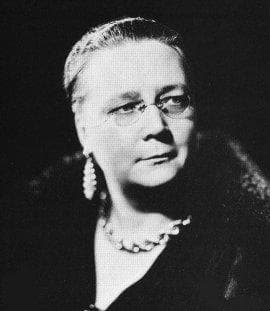
Dorothy Leigh Sayers was an English crime writer and poet. She was also a student of classical and modern languages.

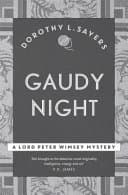
Dorothy L. Sayers (2016)
Genre
Historical Fiction / Mystery / Romance
Reading Time
12 Minutes
Key Themes
See below
Sign in to track this book
A female crime novelist returns to her Oxford college to confront a series of escalating, malicious pranks that soon turn deadly, forcing her to seek the help of Lord Peter Wimsey.
Harriet Vane, a successful crime novelist and former murder suspect, is invited to the Shrewsbury College Gaudy, a reunion for alumnae. Despite her past scandal and reluctance to revisit her old school, she decides to attend, partly out of curiosity and loyalty. When she arrives, she sees the college's traditional grandeur but also senses tension. She immediately encounters unsettling incidents: an obscene drawing on her door, a defaced photograph of the Dean, and general unease among the dons and students. These events suggest the 'Gaudy' will not be the peaceful reunion she expected.
The 'pranks' become more serious. Harriet finds a dead rat in her academic gown and a violent effigy of herself in her room. Poison pen letters circulate, targeting various college members, including the Dean and Bursar. These letters accuse them of professional incompetence or personal impropriety. The content is personal and designed to cause distress. College authorities, especially the Dean, try to appear calm, but fear and suspicion grow. It's clear a deliberate campaign of malice is underway, threatening the intellectual and social structure of Shrewsbury.
As the malicious acts intensify, becoming more targeted and psychologically damaging, Harriet realizes she cannot handle it alone. The local police dismiss the incidents as student pranks, not understanding how serious they are. Since the college cannot cope and her dread grows, Harriet reluctantly contacts Lord Peter Wimsey, her suitor and a renowned amateur detective. Peter, eager to help Harriet and sensing the situation's gravity, arrives at Shrewsbury College pretending to visit his nephew, who is also at Oxford. His presence adds a new dynamic, offering both comfort and a potential complication for Harriet.
Working quietly to avoid further panic, Peter and Harriet begin their investigation. They examine physical evidence, analyze the handwriting and style of the poison pen letters, and interview dons and students, looking for hidden resentments or motives. The college's insular academic environment is challenging, with its social hierarchies, intellectual rivalries, and unspoken traditions. They discover subtle tensions and past grievances among the faculty, making it hard to pinpoint a single suspect. The 'prankster' seems familiar with college life and the personal lives of its members, suggesting an insider.
The malicious acts turn more dangerous. Valuable academic manuscripts are defaced, a don's research is sabotaged, and an attempt is made to poison the college's ink supply, which could have serious consequences for examinations. The psychological toll on the college community is immense, causing trust to erode and paranoia to set in. The Dean and other senior dons become desperate, fearing for the college's reputation and the safety of its inhabitants. Harriet herself becomes a direct target again, showing the personal vendetta aspect of the campaign. The 'prankster' is clearly escalating, moving beyond annoyance to real harm.
Peter and Harriet realize that understanding the perpetrator requires a deep look into Shrewsbury College's unique world. They explore the institution's history, its academic pressures, and the psychological impact of a life devoted to scholarship, often at the expense of personal relationships. They consider various motives: professional jealousy, unrequited love, a sense of injustice, or even deep disillusionment with academic ideals. The 'prankster's' actions seem to come from a twisted moral code, a desire to expose perceived hypocrisy or punish those who deviate from an imagined standard of academic purity. This psychological complexity makes the case especially challenging.
The case forces Harriet to confront academic life's strictures and the intense intellectual pressures that can lead to resentment and madness. She thinks about her own time at Oxford, remembering the fierce competition, the pursuit of knowledge, and the isolation that could accompany it. Peter, though an outsider, quickly understands the academic environment, realizing the 'prankster' is likely driven by a deep grievance related to these very pressures. The incidents are not random acts of vandalism but calculated assaults on the intellectual integrity and personal dignity of the dons, showing deep contempt for the college's values.
The 'prankster's' malice reaches a dangerous peak when Harriet narrowly escapes serious injury in what appears to be a deliberately orchestrated accident. This event shows that the perpetrator is not merely seeking to disrupt or embarrass, but to inflict physical harm, possibly even death. The close call energizes Peter and Harriet, intensifying their efforts to identify the culprit before someone is truly hurt. The college community is now fully aware of the grave danger, and fear grips the institution. The lines between 'prank' and 'attempted murder' have become terrifyingly blurred, demanding immediate resolution.
Through careful deduction and the accumulation of subtle clues, Peter and Harriet identify the culprit as Annie Wilson, a quiet and unassuming college servant. Annie's motive is rooted in a deep sense of injustice and resentment. She had been engaged to a promising young scholar whose career was ruined by a scandalous accusation, which she believed the college authorities handled unfairly. Annie, unable to express her pain or seek justice through conventional means, developed a twisted desire for revenge against the institution and its privileged members, meticulously planning her campaign of terror. Her actions are a distorted cry for recognition and retribution for a past wrong.
With Annie Wilson's identity revealed and her motives understood, the campaign of malice at Shrewsbury College ends. The college community is left to deal with the emotional and reputational fallout, slowly beginning to heal and rebuild trust. For Harriet, the experience at Shrewsbury is transformative. Having confronted her past and witnessed Peter's unwavering support and intellectual partnership throughout the ordeal, she finally comes to terms with her feelings for him. In the quiet aftermath, Harriet accepts Lord Peter Wimsey's long-standing marriage proposal, finding a resolution not only to the mystery but also to her own personal journey of independence and love.
The Protagonist
Harriet's arc involves overcoming her deep-seated fear of commitment and vulnerability, ultimately accepting Lord Peter Wimsey's proposal and embracing a partnership that respects her independence.
The Supporting
Peter's arc is one of sustained devotion and patient understanding, culminating in Harriet's acceptance of his proposal, fulfilling his long-held hope for a shared life.
The Antagonist
Annie's arc is one of escalating psychological torment and a slow descent into a destructive campaign of revenge, culminating in her exposure and the unraveling of her motives.
The Supporting
Dean de Vine's arc involves a gradual realization of the depth of malice within her college and the limitations of traditional authority in confronting such a threat, forcing her to accept outside help.
The Supporting
Miss Haddon's arc reflects the growing alarm and frustration of the college administration as they struggle to manage the crisis, forcing her to confront the limitations of practical solutions against psychological warfare.
The Supporting
Miss Lydgate's arc shows a shift from initial skepticism to genuine alarm as she personally experiences the malice, forcing her to confront the vulnerability of the academic community.
The Supporting
Dr. Freke's arc is subtle, showing her gradual recognition of the disruption to her intellectual sanctuary and a dawning awareness of the human frailties that even academia cannot escape.
The Supporting
Miss Viner's arc illustrates the psychological toll the malicious acts take on the community, showcasing how easily fear and suspicion can spread, disrupting intellectual calm.
The novel explores the destructive power of revenge when fueled by a deep sense of injustice. The 'pranks' at Shrewsbury College escalate from minor annoyances to genuinely dangerous acts, showing how unaddressed grievances can become a toxic desire for retribution. The perpetrator's actions are personal, designed to inflict maximum psychological damage and disrupt the academic community. The theme questions whether any justification can excuse such a campaign of terror and highlights the devastating consequences of allowing bitterness to consume one's life.
“For the first time she realized that the thing was not a joke, not a silly undergraduate rag, but a thing of deadly malevolence, directed by a mind diseased.”
A central theme is Harriet Vane's struggle to balance her intellectual independence with the desire for emotional connection and commitment, especially in her relationship with Lord Peter Wimsey. Harriet values her freedom and intellectual autonomy, fearing that marriage would compromise her identity and work. Shrewsbury College, a place for female intellect, provides a backdrop for this internal conflict. The novel suggests that true partnership does not diminish independence but enriches it, allowing for both intellectual equality and emotional fulfillment.
“She wanted a mind that would mate with her own, and not a mere echo, however appreciative.”
The novel examines the ideals and realities of academic life, particularly within an all-female institution. It shows the pursuit of knowledge, intellectual rigor, and scholarly camaraderie, but also reveals the underlying pressures, jealousies, and resentments that can grow in such an insular environment. The 'prankster's' motives are deeply connected to a disillusionment with these academic ideals, a sense of injustice from perceived failures of the system. The theme explores how the pursuit of pure intellect can sometimes come at the cost of human understanding and compassion, leading to isolation or betrayal.
“The mind, after all, was a thing of infinite resource, capable of transforming its own sufferings into intellectual capital.”
Set in a women's college in the 1930s, the novel explores the evolving role of women in society and academia. It shows women who have achieved intellectual prominence and professional independence, challenging traditional gender roles. However, it also highlights the unique pressures and expectations placed upon them, from career sacrifices to societal judgments faced by women like Harriet Vane. The college itself is a refuge and a battleground for these ideas, reflecting broader societal shifts regarding female empowerment and autonomy.
“She had wanted to be free, to be an individual, to stand on her own feet. And she had succeeded.”
Misleading clues and suspects to divert attention from the true culprit.
Sayers masterfully employs red herrings throughout 'Gaudy Night' to keep the reader guessing and to highlight the insular nature of the academic community. Various dons and students are made to appear suspicious through their past grievances, secret jealousies, or unusual behaviors. For instance, the initial focus on student pranks diverts attention from a more sinister, adult motive. The poison pen letters themselves often accuse innocent parties, creating a web of suspicion that obscures the true perpetrator and their deeper, more personal vendetta, forcing Peter and Harriet to sift through layers of misdirection to find the truth.
The use of poison pen letters as a primary tool of malice and plot advancement.
The poison pen letters are a central plot device, serving not only as the primary method of the 'prankster's' malice but also as crucial clues. The content, style, and targets of these letters reveal the perpetrator's intimate knowledge of the college and its inhabitants, as well as their twisted psychological state. Analyzing the handwriting, vocabulary, and accusations within the letters becomes a key part of the investigation. They effectively advance the plot by escalating the conflict, spreading fear, and forcing the characters to confront uncomfortable truths about themselves and their colleagues.
A limited number of suspects confined to a specific, isolated location.
The setting of Shrewsbury College provides a classic closed circle mystery scenario. The malicious acts occur within the confines of the all-female academic institution, meaning the perpetrator must be one of the dons, students, or staff. This limited pool of suspects intensifies the psychological tension, as trust erodes among individuals who live and work in close proximity. The isolation of the college, with its unique rules and traditions, further heightens the sense of claustrophobia and makes the hunt for the 'prankster' an internal affair, forcing characters to confront the darkness within their own community.
The collective bias and limited perspectives of the college community.
While not a single unreliable narrator, the novel employs a collective unreliability through the biased and limited perspectives of the college community. Each don and student holds their own prejudices, fears, and incomplete knowledge, coloring their interpretations of events and suspects. This makes it difficult for Peter and Harriet to get a clear picture of the truth, as they must constantly evaluate the credibility and motives of those they interview. This device emphasizes the subjective nature of truth and how easily misinterpretations and rumors can flourish in an atmosphere of fear and suspicion, effectively obscuring the real culprit.
Ready to see how well you understood this book? Take our interactive quiz with 10 questions.
Dorothy Leigh Sayers was an English crime writer and poet. She was also a student of classical and modern languages.







