“You have the power to create beauty, and to bring it into the world. You have the power to make things right.”
— Kira reflects on her gift and responsibility as a weaver.

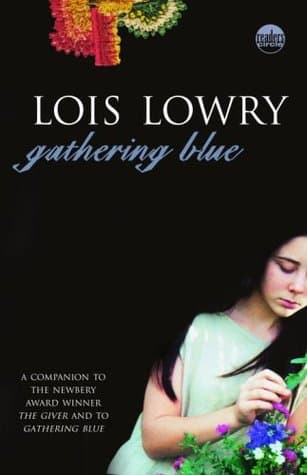
Lois Lowry (2000)
Genre
Fantasy / Children's / Science Fiction / Young Adult
Reading Time
240 min
Key Themes
See below
Sign in to track this book
An orphan with a talent for weaving uncovers her society's dark truths, forcing her to choose between complacency and a dangerous quest for change.
In a post-apocalyptic village, Kira, a young girl with a disabled leg, becomes an orphan after her mother, Katrina, dies. Village laws say the weak or family-less are cast out to die. Kira is immediately targeted by Vandara, an elder woman with a scarred face, who demands Kira's banishment and claims her land. Despite Kira's pleas, villagers, fearing Vandara and following tradition, seem ready to condemn her. Kira's only hope rests with the Council of Guardians, who are called to decide her fate.
Kira is brought before the Council of Guardians, powerful men who govern the village, including the Chief Guardian, Jamison. Instead of banishing her, Jamison, who defends her, reveals Kira's rare talent: she is an exceptional embroiderer and weaver, a skill inherited from her mother. The Council decides Kira will live in the grand Council Edifice. Her task is to repair and complete the Robe of the Ruin, a ceremonial garment that chronicles their civilization's history. This sudden reprieve leaves Kira both relieved and suspicious of the Council's motives.
Kira moves into the opulent but isolated Council Edifice, a contrast to her former life. She gets her own spacious room with a private bathing facility. There, she meets Matt, a boisterous young boy from the Fen, the village's impoverished outskirts, who becomes her loyal friend. She also meets Thomas, a quiet boy her age who lives in the Edifice and is a gifted woodcarver, tasked with repairing the Singer's staff. Kira, Thomas, and Matt form a bond, sharing secrets and observations about their unusual circumstances.
Kira is introduced to the Robe of the Ruin, a large, old garment depicting humanity's history, from its glorious past to its current state. Her mother, Katrina, was the previous keeper and repairer of the robe, and Kira is now expected to continue this duty. Jamison provides her with many colored threads, some with a vibrant quality. As Kira begins to work, she realizes that much of the robe's historical narrative, especially the future section, is unfinished or intentionally left blank, suggesting a controlled version of their history.
As Kira and Thomas work, they notice unsettling patterns. Thomas reveals his parents, also artists, died mysteriously, like Kira's mother. They discover the Council provides specific, often muted, dyes and threads, limiting their artistic expression. Through Matt's eavesdropping and their observations, they realize the Council keeps them isolated and manipulates them, ensuring they depict only the approved version of history and future. The children suspect their talents are used to maintain the Council's power and control over the villagers' understanding of their world.
The annual Gathering arrives, a ceremony where the Singer, a revered but shackled man, performs humanity's entire history, guided by the Robe of the Ruin and his staff. Kira, Thomas, and Matt attend, observing the villagers' reactions. During the performance, Kira notices inconsistencies between the Singer's chant and the robe's images. She sees the Singer's scarred, shackled ankles and realizes he is a prisoner. The performance reinforces the Council's narrative, portraying the past as a series of destructions and the present as a fragile recovery, with the future left blank.
After the Gathering, Kira and Thomas discuss their suspicions. Matt, having ventured into the forbidden forest, returns with a revelation: he found a man with Kira's distinctive limp, living in a hidden community beyond the village. This man, he claims, is Kira's father, believed killed by beasts years ago. Jamison, anticipating Kira's departure, tries to dissuade her, revealing his true, sinister nature. He confesses he attacked Kira's father, leaving him for dead, and implies he may have been involved in the deaths of other gifted artisans, including Kira's mother.
Kira's father, Christopher, confirms Matt's story and reveals Jamison attacked him but he survived, nursed back to health by the community of healers in the forest. He explains the Council isolates and exploits gifted individuals to control the village's narrative and future. Christopher offers Kira a choice: come with him to the safe community of healers where she can live free and develop her art, or remain in the village and try to influence the Robe of the Ruin, hoping to guide her people towards a better future. Thomas, though saddened, encourages her to decide for herself.
Despite the danger, Kira decides to stay in the village. She believes that by remaining, she can use her art to alter the future depicted on the Robe of the Ruin, introducing hope and truth into the rigid historical narrative controlled by the Council. She entrusts Matt with a gift for her father and promises to send messages. Kira understands the risks but feels a responsibility to her people and to the potential for change. She chooses to be a silent beacon of hope, using her talent to weave a new, more truthful future for generations to come, armed with knowledge of the outside world.
With newfound clarity, Kira returns to her work on the Robe of the Ruin. She understands her task is not merely to repair, but to reinterpret and reshape the future depicted on the fabric. She incorporates colors and images that represent hope, community, and the potential for a world beyond the Council's control, drawing inspiration from the stories of the community of healers. She knows her work will be slow and subtle, but she is determined to plant seeds of truth and possibility within the fabric of their history, hoping that future generations will recognize her true message.
The Protagonist
Kira transforms from a vulnerable orphan fearing banishment to a courageous artist who chooses to subtly challenge an oppressive system with her art.
The Antagonist
Jamison's true, malevolent nature is gradually exposed, revealing him as the primary enforcer of the Council's oppressive system.
The Supporting
Matt grows in maturity and loyalty, becoming an invaluable ally and messenger for Kira.
The Supporting
Thomas, initially resigned to his fate, finds a sense of solidarity and purpose through his friendship with Kira.
The Supporting
Vandara remains a static symbol of the village's brutality and adherence to harsh traditions.
The Supporting
The Singer's presence serves as a static symbol of the Council's control over art and history.
The Supporting
Christopher's miraculous reappearance provides Kira with a vital connection to her past and a vision for her future.
The Mentioned
Her legacy and mysterious death drive Kira's initial struggle and her quest for truth.
Art in 'Gathering Blue' is not merely decorative; it is a tool for recording history, shaping perception, and influencing the future. Kira's weaving, Thomas's carving, and the Singer's chant are all forms of art used by the Council to control their society's narrative. Kira discovers that art also holds the potential for rebellion and truth, as she plans to weave a new, hopeful future into the Robe of the Ruin, contrasting the Council's bleak, controlled version. This theme emphasizes art's dual nature as both a weapon of control and a beacon of hope and freedom.
“She would make a future. She would make the world that should be, and not the one that was.”
The novel explores how those in power manipulate information and history to maintain control. The Council of Guardians hides the healing community, controls the narratives presented by the Singer and the Robe of the Ruin, and exploits artists to create a version of reality that suits their agenda. Kira's journey peels back these layers of deception, from the lie of her father's death to the realization that the Singer is a prisoner. The story highlights the importance of seeking truth and questioning authority.
“They don't want the people to know what is possible. They want them to believe that this is the best they can do. And they want them to believe that the future is already woven.”
Kira experiences both extreme isolation and the formation of new communities. Initially, she is an outcast, facing banishment. When brought to the Edifice, she is physically isolated from the village but finds belonging with Thomas and Matt. The novel contrasts the harsh, self-serving community of the village with the compassionate, supportive community of healers her father lives in. This theme questions what makes a 'community' and explores the human need for connection versus the dangers of forced isolation, emphasizing the power of chosen bonds over societal decrees.
“She had found friendship, and that was a solace. It was a comfort in the loneliness of the Edifice.”
The society in 'Gathering Blue' presents itself as a rebuilding civilization after a series of 'Ruins,' but its foundation is built on savagery, exploitation, and the discarding of the weak. The Council uses art to depict a controlled, cyclical history of destruction and limited regrowth, implying that true progress is impossible. Kira's discovery of the healing community, with its emphasis on compassion, knowledge, and genuine care, offers an alternative vision of civilization. The theme challenges readers to consider whether technological advancement or moral development truly signifies progress, and how a society's values dictate its future.
“This place, the village, it is not the only place. There are others. There is another kind of life.”
A ceremonial garment that chronicles the history of humanity.
The Robe of the Ruin is a massive, intricately embroidered fabric that serves as the visual history of the world, from its glorious past through multiple destructions to the present. It is the central artistic piece Kira is tasked with repairing and completing. This device is crucial because it represents the Council's control over historical narrative and future prophecy. By controlling what is depicted on the robe, they control the villagers' understanding of their past and their expectations for the future, making Kira's ability to subtly alter it a powerful form of resistance.
A physical disability that marks Kira as an outcast but ultimately saves her.
Kira's physical disability, a twisted leg, is initially presented as a severe disadvantage, marking her for banishment in a society that discards the weak. However, it ironically becomes the reason she is spared, as her inability to perform manual labor makes her more suited for the sedentary work of weaving. This serves as a powerful symbol of how perceived weaknesses can become strengths, and how a society's definition of 'valuable' is often arbitrary and cruel. It also connects her to her father, who also has a distinctive limp due to Jamison's attack.
A grand, isolated building that houses the Council and the artists.
The Council Edifice is a large, imposing building that stands apart from the rest of the village. It is a place of luxury compared to the villagers' homes, but it is also a place of isolation and surveillance for Kira and Thomas. It functions as a gilded cage, providing comfort while subtly controlling its inhabitants and their access to information. The contrast between its opulence and the hidden truths within highlights the deceptive nature of the Council's power and the isolation of the exploited artists.
The impoverished, unruly outskirts of the village.
The Fen is the rough, impoverished district outside the main village where Matt and his family live. It represents the lowest social stratum of the society, characterized by squalor, hunger, and a lack of formal education. Despite its harshness, the Fen produces resilient and resourceful individuals like Matt. It serves as a contrast to the relative order and comfort of the village and the Edifice, highlighting the extreme social inequalities and providing a source of uncensored information and loyalty through Matt.
“You have the power to create beauty, and to bring it into the world. You have the power to make things right.”
— Kira reflects on her gift and responsibility as a weaver.
“It was what they did. They took the talented ones and put them to use.”
— Kira realizes the true purpose behind her being brought to the Council of Guardians.
“The future was not a place to be feared. It was a place to be built.”
— Kira's shift in perspective about her role and the potential for change.
“They were afraid of the truth, so they made up lies.”
— Kira's understanding of why the Guardians manipulate information.
“You are like the thread that holds the tapestry together.”
— Matt's simple but profound description of Kira's importance.
“The Ruin Song was a history, a memory, and a prophecy.”
— Kira's realization about the multifaceted nature of the tapestry and the song.
“What if the world was meant to be beautiful?”
— Kira's internal question challenging the bleak reality of her village.
“It was easy to be brave when you had nothing to lose.”
— Kira's thoughts on her own courage after losing her mother and home.
“The gift was not the ability to weave, but the ability to see.”
— Kira's deeper understanding of her unique talent.
“He had a kind face, but his eyes were cold.”
— Kira's initial impression of Jamison, foreshadowing his true nature.
“She was learning that there was more than one way to mend.”
— Kira's broadening understanding of healing beyond physical repair.
“Colors. They were everywhere.”
— Kira's initial wonder at the vibrant dyes and threads, a stark contrast to her monochrome village.
“The past was not something to be forgotten, but something to be understood.”
— Kira's perspective on the importance of history, particularly the Ruin Song.
“The world was full of secrets, and some of them were dangerous.”
— Kira's growing awareness of the hidden truths within her society.
Ready to see how well you understood this book? Take our interactive quiz with 10 questions.
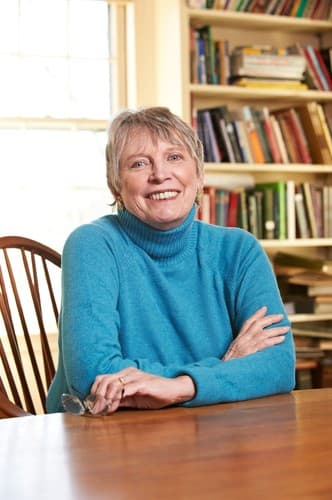
Biography coming soon.







