“She knew then that there was no such thing as a fair fight, and that the only way to win was to cheat.”
— Claire's realization about life's challenges.

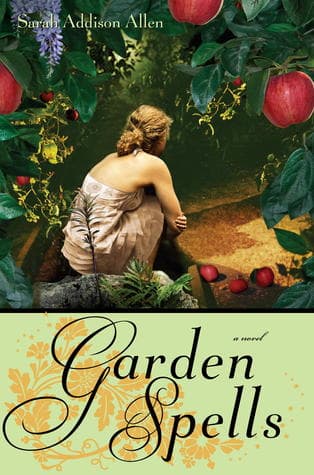
Sarah Addison Allen (2007)
Genre
Fantasy / Romance
Reading Time
6-8 hours
Key Themes
See below
Sign in to track this book
In a town where an enchanted apple tree dictates destiny and edible magic stirs the soul, two estranged sisters must reconcile their past to embrace a future where love blooms as unexpectedly as the mystical garden they inherit.
Claire Waverley, a meticulous caterer, lives alone in her ancestral Queen Anne house in Bascom, North Carolina. She tends the magical garden, a family inheritance, where an apple tree and various herbs have unique properties. Claire uses these ingredients to create dishes that subtly influence her clients' emotions and destinies, maintaining a controlled life. She finds solace in routine and her grandmother's legacy, while quietly regretting her mother's past and the decade-long absence of her rebellious sister, Sydney. Claire's life is one of order, a contrast to the magic she wields.
Sydney Waverley, Claire's younger sister, unexpectedly returns to Bascom after ten years, bringing her young daughter, Bay. Sydney runs from an abusive ex-boyfriend and seeks refuge in her childhood home. Her arrival shatters Claire's peace. Bay, a quiet child, is instantly drawn to the magical garden, sensing its power. Sydney's presence forces Claire to confront old resentments and unresolved issues from their past, while also introducing a new dynamic to the solitary Waverley household.
With Sydney and Bay in the house, the garden's magic intensifies, affecting Claire in unexpected ways. The apple tree begins to bear fruit that reflects the emotional state of those around it. Claire experiences emotions she had long suppressed, triggered by the garden's heightened activity and Sydney's presence. As the sisters navigate their shared space, old wounds surface, but so does a tentative understanding. They begin to confide in each other, slowly mending their fractured bond. Bay’s innocent curiosity about the garden also acts as a bridge.
Claire meets Tyler Hughes, a charming clockmaker who moves into the house next door. Tyler, with his calm demeanor and appreciation for the unique, is drawn to Claire. His presence, combined with the garden's influence, further disrupts Claire's control over her emotions. She experiences feelings of attraction and vulnerability she had long denied. Their interactions are hesitant at first, but Tyler's genuine interest and understanding begin to chip away at Claire's emotional walls, making her question her solitary existence and opening her to the possibility of love.
Sydney, determined to build a stable life for Bay, takes a job at a local salon. She also reconnects with David, a kind and steady man from her past who has always cared for her. Their rekindled romance offers Sydney a sense of hope and stability she hasn't felt in years. However, her abusive ex-boyfriend, who has been tracking her, remains a threat. Sydney grapples with the fear of him finding them, a fear that overshadows her newfound happiness and her relationship with David. The past is not easily left behind, even in Bascom.
The Waverley sisters are often visited by their elderly, eccentric cousin, Evanelle, who has her own magical gift: she gives people things they will need in the future, often without understanding why. Her seemingly random gifts and cryptic pronouncements often provide crucial, though initially baffling, guidance to Claire and Sydney. Evanelle's presence reinforces the magical undercurrents of their lives and subtly steers them toward understanding their own powers and navigating their challenges, even when her advice seems nonsensical at first. Her wisdom is part of the Waverley legacy.
Bay, with her innate sensitivity, develops a strong bond with the magical garden. She discovers her own surprising gifts, particularly her ability to communicate with the plants and influence their growth. The garden responds to her presence, and she finds comfort and understanding within its embrace. Bay's developing powers and her innocent acceptance of the magic help Claire and Sydney to further embrace their own heritage and the unique nature of their family. She is a symbol of hope and the continuation of the Waverley legacy.
As the sisters grow closer, they begin to unravel the mysteries surrounding their mother's troubled past and her connection to the garden. They realize that their mother, like them, was deeply affected by the garden's magic, but perhaps struggled to control it. This understanding helps them to forgive their mother and to see their own gifts in a new light. The garden reveals more of its secrets, deepening their connection to their heritage and empowering them to embrace their unique identities and the responsibilities that come with their magic.
Sydney's abusive ex-boyfriend finally tracks her down in Bascom, creating a dangerous and tense situation. He confronts Sydney, threatening her and Bay. This event forces Claire and Sydney to fully unite, drawing upon their magical abilities and their newfound strength as sisters. The garden itself responds to the crisis, offering subtle aid. The confrontation is a moment where the Waverley women must protect themselves and each other, demonstrating the power of their bond and their magic when faced with external threats. It is a test of their resilience and courage.
Through their combined strength and the subtle magic of the garden, Sydney and Claire successfully fend off the threat posed by Sydney's ex-boyfriend. With this danger averted, the sisters can finally move forward. Sydney embraces her relationship with David and builds a stable life for Bay. Claire fully opens herself to Tyler, finding love and companionship she never thought possible. The Waverley women, including Bay, fully embrace their magical heritage, finding joy and purpose in their unique gifts and their family bonds. They find peace and happiness within the comforts of Bascom and the magical garden.
The Protagonist
Claire learns to relinquish control, embrace her own emotions, and open herself to love and vulnerability, moving beyond her carefully constructed life.
The Protagonist/Supporting
Sydney finds stability, healing from past trauma, and embraces her family and a new future, learning to trust and accept love.
The Supporting
Bay finds a stable, loving home and discovers her own innate magical gifts, becoming a conduit for the garden's power.
The Supporting
Tyler helps Claire open up to love and vulnerability, becoming her partner and a supportive presence in her magical world.
The Supporting
Evanelle consistently provides crucial, though often mysterious, guidance, serving as a magical anchor and catalyst for the sisters' growth.
The Supporting
David offers Sydney a stable and loving relationship, helping her to heal and build a secure future.
The Mentioned
Her past struggles and eventual understanding by her daughters allow for their own healing and acceptance of their legacy.
The Mentioned
Her legacy and teachings guide Claire, allowing her to eventually reconcile with her sister and embrace her full potential.
The novel centers on the estranged relationship between Claire and Sydney and their journey to reconciliation. Their initial distance, fueled by past resentments and differing life choices, slowly dissolves as they share the challenges of Sydney's return and the renewed activity of the magical garden. Sisterhood is a powerful force, enabling them to heal old wounds, protect each other, and embrace their shared magical heritage. This theme is evident in their joint effort to protect Bay and in their mutual support in confronting Sydney's ex-boyfriend.
“The magic was always there, waiting for them to remember how to use it together.”
Both Claire and Sydney initially resist or control aspects of their magical heritage. Claire meticulously measures the garden's influence, creating a predictable life, while Sydney ran from it entirely. As the story progresses, the heightened magic of the garden forces them to confront their true selves and fully embrace their unique gifts. This is particularly evident in Claire learning to feel emotions openly and Sydney accepting her roots. Bay, with her innate connection, symbolizes the uninhibited acceptance of their magical nature, guiding her elders to do the same.
“Sometimes the only way to get a thing done is to take a leap of faith, whether you're ready or not.”
The Waverley garden is not merely a setting but a living, sentient entity that mirrors and influences the family's emotions. The apple tree, in particular, bears fruit that reflects the emotional state of those nearby, and the herbs affect moods and fates. This deep connection highlights how external environments can impact internal states. As the sisters' emotional lives become more vibrant and tumultuous, the garden's magic intensifies, showing a symbiotic relationship between the natural world and human experience. The garden acts as a barometer and a catalyst for change.
“The garden, like a temperamental child, responded to their moods.”
The novel explores healing from past traumas and the importance of forgiveness, both of others and of oneself. Sydney must heal from the wounds of her abusive relationship and forgive herself for leaving Bascom. Claire must come to terms with her mother's past and forgive Sydney for her decade-long absence. Through their reconnection and understanding of their family history, they find a path to emotional restoration. Tending the garden itself becomes a metaphor for nurturing healing and growth.
“Some things, like magic, are meant to be shared, not hoarded.”
A sentient garden whose plants and fruits influence emotions and destinies.
The Waverley garden is the central magical element, acting as a character in itself. Its plants possess specific properties: lilac for humility, rose geranium for memories, and the apple tree reflecting the emotional state of its surroundings. The garden is both a source of the family's power and a barometer of their emotional lives. Its heightened activity upon Sydney's return directly influences the plot, forcing the sisters to confront their magic and emotions. It also serves as a sanctuary and a place of discovery for Bay.
Evanelle's compulsion to give people objects they will need in the future.
Evanelle's unique magical ability to foresee future needs and provide seemingly random objects serves as a form of subtle foreshadowing and divine intervention. Her gifts, often initially perplexing to the recipients, always prove to be crucial for resolving a conflict or offering guidance at a critical moment. This device adds an element of whimsical mystery and reinforces the pervasive, often unpredictable, nature of magic in the Waverley world, gently nudging the plot forward.
A central tree in the garden that bears fruit reflecting the emotions of those nearby.
The apple tree is a specific, potent element within the magical garden. Its ability to produce apples that embody the current emotional state of the Waverleys (e.g., apples of regret, joy, or anger) serves as a powerful symbol and a direct catalyst for emotional revelation. It forces the characters, particularly Claire, to acknowledge and confront feelings they might otherwise suppress, thereby driving their personal growth and the development of their relationships. It is a tangible manifestation of the story's theme of emotional interconnectedness.
“She knew then that there was no such thing as a fair fight, and that the only way to win was to cheat.”
— Claire's realization about life's challenges.
“Love was a country, and you couldn't leave it once you were in.”
— Sydney's reflection on the nature of love.
“The world was full of magic, if you only knew where to look.”
— A general theme about the hidden magic in everyday life.
“Some secrets were meant to stay buried, like seeds in the dark earth, waiting for the right moment to sprout.”
— The idea of secrets and their eventual revelation.
“Food was her language, her way of showing love, her way of understanding the world.”
— Claire's deep connection to cooking and its meaning.
“Every garden had its secrets, just as every heart had its thorns.”
— A metaphor connecting gardens to human emotions.
“Sometimes the most ordinary things could be the most extraordinary.”
— Emphasizing the wonder in the mundane.
“She wondered if magic was just believing in something so hard it came true.”
— Claire's musing on the nature of magic and belief.
“The past was a stubborn weed, always finding a way to push through the cracks.”
— Reflecting on how past events resurface.
“There was a certain magic in starting over, a clean slate, a blank page.”
— Embracing new beginnings and their potential.
“Happiness was not a destination, but a way of traveling.”
— Sydney's philosophical view on happiness.
“The best stories were the ones that lived inside you, whispering their truths when you least expected it.”
— The power of internal narratives and intuition.
“Sometimes all you needed was a little bit of magic to remind you that life was still full of possibilities.”
— The role of magic in inspiring hope.
“She knew that some things, once broken, could never be fully mended, but they could be loved anyway.”
— Acceptance of imperfection and continued affection.
Ready to see how well you understood this book? Take our interactive quiz with 10 questions.







