“Sometimes the most boring people turn out to be the most interesting.”
— Ben's realization about his grandmother after discovering her secret past.

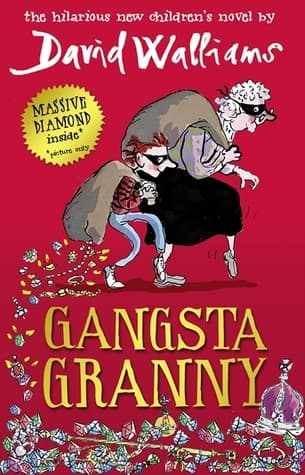
David Walliams (2011)
Genre
Children's / Young Adult
Reading Time
240 min
Key Themes
See below
Sign in to track this book
A bored boy discovers his cabbage-soup-loving grandma is secretly a notorious jewel thief who needs his help to pull off the biggest heist of her life: stealing the Crown Jewels.
Every Friday night, eleven-year-old Ben hates being dropped off at his Granny’s house while his parents watch 'Strictly Stars Dancing'. Ben finds his Granny boring; she smells of cabbage, plays Scrabble, and serves only cabbage soup. He dreams of becoming a plumber and reads plumbing magazines, fantasizing about escape. His parents, obsessed with ballroom dancing and their social image, do not notice Ben's misery or Granny's loneliness. Ben wishes he had different, more exciting grandparents, thinking his Granny has nothing interesting about her life.
One Friday night, while looking for something to eat besides cabbage soup, Ben finds an old biscuit tin hidden among Granny's things. Curious, he opens it. It holds not biscuits, but a collection of sparkling jewels: necklaces, rings, and tiaras, all gleaming. Ben is shocked, realizing his Granny might not be as dull as he thought. He confronts her, and she tries to say it is 'costume jewelry,' but Ben knows better. This discovery makes Ben question everything he thought he knew about his grandmother.
After Ben's questions about the jewels, Granny confesses her secret past. She reveals she was once 'The Black Cat,' a notorious international jewel thief known for daring heists across Europe. She tells thrilling stories of her escapades, using agility and cunning to outwit guards and bypass security. Ben is captivated. His view of his 'boring' Granny shatters. He sees her in a new way – not a dull old woman, but an adventurous figure, and his respect for her grows.
Granny, encouraged by Ben's enthusiasm and trust, tells him her ultimate ambition: to steal the Crown Jewels from the Tower of London. She explains this has been her dream for decades, 'the one that got away.' She shows Ben a detailed, if slightly outdated, plan, with blueprints and escape routes. Ben is hesitant, overwhelmed, but the thrill of adventure and wanting to spend time with his Granny soon win him over. He agrees to be her accomplice, and they begin to refine the plan.
Ben and Granny start preparing for the heist. Granny, despite her age, shows surprising agility and knowledge of stealth. They practice navigating obstacles in her garden, using a homemade grappling hook, and devising codes. Ben, at first clumsy, improves his agility and problem-solving, becoming the apprentice. Their training sessions are full of laughter, strengthening their relationship. Ben's dread of Friday nights changes to eager anticipation. They even plan a diversion using Ben's parents' dancing obsession.
The heist night arrives. Ben and Granny, disguised as an elderly couple on a late-night stroll, head to the Tower of London. They use a distraction involving Ben's parents' dancing competition on a portable TV to draw away a security guard. Granny, with agility, scales a wall, while Ben, using his smaller size, navigates ventilation shafts. They encounter laser grids and pressure-sensitive floors, bypassing them with practiced moves and quick thinking. The tension is high, but their teamwork and Granny's experience keep them focused.
Ben and Granny successfully navigate the Tower's security, reaching the chamber with the Crown Jewels. The dazzling jewels, especially the Imperial State Crown and the Sovereign's Sceptre, impress them. They face the final challenge: a thick glass display case. Granny, with Ben's help, uses a hidden diamond-tipped glass cutter and begins to score the glass. The pressure is immense; they know they have a short window before alarms or guards discover them. Their lifelong dream is within reach.
Just as Granny is about to finish the cut, she pauses. She looks at Ben, then at the jewels, and has a realization. She tells Ben the true treasure is not the jewels, but the adventure they shared and their time together. Stealing them would only bring a fleeting thrill, but their bond is lasting. Ben, surprised, understands and agrees. They decide to leave the Crown Jewels untouched, having achieved something more valuable: a shared, unforgettable experience and a deeper connection.
Their mission accomplished in a new way, Ben and Granny escape the Tower of London, retracing their steps. They slip away undetected, leaving behind a bewildered security team who later find the scored but intact display case. Authorities are baffled, unable to understand how anyone got so far without taking anything. Ben and Granny return to her house, exhausted but thrilled, sharing a quiet moment of triumph. Their secret adventure strengthens their bond, becoming a cherished memory.
Soon after their adventure, Granny's health declines quickly. Ben, now spending every moment with her, sees her not as a boring old woman, but as his incredible, adventurous 'Gangsta Granny.' He reads to her, plays Scrabble without complaint, and cherishes every conversation, knowing their time is limited. His parents, still self-absorbed, notice Ben's change but do not understand his deep connection with Granny. Ben helps her write her life story, ensuring her legacy as 'The Black Cat' and their shared adventure will not be forgotten.
Granny passes away peacefully. Ben is heartbroken but grateful for their extraordinary bond. At her funeral, he gives a heartfelt eulogy, hinting at her adventurous past without telling his oblivious parents her secret identity. He feels a deep loss but also appreciation for the unique, exciting grandmother he knew. The experience changed Ben, teaching him to look beyond appearances and to value people for who they truly are, not just what they seem.
Ben's life continues, but he is changed. He still enjoys plumbing magazines but now carries the adventurous spirit and wisdom his Granny gave him. He looks at older people with new curiosity and respect, understanding that everyone has a story. He keeps Granny's secret close, a shared adventure no one else will ever know. Ben often thinks of his 'Gangsta Granny,' cherishing memories of their daring plan and the lesson that the greatest treasures are not material possessions, but the love, laughter, and shared experiences with loved ones.
The Protagonist
Ben transforms from a bored, dismissive grandson into an adventurous, loving, and understanding boy who cherishes his grandmother and learns to look beyond superficial appearances.
The Protagonist/Supporting
Granny, initially lonely and feeling overlooked, finds renewed purpose and joy in sharing her true self and her final adventure with Ben, ultimately valuing their bond over material gain.
The Supporting
Linda remains largely unchanged throughout the story, serving as a foil to Ben's developing empathy and understanding.
The Supporting
Mike remains largely unchanged, serving as a comedic and somewhat tragic figure who follows his wife's lead.
The Supporting
Raj remains a consistent, friendly, and humorous presence in the story, offering lighthearted interactions.
The Mentioned
Not applicable, as he is a minor, off-screen character representing a societal phenomenon.
The Mentioned
Not applicable, as she is a symbolic figure rather than an active character.
The main theme is that people are often more complex than they seem. Ben first sees his Granny as boring, then discovers her past as 'The Black Cat.' This challenges his assumptions and teaches him to look beyond appearances. The difference between Granny's 'cabbage-smelling' exterior and her adventurous inner life shows how much we can miss by judging others superficially. This theme also applies to Ben's parents, whose obsession with ballroom dancing hides an emptiness in their lives.
““There are two things Ben doesn’t know about his grandma. 1) She was once an international jewel thief. 2) All her life, she has been plotting to steal the Crown Jewels, and now she needs Ben’s help…””
The book shows the importance of the bond between grandparents and grandchildren. Ben's relationship with his Granny changes from dread to deep love, respect, and shared adventure. Through their time together, Ben learns about his Granny's past and helps her fulfill a dream, while Granny finds companionship and joy in her final years. This theme contrasts with Ben's parents' neglect of both Ben and Granny, emphasizing that real connection and shared experiences are more valuable than superficial pursuits or material wealth.
““The greatest treasure wasn’t in the Tower of London. It was sitting next to him.””
The story offers a sense of adventure as Ben and Granny plan and execute their plan to steal the Crown Jewels. For Ben, it is an escape from his mundane Friday nights and his parents' routines. For Granny, it is the culmination of a lifelong dream and a chance to relive her past. The descriptions of their training and the heist provide excitement, letting both characters and readers experience a fantasy journey that breaks everyday monotony.
““This was going to be the biggest heist of all time! Ben couldn’t wait!””
As Granny's health declines, love and loss become important. Ben's growing affection for his Granny makes her eventual death poignant. The book handles death with sensitivity, focusing on Granny's lasting impact on Ben's life. Her stories and their adventure become her legacy, passed to Ben, who carries her spirit of adventure and her lesson about valuing people. This theme shows that while life ends, the love and memories shared with loved ones can live on.
““It didn’t matter that Granny was gone. She lived on in his heart.””
The book subtly critiques the superficial values of Ben's parents, who are obsessed with ballroom dancing, social status, and appearances. Their neglect of Ben's emotional needs and their dismissive attitude towards Granny highlight the emptiness that can come from prioritizing shallow pursuits over genuine human connection. In contrast, Granny's decision not to steal the jewels, realizing the true value is in her relationship with Ben, directly challenges a materialistic worldview.
““Ben’s mum and dad only cared about one thing. Ballroom dancing.””
A seemingly ordinary object that hides a shocking secret and acts as a catalyst for discovery.
The old biscuit tin, initially dismissed by Ben, serves as a classic plot device for revealing a hidden secret. Its mundane exterior conceals Granny's dazzling collection of stolen jewels, symbolizing the hidden depths of her character. The discovery of the tin acts as the inciting incident, shattering Ben's preconceived notions about his grandmother and propelling the narrative into its adventurous phase. It represents the idea that extraordinary things can be found in the most unexpected places.
The ultimate symbolic prize that drives the central conflict and represents a lifelong ambition.
The Crown Jewels are not merely a target for a heist; they are a powerful symbol. For Granny, they represent the ultimate challenge, the 'one that got away,' and the pinnacle of her career as 'The Black Cat.' For Ben, they symbolize the grand adventure he embarks on with his Granny. Ultimately, their decision to leave the jewels untouched transforms their symbolic meaning from material wealth to the priceless value of their shared experience and bond, highlighting the story's core message.
Granny's recounted tales of past heists, providing backstory and character development.
After confessing her past, Granny shares vivid stories of her previous jewel heists. These serve as mini-flashbacks, immersing Ben (and the reader) in her adventurous life as 'The Black Cat.' These narratives not only provide crucial backstory for Granny's character but also build her credibility as a formidable thief, making her ambition to steal the Crown Jewels believable. They also serve to entertain Ben, drawing him closer to her and transforming his perception of her.
Used to create comedic effect, highlight character flaws, and make serious topics accessible.
David Walliams employs humour and exaggeration extensively, particularly in the descriptions of Ben's parents' obsession with ballroom dancing, Granny's 'cabbage' smell, and the absurdities of their heist training. This comedic tone makes the story engaging for young readers and allows for the exploration of deeper themes, such as loneliness and loss, without becoming overly somber. The exaggeration of characters' traits serves to highlight their flaws and quirks, making them memorable and often providing a lighthearted contrast to the adventurous plot.
The initial portrayal of Granny as a stereotypical 'boring' elder, which is then dramatically upended.
The narrative deliberately sets up Granny as the epitome of a 'boring' grandmother – she smells of cabbage, loves Scrabble, and serves dreadful soup. This initial portrayal establishes Ben's negative perception and the reader's low expectations. The dramatic reveal of her secret identity as 'The Black Cat' then completely subverts this trope. This device effectively highlights the theme of hidden depths and encourages readers not to judge people based on superficial appearances, making the subsequent adventure all the more surprising and impactful.
“Sometimes the most boring people turn out to be the most interesting.”
— Ben's realization about his grandmother after discovering her secret past.
“It's never too late to have an adventure.”
— Granny encouraging Ben to embrace excitement in life.
“Just because you're old doesn't mean you have to be boring.”
— Granny explaining her philosophy to Ben.
“The Crown Jewels are just shiny things. What matters is what's in your heart.”
— Granny reflecting on her criminal past and true values.
“Being a gangsta is all about style.”
— Granny describing her approach to thievery.
“Parents don't always know what's best for you.”
— Ben's thoughts on his parents' obsession with ballroom dancing.
“A good plan is like a recipe. You need all the right ingredients.”
— Granny planning the heist with Ben.
“The world is full of surprises if you just look for them.”
— Ben learning to see beyond surface appearances.
“Old age is just a number, not a sentence.”
— Granny defying expectations about elderly people.
“Sometimes breaking the rules is the only way to find yourself.”
— Ben reflecting on his journey with Granny.
“Cabbage is the food of champions.”
— Granny's humorous insistence on her favorite food.
“Real treasure isn't gold or jewels. It's the memories you make.”
— Ben and Granny bonding over their adventures.
“You don't need to be a hero to do something heroic.”
— Ben realizing the impact of his actions with Granny.
“Life is too short to eat boring food.”
— Granny's playful take on enjoying life.
Ready to see how well you understood this book? Take our interactive quiz with 10 questions.

David Walliams is a celebrated British author, comedian, and television personality, best known for his hugely popular children's books. His works, including "Gangsta Granny," "Mr Stink," and "The World's Worst Teachers," are characterized by humor, heart, and often a touch of the absurd. Walliams's distinctive storytelling has made him a household name in children's literature.

Dan Gemeinhart
4.5

Kate O'Hearn
4.4

Jeanne Birdsall
4.4

Jen Wang
4.4

Wendelin Van Draanen
4.3

John Marsden
4.3

Chris Van Allsburg
4.3
Jennifer A. Nielsen
4.2