“I was a good kid. I was. And then I met him.”
— Prologuewhere the narrator reflects on his past.

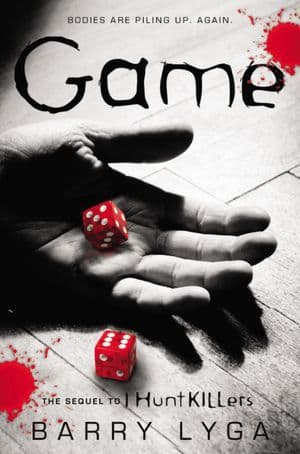
Barry Lyga (2013)
Genre
Thriller / Mystery / Young Adult
Reading Time
520 min
Key Themes
See below
Sign in to track this book
Haunted by his serial killer father's legacy, Jazz travels to New York City to confront a new murderer, playing a deadly game of cat and mouse where every move could prove he's more like his dad than he dares to admit.
The story begins with a gruesome discovery in New York City: a victim, brutally murdered and posed with a fedora and a hot dog, leading to the killer being called the "Hat-Dog Killer." Detective G. William "Gibbs" G. of the NYPD, overwhelmed by the killer's cleverness and the rising body count, recognizes the pattern of a true psychopath. Desperate for a lead, Gibbs contacts Sheriff G. William "Bill" G. of Lobo's Nod, a small town known for its past encounters with serial killers. Gibbs asks for help from Jazz Dent, the son of the notorious serial killer Billy Dent, believing Jazz's unique understanding of the criminal mind could be very useful. Jazz, at first hesitant to leave Lobo's Nod and his girlfriend, Connie, ultimately feels he must go to prove he's different from his father.
Jazz and Connie travel to New York City, where Detective Gibbs meets them. Jazz is immediately struck by the city's energy and how different it is from his quiet life in Lobo's Nod. Gibbs introduces them to the task force, where Jazz's reputation as Billy Dent's son precedes him, causing a mix of awe and apprehension among the officers. Jazz, despite his discomfort, quickly gets involved in the case files, looking at crime scene photos and victim profiles. Connie, while supportive, struggles with the intensity of the investigation and the constant reminder of Jazz's dark family history. Their initial look into the investigation shows the Hat-Dog Killer's careful planning and disturbing psychological games, leaving the NYPD puzzled.
Jazz starts using his unique perspective, shaped by his father's twisted lessons, on the Hat-Dog Killer's methods. He notices small details in the crime scenes and victim types that the police missed, suggesting the killer is playing a specific, personal game. The killer's taunting messages, left at the scenes, seem to be aimed not just at the police, but at someone specific, perhaps even Jazz himself. As Jazz goes deeper, he feels an unsettling connection to the killer's way of thinking, a connection he both fears and relies on. Connie observes Jazz's increasing intensity, worried about how the investigation is affecting him and if he might go too far.
With the investigation stuck, Jazz makes the difficult decision to visit his father, Billy Dent, in the secure mental institution where he is held. Jazz hopes that Billy's unmatched understanding of serial killers might offer a key clue, despite his deep disgust. Billy, always manipulative, enjoys Jazz's situation, offering fragmented, unsettling advice that is more riddle than direct help. He hints at a bigger game, one that involves more than just the current victims. Jazz leaves the encounter disturbed but with a new, if vague, direction for the investigation, further cementing the dark link between his present and his past.
Following a cryptic hint from Billy and Jazz's own deductions, Jazz and Connie focus on the specific details of the victims' lives and the symbolism of the "hat-dog" motif. They discover that the victims, seemingly random, share a subtle connection to a particular institution or a specific historical event. This discovery leads them to a local museum and an obscure exhibit, where they uncover a pattern related to a series of historical assassinations and infamous figures. The Hat-Dog Killer, they realize, is not just killing; they are recreating historical killings, using their victims as stand-ins for historical figures, and the hot dog and fedora as grotesque, symbolic props.
As Jazz and the team put together the historical connections, they begin to profile a killer obsessed with history, power, and the idea of leaving a lasting mark. The clues point towards someone with access to specific historical knowledge and a careful, almost theatrical, approach to murder. Through careful analysis of the killer's taunts and the recreated crime scenes, Jazz identifies a potential suspect: an unassuming history professor named Dr. Jonathan Kincaid, who has a hidden past and deep resentment. Kincaid's academic background and his seemingly ordinary life make him an unexpected, yet terrifyingly possible, candidate for the Hat-Dog Killer.
Jazz, Connie, and Detective Gibbs track Dr. Kincaid to a remote, abandoned theater, which Kincaid has carefully transformed into a stage for his final, most elaborate recreation. Kincaid, revealed to be the Hat-Dog Killer, is a disturbed individual driven by a desire for historical notoriety. He has set up traps and psychological challenges, planning to capture and kill Jazz as the ultimate historical figure, the son of a serial killer. A tense cat-and-mouse game unfolds within the theater, with Kincaid taunting Jazz with details about his father and the nature of evil. Connie, using her quick thinking, manages to create a diversion, allowing Jazz to get closer to Kincaid.
Jazz confronts Kincaid, using his knowledge of his father's methods and Kincaid's own psychological weaknesses against him. Jazz understands Kincaid's need for recognition and his warped sense of historical importance. He manipulates Kincaid's ego, drawing him into a verbal battle that distracts from his physical threat. During their struggle, Jazz must use the darker parts of his own nature, the parts he inherited from Billy, to anticipate Kincaid's moves. Connie, meanwhile, alerts Gibbs to their exact location, and the police close in. The confrontation ends in a violent struggle, with Jazz narrowly subduing Kincaid, but not without getting hurt.
Dr. Kincaid is arrested, and the Hat-Dog Killer's reign of terror ends. Jazz, though physically wounded, is more deeply affected by the psychological toll of the case. He struggles with the unsettling realization of how easily he could understand Kincaid's twisted logic, reinforcing his constant fear of becoming like his father. Connie offers steady support, helping Jazz process the trauma and reminding him of his inherent goodness. Detective Gibbs expresses deep gratitude for Jazz's help, acknowledging his unique and important contribution. The experience leaves Jazz deeply changed, forcing him to confront who he is and his ongoing struggle against the darkness within him.
Jazz and Connie return to Lobo's Nod, seeking the comfort and familiarity of their small town. The experience in New York, however, has changed them both. Jazz is more thoughtful, constantly questioning his own motives and the line between good and evil. He is more aware of how widespread darkness is, both in the world and possibly within himself. Connie, while relieved to be home, is also more aware of the dangers that constantly surround Jazz because of his family history. Their relationship, tested by the intensity of the case, is strengthened by their shared ordeal, but also burdened by the unspoken understanding of the challenges ahead for Jazz.
The Protagonist
Jazz starts as a young man trying to outrun his past, but through the case, he begins to accept that his unique perspective, born from his dark heritage, can be a force for good, even if it comes at a personal cost.
The Supporting
Connie grows in resilience and understanding, deepening her commitment to Jazz despite the dark world he inhabits, while also learning to navigate her own fears.
The Supporting
Gibbs learns to trust and rely on unconventional methods, recognizing that some cases require a different kind of insight than traditional police work offers.
The Antagonist/Mentioned
Billy remains a static, evil force, serving as a constant reminder of Jazz's internal struggle and the source of his unique, dangerous insights.
The Antagonist
Kincaid's arc is one of escalating madness, as his ambition to achieve historical notoriety through murder leads to his ultimate downfall.
The Mentioned
Provides initial support and connection, but does not have a significant arc within this specific book's narrative.
This theme is central to Jazz's character, as he constantly fears he will become like his serial killer father, Billy Dent. His internal struggle shows in his reluctance to use his natural understanding of psychopaths, even though it's his best asset in solving crimes. The narrative explores whether Jazz's exposure to evil, through his father's 'education' and his own investigations, will corrupt him, or if his choices and relationships, especially with Connie, can define him differently. This is clear when Jazz has to use his darker insights to understand Dr. Kincaid, fearing he might cross a line.
““I am not my father. I am not my father. I am not my father.””
Jazz's life is entirely shaped by his father, Billy Dent. His identity is tied to being 'the son of a serial killer,' a label that brings both fear and fascination from others. This burden puts Jazz in a unique position where he is both an outsider and a valuable asset. He struggles with expectations, both the public's fear that he will follow his father's path and his own internal pressure to prove them wrong. The case in New York brings this burden to the forefront, as his presence is controversial, and the killer, Dr. Kincaid, seems to know about and even taunt Jazz about his notorious parentage.
““People always see the monster. They never see the boy trying to keep him locked away.””
The novel explores the appealing power of understanding evil, and the danger that comes with it. Jazz has an almost natural ability to understand the minds of serial killers, a skill sharpened by his father. While this insight is crucial for catching the Hat-Dog Killer, it also draws Jazz dangerously close to the abyss. He feels an unsettling connection to Kincaid's twisted logic, highlighting the thin line between understanding and giving in. Connie's concern for Jazz's mental health shows that long exposure to darkness can erode one's sense of self and morality, even when used for good.
““Sometimes, to catch a monster, you have to think like one. But sometimes, when you think like one long enough, you start to become one.””
Throughout the story, Jazz tries to define himself apart from his father's shadow. He actively makes choices that go against what Billy taught him, choosing to help the innocent rather than harm them. His relationship with Connie is a key part of his self-definition, as she represents the potential for a normal, loving life. The investigation into the Hat-Dog Killer forces Jazz to confront who he is at his core: is he just a product of his upbringing, or can he create his own identity based on his actions and values? The case's resolution, while a victory, leaves Jazz with lingering questions about his true self.
““My choices. That’s what defines me. Not my blood.””
Jazz's internal thoughts provide a window into his conflicted mind.
While the narrative is primarily third-person, Jazz's intense internal monologues and observations often color the reader's perception of events. His unique, often dark, perspective on human nature and crime, shaped by Billy Dent, creates a sense of unease and raises questions about his own stability. This device allows the reader to experience Jazz's constant battle against his inherited darkness, making his insights both valuable and unsettling. It also highlights his psychological vulnerability and the constant threat of him succumbing to his father's influence.
The twisted, adversarial relationship between Jazz and his serial killer father.
This device is a perversion of the traditional mentor/protégé relationship. Billy Dent, though imprisoned, serves as Jazz's unwilling and malevolent mentor, having 'trained' Jazz in the ways of serial killers. Jazz often recalls Billy's lessons and observations, which provide him with crucial insights into the Hat-Dog Killer's psyche. However, this mentorship is a source of deep trauma and fear for Jazz, as he constantly struggles against becoming like his teacher. The dynamic highlights the psychological scars Billy has left on Jazz and the constant internal battle he faces.
Misleading clues and suspects designed to divert the investigation.
Throughout the Hat-Dog Killer investigation, several clues and potential suspects are introduced that initially seem promising but ultimately lead to dead ends. These red herrings serve to complicate the investigation, test Jazz's deductive skills, and heighten the mystery. They force Jazz and the police to constantly re-evaluate their theories, demonstrating the killer's cunning and the difficulty of the case. For example, early theories about the Hat-Dog Killer's motive or background might point to a specific type of individual before the historical recreation aspect is uncovered.
The recurring imagery of the fedora and hot dog carries deeper meaning.
The 'hat-dog' motif, initially appearing as a bizarre and arbitrary signature, is revealed to be deeply symbolic of the Hat-Dog Killer's warped artistic vision. The fedora, often associated with old-time gangsters or detectives, and the hot dog, a quintessential New York street food, are used by Dr. Kincaid to represent the historical figures and the setting of his recreated assassinations. This symbolism elevates the killer's actions from random violence to a macabre form of performance art, making the murders more disturbing and providing crucial clues to the killer's identity and motive.
“I was a good kid. I was. And then I met him.”
— Prologuewhere the narrator reflects on his past.
“There are two kinds of people in the world: those who are the prey, and those who are the hunters. I was learning which one I was.”
— Early in the story as Sefton starts to understand the dark world he's entered.
“The game was simple. It was always simple. It was just never easy.”
— Sefton reflecting on the rules and challenges of the 'game'.
“Fear. It was a weapon. And I was getting good at using it.”
— Sefton's growing understanding and manipulation of fear.
“You don't just watch a train wreck. You feel it. You hear it. You smell it.”
— Describing the visceral impact of witnessing violence or tragedy.
“Every secret has a price. And sometimes, the price is everything.”
— Discussing the consequences of hidden truths.
“The line between right and wrong was not a line at all, but a smear, a smudge, a constantly shifting gray.”
— Sefton grappling with moral ambiguity in his situation.
“He didn't just want to win. He wanted to break you.”
— Describing the antagonist's true intentions.
“Sometimes, the only way out is through the darkest parts of yourself.”
— Sefton's internal struggle and necessary self-discovery.
“Justice wasn't a blindfolded lady with scales. It was a beast with teeth.”
— Sefton's cynical view of justice in his world.
“The past isn't just behind you. It's inside you.”
— Reflecting on how past events continue to affect the present.
“We're all just trying to survive, aren't we? Some of us just have to try a little harder.”
— A character's observation on the universal struggle for survival.
“Trust was a luxury I couldn't afford. Not anymore.”
— Sefton's growing paranoia and isolation.
“You can't unsee what you've seen. You can't unhear what you've heard.”
— The irreversible impact of traumatic experiences.
Ready to see how well you understood this book? Take our interactive quiz with 10 questions.

Barry Lyga is a young adult author known for his gritty and suspenseful thrillers. His most notable work, "Game," explores the dark side of obsession and the gaming world, earning critical acclaim for its unflinching portrayal of teenage psychology. Lyga's writing often delves into complex moral issues, making him a distinctive voice in contemporary YA fiction.







