“The past is never really gone. It just waits for the right time to reappear.”
— Sarah's initial unsettling feelings upon arriving in Thorndyke.

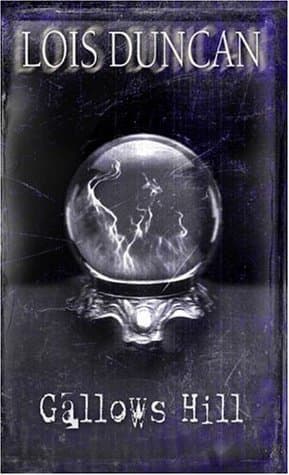
Lois Duncan (1997)
Genre
Thriller / Fantasy / Mystery / Young Adult
Reading Time
320 min
Key Themes
See below
Sign in to track this book
When a school fair's fortune-telling act grants 17-year-old Sarah actual prophetic visions, she finds herself terrifyingly re-enacting the Salem witch trials with her classmates as accusers.
Seventeen-year-old Sarah Zoltanne, upset by her parents' recent divorce, moves with her mother from a bustling city to the quiet, conservative town of Thorndale. She struggles to adjust to her new high school, feeling out of place among the cliquish students. Her mother, a free-spirited artist, encourages Sarah to be herself, but Sarah wants to fit in. She quickly forms an uneasy friendship with Allison, a popular but somewhat manipulative girl, and is drawn to the intense Jude Brannock, who seems to notice her in a way others don't. Sarah feels a strange, unsettling connection to the town itself, as if it holds secrets she can't quite grasp.
Allison, on the carnival committee, persuades Sarah to staff the fortune-teller booth for the Thorndale High fall carnival, thinking Sarah's 'exotic' appearance would be perfect. Sarah, despite her initial reluctance, agrees. During her first 'reading' for a fellow student, she experiences a vivid, disorienting vision that feels incredibly real. She sees images of fire, fear, and an old woman's face, along with hearing whispers. Initially dismissing it as her imagination, the visions become more frequent and disturbing with each 'reading,' terrifying Sarah and making her question her sanity. The students she reads for are shocked by the accuracy of her predictions.
Word of Sarah's ability to predict the future spreads rapidly through Thorndale High. Students become both fascinated and terrified, some seeking her out for readings, others avoiding her. The visions intensify, showing her glimpses of future events, both mundane and unsettling. When she predicts a minor accident that then occurs, the whispers about her turn into overt fear. Some students, particularly the more religious or superstitious, begin to openly accuse her of being 'different' or 'evil.' Sarah feels increasingly isolated, reflecting historical fear of the unknown. Her only comfort is Jude Brannock, who seems to believe her and offers a strange kind of support.
Drawn to Jude, Sarah spends more time with him, and he reveals some of Thorndale's hidden history. He tells her about the town's past, specifically a dark period involving witch trials centuries ago, and the role his own family, the Brannocks, played in those events. Jude explains that his ancestors were among the accusers, and that a woman named Sarah Good was one of the accused and executed 'witches.' This revelation sends shivers down Sarah's spine, as she realizes the chilling parallels between her name and the historical victim, and between the growing fear surrounding her and the historical hysteria. She starts to wonder if her visions are connected to this past.
As the fear around Sarah grows, a series of unfortunate events plague students who had been particularly cruel or dismissive towards her. A bully suffers a minor but embarrassing accident, a popular girl's reputation is publicly tarnished, and other small misfortunes occur. While these events could be coincidental, the students and some adults immediately link them to Sarah and her 'powers.' The accusations escalate from whispers to open hostility, with some students calling her a 'witch' to her face. Sarah becomes an outcast, experiencing a chilling recreation of the historical witch hunt mentality. She feels helpless and terrified, unable to control the fear she seems to inspire.
Fueled by fear and a twisted sense of justice, a group of students, led by Allison and other popular figures, decide to stage a 'mock' witch trial for Sarah. What begins as a cruel prank quickly becomes something far more sinister. The students, convinced of Sarah's supernatural abilities and blaming her for their misfortunes, become increasingly aggressive and accusatory. The 'trial' takes place in an isolated part of the school grounds, with the students acting as judges and accusers. Sarah is subjected to intense interrogation and public humiliation, experiencing the terror and helplessness of the historical accused. The line between role-playing and reality blurs, and Sarah feels genuine fear for her safety.
During the mock trial, as Sarah's fear peaks, Jude intervenes. He reveals his true nature: he is not merely a boy, but a spiritual entity, the descendant of the original accusers, who has been bound to Thorndale for centuries. He explains that Sarah is the reincarnation of Sarah Good, the witch his ancestors condemned. Her visions are not random but a reawakening of Good's psychic abilities, triggered by her presence in Thorndale. Jude confesses that he has been drawn to her, not only out of a sense of historical duty but also a deep, complicated affection. He reveals that his family's curse is tied to the injustice of the past, and that Sarah's return is either a chance for redemption or a re-enactment of the tragedy.
As Jude's revelations unfold, Sarah is overwhelmed by powerful, immersive flashbacks. She experiences the life and tragic fate of Sarah Good firsthand – the accusations, the fear, the isolation, and the ultimate execution at Gallows Hill. These visions are so real that Sarah feels Good's emotions and physical sensations, fully understanding the injustice and terror of the past. She sees the faces of the accusers, including Jude's ancestors, and the faces of those who stood by. This deep connection to her past self solidifies her identity as Sarah Good reincarnated, making her present predicament all the more terrifying as history seems poised to repeat itself.
Jude explains that Sarah's return is not merely a coincidence, it is a key moment. The spirits of the past, both the accused and the accusers, are stirring, and the town itself is caught in a cycle of fear and judgment. Sarah, as Sarah Good reincarnated, has the power to either break this cycle of historical injustice and spectral torment or to allow history to repeat itself, potentially leading to another tragic outcome for her. Jude, bound by his family's past actions, feels a desperate need to help her, seeing her as the key to his own potential release from his long-standing purgatorial existence in Thorndale. He asks her to make a conscious choice, to use her new understanding to forge a different path.
Armed with a full understanding of her past as Sarah Good and the nature of the curse, Sarah confronts the students who have become a modern-day mob. Instead of succumbing to their fear and accusations, she uses her visions and psychic abilities deliberately. She projects images and feelings, making the students experience glimpses of the historical injustice, the fear of the accused, and the emptiness of their own baseless accusations. This powerful display shocks them into silence, forcing them to confront their own prejudices and the echo of the past. The hysteria breaks, and the students, including Allison, begin to disperse, their fear replaced by confusion and guilt.
By choosing to confront rather than flee, and by using her gifts to enlighten rather than retaliate, Sarah breaks the cycle of fear and accusation that has haunted Thorndale for centuries. Her act of courage and understanding brings a measure of peace to the restless spirits, particularly Sarah Good's. As a result, Jude, who was bound to the town by his ancestors' actions, is finally released from his ethereal existence. He fades from physical form, his mission complete, leaving Sarah with a sense of closure and a profound understanding of her own unique identity. The town begins to heal, the oppressive atmosphere lifting, signaling a new beginning for Thorndale.
With the historical cycle broken and Jude's spirit at peace, Sarah finds a new sense of self and belonging. She no longer feels like an outsider but understands her unique place in the world. Thorndale, though still small, feels different, lighter, as if a long-held shadow has lifted. Sarah's relationships with her classmates, though altered, are no longer dominated by fear. She has come to terms with her psychic abilities, seeing them not as a curse but as a part of who she is. She looks towards the future with confidence, ready to embrace her individuality and the extraordinary path she is destined to follow, forever changed by her experience at Gallows Hill.
The Protagonist
Transforms from a resentful, alienated teenager into a self-assured young woman who embraces her powers and confronts historical injustice.
The Mysterious Guide/Love Interest
From a mysterious, bound entity seeking to fulfill a historical duty, he finds release and peace through Sarah's actions.
The Antagonist/Supporting
Starts as a superficial friend, becomes a fear-driven accuser, and ends with a moment of recognition of her wrongdoing.
The Supporting
Remains largely consistent, offering a stable, if sometimes distant, parental figure.
The Mentioned
Remains largely static, representing the unaware adult world.
The Supporting/Antagonistic Collective
Transforms from a curious audience to a hostile mob, eventually quieted by Sarah's confrontation.
The novel shows how fear and ignorance can quickly escalate into collective hysteria, leading to irrational accusations and persecution. The students of Thorndale High, initially curious about Sarah's fortune-telling, rapidly turn into a fearful, judgmental mob when her powers become undeniable and misfortunes occur. This mirrors the historical Salem witch trials, where baseless accusations led to tragic consequences. The 'mock' trial scene powerfully represents this, showing how easily individuals can be swept up in groupthink, losing their sense of justice and empathy in the face of perceived threats. The theme highlights how fragile reason is when confronted with the unknown.
“Fear spread through the school like a virus, infecting everyone with its irrationality. It was easier to believe in a witch than to face their own insecurities.”
A central theme is reincarnation and how historical events can echo through time, influencing the present. Sarah Zoltanne is revealed to be the reincarnation of Sarah Good, a woman accused and executed during Thorndale's original witch trials. Her psychic abilities are a reawakening of her past self's gifts, triggered by her return to the town. The novel suggests that unresolved historical injustices can leave a lingering spiritual imprint, manifesting in recurring patterns of behavior and fate. Jude Brannock's spectral existence further emphasizes this, as he is bound to the town until the historical wrong is addressed. Sarah's journey is about breaking this cycle and finding closure for both her past and present selves.
“'You are not just Sarah Zoltanne,' Jude said, his voice low. 'You are the echo, the return. You are Sarah Good.'”
Sarah's struggle with identity and belonging is a core part of the narrative. As a new girl in Thorndale, she feels like an outsider, navigating the cliques and conservative atmosphere. Her psychic abilities further alienate her, making her 'different' in a way that frightens others. The revelation of her past life as Sarah Good complicates her sense of self, forcing her to integrate a historical identity with her present one. Her journey is about accepting her unique nature, including her powers and her past, rather than trying to conform. By the end, she finds a stronger sense of self and belonging, not by fitting in, but by embracing her true, extraordinary identity.
“She had always felt like an outsider, but now she understood why. She was not just new to Thorndale; she was an echo from its deepest, darkest past.”
The novel emphasizes the power of individual choice to break cycles of negativity and injustice. Sarah is given the choice to either succumb to the fear and repeat the tragic fate of Sarah Good or to confront the mob and use her powers for understanding and healing. Her decision to stand up and expose the truth, rather than retaliate or flee, shows the transformative power of agency. This act of courage, coupled with an implicit act of forgiveness towards her accusers (both past and present), allows for a form of redemption for the town and releases Jude from his centuries-long bond. It highlights that while the past influences the present, it does not dictate an unchangeable future.
“The past had brought her here, but the future was hers to choose. She would not be a victim again.”
The theme of prejudice against 'otherness' is central to the narrative. Sarah, as a new girl with an 'unusual' background, is already an outsider. Her emerging psychic abilities then brand her as 'different' and, ultimately, 'dangerous' in the eyes of the conservative Thorndale community. The town's quickness to label and condemn her mirrors historical prejudices against those who didn't conform or possessed unexplained abilities. The fear of the unknown leads to intolerance and a desire to persecute. The novel critiques how easily society can turn against individuals who challenge their established norms or understanding, showing that 'witch hunts' can manifest in modern forms.
“They didn't understand her, and what they didn't understand, they feared. And what they feared, they condemned.”
The return of a soul in a new body, specifically Sarah Zoltanne as Sarah Good.
Reincarnation is the central plot device, explaining Sarah's psychic abilities and her fated connection to Thorndale. It provides the historical context for the modern-day witch hunt and gives Sarah a profound personal stake in the town's past. This device allows the narrative to bridge centuries, making historical events immediately relevant and deeply personal to the protagonist. It also serves as the catalyst for Jude's involvement, as he is bound to the reincarnation of the woman his ancestors condemned, making him a historical and romantic counterpart to Sarah.
Sarah's ability to see into the future and experience past events.
Sarah's psychic visions are the primary driver of the plot's initial conflict. They begin as unsettling glimpses during fortune-telling, escalating to vivid premonitions that terrify her and her classmates. These visions directly lead to the accusations against her. Later, they evolve into full-blown flashbacks, allowing her to experience Sarah Good's life and death, thus revealing the reincarnation plot. The visions serve to both demonstrate Sarah's 'otherness' and provide crucial exposition about the town's dark history, propelling the story forward and deepening the mystery.
A staged event by students that quickly turns into a real and terrifying persecution.
The mock witch trial is a critical plot device that serves as the climax of the modern-day persecution. It directly mirrors the historical witch trials, creating a chilling parallel between past and present. This scene intensifies the conflict, pushing Sarah to her breaking point and forcing Jude to reveal his true nature. It highlights the dangers of mob mentality and how easily 'play-acting' can devolve into genuine malice and fear. The trial sets the stage for Sarah's ultimate confrontation and decision to break the cycle, making it a pivotal moment for her character arc and the story's resolution.
Jude's ancestral legacy that binds him to Thorndale and the fate of Sarah Good.
The Brannock family's historical involvement in the witch trials and Jude's subsequent spectral existence serve as a supernatural plot device. This 'curse' or 'bond' ensures Jude's presence in Thorndale and his connection to Sarah Good's reincarnation. It provides a supernatural motivation for Jude's actions and his role as Sarah's guide, as his release is contingent on the resolution of the historical injustice. This device adds a layer of fantasy and urgency to the narrative, linking the past and present through a supernatural consequence.
“The past is never really gone. It just waits for the right time to reappear.”
— Sarah's initial unsettling feelings upon arriving in Thorndyke.
“It’s funny how you can live in a place your whole life and never really know its secrets.”
— Adam musing about Thorndyke's hidden history to Sarah.
“Sometimes, the things we fear the most are the things we carry within ourselves.”
— Sarah reflecting on her own anxieties and the growing tension in Thorndyke.
“History isn't just dates and names; it's the echoes of lives lived, and sometimes, those echoes are very loud.”
— Mr. Craven explaining the significance of Thorndyke's past to Sarah.
“Trust is a fragile thing. Once broken, it's very hard to put back together.”
— Sarah's growing distrust of the townspeople as events unfold.
“Ignorance can be a powerful shield, but it can also be a dangerous weapon.”
— Sarah realizing how the town's denial of its past affects the present.
“There are some things that science can't explain, no matter how hard it tries.”
— Sarah grappling with the supernatural occurrences she witnesses.
“A lie can travel halfway around the world while the truth is still putting on its shoes.”
— Sarah observing how rumors and accusations spread quickly in Thorndyke.
“Sometimes, the only way to escape the past is to face it head-on.”
— Sarah steeling herself to confront the town's dark history.
“We all have a little bit of darkness inside us. It’s what we do with it that matters.”
— Sarah contemplating the inherent human capacity for good and evil.
“The line between reality and illusion can be very thin, especially when fear is involved.”
— Sarah questioning her own sanity amidst the strange events.
“Forgiveness isn't just about letting others off the hook; it's about freeing yourself.”
— Sarah considering the long-standing grudges and their impact on the town.
“Some stories are meant to be forgotten, and some are meant to be remembered, no matter how painful.”
— Sarah reflecting on the importance of acknowledging the past.
“The greatest evil isn't always a monster under the bed; sometimes, it's the monster in the mirror.”
— Sarah's realization about the human element behind the town's troubles.
Ready to see how well you understood this book? Take our interactive quiz with 10 questions.
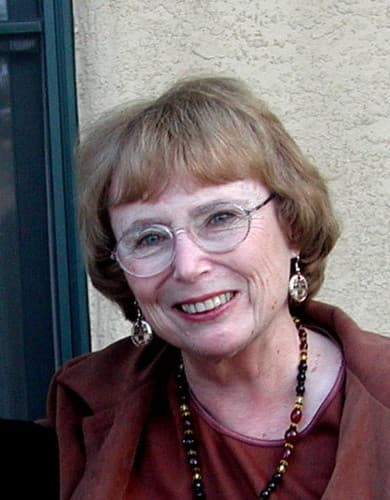
Biography coming soon.







