“It's not about being brave. It's about doing what you have to do.”
— Tamaya reflects on her actions while facing danger in the woods.

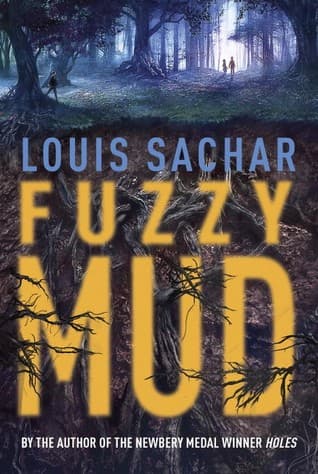
Louis Sachar (2015)
Genre
Children's / Mystery / Science Fiction / Young Adult
Reading Time
180 min
Key Themes
See below
Sign in to track this book
When a shortcut through forbidden woods leads to an encounter with mysterious, mutating mud, two students accidentally unleash a global biological crisis that could redefine the future of life on Earth.
Fifth graders Tamaya Dhilwaddi and Marshall Walsh walk home from Woodbridge Academy when Chad Wilson, a seventh-grade bully, confronts them. To avoid a fight, Marshall takes a shortcut through the forbidden woods behind the school. Tamaya, a rule-follower, is hesitant but follows Marshall, fearing for his safety. As they navigate the dense woods, they lose their way. Eventually, they find a strange, purplish, and unusually warm mud. Chad Wilson, who had followed them, ambushes Marshall. During the struggle, Tamaya shoves Chad, causing him to fall face-first into the fuzzy mud.
After Chad falls into the fuzzy mud, he scrambles out, angry and disoriented, and runs off deeper into the woods, disappearing. Tamaya feels guilty and afraid, convinced she has seriously hurt Chad. Marshall, also shaken, insists they must get out of the woods and not tell anyone what happened. They eventually find their way out and return home, but the incident weighs heavily on Tamaya. The next day, Chad doesn't show up for school, and his parents report him missing, sparking a search effort that includes the local police and school officials. Tamaya tries to act normal, but her anxiety grows.
The day after the incident in the woods, Tamaya notices a small, itchy, purplish rash developing on her arm, exactly where some of the fuzzy mud had splattered. She tries to hide it, but it quickly spreads and becomes more painful. Other students and staff at Woodbridge Academy also begin to report similar rashes and flu-like symptoms, particularly those who were involved in the search for Chad. The school closes temporarily, citing a mysterious illness. Meanwhile, Tamaya's parents take her to the doctor, who is baffled by her condition, unable to identify the cause or provide effective treatment for the rapidly worsening rash.
After several days of intense searching, Chad Wilson is found deep in the woods. He is in critical condition, covered in a severe rash that mirrors Tamaya's, and suffering from a high fever and disorientation. He is immediately hospitalized. His discovery confirms Tamaya's fears and links the mysterious mud to the spreading illness. The news of Chad's condition and the growing number of affected individuals, including search volunteers and emergency personnel, causes widespread panic. The illness, now called 'Fuzzy Mud Disease,' becomes a national public health crisis, attracting the attention of scientists, medical experts, and government officials.
As the 'Fuzzy Mud Disease' escalates, the U.S. Senate holds emergency hearings to understand the crisis. Dr. Fitzman, a scientist, is called to testify. He reveals that the fuzzy mud is a new, rapidly multiplying single-celled organism, a 'microrg,' which he had been developing in a secret lab located near the Woodbridge Academy woods. His initial goal was to create a clean, renewable energy source, but the microrg mutated unexpectedly, becoming aggressive and pathogenic when exposed to sunlight and certain environmental conditions. He confesses his role in the accidental release of the organism into the environment.
During the Senate hearings, Dr. Fitzman explains the microrg, which he named 'splurch.' He describes how he genetically engineered it from a common pond scum, aiming for an efficient biofuel. However, the organism developed an unforeseen ability to consume organic matter at an alarming rate and, under certain conditions, to cause severe skin lesions and internal damage in humans. He explains that the microrg thrives in warmth and light, and its rapid reproduction makes it difficult to contain. The senators question him on his ethical responsibilities and the lack of oversight in his experimental research, noting the potential for global consequences.
As the crisis deepens, medical researchers struggle to find a cure for the 'Fuzzy Mud Disease.' They observe that while many victims suffer greatly, Tamaya Dhilwaddi's symptoms, though severe, seem to be progressing differently than Chad's. Dr. Fitzman, reviewing the medical data, notices a subtle difference in her blood work and the nature of her lesions. He hypothesizes that something in Tamaya's unique biochemistry, possibly an allergen or an unknown antibody, is slightly inhibiting the microrg's progression within her body, offering a glimmer of hope. He believes that understanding this difference could be key to developing an antidote or a treatment.
Inspired by Dr. Fitzman's hypothesis, a team of scientists begins working around the clock to isolate and analyze the specific components in Tamaya's blood that seem to be fighting the microrg. They take numerous samples from her, subjecting them to testing. The pressure is immense, as the 'Fuzzy Mud Disease' continues to spread, threatening to overwhelm hospitals and destabilize society. The Senate hearings continue, with testimony from public health officials detailing the grim projections if a cure isn't found soon. The world watches anxiously, hoping for a breakthrough from the scientific community.
After an intense period of research, the scientists develop an antidote derived from Tamaya's unique biological response. The antidote, a specially engineered enzyme, is designed to neutralize the microrg's harmful effects and halt its reproduction. It is quickly administered to Chad Wilson, Tamaya, and other victims, leading to a recovery for many. The Senate then focuses on containment strategies, including a plan to spray the affected areas with a chemical agent that is harmless to humans but lethal to the microrg. The immediate threat is contained, but the long-term ecological impact remains a concern.
With the crisis averted, Woodbridge Academy reopens, and life slowly returns to normal. Tamaya and Marshall, though affected by their experience, are relieved and grateful for their recovery. Chad, having made a full recovery, is changed by the near-death experience, becoming less of a bully and more introspective. Dr. Fitzman faces legal and ethical consequences for his unauthorized research, but his scientific contributions to the antidote are acknowledged. The fuzzy mud incident is a reminder of the delicate balance of nature, the dangers of unchecked scientific experimentation, and the importance of ethical considerations in technological advancement. The world learns a lesson about humility in the face of nature's power.
The Protagonist
Tamaya transforms from a rule-abiding, anxious girl into a reluctant hero who faces her fears and contributes to saving others, learning about courage and responsibility.
The Supporting
Marshall learns the consequences of avoiding problems and the importance of honesty and taking responsibility for his actions, rather than hiding them.
The Antagonist/Victim
Chad undergoes a significant transformation from a cruel bully to a more subdued and thoughtful individual after his near-death experience with the fuzzy mud.
The Supporting
Dr. Fitzman moves from a brilliant but reckless scientist to one who takes responsibility for his creations and actively works to mitigate the damage he caused.
The Supporting
The Senator's arc is less personal and more about navigating a complex national crisis, ensuring justice and public safety.
The Mentioned
Not a significant arc, but she represents the immediate adult concern and confusion at the onset of the crisis.
The Supporting
His arc is tied to Tamaya's illness and recovery, showing parental concern and relief.
The Supporting
Her arc is tied to Tamaya's illness and recovery, showing parental concern and relief.
The novel examines the ethical implications of unchecked scientific ambition. Dr. Fitzman's creation of the microrg, intended for renewable energy, shows the dangers of pursuing scientific advancement without adequate oversight and risk assessment. His secret lab and unauthorized experiments directly lead to a global health crisis, forcing a reckoning with the moral obligations of scientists. The Senate hearings show the societal demand for accountability in scientific research, emphasizing that innovation must be balanced with responsibility for potential consequences. The 'fuzzy mud' is a symbol of good intentions gone terribly wrong.
“Just because you can do something, doesn't mean you should.”
Every major plot point in 'Fuzzy Mud' stems from a choice, showing the ripple effect of individual decisions. Marshall's decision to take a shortcut to avoid Chad leads them into the woods. Tamaya's impulsive shove of Chad into the mud directly triggers the spread of the microrg. Dr. Fitzman's choice to conduct unregulated experiments has catastrophic global consequences. Even seemingly small choices, like Tamaya's initial reluctance to follow Marshall, contribute to the escalating events. The narrative traces how these choices, both deliberate and accidental, intertwine to create a crisis, demonstrating that actions, however minor, have significant and often unforeseen repercussions.
“One wrong step, and everything can change.”
Bullying is the initial catalyst for the entire plot. Chad Wilson's persistent bullying of Marshall forces Marshall to seek an alternative route home, leading him and Tamaya into the forbidden woods. The fear and desperation caused by Chad's aggression are what directly lead to Tamaya's shove, which in turn exposes Chad to the fuzzy mud. The novel explores the psychological impact of bullying on both the victim (Marshall's fear) and the bully (Chad's eventual transformation after his near-death experience). It shows how a common problem like bullying can have extraordinary and unforeseen consequences.
“He hated Chad, but he was also terrified of him.”
The fuzzy mud, a genetically engineered organism, represents the delicate balance of nature and how human intervention can disrupt it with devastating effects. Dr. Fitzman's attempt to 'improve' upon nature for human benefit results in an uncontrollable, self-replicating entity that threatens ecosystems and human life. The microrg's rapid mutation and aggressive nature show the unpredictability of biological systems when tampered with. The woods, initially a place of childhood adventure and mystery, become a source of danger, symbolizing how human disregard for natural boundaries can unleash unforeseen forces. The theme highlights humanity's responsibility to respect and protect the natural world.
“Nature has a way of fighting back, even against our best intentions.”
The central antagonist and catalyst for the entire plot.
The fuzzy mud is a genetically engineered single-celled organism (microrg) created by Dr. Fitzman. It initially appears harmless, a strange purple mud, but quickly proves to be highly pathogenic and rapidly multiplying, causing severe rashes and illness. It serves as the primary antagonist, driving the plot from a local incident to a global health crisis. Its unpredictable mutation and aggressive nature symbolize the dangers of unchecked scientific experimentation and humanity's attempts to control nature.
A setting that symbolizes danger, the unknown, and the consequences of breaking rules.
The woods behind Woodbridge Academy are explicitly off-limits, making them a forbidden zone that Marshall and Tamaya enter. This setting immediately establishes a sense of tension and foreboding. It represents a place where rules are broken, and where the unknown (the fuzzy mud) resides. The woods become a symbol of both escape and entrapment, leading the children into the heart of the crisis and serving as the initial containment zone for the spreading microrg.
A narrative structure used to provide exposition and broaden the scope of the crisis.
Interspersed throughout the main narrative of Tamaya and Marshall's experience are transcripts of U.S. Senate hearings. This device allows Sachar to provide scientific explanations for the fuzzy mud, reveal Dr. Fitzman's backstory, and illustrate the national and global impact of the crisis. It broadens the story's scope beyond the children's immediate experience, lending credibility and urgency to the unfolding events, while also exploring themes of scientific ethics and governmental response.
A visible manifestation of the fuzzy mud's infection and a symbol of guilt and spreading danger.
The purplish, itchy rash that first appears on Tamaya and then on Chad and other victims is a key plot device. It serves as a physical manifestation of the fuzzy mud's infection, making the invisible danger visible. For Tamaya, it's a constant reminder of her guilt and fear. For the wider community, it's a clear indicator of the spreading disease, escalating the crisis from a local disappearance to a public health emergency, and driving the search for a cure.
“It's not about being brave. It's about doing what you have to do.”
— Tamaya reflects on her actions while facing danger in the woods.
“Sometimes the smallest things can cause the biggest problems.”
— Narrator commenting on the fuzzy mud's origins and impact.
“Friends don't let friends walk into danger alone.”
— Marshall decides to help Chad despite their conflicts.
“Nature has a way of fighting back when we mess with it.”
— Discussion about the bioengineered organism in the mud.
“Fear is just a feeling. It doesn't have to stop you.”
— Tamaya encourages herself while navigating the woods.
“We thought we could control it, but we were wrong.”
— A scientist reflects on the fuzzy mud experiment.
“Bullies are just scared people pretending to be tough.”
— Tamaya's observation about Chad's behavior.
“The mud wasn't evil. It was just doing what it was made to do.”
— Explanation of the fuzzy mud's biological nature.
“Sometimes you have to break the rules to do what's right.”
— Tamaya justifies taking a shortcut through the woods.
“One small act of kindness can change everything.”
— Reflection on how characters' decisions impact the story.
“The woods weren't scary because of what was in them, but because of what we brought with us.”
— Tamaya realizes their fears shaped their experience.
“We're all connected, whether we like it or not.”
— Comment on how the fuzzy mud affects the community.
“Learning isn't just about books. It's about paying attention to the world around you.”
— Tamaya applies classroom lessons to real-life danger.
“The truth doesn't care if you believe in it or not.”
— Reference to the scientific reality of the fuzzy mud.
Ready to see how well you understood this book? Take our interactive quiz with 10 questions.
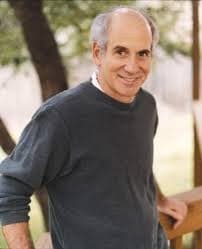
Biography coming soon.

Dan Gemeinhart
4.5

Kate O'Hearn
4.4

Jeanne Birdsall
4.4

Jen Wang
4.4

Wendelin Van Draanen
4.3

John Marsden
4.3

Chris Van Allsburg
4.3
Jennifer A. Nielsen
4.2