“The gods are dead, and we have killed them. Not with fire and sword, but with contracts and ledgers. With interest rates and market shares.”
— A reflection on the nature of divinity and power in a modern, financialized world.

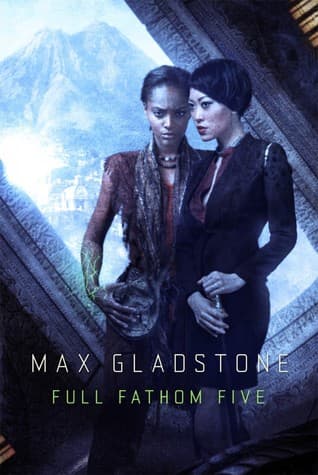
Max Gladstone (2014)
Genre
Fantasy / Science Fiction
Reading Time
10-12 hours
Key Themes
See below
Sign in to track this book
In a world of manufactured gods, a disillusioned craftsman fights a conspiracy when her creations begin to die, forcing her to confront her divinely-controlled society.
Kai, a Craftsman on Kavekana island, builds gods for various uses. Her creations are not thinking beings but channels for divine power, accepting sacrifices and offering protection. During a routine check, Kai finds one of her smaller, recently placed gods, a patron for a fishing village, inexplicably dying. Driven by responsibility and empathy for her creations, she tries a dangerous, direct rescue, a practice usually forbidden. The attempt fails, and Kai is badly hurt by the god's collapsing power, suffering physical and magical injuries. This incident makes her seem unstable to her superiors and colleagues.
After her injury, Kai is put on mandatory medical leave by her boss, Lei. Her colleagues, including her ex-boyfriend Raz, see her actions as reckless and emotional, isolating her further. Confined to her home, Kai recovers from her physical injuries and the magic residue from the dying god. Despite the official story that her god's death was a fluke or a design flaw, Kai's gut feeling says otherwise. She starts to notice small differences in reports and the dismissive attitudes of her peers. Her forced downtime only makes her more determined to find the real cause of her god's death, believing it is more than an accident.
While recovering, Kai is approached by J.K.V., an investigator from the distant land of Kos, who came to Kavekana for unknown reasons. J.K.V. is investigating unusual god-deaths and disruptions that seem to come from Kavekana. Though cautious at first, Kai finds J.K.V. to be someone who takes her suspicions seriously instead of dismissing them as instability. J.K.V. reveals that the god-deaths on Kavekana are not isolated but part of a larger pattern, suggesting a systematic attack on divine structures. This alliance gives Kai a needed outside view and confirms her growing unease.
As Kai and J.K.V. investigate further, they find a widespread fear and silence among the Kavekanan Craftsmen. Many are unwilling to talk about the god-deaths, fearing consequences from their superiors or unknown forces. Some give vague warnings, hinting at dangers beyond a simple failing god. Raz, still worried about Kai's mental state, tries to stop her, but his explanations sound increasingly empty. The lack of cooperation from the Kavekanan Craft community makes their investigation hard, forcing them to use secret meetings, hidden records, and Kai's knowledge of god-building to find clues.
Through careful investigation, Kai and J.K.V. uncover a secret operation under Kavekana: a 'god-dredge.' This advanced, illegal facility extracts raw divine power directly from the island's ley lines and its gods. The dredge systematically drains the gods' lifeblood, making them weak, sick, and eventually killing them. This explains the mysterious deaths Kai saw and the larger pattern J.K.V. was investigating. The operation is highly advanced and dangerous, suggesting a powerful group is behind it, aiming to use or weaponize divine energy.
Evidence increasingly points to Lei, Kai's boss, as a key figure in the god-dredging plan. Lei, a seemingly respected and proper Craftsman, has been secretly organizing the extraction of divine power, likely for personal gain or under pressure from a larger, hidden power. This news is a deep betrayal for Kai, who had admired Lei. It explains Lei's dismissive attitude toward Kai's concerns and her eagerness to sideline Kai after the incident. The full extent of Lei's involvement and her motives remain partly unclear, but her guilt in destroying the gods is obvious.
Adding another layer of betrayal, Kai discovers that Raz, her ex-boyfriend and fellow Craftsman, has been involved in Lei's operation. While Raz's involvement seems less malicious than Lei's, perhaps driven by misguided loyalty or force, his knowledge of the god-dredge and his efforts to stop Kai from investigating deepen her feeling of isolation. This discovery breaks Kai's remaining trust in her former colleagues and forces her to face the painful truth that those closest to her have been part of the conspiracy she fights against. His involvement highlights the conspiracy's wide reach.
With proof, Kai and J.K.V. confront Lei and Raz about the god-dredge. The confrontation turns into a dangerous magical and physical fight. Lei, desperate to protect her operation and secrets, uses her significant Crafting abilities against them. Raz, caught between loyalty to Lei and his feelings for Kai, is conflicted but initially sides with Lei. During the chaotic fight, Kai and J.K.V. are overwhelmed by Lei's forces and captured. They are taken deeper into the god-dredge facility, where Lei plans to silence them permanently and continue her illegal activities.
Imprisoned within the god-dredge, Kai and J.K.V. learn the full, terrible truth. Lei is not acting alone or just for personal gain. She is being forced by a far more powerful and old entity, a being from beyond the known world, that demands the extracted divine energy. This entity, a 'Drowned God' or similar forgotten power, wants to re-enter the world or achieve some unknown, destructive goal by consuming the divinity of Kavekana's gods. Lei is just a pawn, caught in a desperate deal to save herself or something she cares about, forced to sacrifice the island's divine protectors.
Seeing the full horror of the Drowned God's influence and the destructive power Lei is unleashing, Raz changes his mind. He realizes the true danger and the irreversible harm being done to Kavekana and its gods. Overcoming his fear and misplaced loyalties, Raz secretly helps Kai and J.K.V. escape from the god-dredge. His detailed knowledge of the facility and its defenses is crucial, allowing them to avoid Lei's remaining loyalists and prepare for a final stand against the Drowned God and its plans.
Kai, J.K.V., and Raz, now united, launch a desperate counter-attack to stop the god-dredge and prevent the Drowned God's full emergence. They must face Lei, who, driven by fear and desperation, continues to fight for the Drowned God. The battle involves Crafting, strategic sabotage, and direct magical combat within the unstable god-dredge. Kai uses her deep understanding of god-building to try and cut the Drowned God's connection to the world, while J.K.V. and Raz provide support and fight Lei.
In a final struggle, a significant sacrifice is made to seal the Drowned God away, stopping its return to the world. This sacrifice, involving a powerful burst of divine energy and a hard choice, disrupts the god-dredge and severs the old entity's connection to Kavekana. Lei is either defeated or consumed by the backlash of the Drowned God's sealing. Afterwards, Kavekana is scarred but safe. Kai, changed by her experience, begins the long process of helping the island and its remaining gods heal, taking a new, more active role in their protection and restoration.
The Protagonist
Kai transforms from a sidelined, doubted individual into a courageous leader and protector of Kavekana's divine ecosystem, finding her true strength in her unique empathy.
The Supporting
J.K.V. evolves from a detached observer to an active participant, risking her life to protect Kavekana and its gods, finding a deeper purpose beyond mere investigation.
The Antagonist
Lei's arc reveals her as a tragic figure, a powerful Craftsman forced into a devastating bargain, ultimately consumed by the very power she sought to control or appease.
The Supporting
Raz's arc is one of redemption, moving from complicity and denial to recognizing the true danger and choosing to fight alongside Kai against the greater threat.
The Antagonist
The Drowned God's arc is one of attempted resurgence and ultimate defeat, its ancient power thwarted by the combined efforts of Kai and her allies.
The Supporting
The community initially resists Kai's investigations but is eventually forced to confront the truth about the vulnerability of their gods and the dangers of unchecked divine manipulation.
The novel explores what a 'god' means when they can be built and maintained. It asks if consciousness is needed for divinity, and how belief and sacrifice give power. Kai's empathy for her non-conscious creations shows a different kind of sacredness, questioning the view of gods as mere tools. The god-dredge further twists this, showing divinity as a raw, extractable resource, changing the relationship between people and the divine.
“A god is a thing you build, and a thing you believe in. And sometimes, it's a thing that dies.”
A main conflict is Kai's empathetic, almost caring, approach to her god-creations versus the practical, detached view of most of the Craft community. Her willingness to risk herself for a 'dying machine' is seen as a weakness, but this empathy allows her to see the real threat. The story suggests that emotional connection and intuition can be more valuable than cold logic, especially when dealing with forces beyond simple mechanics.
“They called her crazy. She called it caring. The difference, she was learning, could save a world or destroy it.”
The story has themes of corruption in the established order and deep personal betrayal. Lei's involvement in the god-dredging, and Raz's initial participation, break Kai's trust in her colleagues and the system she once believed in. This betrayal is not just personal but also systemic, as the very people trusted to protect the gods are shown to be using them for hidden reasons or under duress. This highlights how power and fear can be subtle.
“The hardest part wasn't fighting the monster. It was realizing the monster wore a familiar face.”
The god-dredge can be seen as a strong symbol for environmental destruction and the unsustainable use of natural resources. The gods, as living parts of Kavekana's magical ecosystem, are being 'mined' to death for their raw power. This reckless extraction threatens the island's balance and shows the long-term results of short-sighted greed, reflecting real-world worries about natural resource depletion and ecosystem destruction for profit.
“They weren't just killing gods. They were gutting the island, tearing its heart out for a price.”
Kai's journey is about challenging authority and the comfortable, but dangerous, status quo. Her superiors dismiss her, her community fears the truth, and she must work outside official channels. Her refusal to accept easy answers and her pursuit of the truth, despite personal cost, drives the story. This theme celebrates the courage needed to speak truth to power and to fight for what is right, even when alone.
“Sometimes, the only way to save something was to break everything they thought they knew about it.”
A hidden facility designed to extract raw divine power from Kavekana's gods.
The god-dredge serves as the central MacGuffin and antagonist's tool. It's a technological and magical marvel that drains the life force from gods, directly causing the mysterious deaths. It acts as a physical representation of the exploitation theme and the Drowned God's influence. Its existence creates urgency and provides a tangible goal for Kai and J.K.V. to dismantle, while also being a dangerous environment for the final confrontation.
Kai's unique ability to feel and understand the 'suffering' of her non-sentient god creations.
This device is crucial for driving the plot. It's what initially alerts Kai to the problem and fuels her relentless investigation, despite being dismissed. It sets her apart from other Craftsmen and allows her to perceive subtle clues that others miss. It also deepens the philosophical questions about the nature of divinity and consciousness, making the gods more than just magical machines, and giving Kai a personal stake beyond mere duty.
The pervasive fear and reluctance among Kavekanan Craftsmen to acknowledge or investigate the god-deaths.
This device creates significant obstacles for Kai and J.K.V.'s investigation, highlighting the power of fear and the difficulty of uncovering truth when those with knowledge are unwilling to speak. It builds suspense and emphasizes Kai's isolation, making her journey more challenging. It also reveals the extent of the Drowned God's influence and the moral compromises made by the community, creating a sense of a society rotting from within.
An ancient, unseen entity manipulating events from afar, seeking to return.
The Drowned God serves as the ultimate, unseen antagonist, a lurking cosmic horror that provides the overarching threat. It's a classic 'greater evil' that explains the motives behind the god-dredge and Lei's actions. Its ancient, incomprehensible nature elevates the stakes beyond simple corporate espionage to a world-threatening crisis, providing a powerful, existential threat that demands a grand sacrifice to repel.
“The gods are dead, and we have killed them. Not with fire and sword, but with contracts and ledgers. With interest rates and market shares.”
— A reflection on the nature of divinity and power in a modern, financialized world.
“Every lie is a promise. Every promise, a debt.”
— Reflecting on the interconnectedness of truth, deception, and obligation.
“Magic isn't about power. It's about responsibility. About understanding the weight of what you do.”
— A character explaining the true nature of magic beyond mere strength.
“The market doesn't care about your feelings, only your perceived value.”
— A harsh truth about the impersonal nature of the economic system.
“Sometimes, the only way to save a world is to let a piece of it die.”
— A difficult choice faced when trying to preserve a greater whole.
“History isn't what happened. It's what we agree happened. And that agreement is constantly being renegotiated.”
— Discussion on the malleable and constructed nature of historical narratives.
“You can't buy absolution, but you can certainly buy time.”
— A cynical observation on the power of money to defer consequences.
“To be truly free, you must first understand the chains that bind you.”
— A philosophical insight into the path towards genuine freedom.
“The ocean remembers. Not like a mind, but like a ledger, every transaction recorded in currents and salt.”
— Describing the profound, almost sentient memory of the sea.
“Hope is a terrible investment, but sometimes it's the only currency you have.”
— A character weighing the practicalities and necessities of maintaining hope.
“Every soul has a price, if you know how to calculate it.”
— A dark perspective on the commodification of human spirit and worth.
“The greatest magic is often simply knowing which lever to pull, and when.”
— Highlighting that true power often lies in strategic insight, not raw force.
“We build our gods in our own image, then wonder why they act like us.”
— A critical look at the anthropomorphic nature of divinity and human projection.
“Grief is a debt that must be paid, one way or another.”
— Exploring the unavoidable process of mourning and its lasting impact.
Ready to see how well you understood this book? Take our interactive quiz with 10 questions.

Biography coming soon.







