“The past, which we long to escape from, is also the place we long to return to.”
— Jakob's reflection on the inescapable nature of memory and trauma.


Anne Michaels (1998)
Genre
Literary Fiction / Historical Fiction
Reading Time
7-9 hours
Key Themes
See below
Sign in to track this book
Haunted by the silent screams of his family lost to the Holocaust, a young Jewish survivor finds solace and a voice for the dead excavating ancient histories on a Greek isle, unearthing not just artifacts but the insidious ways power distorts truth.
In 1940, during the Nazi invasion of Poland, young Jakob Beer's family is murdered. His parents and sister, Bella, die. Jakob is buried alive in the mud near his home, witnessing the atrocities. Athos Roussos, a Greek geologist and paleontologist studying geological formations, discovers and pulls him from the earth. Athos, horrified by the war, takes the traumatized boy under his wing. He smuggles Jakob out of Poland and brings him to his home on the Greek island of Zakynthos, offering him refuge and a new life amidst nature's beauty.
On Zakynthos, Jakob slowly recovers from his trauma. Athos provides a loving and intellectually stimulating environment, teaching him geology, history, and the natural world. Jakob finds solace in the island's ancient landscapes, the sea, and the earth's stories. He learns Greek and English, absorbing knowledge from Athos's library. The island's culture, its resistance against Italian and German occupations (where locals famously hid all Jewish residents), and Athos's guidance help Jakob re-engage with life, though his past memories remain a constant presence.
Despite the peace on Zakynthos, Jakob is haunted by his sister, Bella. Her image, voice, and death are always with him. He feels intense survivor's guilt, believing he should have protected her or died with her. These memories appear as vivid hallucinations and internal monologues, where he talks with Bella, trying to piece together their past and reconcile his loss. Athos, seeing Jakob's trauma, encourages him to write and engage with the world, believing creativity and connection lead to healing. The bond with Bella remains central to Jakob's inner life.
Influenced by Athos, Jakob becomes an archaeologist, specializing in ancient civilizations. His work helps him confront and understand the past, particularly how history is recorded, interpreted, and often manipulated. He observes how the Nazis, by twisting archaeology and anthropology, tried to create a false narrative of Aryan supremacy and erase the histories of those they deemed 'inferior.' Jakob's research aims to uncover true histories, give voice to the lost, and understand human existence's deep currents that persist despite destruction attempts. He sees the earth as a memory repository, both natural and human.
After Athos's death, Jakob, now a respected scholar, moves to Toronto, Canada, for a university position. There, he meets and falls in love with Alexandra (Alex) Beer, a musician. Their relationship is tender and complex, marked by Jakob's deep trauma and his difficulty opening up. Alex is patient and loving, but she struggles to fully understand Jakob's past. She sees that Bella's ghost remains a powerful presence in his life and that his childhood trauma runs deep. Despite these challenges, they build a life together, finding comfort in their shared routines and intellectual pursuits.
Jakob's life in Toronto is a constant negotiation between his present and his past. He dedicates himself to his academic work, publishing extensively on archaeology and memory. He tries to connect with others, but his deepest bond remains with Bella's memory and Athos's teachings. He reflects on time, memory, and the fragments of human experience that persist. His work is not just academic; it is a personal quest to understand how history shapes identity and how one can live and even thrive after unimaginable loss. He grapples with the idea of 'fugitive pieces' – the scattered remnants of lives and histories.
Years into his marriage with Alex, Jakob meets Naomi, a child of Holocaust survivors. They have an immediate, deep connection, born from a shared understanding of inherited trauma. Naomi, unlike Alex, intuitively grasps the specific nature of Jakob's grief and the Holocaust's permanent mark on his soul. Their bond is not just intellectual; it is a spiritual and emotional recognition of shared history and suffering. This connection with Naomi challenges Jakob's established life patterns and his relationship with Alex, forcing him to confront different aspects of his identity and capacity for intimacy.
The growing intimacy between Jakob and Naomi creates a rift in Jakob's marriage to Alex. Alex, despite her love for Jakob, feels isolated by his inability to share his inner world with her and by the deep, unspoken understanding he shares with Naomi. The weight of Jakob's past and his emotional unavailability eventually become too much for their relationship. Alex, with quiet dignity, decides to leave Jakob, acknowledging she cannot give him the specific solace or connection he finds with Naomi, nor can she compete with his past's enduring presence.
After Alex leaves, Jakob and Naomi begin a life together. Their relationship is characterized by deep empathy and mutual understanding of their histories of loss and survival. Naomi's presence allows Jakob to articulate and process aspects of his trauma that he had previously kept buried. They share a quiet, profound connection, finding comfort in their shared silences and their ability to witness each other's pain without judgment. The past is never fully erased, but with Naomi, Jakob finds a different kind of home, a space where his fragmented self can exist more fully and be understood on a fundamental level.
As an older man, Jakob returns to Zakynthos, the island that first offered him refuge. This pilgrimage is a journey back to the source of his healing, to the landscapes that shaped him after the initial trauma. He revisits Athos's house, the beaches, and the ancient sites, reflecting on Athos's profound impact on his life. This return is a moment of deep introspection, a way to reconcile his disparate pasts – the horror of Poland, the solace of Zakynthos, and the complexities of his adult life. He feels the presence of Athos, Bella, and all those who have touched his life, acknowledging memory and place's enduring power.
Throughout his life, Jakob carries Athos Roussos's legacy. Athos's teachings about time, geology, history, and humanity's interconnectedness form the bedrock of Jakob's worldview. Athos taught him to see the world not as fragmented, but as a continuous flow, where past and present intermingle. He instilled in Jakob a love for language, for nature's beauty, and for the human spirit's resilience. Jakob understands that Athos not only saved his life physically but also gave him the intellectual and emotional tools to navigate his trauma, transforming him from a buried boy into a man of deep insight.
Jakob's journey is a meditation on memory. He grapples with how memory is not a static archive but a living entity that constantly reshapes the present. He explores the tension between the necessity of remembering, especially the Holocaust's atrocities, and the human desire for peace and release from pain. He understands that true forgetting is impossible for those who have experienced such profound loss, but that memory can be transformed from a destructive force into a source of understanding and connection. He acknowledges the 'fugitive pieces' of memory that surface unexpectedly, reminding him of his past but also allowing him to weave it into his present.
The Protagonist
Jakob moves from a state of buried trauma and fragmented identity towards a more integrated understanding of his past, finding a unique form of solace and connection with Naomi.
The Supporting
Athos remains a constant, guiding presence in Jakob's life, even after his death, shaping Jakob's worldview and moral compass.
The Supporting/Mentioned
Bella's presence evolves from a raw wound to an integrated, if still painful, part of Jakob's identity.
The Supporting
Alex's arc involves her realization that her love, while genuine, is not enough to bridge the chasm of Jakob's unique trauma, leading to her dignified departure.
The Supporting
Naomi's arrival provides Jakob with a new form of intimacy and understanding, allowing him to achieve a deeper integration of his past and present.
The novel explores how trauma, especially the Holocaust, imprints itself on an individual's mind and shapes their entire life. Jakob's memories are not static; they are living entities that constantly inform his present, appearing as vivid hallucinations of Bella and a pervasive sense of loss. The past is not just remembered; it is experienced anew, influencing his relationships, his work, and his understanding of the world. The narrative shows that while healing is possible, true forgetting is not. Remembering becomes a moral imperative, a way to honor the dead and understand the living. This is clear in Jakob's constant internal dialogues with Bella and his lifelong engagement with history through archaeology.
“What is memory without a body? A ghost, a fugitive piece of the mind.”
Amidst human cruelty, the novel highlights nature and language as sources of solace and healing. On Zakynthos, the island's ancient landscapes, the sea, and geological formations give Jakob a sense of continuity and connection to something larger than human suffering. Athos, a geologist, teaches Jakob to read the earth's history, finding patterns and enduring beauty. Similarly, language—poetry, storytelling, and writing—becomes Jakob's main tool for processing his trauma and giving form to the unspeakable. Through language, he tries to reconstruct his fragmented past and articulate the inexpressible, finding a way to live within his memories without being consumed by them.
“The earth, like a great book, had opened itself to him, its chapters written in stone and bone.”
The novel argues that personal identity is linked to historical events, especially large-scale ones like the Holocaust. Jakob's individual story is a direct consequence of history. His work as an archaeologist emphasizes this theme, as he seeks to uncover and interpret past layers, understanding how ancient civilizations and their narratives inform contemporary existence. The book shows how historical trauma can be passed down, affecting later generations (as seen in Naomi's background), and how individuals try to make sense of their place within these vast historical currents, finding meaning in the 'fugitive pieces' of the past.
“History is not a line, but a shattered mirror.”
Jakob's journey is a search for a 'home' – not just a physical place, but a state of being where he can reconcile his fractured identity. After losing his original home and family, he finds temporary refuge with Athos on Zakynthos, which becomes a second origin. Later, in Toronto, he builds a life with Alex, but he finds a deeper sense of belonging with Naomi, who shares an empathetic understanding of his historical trauma. The novel suggests that for survivors of profound loss, home is not merely a location but a state of mind, a shared understanding, or a continuous engagement with one's complex history.
“To be without a home is to be a piece of music without a score.”
The story unfolds through fragmented memories, reflections, and internal monologues, mirroring Jakob's traumatized mind.
The novel does not follow a strict chronological order. Instead, it weaves together Jakob's present experiences with vivid flashbacks, internal dialogues with his deceased sister Bella, and philosophical reflections. This fragmented structure mirrors the shattered nature of Jakob's memory and his traumatized psyche, reflecting how past and present are constantly intermingled. It allows the reader to experience the disorienting, haunting quality of profound grief and memory, making the narrative itself a reflection of the protagonist's inner world and the 'fugitive pieces' of his past.
The earth and archeological digs symbolize memory, history, and the buried past.
The earth itself is a powerful symbol in the novel. Jakob is literally buried in the earth at the beginning, and his subsequent career as an archeologist involves digging into the earth to uncover ancient histories. The layers of soil and rock represent layers of time and memory, with buried artifacts being 'fugitive pieces' of the past. Archeology becomes a metaphor for Jakob's own psychological excavation of his trauma, his attempt to unearth and understand the buried fragments of his own life and the broader human experience. The earth offers both a place of burial and a source of revelation and continuity.
Water symbolizes both destruction and purification, cleansing, and the flow of time and memory.
Water, particularly the sea around Zakynthos, is a recurring motif. It is initially associated with the mud that buried Jakob, a symbol of engulfment and death. However, on Zakynthos, the sea becomes a source of purification, healing, and solace. Its constant flow and ancient rhythms offer a sense of timelessness and continuity, contrasting with the abrupt violence of human history. The sea also symbolizes the vastness of memory and the unconscious, carrying away some sorrows while bringing others to the surface. It represents a fluid boundary between life and death, past and present, offering both oblivion and renewal.
Jakob's thoughts, reflections, and conversations with Bella are presented directly to the reader.
A significant portion of the novel is conveyed through Jakob's internal monologues and stream of consciousness. This includes his philosophical musings on memory, time, and language, as well as his ongoing, vivid 'conversations' with his deceased sister, Bella. This device provides direct access to Jakob's deeply introspective and traumatized mind, allowing the reader to experience his grief, his intellectual struggles, and his unique way of processing the world. It blurs the lines between memory, reality, and imagination, emphasizing the subjective and personal nature of his experience and the enduring presence of his past.
“The past, which we long to escape from, is also the place we long to return to.”
— Jakob's reflection on the inescapable nature of memory and trauma.
“Language is a body, a living creature, whose breath is words.”
— Jakob's poetic understanding of language and its vital force.
“What is remembered is not what was, but what is.”
— Jakob contemplating the subjective and fluid nature of memory.
“A human being is not a single thing, but a place, a landscape, a geography.”
— Jakob's expansive view of human identity, seeing individuals as complex worlds.
“The dead speak to us from the earth, from the stones, from the air. They are not gone.”
— Jakob's sense of the enduring presence of those lost, especially his family.
“To be alive is to be a refugee.”
— Jakob's profound and melancholic statement on the human condition, always in motion or seeking belonging.
“Every object has a soul, a memory, a history.”
— Jakob's sensitivity to the stories embedded in inanimate objects, a theme throughout his archaeological work.
“Love is not a place, but a voyage.”
— Jakob's understanding of love as an ongoing journey rather than a fixed destination.
“The earth remembers. The air remembers. The water remembers.”
— Jakob's belief in the pervasive memory of the natural world, holding echoes of past events.
“Silence is not the absence of sound, but the presence of unheard sound.”
— Jakob's nuanced perception of silence, implying layers of unspoken or forgotten things.
“Beauty is a form of justice.”
— Jakob's belief in the redemptive power of beauty, especially after experiencing immense ugliness and destruction.
“We are all born with the need to create, to make, to leave behind a trace.”
— Jakob's reflection on the fundamental human drive for artistry and legacy.
“The present is merely the past in disguise.”
— Jakob's perspective on how historical events and past traumas continue to shape the present.
“Grief is a landscape, not a single road.”
— Jakob's metaphor for the complex and varied experience of grief, not a linear process.
Ready to see how well you understood this book? Take our interactive quiz with 10 questions.
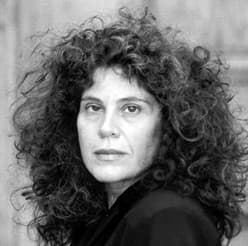
Anne Michaels is a Canadian poet and novelist whose work has been translated and published in over 45 countries. Her books have garnered dozens of international awards including the Orange Prize, the Guardian Fiction Prize, the Lannan Award for Fiction and the Commonwealth Poetry Prize for the Americas. She is the recipient of honorary degrees, the Guggenheim Fellowship and many other honours. She has been shortlisted for the Governor General's Award, the Griffin Poetry Prize, twice shortlisted for the Giller Prize and twice long-listed for the International Dublin Literary Award. Michaels won a 2019 Vine Award for Infinite Gradation, her first volume of non-fiction. Michaels was the poet laureate of Toronto, Ontario, Canada from 2016 to 2019, and she is perhaps best known for her novel Fugitive Pieces, which was adapted for the screen in 2007.







