“The dolls were made of porcelain, with tiny, perfect features and eyes that seemed to follow you around the room.”
— Description of the Frozen Charlotte dolls in the antique shop.

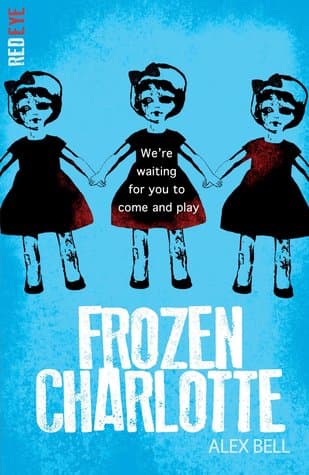
Alex Bell (2016)
Genre
Thriller / Fantasy / Mystery / Young Adult
Reading Time
360 min
Key Themes
See below
Sign in to track this book
A summer retreat to an isolated Scottish island schoolhouse turns chilling when Sophie encounters her mysteriously deceased cousin and her unsettling collection of antique dolls, all eager to play a deadly game.
Sophie and her best friend, Jay, are playing with an antique Ouija board in Sophie's bedroom when Jay, trying to prank Sophie, says a spirit is spelling out a message. Suddenly, the board violently shatters, and a piece of wood pierces Jay's eye, killing him. Traumatized and blaming herself, Sophie's parents decide she should spend the summer with her cousins in their remote home on the Isle of Skye. The house, once Dunvegan School for Girls, is a large, eerie place, full of shadows and strange noises. Sophie's arrival is met with awkwardness and hostility from her cousins, Cameron, Lilias, and Piper, who seem to have their own secrets and worries about the house and its history.
Upon arriving at Dunvegan, Sophie immediately notices the house's heavy atmosphere. She learns that her aunt and uncle, along with her cousins Cameron, Lilias, and Piper, live there. Sophie is given Rebecca's old room, a space kept exactly as it was. Inside, she finds a large collection of antique 'Frozen Charlotte' dolls—small, porcelain figures with fixed poses, often found in shipwrecks. Piper explains that Rebecca, their deceased cousin, was obsessed with these dolls and had an unsettling connection to them before she died. The family does not want to talk about Rebecca, but it is clear her memory, and her dolls, still have a strong influence over the household.
Soon after Sophie settles in, strange events begin. Dolls are found moved, eerie music plays from an antique music box, and whispers are heard at night. Sophie also finds a diary belonging to Rebecca, which details her intense, almost obsessive, relationship with her dolls and her belief that they were alive. The diary entries become more disturbed, hinting at dark secrets and a harmful presence. Sophie starts to suspect that Rebecca's spirit, or perhaps the dolls themselves, are causing the disturbances. Her cousins react with fear and denial, with Lilias being especially scared of the dolls and Cameron becoming more withdrawn and protective.
The dolls' activity grows from small disturbances to more direct and harmful incidents. Sophie finds herself scratched, objects are thrown, and the dolls' eyes seem to follow her. She learns that the Ouija board she brought from home, the one that killed Jay, was originally Rebecca's. This connection makes Sophie more uneasy. Piper, at first dismissive, becomes more agitated, while Lilias's fear turns into terror, leading her to try and destroy some of the dolls, only to be inexplicably injured. Cameron, meanwhile, is full of guilt and secrecy, hinting at a past event involving Rebecca and the dolls that he refuses to fully explain.
Through Rebecca's diary, fragmented conversations with her cousins, and her own terrifying experiences, Sophie slowly puts together the truth about Rebecca's death. Rebecca, driven by loneliness and a fragile mental state, had come to believe that her dolls were alive and communicated with her through the Ouija board. She believed one doll, an old 'Frozen Charlotte' named Charlotte, was a kind spirit. However, it was another, more harmful doll, Lucy, that was truly communicating, manipulating Rebecca. Lucy convinced Rebecca to hurt herself, eventually leading to her death in a fall, making it look like an accident. The dolls, particularly Lucy, were not just inanimate objects but vessels for a dark, possessive entity.
Sophie learns that the 'Frozen Charlotte' dolls were brought to Dunvegan School for Girls by a teacher named Miss Finch. Miss Finch had a tragic past, losing her own daughter, Charlotte, and believed the dolls could act as conduits for spirits. She used the Ouija board with her students, accidentally awakening a harmful entity that then latched onto the dolls. This entity, which Sophie now understands as Lucy, has been responsible for misfortunes and deaths at Dunvegan, preying on vulnerable individuals, including Rebecca. The house itself, and the dolls within it, have this dark history, making it a dangerous place for anyone open to its influence.
Cameron finally confesses his secret: he was present when Rebecca died. He had tried to intervene when he saw Lucy manipulating Rebecca, but the harmful doll attacked him, scarring his hand, and he was too late to save her. Overwhelmed by guilt, he had kept silent. Realizing the danger, Sophie, Cameron, and Piper decide they must destroy the dolls and banish the harmful spirit. They attempt an exorcism, gathering all the dolls, including the original Ouija board, and try to burn them. However, the spirits fight back with terrifying force, causing objects to fly and the house to shake, showing their strong hold.
During the attempted exorcism, Piper reveals her true, chilling nature. It becomes clear that she has been under the influence of the harmful spirit, Lucy, all along, acting as a host and helper for the dolls' evil. Piper's perfect manner was a facade. Lucy, through Piper, openly taunts Sophie and Cameron, showing her manipulative power. In a shocking turn, Lucy, leaving Piper's body, then tries to possess Sophie, seeking a new, stronger host. Sophie experiences a terrifying internal struggle as Lucy tries to take control, filling her mind with dark thoughts and memories of Jay's death.
Sophie battles Lucy's possession with all her might, using her will to live and her guilt over Jay's death. Cameron, despite his injuries and fear, finds the courage to help Sophie. He realizes that the only way to truly defeat Lucy is to destroy the original 'Frozen Charlotte' doll, Charlotte, which Lucy uses as her main anchor. In a desperate act, Cameron throws Charlotte into the roaring fire, despite Lucy's agonizing screams and attempts to stop him. The destruction of the core doll weakens Lucy's hold significantly, allowing Sophie to finally expel the spirit from her body, though the experience leaves her deeply shaken.
With Charlotte destroyed and Lucy's main anchor gone, the immediate harmful presence in Dunvegan disappears. The house falls silent, but the trauma of the events leaves a lasting impact on Sophie and her cousins. Piper is left catatonic, her mind shattered by Lucy's long possession. Lilias, though terrified, begins to heal from her fears. Cameron is scarred, both physically and emotionally, but relieved that the truth is out and the immediate danger is over. Sophie, though free from possession, carries the heavy burden of her experiences and the guilt over Jay's death, understanding now the true power of the Ouija board and the darkness that can lurk within seemingly innocent objects. The family decides to leave Dunvegan, unable to live with its haunted past.
The Protagonist
Sophie transforms from a grieving, guilt-ridden girl into a resilient survivor who confronts supernatural evil and begins to process her trauma.
The Supporting
Cameron moves from a state of guilt-ridden silence and fear to actively confronting the evil that haunted his family, finding a measure of redemption.
The Supporting
Lilias's arc is one of sustained terror, but she ultimately survives and begins to heal from her psychological torment.
The Antagonist (initially Supporting)
Piper's arc is a shocking reveal from a seemingly helpful cousin to a primary antagonist, demonstrating the insidious nature of the supernatural possession.
The Supporting/Posthumous Antagonist
Rebecca's arc is primarily told through flashbacks and her diary, showing her descent into madness and ultimate demise due to supernatural influence.
The Antagonist
Lucy's arc is a constant pursuit of new hosts and extending her malevolent influence, culminating in her defeat but not complete eradication.
The Mentioned
Her arc is historical, detailing the tragic circumstances that led to her bringing the dolls and the Ouija board to Dunvegan, thus setting the stage for the book's events.
The Mentioned
His death is the inciting incident, setting Sophie's journey into motion.
The novel explores grief, guilt, and trauma, mainly through Sophie's character. Her strong guilt over Jay's death drives her, making her open to Lucy's manipulations. Cameron's long-held guilt over Rebecca's death also influences his actions and silence. The dolls themselves feed on these emotional weaknesses, using past tragedies to torment the living. The psychological impact of these emotions is central to the characters' struggles and their openness to the supernatural.
“The memory of Jay's eyes, wide and unseeing, was a constant, icy knot in her stomach, a phantom limb of guilt she couldn't shake.”
Loneliness and vulnerability are shown as places where harmful forces can grow. Rebecca's isolation and fragile mental state made her an easy target for Lucy, who offered companionship through the dolls, leading to her death. The spirit preys on those who feel alone or unheard, twisting their desires into destructive obsessions. This theme shows how emotional weakness can open doors to supernatural manipulation, highlighting the importance of human connection and strength.
“Rebecca had poured all her loneliness into the dolls, and something had answered back. Something cold and ancient.”
The book looks at the slow nature of evil, not just as a supernatural entity but as a force that can slowly corrupt and possess. Lucy's possession is not immediate but a gradual manipulation, wearing down her victims' wills. The dolls act as vessels, making an inanimate object terrifyingly alive with evil. The story explores different levels of possession, from subtle influence to complete takeover, as with Piper, and the internal fight needed to resist it, as Sophie experiences.
“It wasn't just a doll. It was a cage for something that had been waiting, patiently, for someone to play.”
The past literally haunts the present in 'Frozen Charlotte.' The history of Dunvegan School for Girls, Miss Finch's tragedy, and Rebecca's death are not just background but active forces shaping the characters' lives. The house itself holds past traumas, and the dolls are physical links connecting the present family to the school's dark history. The characters cannot escape the past until they face it and understand its influence, making the discovery of historical truths important to their survival.
“The house remembered. Every whisper, every tear, every scream. It held it all, like a cold, stone heart.”
The family dynamic in Dunvegan is full of secrets and problems, which the harmful spirit uses. The family's unwillingness to talk about Rebecca, Cameron's hidden guilt, and Piper's deceptive facade create an environment of distrust and isolation. These unspoken truths stop them from collectively addressing the supernatural threat, making them more vulnerable. Sophie's arrival forces these secrets into the open, showing how family bonds can be both a source of strength and a weakness when broken by unspoken pain.
“There were too many shadows in this house, and not all of them were cast by the furniture.”
Antique porcelain dolls serving as physical anchors and vessels for a malevolent spirit.
The 'Frozen Charlotte' dolls are the central plot device. These small, antique porcelain figures, named after a folk ballad about a girl who froze to death, are not merely props but active, malevolent entities. They serve as physical anchors for the spirit Lucy, allowing her to manifest, communicate, and exert influence. Their fixed, unblinking stares and their ability to move on their own create a pervasive sense of unease and horror. The destruction of a specific 'Charlotte' doll is crucial for weakening the spirit.
A communication tool that opens a portal to the supernatural, causing a tragic death.
The Ouija board is a critical plot device that initiates the entire narrative. It is the object through which the malevolent spirit, Lucy, first communicates and causes Jay's death, directly leading to Sophie's journey to Dunvegan. The board is later revealed to have belonged to Rebecca, establishing a direct link between Sophie's trauma and the house's haunted history. It symbolizes the dangerous allure of communicating with the unknown and the dire consequences of meddling with forces beyond human comprehension.
A journal providing crucial exposition and insight into the dolls' history and the spirit's manipulation.
Rebecca's diary serves as a vital expository plot device. Discovered by Sophie, the diary entries chronicle Rebecca's increasing obsession with the dolls, her belief in their sentience, and her descent into madness under Lucy's manipulation. It provides firsthand accounts of the spirit's tactics, the house's history, and the tragic circumstances leading to Rebecca's death. The diary is instrumental in allowing Sophie to piece together the truth and understand the true nature of the threat she faces.
A remote, former boarding school that amplifies feelings of entrapment and dread.
The setting of Dunvegan School for Girls on the remote Isle of Skye is a powerful plot device. Its isolation ensures that the characters are cut off from external help, intensifying the sense of dread and claustrophobia. The house's history as a girls' school, filled with past lives and a specific tragedy involving Miss Finch, imbues it with a pervasive, lingering malevolence. The decaying grandeur and the sheer size of the house contribute to the feeling of being trapped within a haunted, inescapable environment.
A physical mark on Cameron, symbolizing his past trauma and a clue to Rebecca's death.
Cameron's scarred hand is a subtle but significant plot device. It serves as a constant physical reminder of his past encounter with the malevolent doll, Lucy, and his inability to save Rebecca. The scar fuels his guilt and secrecy, making him initially withdrawn. Its presence is a visual clue to the depth of the family's trauma and the physical danger posed by the spirits. When Cameron finally reveals its origin, it provides crucial information about the moments leading up to Rebecca's death.
“The dolls were made of porcelain, with tiny, perfect features and eyes that seemed to follow you around the room.”
— Description of the Frozen Charlotte dolls in the antique shop.
“Some things are better left buried, Sophie. Some memories are too painful to dig up.”
— A warning from a character about uncovering the past.
“The island has a way of keeping its secrets. It doesn't like outsiders prying.”
— Reflection on the isolated setting of the story.
“Every family has its ghosts. Ours just happen to be more literal than most.”
— A character discussing the supernatural elements tied to their family history.
“Fear is a funny thing. It can make you see monsters where there are none, and miss the real ones staring you in the face.”
— A moment of introspection about the nature of fear in the thriller plot.
“The past isn't dead. It's not even past. It's right here, waiting to be remembered.”
— A line about the haunting influence of history on the present.
“Sometimes the most dangerous things come in the smallest packages.”
— Referring to the seemingly innocent but sinister Frozen Charlotte dolls.
“You can't run from what's inside you. It'll always find a way out.”
— A character confronting inner demons or hidden truths.
“The cold here isn't just in the air. It's in the bones of this place, in its very soul.”
— Description of the chilling atmosphere of the island setting.
“Truth has a way of breaking through, no matter how hard you try to hide it.”
— A theme about the inevitability of uncovering secrets.
“We're all just dolls in someone else's story, waiting for our strings to be pulled.”
— A metaphorical reflection on fate and control in the narrative.
“The silence here is louder than any scream. It's filled with things unsaid.”
— Observing the oppressive quiet and hidden tensions in the story.
“Some doors should never be opened. Some rooms should stay locked forever.”
— A warning about delving into forbidden or dangerous knowledge.
“In the end, we're all just stories. What matters is how we tell them.”
— A philosophical moment about narrative and legacy.
Ready to see how well you understood this book? Take our interactive quiz with 10 questions.

Alex Bell is a children's author known for her chilling horror novels. Her debut, "Frozen Charlotte," published in 2017, quickly gained popularity for its atmospheric suspense and engaging plot. Bell's writing often explores themes of mystery and the supernatural, appealing to young readers who enjoy a good scare.







