“There are no monsters, only people. And sometimes, they do monstrous things.”
— Angra's philosophy on evil, early in the book.

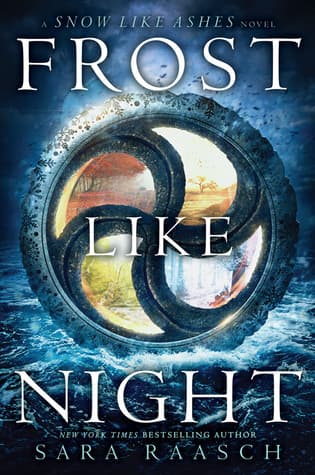
Sara Raasch (2016)
Genre
Fantasy / Young Adult / Romance
Reading Time
10-12 hours
Key Themes
See below
Sign in to track this book
As a world-devouring Decay spreads, a queen must master forbidden magic, a king must rally his shattered people, and a princess must confront a shocking betrayal, all while battling a resurrected tyrant and the ultimate sacrifice looming.
The story opens with Angra's return, his Decay spreading across Primoria, turning life into barren ice. Meira, now queen of Winter with new magic, struggles under Angra's mental assaults. He tries to break her will and access her power. She is haunted by her parents' deaths and the weight of her responsibilities. Desperate to understand and control her magic, especially the powerful 'Godstone' within her, Meira agrees to travel to Paisly with the Elder, who promises to teach her. This journey is dangerous, as Angra's influence is everywhere, threatening the world and Meira's mind, creating immense pressure on the young queen.
Meanwhile, Mather, heartbroken by Meira's departure and their lingering tension, dedicates himself to finding her and rallying support against Angra. He leads the 'Children of the Thaw,' a group of Winter refugees and allies, traveling through the ravaged kingdoms. Mather's journey shows the devastating effects of the Decay and the people's desperate pleas. He struggles with his unacknowledged love for Meira, a silent burden that fuels his determination to protect her and their kingdom. His mission is made more complex by the political maneuvering needed to unite the fractured kingdoms, many hesitant to trust Winter or Angra's former general.
Ceridwen, imprisoned by Angra after her brother's death and Summer's fall, is freed by an unexpected ally, Sir. He reveals a shocking truth: the Summer slave trade, long thought to be a means of survival, was a cruel manipulation by Angra to fuel the Decay. This revelation changes Ceridwen's understanding of her kingdom's history and her family's involvement. She is consumed by a fierce desire for vengeance against Angra and a desperate need to save her people, particularly her true love, Sir, who she believes is still alive. Her escape ignites a rebellion within the remnants of Summer, forcing her to confront difficult choices to reclaim her kingdom and atone for its past.
In Paisly, Meira trains rigorously with the Elder, learning to harness the raw, chaotic magic flowing through her. The Elder teaches her to manipulate Primoria's fundamental forces, pushing her to her limits. However, Meira grows uneasy with the Elder's methods and the Order of the Light's secretive nature. She senses that their goals might not entirely align with stopping Angra, but rather with controlling the magic itself. Her training reveals the immense power she wields, but also the potential for that power to corrupt or be misused, deepening her internal conflict and distrust of the Elder's motives.
The Elder eventually reveals that the true key to defeating Angra lies within a hidden labyrinth deep beneath the Season Kingdoms, a place of ancient magic and dangerous trials. This labyrinth is said to hold the secret to destroying the very magic Meira is learning to control, and potentially Angra himself. However, Angra's mental attacks intensify, planting seeds of doubt and fear in Meira's mind, making her question her allies and her sanity. He manipulates her memories and emotions, attempting to break her resolve and turn her against those she trusts, highlighting the psychological warfare at play.
Mather and Ceridwen's paths eventually meet. They form an uneasy alliance, uniting the Children of the Thaw with the growing Summer rebellion. Their combined forces, though formidable, are still outnumbered by Angra's army of Decay-corrupted creatures. As they plan their attack, a major betrayal within their ranks is uncovered. A trusted ally, swayed by Angra's promises or threats, sabotages their efforts, leading to devastating losses and further fracturing their fragile alliance. This act of treachery highlights Angra's pervasive influence and the immense challenges the resistance faces.
Meira, accompanied by a small group of trusted companions including Theron and eventually Mather, enters the treacherous labyrinth. The labyrinth is a place of illusions, ancient magic, and personal trials, forcing Meira to confront her deepest fears, regrets, and the immense power she wields. Within its shifting walls, she faces projections of Angra, her dead parents, and her own self-doubt. Each trial tests her resolve, her control over her magic, and her understanding of her true purpose. The labyrinth is not just a physical challenge but a journey of self-discovery and a crucible for her growing power.
Deep within the labyrinth, Meira discovers the truth about the Godstone—the source of her amplified magic—and its connection to Angra. She learns that Angra himself is not just a man, but a manifestation of Primoria's ancient, destructive magic, amplified by the Godstone and the misuse of power by previous generations. His Decay is not merely a weapon but an inherent aspect of this corrupted magic. This revelation forces Meira to understand that simply defeating Angra physically might not be enough; she must confront the source of the magic itself, even if it means destroying a part of herself.
To stop Angra and the spreading Decay, Meira realizes she must destroy the source of the magic that fuels him, which also means destroying the Godstone within herself. This is the ultimate sacrifice, as it means relinquishing her powers and potentially her life. In a climactic confrontation within the heart of the labyrinth, Meira channels all her remaining strength, with the support of Mather and her allies, to shatter the Godstone and unravel the corrupted magic. The act is cataclysmic, causing a massive magical backlash that threatens to consume all of Primoria and forever alter the balance of magic in their world.
After the Godstone's destruction, Angra is defeated, and the Decay recedes, leaving behind a scarred but healing Primoria. Meira survives, though changed by her sacrifice and the loss of her extraordinary magic. The kingdoms, united by their shared struggle, begin the arduous process of rebuilding. Mather remains by Meira's side, finally confessing his enduring love for her. Ceridwen takes on leadership for a reformed Summer, dedicated to justice and true freedom. The world is altered, but a new era of peace, one without the powerful magic of the past, dawns for Primoria, built on the sacrifices and resilience of its heroes.
The Protagonist
Meira transforms from a hesitant queen into a self-sacrificing hero, learning to control her immense power and ultimately choosing to relinquish it for the greater good of Primoria.
The Protagonist/Love Interest
Mather evolves from a loyal general to a confident leader, finally expressing his love for Meira and becoming her constant support in the face of overwhelming odds.
The Protagonist/Ally
Ceridwen transforms from a disillusioned prisoner to a decisive leader, reclaiming her kingdom and fighting for a more just future for Summer.
The Antagonist
Angra's arc is one of escalating destructive power and manipulation, culminating in his defeat through the unraveling of the very magic he embodies.
The Supporting
The Elder's arc reveals his true intentions are not entirely selfless, but rather driven by a desire to control the ancient magic, ultimately making him an obstacle to Meira's true purpose.
The Supporting
Sir's arc is one of revelation and support, aiding Ceridwen in her journey and helping her uncover the truth about her kingdom.
The Supporting
Theron remains a consistent source of loyalty and support for Meira, his devotion unwavering throughout the most challenging trials.
The Supporting
Ram's arc is one of steadfast loyalty and contribution to the resistance, embodying the spirit of the Children of the Thaw.
Sacrifice is central, particularly with Meira's decision to destroy the Godstone, relinquishing her power and risking her life to save Primoria. This act of selflessness shows that true power is not in control, but in the willingness to let go for the greater good. Redemption is explored through Ceridwen's journey, as she seeks to atone for Summer's past actions and rebuild her kingdom on a foundation of justice, freeing slaves and exposing Angra's manipulations of the slave trade.
“Sometimes, the greatest strength is knowing when to let go, even of the things that define you.”
The novel explores the dual nature of power: its potential for good and its capacity for corruption. Meira's struggle to control her amplified magic, and the Elder's manipulative desire to harness it, show how power can tempt and distort intentions. Angra himself is a manifestation of corrupted ancient magic, showing how unchecked power can lead to destruction and tyranny. The story suggests that true power lies not in its magnitude, but in the moral compass of the one who wields it, and the willingness to use it for protection rather than domination.
“Magic is a river, Meira. It can nourish the land, or it can drown it. It is the hand that guides it that truly matters.”
Amidst the devastation of the Decay, love and loyalty remain powerful forces. Mather's devotion to Meira, his willingness to risk everything to find and protect her, underscores the strength of their bond. Ceridwen's fight to save Sir and reclaim her kingdom is fueled by her deep love and loyalty to her people and her beloved. These personal connections provide anchors in a world consumed by chaos, showing that even in the darkest times, human connection and fidelity can inspire courage. The characters' loyalties are tested by betrayal, but ultimately, these bonds prove stronger.
“I would burn the world for you, Meira. You know that, don't you?”
The spreading Decay is a metaphor for environmental devastation, illustrating the consequences of unchecked destructive power. Angra's magic turns fertile land into barren ice, highlighting nature's fragility and the profound impact of negative forces. The aftermath of Angra's defeat, with the slow healing of Primoria, signifies rebirth and the arduous process of ecological recovery. It suggests that even after immense destruction, there is hope for renewal, but it requires collective effort and a fundamental shift in how power is wielded and respected.
“Where the Decay touched, nothing grew. Only ice and silence remained. It was a wound that ran deeper than any blade.”
A powerful magical artifact within Meira, linked to Angra and the ancient magic.
The Godstone is a magical artifact, or perhaps an embodiment of raw magic, that resides within Meira, granting her immense power but also connecting her to Angra. It functions as a macguffin and a source of both hope and dread. Its existence drives much of the plot, as Meira must learn to control it, and ultimately, destroy it to defeat Angra. The Godstone represents the concentrated, ancient magic of Primoria, making its fate directly tied to the fate of the entire world and the balance of power.
An ancient, magical maze that tests Meira and holds the key to defeating Angra.
The Labyrinth is a mythical, ancient structure beneath the Season Kingdoms, serving as a setting for critical character development and plot progression. It is more than just a physical maze; it's a series of trials, illusions, and confrontations with inner demons and fears. The Labyrinth functions as a crucible for Meira, forcing her to confront her past, her power, and her ultimate purpose. It also contains the deeper secrets about Angra and the Godstone, making it the ultimate destination for the protagonists to achieve their goal.
Angra's psychological attacks on Meira, planting doubt and manipulating her mind.
Angra's mental assaults are a crucial plot device that maintain tension and drive Meira's internal conflict. These attacks manifest as visions, whispers, and manipulations of her memories, designed to break her will, make her question her allies, and ultimately, seize control of her power. This device highlights Angra's cunning and the psychological toll of the war, making the fight not just physical but also a battle for Meira's mind and sanity. It also serves to isolate Meira and deepen her reliance on her own inner strength.
A spreading magical blight that turns life into barren ice, Angra's primary weapon.
The Decay is Angra's signature destructive power, a magical blight that transforms living things and landscapes into frozen desolation. It serves as a constant visual and thematic reminder of Angra's threat and the stakes of the conflict. The Decay is not just a weapon but also a manifestation of Angra's corrupted magic, and its spread directly impacts the characters' movements and the urgency of their mission. It acts as a ticking clock, emphasizing the impending doom if Angra is not stopped.
“There are no monsters, only people. And sometimes, they do monstrous things.”
— Angra's philosophy on evil, early in the book.
“Hope is a dangerous thing. It can make you believe in impossible things, and it can make you fall when those things shatter.”
— Meira reflecting on the nature of hope and its potential for pain.
“Sometimes, the only way to save someone is to let them go.”
— A difficult realization for one of the main characters regarding a loved one.
“Power isn't just about what you can take; it's about what you can protect.”
— A lesson learned about true leadership and responsibility.
“The past is a chain, but it doesn't have to shackle you forever.”
— Meira contemplating her heritage and the choices she has to make.
“Love isn't a weakness. It's the greatest strength of all, if you know how to wield it.”
— A character defending the power of love in a world of war.
“Fear can make you do terrible things, but it can also make you brave.”
— Meira facing her fears and finding courage in the process.
“Even in the darkest night, there is always a flicker of light, if you only choose to see it.”
— A message of perseverance during a bleak situation.
“Some scars never heal, but they can remind you of how far you've come.”
— A character reflecting on their past wounds and resilience.
“To truly know someone, you must see them at their worst, and still love them.”
— A profound statement about the depth of true affection.
“The greatest battles are not fought with swords, but within the heart.”
— Meira grappling with internal conflicts and difficult decisions.
“Sometimes, the truth is a weapon, and it can wound as deeply as any blade.”
— The consequences of revealing difficult truths.
“A queen's duty isn't just to rule, but to protect her people, even from herself.”
— Meira understanding the weight of her responsibilities as a monarch.
“It's not about being fearless, it's about acting despite your fear.”
— A character encouraging another to face a dangerous situation.
Ready to see how well you understood this book? Take our interactive quiz with 10 questions.

Biography coming soon.







