“Buying a one-way ticket is a lot like taking a leap of faith. You don't know where you'll land, but you trust that you will.”
— Claudia's decision to buy one-way train tickets to New York.

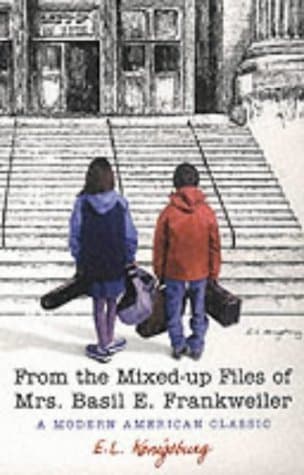
E.L. Konigsburg (1967)
Genre
Children's / Mystery / Young Adult
Reading Time
150 min
Key Themes
See below
Sign in to track this book
A meticulous, runaway suburban girl and her penny-pinching brother turn the Metropolitan Museum of Art into their elegant hideout while solving the mystery of a possibly Michelangelo-sculpted angel.
Eleven-year-old Claudia Kincaid, the oldest of four children, feels misunderstood and unappreciated by her parents in suburban Greenwich, Connecticut. She hates her chores and the dullness of her life. After careful planning, she decides to run away, not just from home, but to somewhere magnificent and elegant. She chooses the Metropolitan Museum of Art in New York City. Knowing she lacks funds, she recruits her younger brother, Jamie, for his substantial savings from allowances and card games. This money is essential for her elaborate plan.
Claudia carefully plans their escape, telling Jamie to pack necessities like clean underwear, a toothbrush, and his empty violin case for clothes. On a Tuesday morning, they sneak out and catch a bus to the train station. Jamie, though unsure at first, is convinced by Claudia's determination and the promise of adventure. They take a train to New York City, blending in with other commuters. During the trip, Claudia manages their small budget, ensuring they have enough for train tickets and a small meal before reaching their destination: the Metropolitan Museum of Art.
At the Metropolitan Museum of Art, Claudia and Jamie carefully watch the staff and visitors. As closing time nears, they find a secluded spot in the ladies' restroom, hiding in separate stalls until the museum is empty. Once the lights dim and the doors are locked, they come out. Their first night is spent exploring the vast, silent halls. They find a luxurious antique four-poster bed in the 16th-century Italian bedroom exhibit to sleep in, a detail that perfectly suits Claudia's wish for elegance and comfort in their new, temporary home.
The children quickly set up a routine to avoid being caught. They wake before dawn, shower, and brush their teeth in the public restrooms, then hide in the same stalls until the museum opens. During the day, they blend in with school groups and tourists, reading newspapers and doing their homework. They eat discreetly in the cafeteria or from vending machines. One morning, they notice a new exhibit: a beautiful marble statue of an angel, recently bought by the museum for only $225. A note suggests it might be an early work by Michelangelo, sparking their curiosity and giving them a new purpose.
The 'Angel' statue fascinates Claudia, who sees it as a beautiful puzzle. The museum's announcement that the statue was bought for little money but might be an authentic Michelangelo, worth millions, sparks her investigative spirit. She and Jamie spend hours in the library, researching Michelangelo and other Renaissance artists, comparing styles and techniques. They study art books, looking for clues, trying to determine if the statue is indeed a masterpiece or a clever fake. This intellectual pursuit gives Claudia a strong sense of purpose, far more engaging than her previous life.
Wanting to solve the mystery, Claudia decides they need more information. She writes an anonymous letter to the museum's director, Mr. Kincaid (no relation), offering their 'services' in verifying the statue's authenticity, hinting they have unique insights from living in the museum. Their efforts to get closer to the truth lead them to the museum's archives. They cleverly sneak into a restricted area, hoping to find files related to the 'Angel' statue's purchase, believing the answers are in official documents rather than just public talk.
While trying to access the museum's private files, Claudia and Jamie have a close call with a security guard, forcing them to hide quickly and barely avoid being discovered. Despite the scare, they find a vital piece of information: a letter stating the 'Angel' statue was sold by a Mrs. Basil E. Frankweiler in Farmington, Connecticut. This name becomes their new focus, suggesting the statue's true origin story lies with its previous owner, not within the museum's public records or their own research. They realize they must leave the museum to follow this lead.
Having spent nearly all of Jamie's money, the siblings combine their last few dollars for bus fare to Farmington, Connecticut. They decide to leave the museum, feeling their search there has reached a dead end. The journey is tense, as they are now more exposed and vulnerable. In Farmington, they find Mrs. Basil E. Frankweiler's large, eccentric estate. Their goal is clear: confront the enigmatic old woman and get the truth about the 'Angel' statue, hoping she holds the key to confirming or denying its Michelangelo attribution and providing the adventure's final answer.
Mrs. Basil E. Frankweiler, a wealthy, sharp-witted, and formidable old woman, initially dismisses the children. However, impressed by their boldness and the unique story of their museum stay, she agrees to a deal. She knows the secret of the 'Angel' statue, but she will only reveal it if Claudia and Jamie can find the truth themselves within her extensive, disorganized archives – a room full of cabinets and boxes of documents, drawings, and letters. This challenge renews their investigative spirit, turning their quest into a treasure hunt within Mrs. Frankweiler's home.
After hours of searching through Mrs. Frankweiler's chaotic files, Claudia and Jamie find a specific drawing. It is a sketch by Michelangelo himself, showing the 'Angel' statue, along with a letter from Michelangelo confirming he sculpted it, but as a child. This discovery confirms the statue's authenticity as a Michelangelo, but also explains its low purchase price and the museum's hesitation: it was an early, unacknowledged work. The children have solved the mystery, understanding that the value is not just in the name, but in the story of its creation and discovery.
Mrs. Frankweiler, very pleased with their detective work, makes a pact with Claudia and Jamie. She agrees to keep their secret about running away and living in the museum, and about the true identity of the 'Angel' statue, if they tell her their entire story in detail. She plans to include their adventure in her will, ensuring the information about the statue's history eventually reaches the Metropolitan Museum. This agreement forms a unique bond between the eccentric old woman and the two adventurous children, promising a lasting legacy for their remarkable journey.
Mrs. Frankweiler arranges for her chauffeur, Sheldon, to drive Claudia and Jamie home to Greenwich. They arrive, somewhat reluctantly, at their house, feeling both relieved and a little sad that their grand adventure is over. They are different children now, having gained independence, self-knowledge, and a deeper bond with each other. Claudia, especially, feels a sense of accomplishment and having found her 'secret,' something she had wanted. Though their parents are relieved, they remain unaware of the true extent of their children's extraordinary experiences, as promised to Mrs. Frankweiler, who now holds the complete narrative.
The Protagonist
Claudia transforms from a child seeking external validation and escape into one who finds inner satisfaction through intellectual pursuit and self-discovery, accepting her own uniqueness.
The Supporting
Jamie, initially a pragmatic follower, grows in confidence and resourcefulness through his contributions to the adventure, becoming a more active participant.
The Supporting
Mrs. Frankweiler, initially a distant figure, finds renewed purpose and connection through sharing her wisdom and secrets with Claudia and Jamie.
The Mentioned
N/A (framing device)
Claudia runs away because she wants to find something unique and meaningful in her life, to escape feeling 'ordinary' and unappreciated. Her later involvement in the 'Angel' statue mystery gives her a clear goal, a challenge that lets her use her intellect and leadership skills. This search for external validation and a grand secret eventually leads her to self-discovery, realizing her true worth comes from within, through her own efforts and courage. The adventure gives her a 'secret' of her own, fulfilling her initial desire.
“Running away to the museum was a way of finding a secret, a specialness, that belonged only to her.”
The Metropolitan Museum of Art is a central part of the story, providing the setting for the children's adventure and sparking their intellectual curiosity. The 'Angel' statue's mystery highlights the subjective and objective values of art – from its monetary worth to its historical importance and beauty. Through their research, Claudia and Jamie learn about Michelangelo and the Renaissance, appreciating the creative process and the stories behind artifacts. Mrs. Frankweiler, an art and history expert, reinforces this theme, showing how knowledge and context enrich one's understanding and experience of the world.
“The secret, Claudia, is that the statue IS a Michelangelo. But it is a child's Michelangelo.”
The book's entire premise is about Claudia and Jamie's ability to survive and thrive independently in a challenging environment. From carefully planning their escape and managing their money to finding hiding spots, showering, and eating, they show remarkable resourcefulness. They learn to adapt, solve problems, and rely on each other's strengths – Claudia's planning and leadership, Jamie's practicality and financial sense. This experience builds their independence, proving to themselves and each other that they can navigate the world without adult supervision, leading to significant personal growth.
“They were running away, but they were running to something, and that made all the difference.”
Secrets run through the story, from Claudia's hidden wish for her own 'secret' to the mystery surrounding the 'Angel' statue's origin. The children's successful hiding in the museum is a secret kept from the entire city. Mrs. Frankweiler herself keeps secrets, deliberately withholding information to test Claudia and Jamie. The climax involves uncovering the 'truth' about the statue, which is not a simple yes or no, but a nuanced story involving a child Michelangelo. The book suggests that truth can be complex and layered, and that sharing secrets can form unique bonds and lead to deeper understanding.
“I shall tell you my secret, and then you must tell me yours.”
The story is narrated by Mrs. Basil E. Frankweiler, dictating to her lawyer, Saxonberg.
This narrative choice allows for a unique blend of immediate action and retrospective wisdom. Mrs. Frankweiler's voice provides an adult, experienced perspective on the children's adventure, offering insights into their motivations and growth that they themselves might not fully grasp in the moment. It also creates a sense of intrigue, as the reader slowly uncovers the narrator's connection to the events. The narration to Saxonberg justifies the detailed recounting and adds a layer of formality and importance to the children's story, elevating it beyond a simple runaway tale.
A newly acquired statue with uncertain origins becomes the central puzzle driving the plot.
The 'Angel' statue serves as the primary external motivator for Claudia and Jamie's actions once they are settled in the museum. It provides them with a purpose beyond merely hiding, transforming their escape into an intellectual quest. The ambiguity surrounding its attribution to Michelangelo creates suspense and allows the children to engage in research, problem-solving, and critical thinking. The mystery is not just about the statue's origin, but also about the nature of art, authenticity, and value, ultimately leading them to Mrs. Frankweiler and the story's resolution.
The iconic museum acts as both a shelter and a character in itself.
The Met is not merely a backdrop; it is integral to the plot and themes. It provides the children with shelter, food, and endless opportunities for exploration and learning. Its vastness allows them to remain hidden, while its collections spark their curiosity and lead them to the 'Angel' statue. The museum symbolizes elegance, knowledge, and a world far removed from their suburban lives, fulfilling Claudia's desire for a beautiful and stimulating environment. Living within its walls allows them to experience art and history in an intimate, unconventional way.
Jamie's hidden stash of money is the practical enabler of the entire runaway plan.
Jamie's significant savings, amassed from poker winnings, are a crucial plot device that makes Claudia's ambitious runaway plan feasible. Without this financial resource, their ability to travel to New York, eat, and maintain a semblance of comfort within the museum would be severely hampered or impossible. The money grounds the fantastical elements of their adventure in a practical reality, highlighting the children's resourcefulness and the importance of planning. It also serves as a point of contention and negotiation between the siblings, revealing aspects of their individual personalities.
“Buying a one-way ticket is a lot like taking a leap of faith. You don't know where you'll land, but you trust that you will.”
— Claudia's decision to buy one-way train tickets to New York.
“Sometimes the most beautiful things are the ones you find by accident.”
— Relating to the discovery of Michelangelo's angel statue.
“Knowledge is a funny thing. The more you have of it, the more you want to have.”
— Mrs. Frankweiler reflecting on Claudia's quest for answers.
“The hardest part of being a grown-up is deciding what to do with all your freedom.”
— Claudia pondering the responsibilities that come with her newfound independence.
“Every secret needs a good hiding place.”
— Jamie's pragmatic approach to keeping their money and plans hidden.
“It is good to have a secret, but it is better to have a friend to share it with.”
— Claudia realizing the value of Jamie's companionship.
“The Metropolitan Museum of Art was an excellent place to run away to. It was big, it was comfortable, and it was full of art.”
— The initial description of their chosen refuge.
“You don't just run away from something, you run to something.”
— Claudia's motivation for choosing the museum as her destination.
“Adventure is not always about grand gestures; sometimes it's about finding the extraordinary in the ordinary.”
— Their daily life and discoveries within the museum.
“There are times when the only way to get answers is to ask the right questions.”
— Claudia's persistent pursuit of the angel's sculptor.
“The best kind of learning happens when you don't even realize you're being taught.”
— Mrs. Frankweiler observing Claudia's growth and learning.
“Being rich isn't just about money; it's about having options.”
— Jamie's practical understanding of their financial resources.
“Sometimes you have to break a few rules to find what you're looking for.”
— Their rule-breaking adventures inside the museum.
“The greatest treasures are often hidden in plain sight.”
— Reflecting on the angel statue and other overlooked marvels.
Ready to see how well you understood this book? Take our interactive quiz with 10 questions.

Dan Gemeinhart
4.5
Kate O'Hearn
4.4

Jeanne Birdsall
4.4

Jen Wang
4.4
Wendelin Van Draanen
4.3

John Marsden
4.3

Chris Van Allsburg
4.3
Jennifer A. Nielsen
4.2