“Magic is not a gift, it is a burden. And like all burdens, it must be carried, or it will crush you.”
— A mentor figure explaining the nature of magic to a young protagonist.

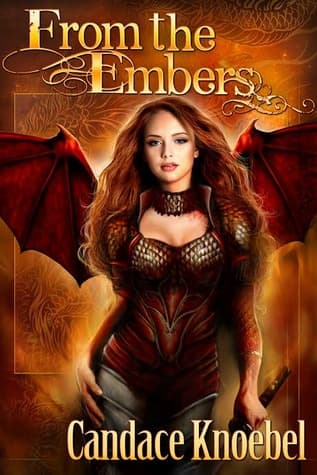
Candace Knoebel (2014)
Genre
Fantasy
Reading Time
812 min
Key Themes
See below
Sign in to track this book
Burdened by a dark destiny and a fated connection to her enemy, a young woman must unravel a prophecy to save the realms from a war orchestrated by an overthrown Fate, even if it means sacrificing herself.
Aurora Megalos, known as the Progeny, carries the weight of a prophecy from The Fates. Her life has been planned since birth, leading her to a destiny she cannot escape. A central, terrifying part of this destiny is her connection to Zordon, a powerful Son of a Fate and her enemy. This revelation leaves Aurora feeling hopeless, as it implies her own destruction is tied to his. Despite the odds, Aurora holds onto the faint hope of finding a hidden detail within the ancient prophecy that could offer a different path, one that does not demand her sacrifice. Her initial understanding of the prophecy paints a bleak picture, forcing her to confront her predetermined fate.
Driven by desperation, Aurora studies ancient texts and forgotten lore, seeking any loophole in the prophecy. Her closest ally, Fenn, a skilled warrior, helps her in this research. Together, they read dusty scrolls and decipher cryptic verses, hoping to find a way to avoid the fate binding Aurora to Zordon. Their efforts eventually succeed when they uncover a crucial, previously overlooked detail within the prophecy. This revelation suggests that the Fates' decree might not be as absolute as it seemed, offering a glimmer of hope that Aurora might defeat Zordon without sacrificing herself. This discovery renews Aurora's determination, shifting her focus from passive acceptance to active resistance.
While Aurora and Fenn search for answers, Zordon's influence expands rapidly. He overruns The Fates, taking their power and twisting their authority to his will. This event has catastrophic consequences, as the barrier between the mortal realm and the ethereal realm of The Fates shatters. Zordon's darkness begins to seep into the lands, spreading fear and chaos. Entire regions fall under his shadow, and the balance of power across all realms is disrupted. The growing threat increases the urgency of Aurora's quest, as existence itself is threatened by Zordon's unchecked power.
Recognizing the scale of the conflict, Aurora and Fenn begin to gather allies. They seek warriors, mages, and beings from various realms who believe Zordon must be stopped. This involves convincing skeptical factions and forging new alliances. They explain the universal threat Zordon poses, how his darkness will consume everything if unchecked. The diverse group of allies brings unique skills to the fight, forming a united front against the shadow. This stage highlights Aurora's growing leadership as she navigates complex situations and inspires hope in a time of widespread despair.
With war on the horizon, Aurora and her allies undergo rigorous training. They focus on improving combat skills, mastering magical abilities, and developing coordinated strategies. Aurora, in particular, works to understand and control her own power, which is tied to her identity as the Progeny. Fenn, with his combat expertise, helps train the forces. They anticipate Zordon's tactics and prepare for the devastating impact his darkness will have. This period of intense preparation is marked by determination, as each individual understands the immense stakes and the sacrifices needed to protect their homes and loved ones from Zordon.
The war begins with a series of skirmishes and border conflicts. Zordon's forces, empowered by his spreading darkness, are relentless. These early battles serve as a reminder of Zordon's power and the devastating impact of his corruption. Aurora and her allies experience both victories and losses, learning valuable lessons about their enemy's tactics and the true cost of war. The encounters test their resolve and force them to adapt their strategies. These initial clashes also highlight the personal sacrifices made by their allies, solidifying their commitment and deepening Aurora's understanding of her responsibility as leader.
As the war progresses, Aurora battles not just Zordon's external forces, but also the darkness within her. Her connection to Zordon means his influence can sometimes touch her, threatening her own being. She experiences doubt, fear, and a pull towards the power she seeks to destroy. Fenn and her other trusted allies provide crucial support during these internal struggles, reminding her of her purpose and strength. This internal conflict is a constant psychological battle, testing Aurora's resilience and forcing her to maintain her resolve against an insidious evil that seeks to consume her from within.
Guided by their understanding of Zordon's growing power and the weakened Fates, Aurora and her allies plan a strategic offensive. They aim to strike at a critical stronghold or source of Zordon's power, hoping to cripple his influence and reclaim lost ground. Aurora, using her connection and understanding of the prophecy, devises a plan that uses her strengths while minimizing the risks of her bond to Zordon. This offensive is a high-stakes gamble, requiring precise coordination and courage. Its success is crucial for turning the tide of the war and showing that Zordon is not invincible, offering a morale boost to their forces.
The war's climax brings Aurora face-to-face with Zordon in a decisive confrontation. This battle is a clash of wills and destinies. Aurora must use every lesson learned, every power she possesses, and all her resolve to defeat her enemy. The stakes are impossibly high, as the destruction of all realms looms if Zordon wins. The fight is intense, with both combatants pushing their limits. Aurora's connection to Zordon adds a layer of internal conflict, as she must find a way to sever or overcome this bond without succumbing to it or destroying herself. The fate of the universe rests on her shoulders in this final showdown.
Following the battle, the realms begin the slow process of healing and rebuilding. Zordon's darkness recedes, and the Fates, though weakened, start to regain some authority. Aurora, having survived the confrontation, must now come to terms with her destiny and the sacrifices made. She reflects on the journey, the allies lost, and the changes within herself. The ending suggests a new beginning for the realms and for Aurora, who has gone beyond her predetermined path. She has not only saved existence but also redefined what it means to be the Progeny, forging her own destiny beyond the Fates' initial decree.
The Protagonist
Aurora transforms from a reluctant, fated individual into a powerful, self-actualized leader who redefines her own destiny.
The Supporting
Fenn remains a constant, unwavering source of support, evolving from a companion to a key military strategist and Aurora's most trusted confidant.
The Antagonist
Zordon's power and darkness grow exponentially, only to be ultimately defeated by Aurora, proving that even Fates' children are not invincible.
The Mentioned/Supporting
Their omnipotence is challenged and temporarily broken by Zordon, forcing a re-evaluation of destiny and free will.
The Supporting
They unite under Aurora's leadership, evolving from disparate individuals to a cohesive, formidable resistance force.
The central theme explores whether one's path is predetermined or if individuals can make their own destiny. Aurora is initially bound by a prophecy, believing her life is a sacrifice. However, her discovery of a 'revelation' in the prophecy, along with her choices to fight Zordon and protect her loved ones, shows a strong assertion of free will over fate. The Fates' subjugation by Zordon further blurs this line, suggesting that even cosmic decrees can be altered. Aurora's success in defeating Zordon without self-destruction embodies this theme.
“I am the Progeny. The one deemed to carry this weight. The weight of knowing too much. Of knowing there is a darkness in me. Of knowing that even The Fates can screw things up.”
This theme explores how darkness appears, both externally as a destructive force and internally as a personal struggle. Zordon's spreading darkness physically corrupts the realms and overruns The Fates, showing its external power. Internally, Aurora's connection to Zordon means she constantly battles his corrupting influence within herself, experiencing doubt and a pull towards the evil she fights. The novel explores the resilience needed to resist such pervasive darkness, showing that true strength comes from maintaining one's inner light and purpose despite external and internal pressures.
“His darkness now spreads throughout the lands.”
The story initially presents Aurora's destiny as one of ultimate self-sacrifice. She is prepared to give her life to fulfill the prophecy. However, the revelation within the prophecy shifts this focus, challenging the idea that sacrifice must always mean self-destruction. The theme explores the difference between selfless acts for the greater good and the importance of self-preservation, especially when one's survival is crucial for the fight. Aurora's journey is about finding a way to defeat Zordon and save the realms 'without destroying herself,' showing that heroism is not always about martyrdom but about enduring and finding alternative solutions.
“what she wasn’t prepared for was sacrificing herself.”
The need for strong leadership and unified alliances is a key theme. Aurora, initially burdened by individual destiny, must learn to inspire and lead diverse groups against a common, overwhelming enemy. The success of the resistance depends on her ability to forge alliances, earn trust, and coordinate varied strengths. Fenn's support and the collective efforts of their allies show that even the most powerful protagonist cannot succeed alone. This theme emphasizes the power of unity and collaboration in overcoming difficult odds, showing that shared purpose can overcome individual differences.
“Will Aurora and Fenn find a way to undo the work of The Fates in time to save the realms from complete destruction?”
A predetermined decree by The Fates that shapes Aurora's life.
The prophecy is the foundational plot device, establishing Aurora's destiny as the Progeny and her mortal connection to Zordon. It initially serves as a seemingly inescapable fate, driving Aurora's despair and quest for a loophole. The 'revelation' within the prophecy acts as a turning point, transforming it from a rigid decree into a puzzle with a hidden solution. This device creates both conflict and motivation, setting the stakes for the entire narrative and guiding Aurora's actions as she seeks to fulfill or subvert its terms.
The intertwined destinies and shared vulnerability between Aurora and Zordon.
This device refers to the unique, mortal bond between Aurora and Zordon, established by the prophecy. It means their lives are inextricably linked, making the prospect of defeating Zordon without destroying Aurora incredibly complex. This connection generates significant internal conflict for Aurora, as she battles not only her enemy but also his influence within her. It raises the stakes of their final confrontation, as a direct attack on Zordon could have catastrophic repercussions for Aurora, forcing her to find an unconventional solution.
The collapse of the protective boundary between mortal and ethereal realms.
The broken barrier between realms is a critical plot device that signifies the escalating threat of Zordon's power. Its collapse allows his darkness to spread unchecked, transforming a potential conflict into an immediate, widespread war. This device physically demonstrates the breakdown of cosmic order and the urgency of Aurora's mission. It also enables the interaction of beings from different realms, facilitating the formation of Aurora's diverse alliance and expanding the scope of the narrative beyond a single world.
“Magic is not a gift, it is a burden. And like all burdens, it must be carried, or it will crush you.”
— A mentor figure explaining the nature of magic to a young protagonist.
“The greatest battles are not fought with swords and spells, but within the confines of one's own heart.”
— The protagonist reflecting on internal struggles after a significant external conflict.
“Hope is a dangerous thing. It can keep you fighting when all is lost, or it can blind you to the inevitable.”
— A character expressing cynicism about the concept of hope in a dire situation.
“Even from the deepest ashes, a new fire can ignite. It just needs a spark.”
— A moment of inspiration and resilience after a catastrophic event.
“Fear is a tool, not a master. You can wield it, or it can wield you.”
— A warrior advising a hesitant ally before a dangerous confrontation.
“Some wounds never heal, they merely scar. And scars, too, have their own stories to tell.”
— A character reflecting on past trauma and its lasting impact.
“The truth is not always a comfort. Sometimes, it's a weapon, sharp and unforgiving.”
— A character revealing a harsh truth that causes pain but is necessary.
“Loyalty is a fragile thing. It must be earned, and constantly reaffirmed, or it will shatter.”
— A leader discussing the challenges of maintaining trust among a diverse group.
“To forget the past is to invite its return, often with greater fury.”
— An elder warning against ignoring historical mistakes and their potential repercussions.
“Power is not given; it is taken. And once taken, it must be defended with every fiber of your being.”
— A character asserting dominance and the continuous struggle to maintain it.
“Even the smallest flame can cast a long shadow.”
— A quiet observation about the ripple effect of seemingly insignificant actions.
“The world does not care for your intentions, only your actions.”
— A pragmatic character rebuking another for good intentions that led to poor outcomes.
“Sometimes, the hardest choice is not between right and wrong, but between two wrongs.”
— A character grappling with a difficult ethical dilemma.
“We are all forged in fire, whether it be the flames of triumph or the embers of defeat.”
— A reflective moment on how experiences shape character, regardless of outcome.
Ready to see how well you understood this book? Take our interactive quiz with 10 questions.







